
When I think about my primary school playground, which I don’t do very often, I think about the big metal gate. I have a handful of memories from inside the gate: the time I played ‘Lion King’ with a long-nailed fellow five-year-old and wound up with a permanent scar across my cheekbone; or when Lewis Ferguson stole my bobble hat and dipped it in a muddy puddle, shortly after which I smacked him across the face with it. But what went on outside the gate is something I’ve never quite gotten to the bottom of. My taller friends told me of a world of frowning dads, flirting mums, Nissan Almeras, and of the gossiping and arguing that went on — far worse than any playground spat. But whatever passive-aggressive scrapping occurred outside my playground gate at pick-up time, it likely doesn’t have a patch on what goes on in Trafford, because where I’m from we don’t have grammar schools.
The grammar school system wasn’t always the way it is now. One mother whose son goes to Urmston Grammar tells me that both her parents were working-class miner’s children who went to grammar school in the 60s. It raised them out of poverty and transformed their lives. Like many parents I speak to, she believes the system is now broken — with affluent parents paying for expensive tutors in order to earn their kids an advantage, breeding a culture of lies, competition, and betrayal. Nonetheless, she takes part in the system. “I love my children more than I love the principle of meritocracy, apparently,” she says.
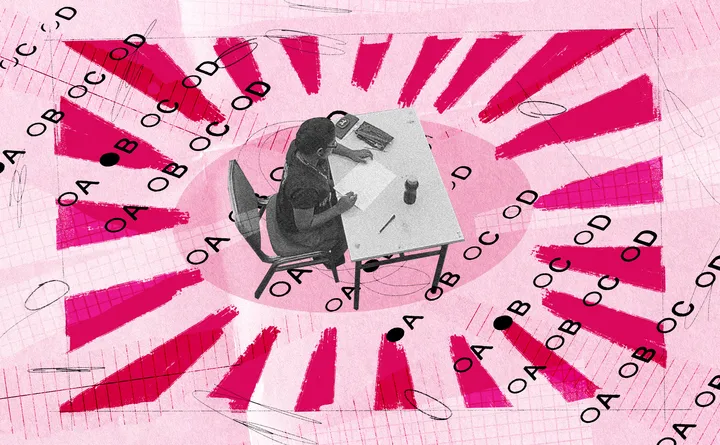
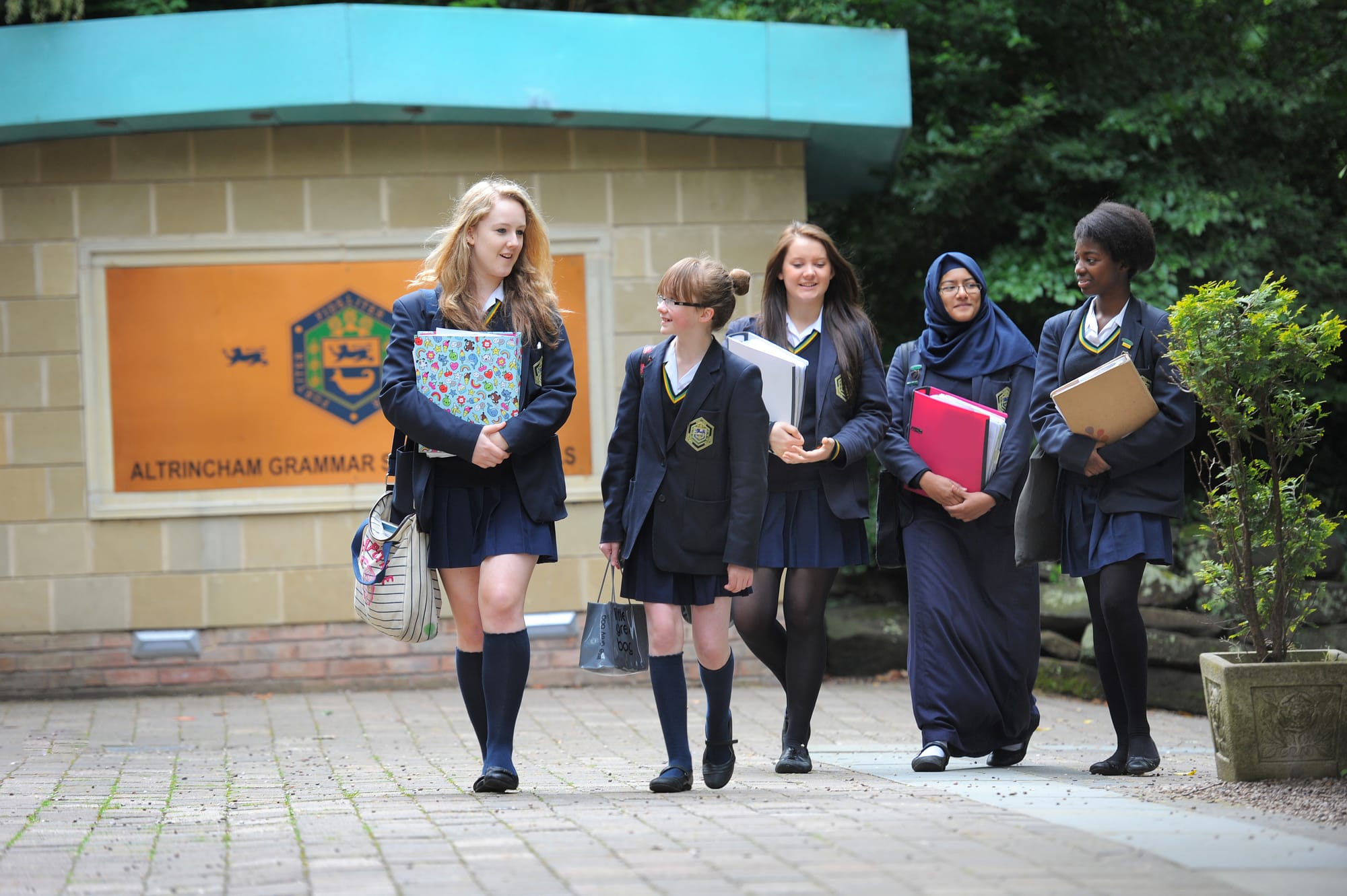
Grammar schools are state-funded secondary schools that require an entrance exam to get in. This exam is known as the 11-Plus, and is taken by pupils at the very beginning of Year 6, testing them on maths, English, verbal reasoning (think word puzzles) and non-verbal reasoning (think picture puzzles). Only around 1 in 4 children pass it. Though grammar schools used to be reasonably widespread across the country, they are now confined to a small number of authorities in England and Northern Ireland. There are exactly seven of such schools in Greater Manchester, and every single one of them is in Trafford — creating a tense dynamic across the borough where parents are desperate to get their children into these establishments, or else risk dire consequences: coughing up thousands for private education, or sending their kids to school outside the area, and worst of all — facing the smug superiority of fellow parents.
Rebecca is a mother of two pupils at Stamford Park primary school in Altrincham — a Grade-II listed Edwardian redbrick. Standing on the brink of the wide, concrete playground, in blue-striped summer dress and large oval sunglasses, she tells me that by the time her children were in the lower infant years of primary school, “everyone was talking about [the 11-Plus], everyone had a tutor.” She also tells me about the increasingly unreasonable amount of time and money expected from parents to get their kids to pass the test. Back in the 1940s, when grammar schools as we know them first came to be, pupils would simply sit the 11-Plus one day and if they passed, they passed, if they didn’t, they didn’t. But by the early 2000s, tutoring became popular among more affluent parents, who would pay for their children to be privately trained on the ins and outs of the exam.
This story is free to read - you just need to join our mailing list. And why wouldn't you? By becoming a Mill subscriber, you'll get our scoops, features, and insights into Manchester, in your inbox, the second we hit publish. No card details required.
Already have an account? Sign In