
Dear readers — this festive season, we’re doing things a little differently (not like that). In true Christmas spirit, we have enlisted the help of Three Wise Men – aka three freelance history writers – who will deliver to you a trio, a triptych even, better than any gold or thoughtful but ultimately useless tree resin. Soon to come is a piece by Dean Kirby, the man behind Manchester History Club, on the resilient shopping behaviour of Mancunians during the Christmas Blitz. This will be followed by another corker by David Rudlin on the ultimate Christmas film (a 1959 black and white thriller set in Oldham, naturally). But first, historian and Mill-regular Thomas McGrath takes us through the rites and rituals of Christmas in the late 1700s (spoiler: it involves ironing). We hope you enjoy.
By Thomas McGrath
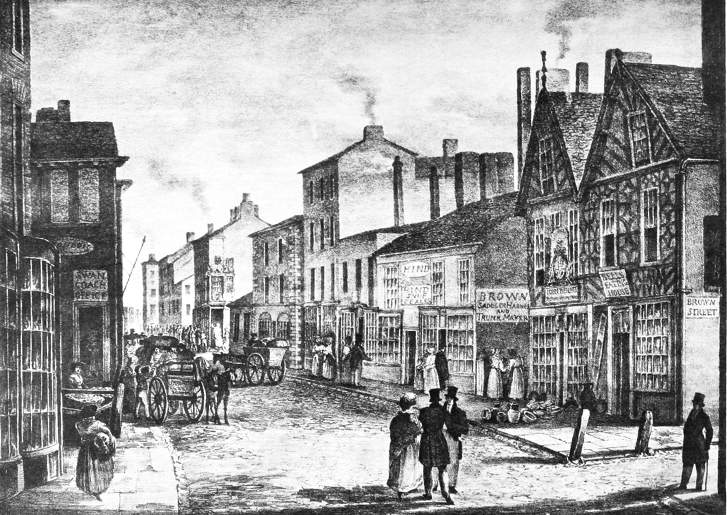
Let’s take ourselves back to Manchester in December 1782, where a ball is being held at the Assembly Rooms on Brown Street. There’s chatter and laughter, and the swishing of satin and silk as couples dance to string music in the warm glow of hundreds of beeswax candles. Outside, snow is also falling amid a backdrop of chimney stacks. A few hundred yards away on Miller Street, Richard Arkwright’s newly built mill is a towering monument to progress. It guzzles five tonnes of coal a day and belches out dark smoke. In this part of town, the snow is already grey by the time it’s landed. Whatever remains by morning will be black. This was Georgian Manchester’s first industrial Christmas.
Manchester was subjected to grimy winters then and for 180 years after. Perhaps for this very reason, Mancunians have never been the sort to neglect the festive season. But stripping away Victorian cultural inventions — trees, cards, crackers — the Manchester dwellers of the eighteenth and early-nineteenth centuries celebrated Christmas in an altogether different manner…
Festivities: Christmas pantos, Christmas ironing, and a couple hundred baptisms on the trot
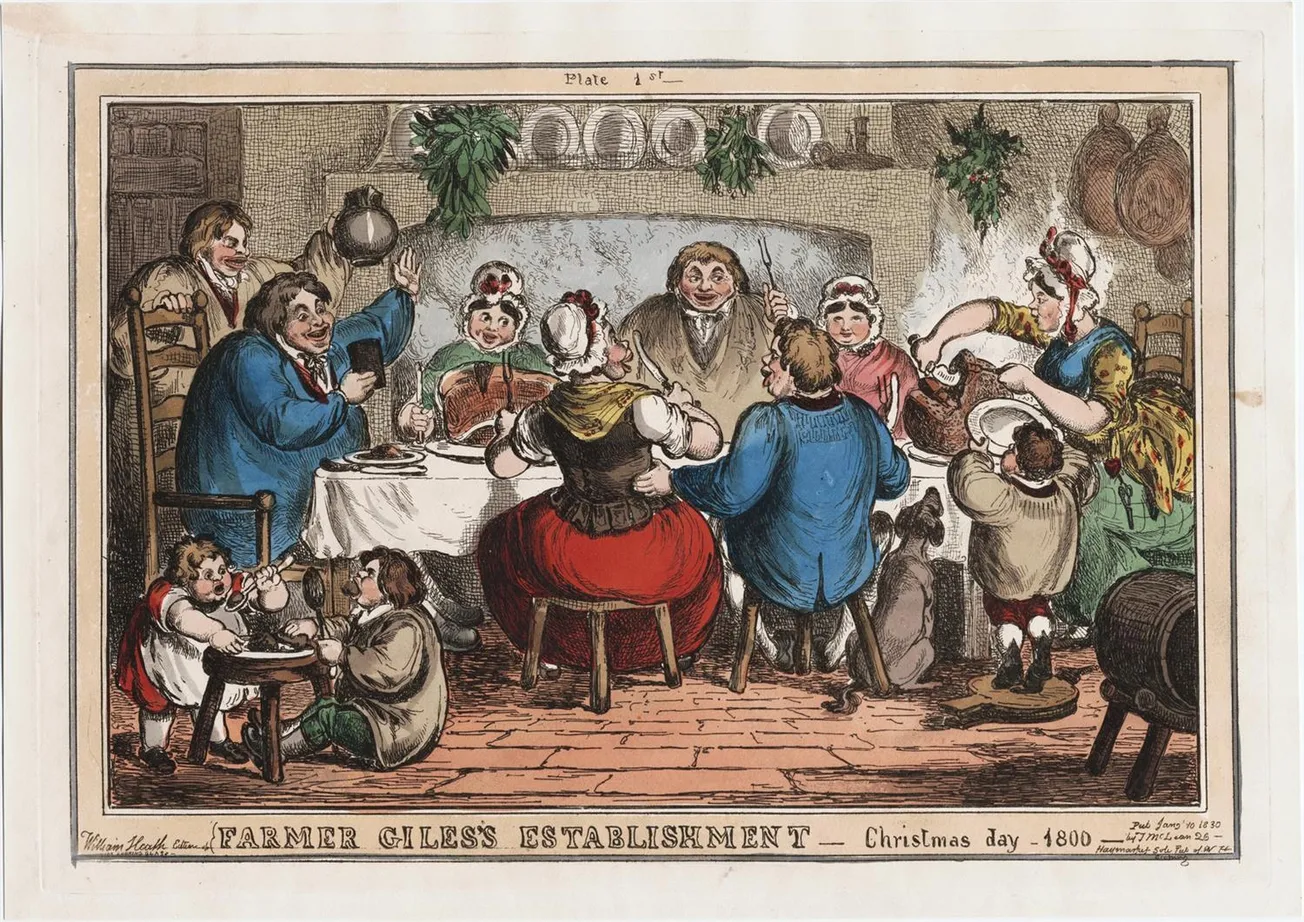
By the eighteenth century, Christmas traditions had taken a bit of a battering. The Reformation had stripped away many of the Catholic-inspired festivities, and in 1647 Christmas and its associated activities were briefly banned outright (though restored along with the monarchy in 1660). Some traditions managed to survive these turbulent times, such as the upholding of the 12 days of Christmas leading to the Epiphany on 6th January, decorations made of holly and ivy, and the seasonal popularity of stories about ghosts and witches.
Christmas Day itself was much like the usual Sunday sabbath: shops closed and churches opened. However, a line in the Manchester Mercury of 1829 reveals much about the dwindling worship of many Mancunians, when it describes the Collegiate Church (now Manchester Cathedral) on Christmas as “unusually full”. On the 25th of December 1836, in what can only be imagined as some sort of ecclesiastical production line, the vicar at the Collegiate Church baptised 204 children and married 43 couples. It’s tempting to look at these figures with romance and whimsy, but they likely boil down to logistics. Christmas Day was a common law holiday and businesses were closed. A 68-plus hour working week was standard among working-class men, women and children until reformative legislation in the 1830s and 1840s, and there were no Bank Holidays until the 1870s. So, Christmas Day was convenient enough to brush up on spiritual matters, pay your respects, and get a few big life events out the way while you were at it.
You can help make great journalism happen.
At The Mill, we believe Manchester deserves high-quality journalism. By signing up as a member, you don’t just get the rest of this story — you get four great features delivered to your inbox every week, and the knowledge that you’re supporting a new model of local news, that puts quality and honesty first.
SubscribeAlready have an account? Sign In