
‘Why am I seeing this here?’
Anene Chiegboka is in the barber’s chair in 2024 when a story catches his attention. The barber describes a recent customer — a historian from Manchester Museum. He tells Chiegboka that when this historian learned the barber was from the Igbo community in Nigeria, he mentioned a collection of artefacts at the museum that he ought to see.
Chiegboka, himself of Igbo heritage and chair of the Igbo Community Greater Manchester (ICM), is intrigued.
He arranges a visit soon after, and meets a researcher at the museum. He’s asked to wear gloves before descending into a basement filled with sculptures and artefacts, all laid out on tables.
These are African objects acquired during the colonial period, believed to be of Igbo origin. Most of them are kept in storage, down here in the basement alongside the museum’s roughly 4.5 million objects.
Chiegboka hesitates. He was born in Nigeria, he grew up in Africa, yet there are objects here that he doesn’t recognise. Is he looking at a God? Should he be bowing? Back upstairs, the researcher asks if he’s okay.
“Let’s reschedule. I just need to go,” Chiegboka says. He’s silent on the drive home, turning over the same question: “Why am I seeing this for the first time here?”
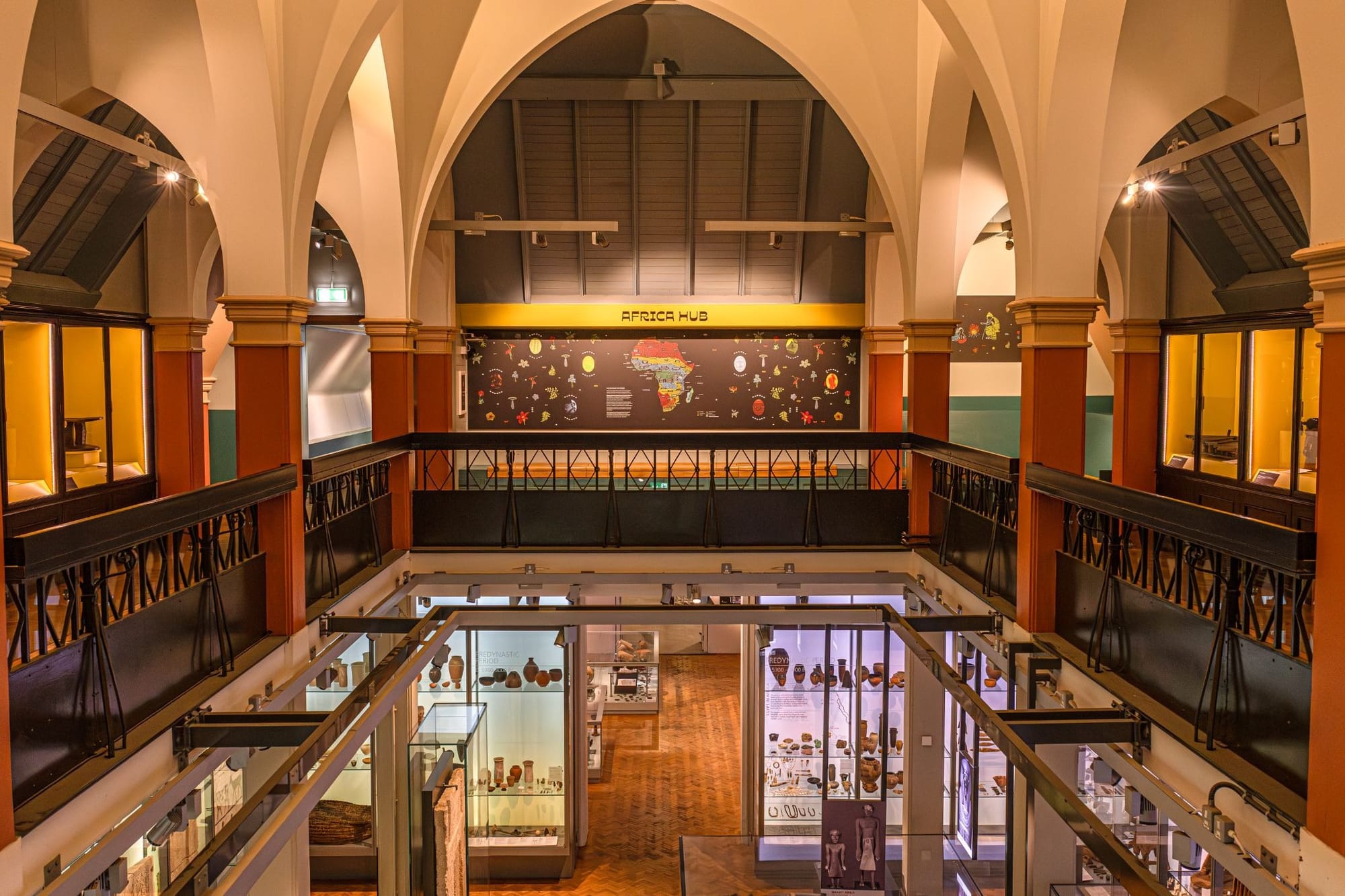
He feels rage, but a different conviction follows. Something must be done. Chiegboka accepts the museum’s proposal to work with the ICM to better understand their collections, and in December 2025 Manchester Museum’s ‘Africa Hub’ opens — its first display a collection of objects of Igbo origin, co-curated with ICM.
Filling in the blanks
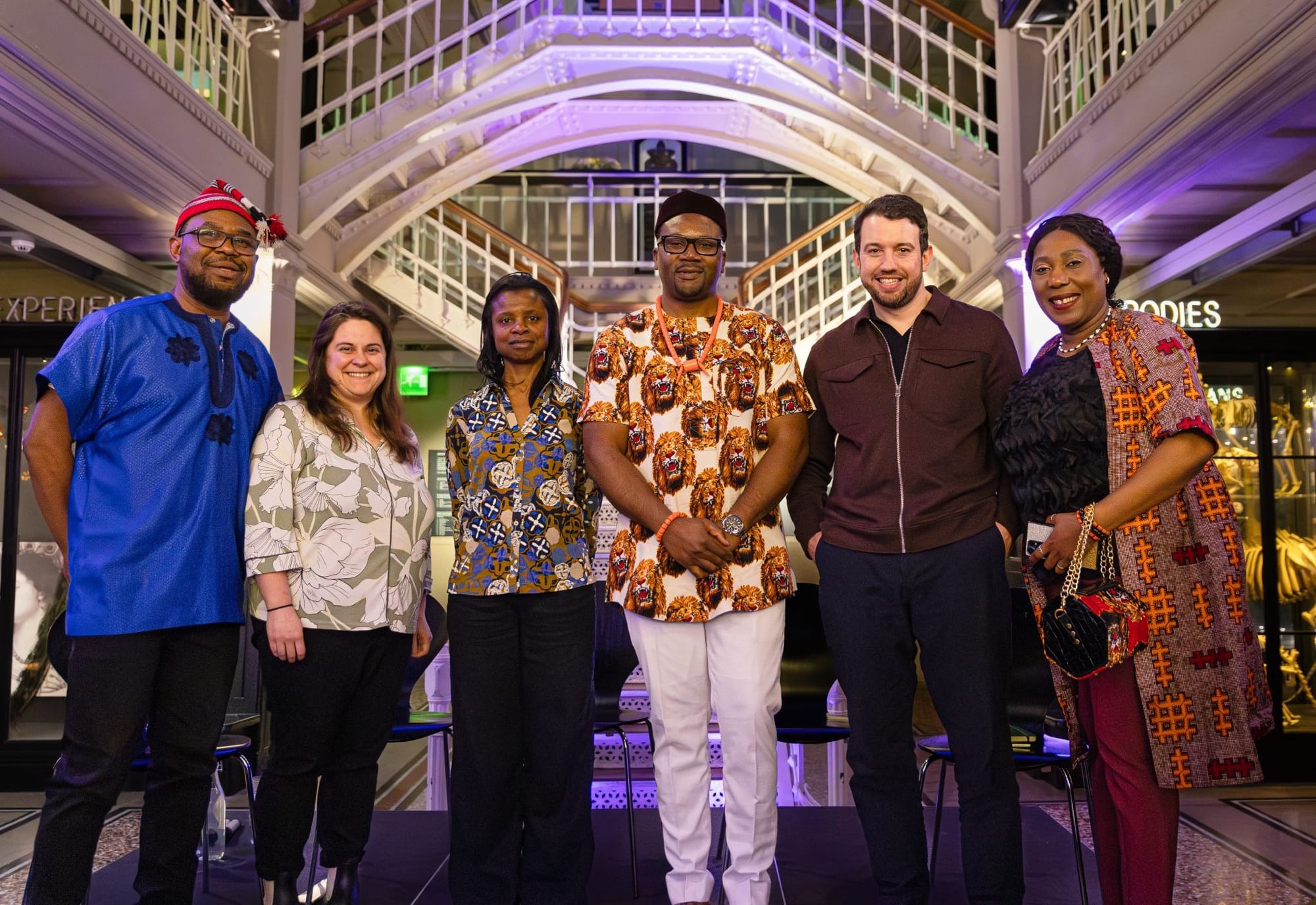
It’s from a stage at the museum that Chiegboka recounts this story, sitting alongside a panel of speakers: To his right is Emeka Onyegbuna, ICM’s public relations officer; Lucy Edematie, the curator of African collections from colonial contexts at the museum; and Alex Alberda, the curator of indigenous perspectives at the museum. The evening is chaired by The Mill’s founder Joshi Herrmann.
The Africa Hub lays bare how little is known about the museum’s 40,000 African objects and specimens. This may sound like a surprising approach for a museum: rather than bestowing knowledge upon its visitors from on high, Manchester Museum invites communities to fill the gaps. What are these objects that are mostly left with very little labelling or information in the museum’s basement? What was — and is — their significance? And should the museum be giving them back to the communities they originally came from?
So-called “repatriation” of objects is a hot topic in the museum world, and has caused controversy in recent years. Manchester Museum has staked out a position of “unconditional return” - meaning that it is theoretically open to returning objects if there are legitimate requests to do so.
Edematie pushes back on the idea that the museum is seeking to empty its shelves. Decolonising, she says, is about redistributing authority, a shift from institutional control to shared decision making. For some African communities in Greater Manchester, she says, access to these objects matters too.
Like Chiegboka, Onyegbuna describes the dissonance of encountering his heritage mediated through a foreign language, and suggests that projects like the Africa Hub invite new forms of repatriation. For diaspora communities, knowing sacred objects are being preserved is a source of comfort and continuity, allowing younger generations to connect with their ancestral past.
There are practical limits too. From her knowledge, Alberda tells the audience that formal return requests are rare — fewer than five in the past five years — and that each request involves “robustly checking” whether there are source communities in Greater Manchester who need to be consulted. The only denial that Alberda knows of involved ancestral remains and was decided collectively; there was a lack of research about their origins, and the community feared “repeating colonial harm” if they later discovered the deceased was of different heritage.
Other encounters have allowed for recontextualisation. When the Africa Hub opened, a stool was displayed as being from West Africa — little else was known about it. Edematie recalls a visitor from Uganda, in East Africa, noticing the stool. She told Lucy those stools are still used in Uganda today; they’re for senior men and have distinct carvings on their legs, which are engraved differently according to the status of the person. The visitor was unsure of other facts, so she left her email address with the museum to get back in touch once she’d verified information, and put Edematie in contact with others who could provide further context.
“It’s really important that we don’t have these materials, with the knowledge that should be connected to them, lost to history” - Lucy Edematie
For Onyegbuna, the value of the project will be measured over time, and younger generations are its prime audience: “They are the ones that should benefit. They are the ones that should take the mantle of community engagement when we are long gone.”
In this way, the Africa Hub is a beginning rather than a finish line, malleable to new research and interpretations. Decisions surrounding repatriation require context, and all parties seem to acknowledge that gathering that context is a long-term process.