
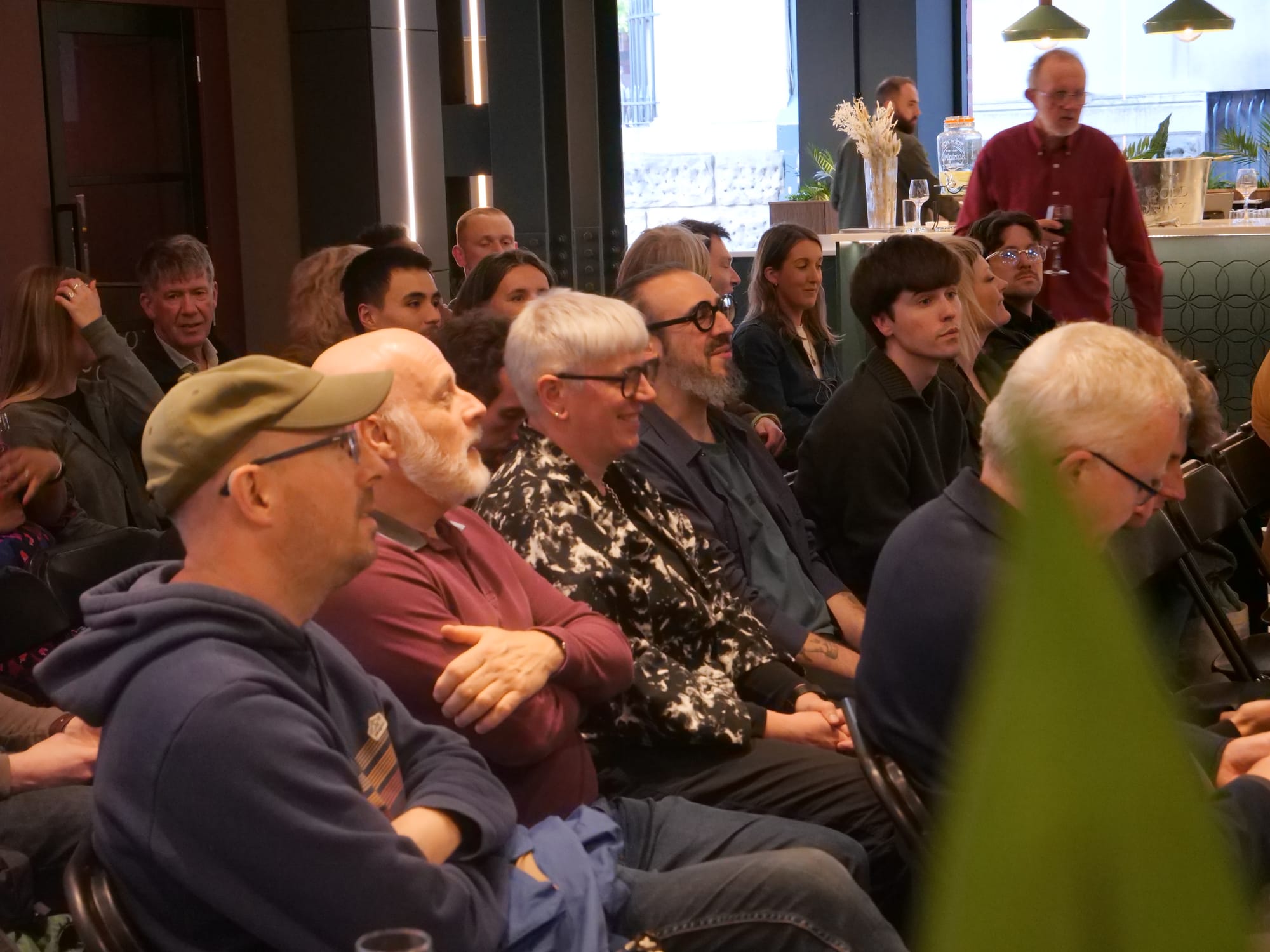
What happened to Manchester’s city centre during the pandemic? How has it changed our economy? And where does the city centre go now?
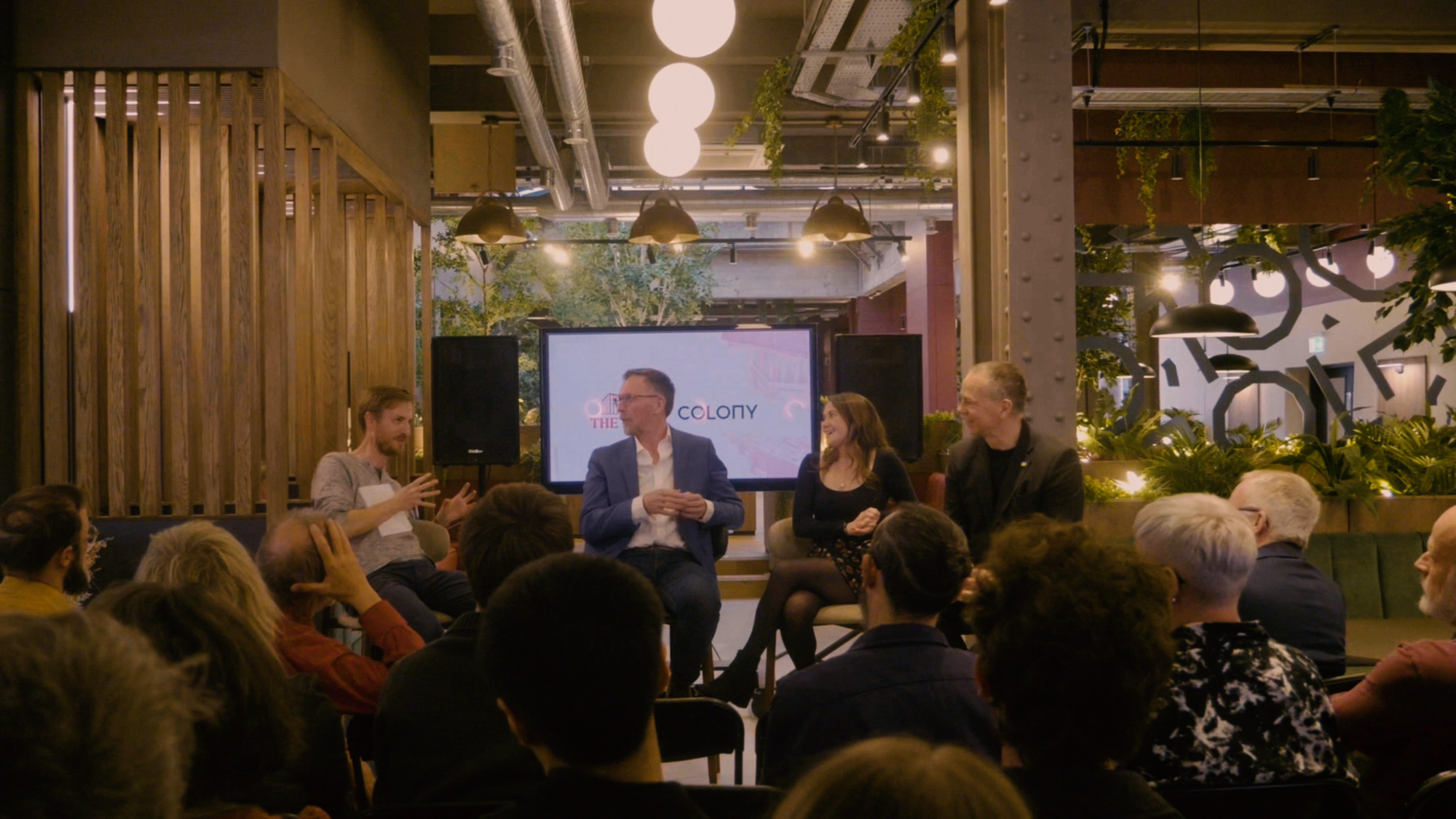
On Tuesday, 12th May, I was joined by three experts for an in-depth discussion on these topics: Professor Jesse Matheson, an economist who has spent the last six years analysing the economic impact of increased home working; Vaughan Allen, who runs Manchester’s business improvement district, working with over 1,500 local businesses; and Rebecca Cox, the managing director of Colony. Colony is one of Manchester’s fastest growing office providers, and we were delighted to be hosted by them in their newest space in King Street.
The return to the office in Manchester was slow at first. Allen said that some of the first workers back in weren’t the ones you’d expect, but young digital marketing staff in the Northern Quarter – people who could still work at home. “Their social life, their love life, everything was focused on work, and that was the driver,” he noted. But in the last eighteen months the push to get people back has accelerated – with a consensus forming around being in on Tuesday, Wednesday, and Thursday. This has happened in part because, in a tighter job market, companies have more power, and they want to see workers in. But companies have also been recognising how important it is that workers can socialise. Cox told us that several of the people using Colony’s co-working spaces are remote workers, but their bosses are funding them to be in a shared space for their own wellbeing.
Matheson’s research had found that homeworking levels nationwide had stabilised at about 40%, and that this had made a lasting impact in suburbs, where some workers are now spending more time. “The decrease [in retail spending] that we're seeing in businesses in city centres is more than offset by the increase we're seeing in the suburbs,” he noted. “If you're working from home, one of the things you're going to be craving is some human interaction, so it's quite likely you'll spend more time in coffee shops than you did when you were working in the office.”
One key theme was Manchester’s relative resilience. Unlike a couple of decades ago, the city centre now has lots of flats, meaning there’s a big, young population to prop up pubs and clubs. “Virtually every other city had loads of night time economy businesses closed, for obvious reasons,” Allen noted. “But Manchester came out of Covid after two years with more night-time economy businesses than it started with.” Matheson contrasted Manchester to cities in his home country of Canada. “There's a real diversity of things going on in the city centre here. Manchester isn't just office space, it has a huge student population nearby, tourists are coming through, [there are] all sorts of things that are actually keeping the spending alive.”
But while Manchester centre is more mixed than other cities, it’s still lacking some important spaces: the schools and GP places that makes a city centre a good place to live after your twenties. As local leaders design the future of Manchester’s city centre, they will need to bring in more of this mix. “It's starting to be the case that your 30 year old who gets married or wants to have kids is starting to go, ‘No, I still want to be in the city centre, I don't want to be moving out to wherever I have to move out to. So, you need to provide me with the facilities to do that’,” Allen argued.
I asked Cox how the pandemic had looked as an office provider – did they ever worry they’d got into the wrong business? She said that, while there was a moment at the start of the pandemic when people started handing their notices in and it briefly looked like the office might be dying, people actually came back “quicker than I think any of us imagined”. “It was that community feel, that sense of belonging somewhere again”, she said.
How do you build that? “It's not just about density of how many people can we fit into this building from a square foot point of view,” Cox said. “We put a lot of attention on breakout spaces, nice kitchen areas, roof terraces, so that people have space to rest and reset; they are not just coming to the office to sit in a box all day,” They’ve also had to rework spaces to match the new needs: with more phone booths for video calls, and bigger meeting rooms for occasional all team meetings. She also noted how being close to transport links has become a holy grail for companies who want to encourage their team to come into the office to work again.
The discussion also covered how branding is becoming increasingly important. Allen argued that the recent Oasis concerts in Manchester made very little overall difference to business takings – the audience sizes are a drop in the ocean relative to the total footfall in a big city like Manchester. But the impact on how Manchester is seen is huge.
With all this changing, how should Manchester’s leaders plan? “My advice has always been a fairly hands-off approach,” said Matheson. “You do need planning, you do need investment, but you want to allow for the fact that you might not know what's going to work.” As one example, Allen remembered being in meetings in the 2010s where people were concerned Market Street would just turn into banks. That has happened, but those banks have introduced lots of café spaces, so it still feels vibrant.
Nonetheless, Cox noted how hard it is now for smaller retail businesses, given increases in business rates and national insurance contributions. Colony, she said, has developed partner programmes with small companies to offer discounts to people who use their space – something that works as a good perk, and helps keep the local neighbourhood alive.
At the beginning of the evening I asked attendees to rate Manchester’s city centre out of five stars, using phone tech to vote. Most respondents plumped for four stars: good, but with room for improvement. There are still big challenges, and no doubt city centres in 10 years will have to look quite different again. But the pandemic has shown Manchester is good at adapting.