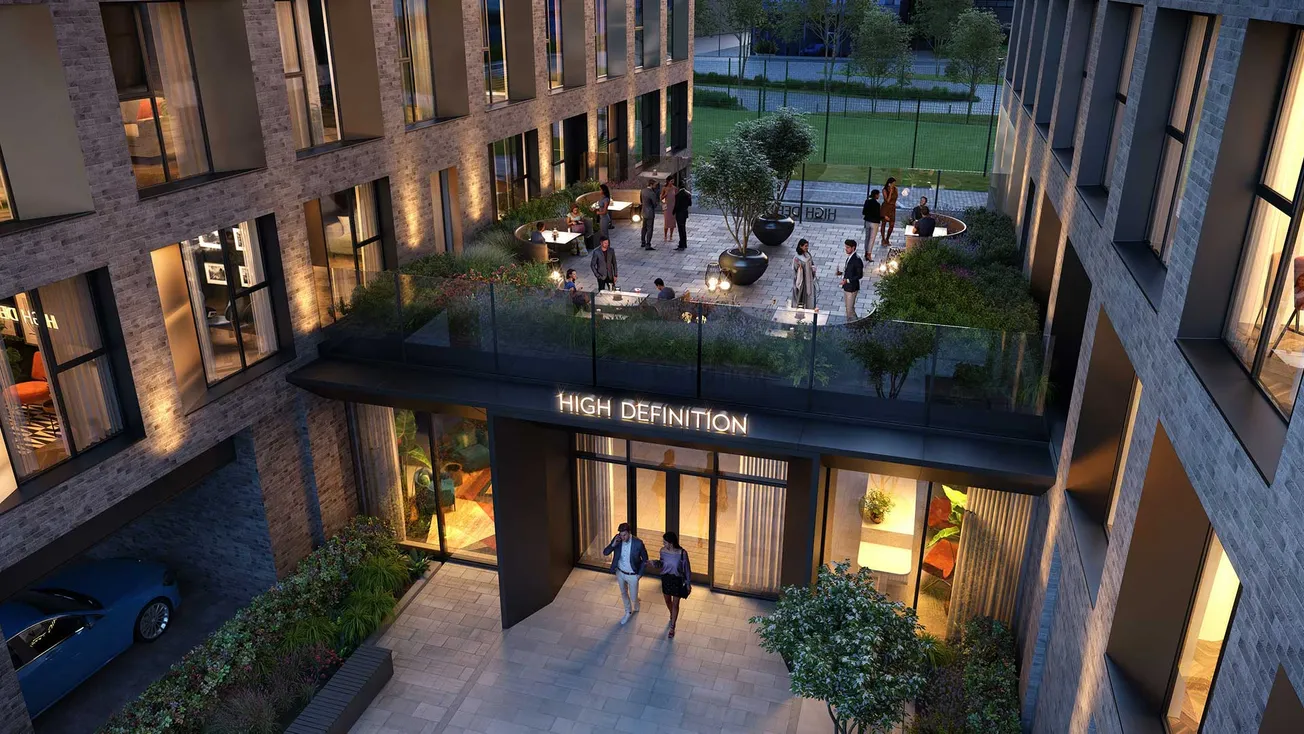


Earlier this week, at House of Social — a new food hall and co-working space with five distinct kitchens serving everything from prawn toast-crumpet hybrids to 18 inch pizzas to biryani — waiters rushed to and from the wraparound bar ferrying drinks to long tables of diners. Fluorescent lights pulsed with the rhythm of the music inside and upstairs there were pool tables and another bar serving cocktails designed to pair with the food served downstairs.
House of Social could easily pass as yet another city centre food hall, but that isn’t actually its main business. Sitting on top of it are 100 student flats, with rents ranging between £1,000 to £2,000 a month for studios with shared kitchens up to 1-bed apartments. They’re marketed on Instagram as the new pinnacle in student living, with gym memberships included, access to co-working space in the bar, and plushly furnished lounges to share with housemates.
On Rednote — the Chinese social media app — House of Social is “a new study abroad experience”. The account hosts live viewings of its apartments at 9:30 Beijing time and totes its proximity to the universities, local Chinese supermarkets and the range of options available in the foodhall downstairs; “you can enjoy global cuisine without leaving home,” one post says. Other videos show images of the block and its ‘luxury’ amenities to a jazz backdrop.
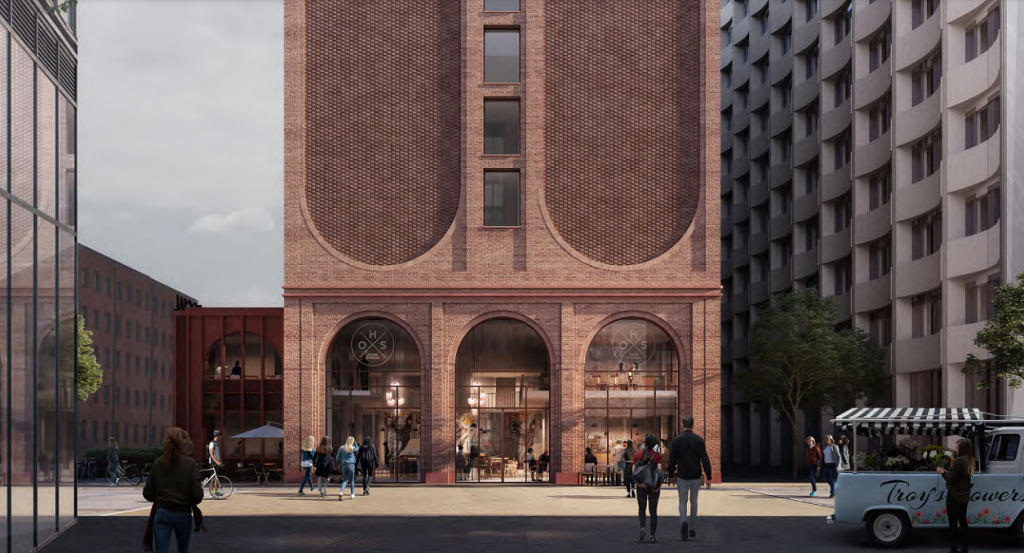
The development is the latest in a string of luxury student blocks that have sprung up in Manchester in recent years. Many built by a company called Vita Living, they’re targeted at the ballooning population of international students coming to the city to study. These blocks focus on safety, security and convenience. They are a departure from the usual student housing pipeline of halls to a house of multiple occupation in a cheaper part of town; these buildings exist almost entirely within the city centre. “Indeed,” Gavin White, the council’s executive member for housing and development tells us, “the number of students living in the city centre rose by 42% between 2016 and 2022.”
Even so, back in 2023 we covered how Fallowfield — the south Manchester neighbourhood it has become a rite of passage for the city’s university students to move to — had become overrun. A transient population of 19-year-olds was distorting the area, and long-term residents were tired of feeling less like a community and more like an extension of campus. And, back in 2022 both the University of Manchester and Manchester Metropolitan University were offering money to students to live outside of the city, some as far as Huddersfield, because they couldn’t meet demand for accommodation. It was clear then that more of what is called Purpose Built Student Accommodation was needed.
Manchester has a distinct lack of PBSA. Developers blamed planning policy in the city, saying the council had put “an effective moratorium” on its development. Last June, project management company Midollo published a report which found Manchester, with one of the biggest student populations in Europe, had a shortfall of 16,000 student bedspaces. Between 2023 and 2024, the council approved developments comprising 7,500 student bedspaces, and has ambitions to deliver 12,500 new bedspaces by 2030.
There are also global factors at play here. The types of student PBSA most appeals to are international students, who are increasingly looking to the UK to study. “America and Australia haven’t really made Chinese students feel very welcome in the past few years,” says one well-placed source. A combination of the pandemic response in other otherwise-popular English-speaking countries, as well as more recent factors, such as the defunding of universities by the Trump administration, all play into this. There’s also the fact that the costs of running a university in the UK have shot up and fees have been capped, making universities more inclined to try and use the lucrative international market to plug the gap (not that this strategy is risk free: “If China decided to invade Taiwan, for argument's sake, you could reasonably suspect that the UK Government would break off relationships with China, therefore there would be no Chinese students coming to England,” says the source, noting that in this circumstance many universities would financially “hit the wall”).
The current drive to build PBSA is a recent trend. Typically, the universities — particularly the University of Manchester, sources say — have objected because they’d prefer students to move into their own halls. But the recent international student boom has changed the picture (40% of students at UoM now come from overseas). According to one source, a few years ago then-vice chancellor of the University of Manchester Dame Nancy Rothwell wrote to Sir Richard Leese complaining that the city was severely lacking in PBSA and requesting the council approve more blocks. In response, allegedly, the council wrote back detailing all the objections the university had filed against PBSA developments for the previous 10 years.
The lack of PBSA has meant that some of these students began moving into luxury apartments in the likes of Deansgate Square. “Students are now penetrating parts of the city centre that 5 or 10 years ago would be unimaginable” says one source in Manchester’s student accommodation market. That’s all well and good, but with students being exempt from council tax, it meant the council was missing out on payments on some of the highest band, most valuable properties in the city. In the 2019/20 tax year, the council forewent £17m. By 2023/24, that figure had risen to £21.4m, a £1m per year increase.
In 2023/24, there were 18,697 student properties exempt from council tax. Interestingly, over a third of them — 6,175 — were in just two wards: Deansgate and Piccadilly. Again, showing how the student population has begun to drift towards the city centre.
And, for the most part, where they want to live isn’t an old terraced house carved into eight bedrooms, rather they want the heights of luxury city living. That’s where Vita — the company that owns House of Social — comes in. Owned by Mark Stott, who also owns Stockport County Football club, the company has been behind multiple luxury student developments in recent years. (Stott also owns Union, a co-living scheme targeted at graduates and young professionals, meaning his companies could feasibly receive rent from someone from age 18 to 33, based on the average age of a first time buyer).
We're so close to hitting 3,500 members. If you've been enjoying our work and you believe in the importance of investigative journalism, please join up now. You will be able to get your membership for just £4.95 a month for the first three months, a £4 discount from our usual price.
In return, you'll get access to our entire back catalogue of members-only journalism, receive eight extra editions per month, and be able to come along to our fantastic members' events. Just click that pink button below.
But what does that luxury actually look like? Earlier this week we decided to go and see for ourselves, admittedly engaging in a spot of low-level journalistic subterfuge (we pretended to be first year art students) by booking a viewing at House of Social. We were shown both the Essential room, with prices on currently available flats starting at £1,152, and the enhanced room, which starts at £1,376 (the enhanced room has its own kitchen facilities, making it more like a mini-studio flat, as well as a door leading directly into the corridor, saving you from having to pass through the communal area if you'd prefer to avoid talking to your flatmates).
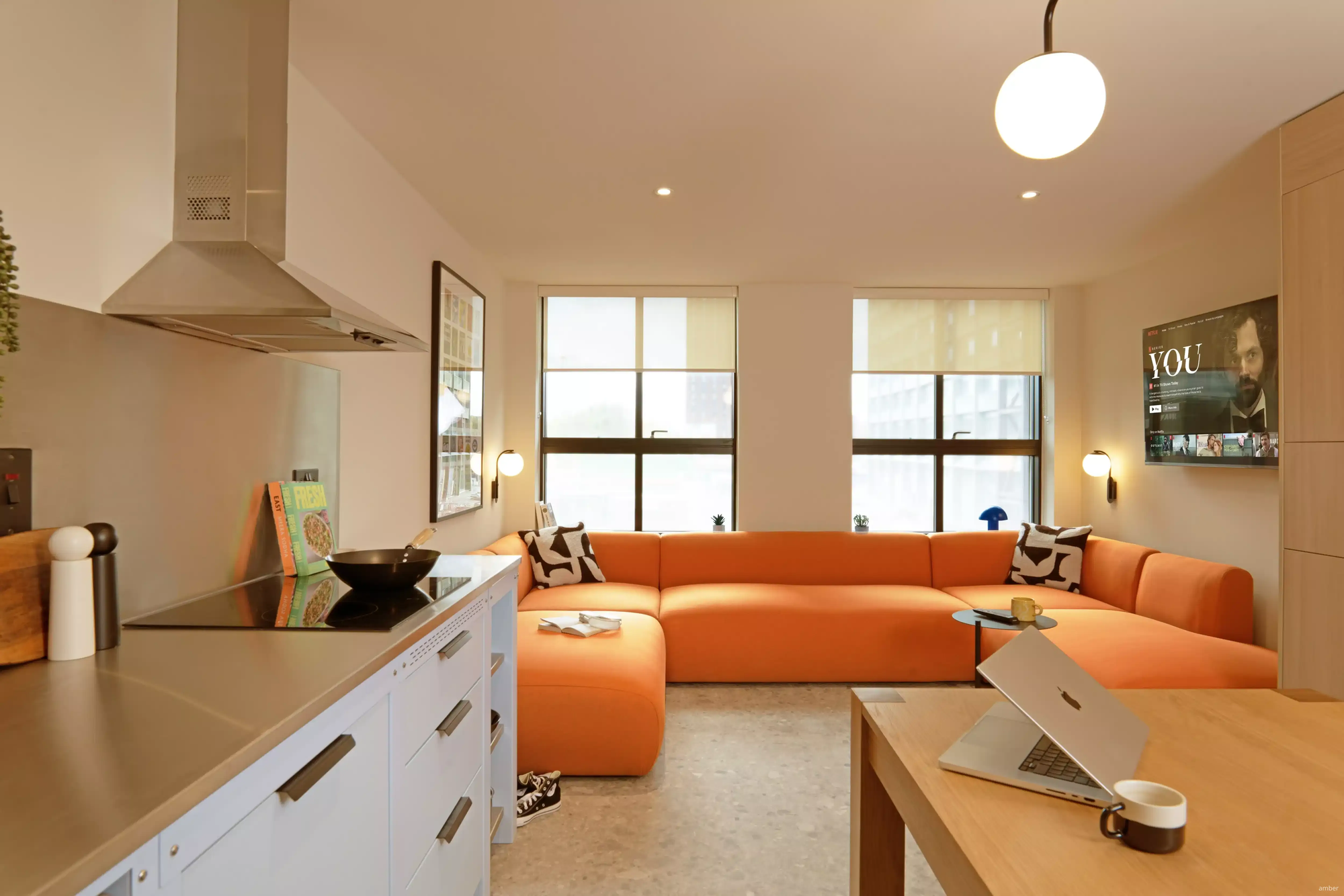
Sure enough, the House of Social team have made the effort to put a few Dior boxes on the shelving units of the display room, as well as hanging trendy branded clothing items (Bershka jeans and a Weekday knit vest) on the clothes rack in one of the bedrooms. Furthermore, the large orange sofa in the communal area is several notches above your standard student house equivalent, and everything looks clean, tidy and tastefully designed. However, it's not hard to see why the price points are raising eyebrows. It’s a lot of money to be paying for a slightly upgraded version of your standard student halls, even if it does come with a 15% foodhall discount.
Anna, who is currently in her third year, lived in a Vita Student block between September 2023 and summer 2024. She estimates her block consisted of 90% Chinese students with virtually no domestic students. As a girl living alone, and someone coming from a small town, Anna says Manchester felt “big and unsafe”. Vita’s offer, and city centre living more generally, by comparison to a student hub like Fallowfield, just felt safer. That was the main appeal, as well as the “rather luxurious” rooms (Anna also mentions that her parents paid for her accommodation up front and that the payment system was very convenient).

While Afnan, a medical student who lived in Vita’s Circle Square One block during his first year, has to give praise to Vita’s breakfast offer (especially the hot cocoa) she now thinks that there’s a kind of incongruity to the concept of luxury student living. Coming from Kuwait to study on a scholarship, she says that most Kuwaiti students like herself weren’t even aware of the concept of student halls. “In our culture we don’t grow up with sharing,” she says, noting that it was an expectation that the scholarship money would be spent on an apartment.
Whereas the Fallowfield crowd were known for their “mouldy bread”, Vita students had housekeepers coming in regularly keeping things tidy (the element of “learning to fend for yourself” is maybe not quite there as a Vita student, she jokes). She says he saw friends having experiences in first year, in the grotty student HMOs of south Manchester, which looked like “a laugh” compared to the somewhat lonelier Vita experience. All in all, she doesn’t think it’s worth the very large fees. “I don’t think you will get anyone who thinks Vita is worth the money,” she says. Especially given the fact that though his parents spent over £21,000 for one year, the pipes burst within two weeks soaking the studio flat in “toilet water”. She thinks a lot of the foreign students living in Vita “fell into it” out of a “cultural expectation” to live somewhere a bit more luxury, but that it “doesn’t come close” to value for money.
Nevertheless, as the number of students coming to Manchester’s universities increases — particularly from overseas — so will demand. And with the rising demand, to quote a developer in the student space, rents will “only go in one direction”. So it’s likely that luxury student living is here to stay. Who knows, maybe one day Fallowfield will be drained at last of its student population, and those who graduate from Manchester’s universities will move into those homes once carved into HMOs with their families, blissfully unaware they were once the host of a thousand house parties, break-ups and mould infestations. But that won’t be before a decade spent paying rent to a company that has traced the journey from student to graduate to buyer, charging a premium at every step of the way.

If you enjoyed this article and you're not yet a Miller, here's how to change that.
The Mill produces great reporting and peerless writing about everything from education to politics, crime to conservation in Greater Manchester.
The Millers, our readers, get all our stories direct to their email inbox, and are part of a brilliant community that sends us story ideas and debates the issues of the day in the comments. Just hit that button below to join up for free.