

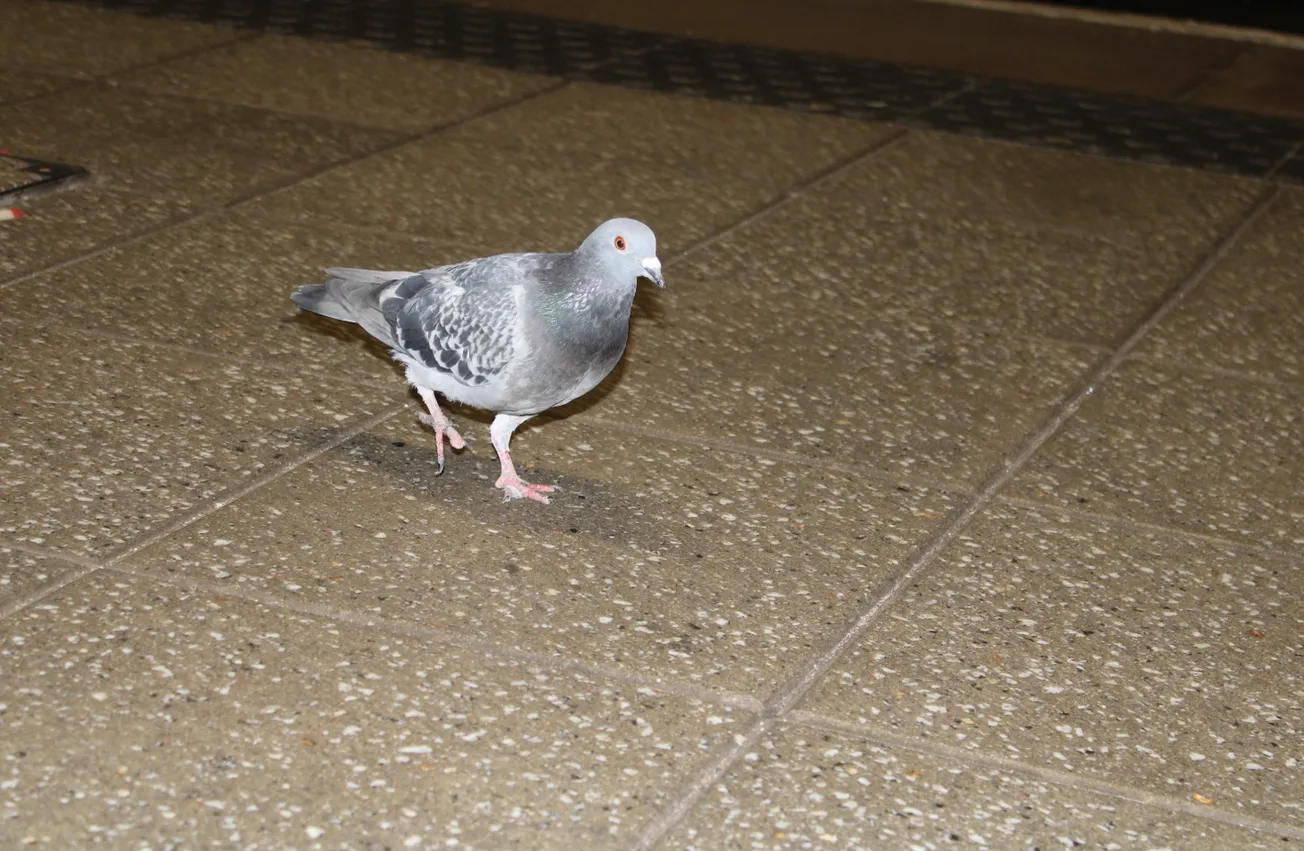
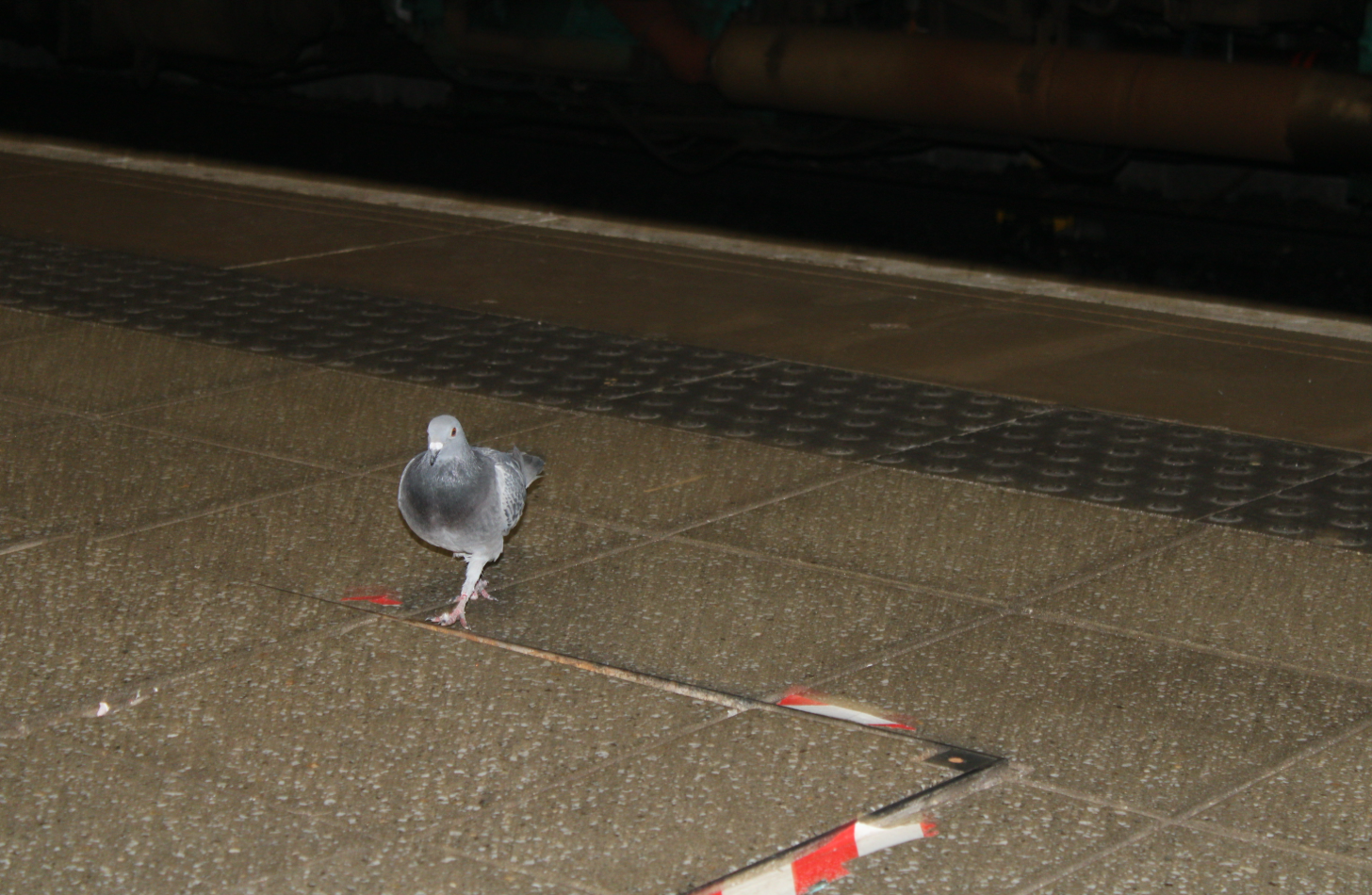
It was dawn or dusk when they shot him. October was on its last legs and so was he. He was found a few hours later, still alive, hanging upside down by a broken limb above a railway notice board. His rescuers named him Victoria, after the station — but by the time he’d been to the vets and had a full check-up, the now one-legged pigeon warranted a shorter name: Victor.
If you’re an avid newsreader, bird-lover, TikTok enthusiast or just like to hang around train stations at unsavoury hours, you might already know about the Manchester Victoria Pigeon Massacres. From 14 October and on many fortnights thereafter, Northern Railway set about culling Victoria’s pigeon population, contracting a pest control company to shoot them in the small hours of the morning. But when two different pigeons were found injured but not killed at gunpoint – Victor with a broken leg, and another named Tagliatelle with a bullet in her neck – footage of their injuries shared by the volunteer group Manchester Pigeon Rehab spread quickly online, prompting outrage from pigeon-lovers nationally.
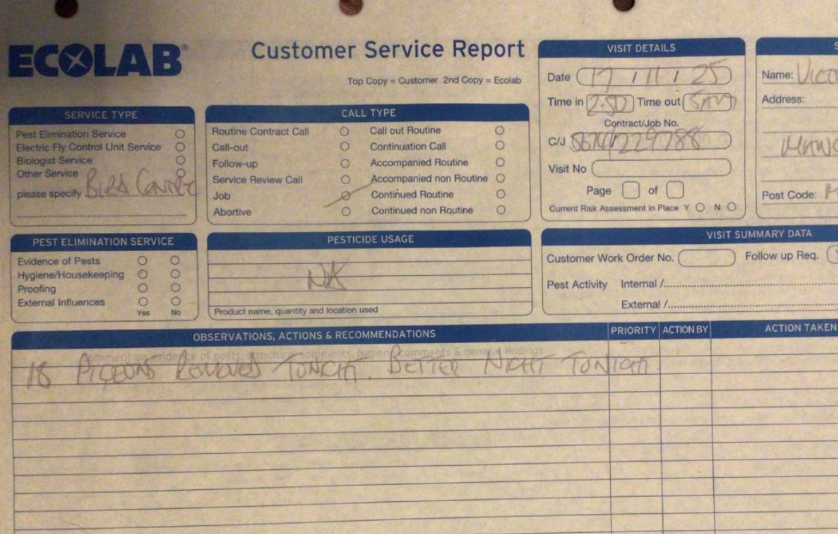
Customer Service Reports – written by pest controllers Ecolab and seen by The Mill – show the cold extent of the killings. On the 14th of October, the night of the first cull, 29 pigeon lives were prematurely taken. Two weeks later they killed 34. The log for 17 November notes that 18 pigeons have been killed on that occasion: “better night tonight,” reads the accompanying note.
Pigeons get a bad rap these days, I think it’s fair to say without quoting an expert on the matter. Rats with wings is the general sentiment, and I saw a woman cross the road on Mosley Street the other day just to avoid one. Northern Railway – who commissioned the culls – told us that pigeons at the station “were becoming unmanageable and posing a risk to colleagues and customers”. But was killing them really necessary? We decided to find out.
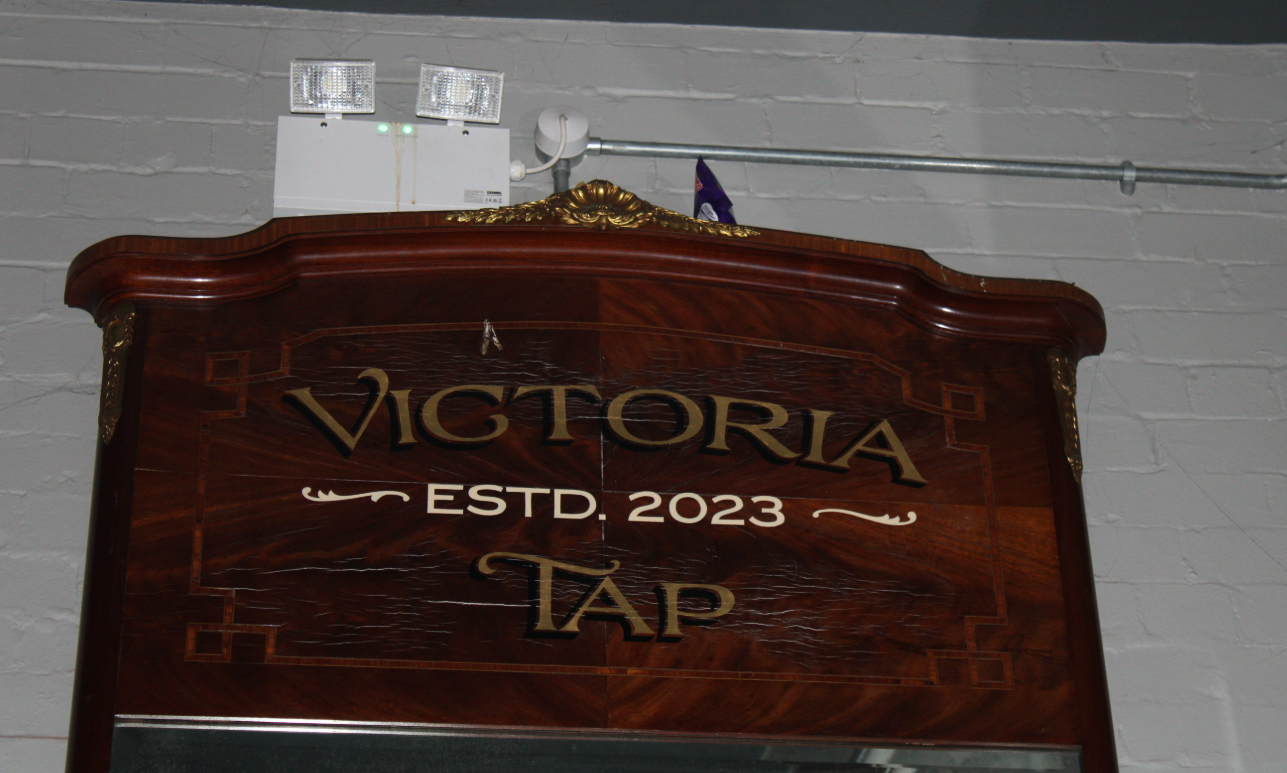
“They’re a fucking nightmare,” says Charlie, in his 20s, with a Noel Fielding-esque haircut and dressed like a Mod. Charlie’s the barman at Victoria Tap: Manchester Victoria’s greatest pub (no offense to The Beer House), and indeed one of Manchester’s finest pubs if your criteria is snack selection and a good view of the trams. According to Charlie, there’s a hole in the skylight above the bar through which pigeons often “fall down or trip”. “I have to throw blue roll or packets of crisps at them to chase them out” he tells me, pointing to what looks like a discarded packet of Monster Munch above a high-up mirror.
Still, work aside, on a personal level, Charlie loves pigeons: “I love pigeons, me,” he says. He thinks shooting them is “fucking grim”. This is a sentiment shared by the various drinkers I get chatting to in Vicky Tap, every single one of which seems to harbour not only an encyclopaedic level of pigeon knowledge, but also a deeply held respect for our feathered friends. Ricky, in his 60s, tells me that “the only pests are human beings. We are in their homes. We are the pests.” Steve, 66, interrupts this moment of profundity to inform me that the Feral Pigeon is a bastardization of the Rock Dove — “the Collared Dove only came to Britain from Turkey in 1955!” he exclaims. Rock Doves breed on cliffs, he tells me, which is why their feral descendants like nesting in high buildings — and train stations, for that matter. Steve thinks pigeons are a health hazard, but does he think they should be shot? “I couldn’t shoot a pigeon,” he replies, which isn’t really what I asked him. “I couldn’t do it,” he shakes his head sadly. “You have to admire them.”
Meanwhile, Will, 26, curly haired and moustached and drinking dark porter at the bar, tells me that “pigeons have been neglected by the human race which left them behind.” Humans domesticated pigeons, he explains, “and then when telegrams were invented, we just binned them off.” He’s also the only person I interview who’s already heard about the culls. “It’s a bit much, innit,” he says.
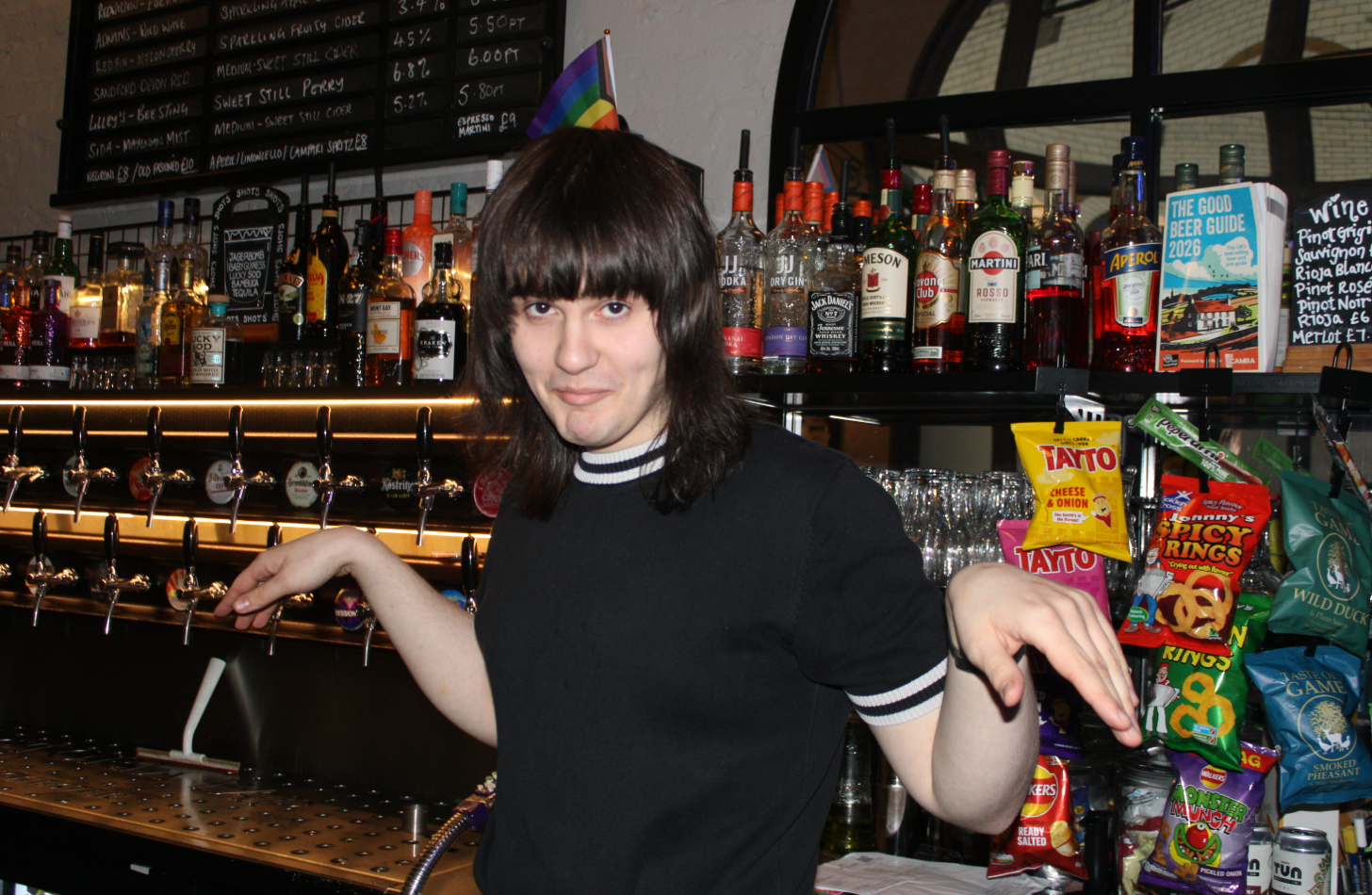
Charlie the barman tells me that staff at Vicky Tap complained to the managers of the station about the skylight chink in Victoria’s armour, but nothing was done about it. According to the Wildlife and Countryside Act 1981, shooting pigeons as a form of pest control is legal — but only if all reasonable forms of non-lethal control have been exhausted, including preventing pigeons from entering the premises in the first place. Obviously I can appreciate that sealing a single hole in a single skylight might seem an inconsequential measure in pigeon-proofing a station that is effectively wide open to the pigeon public — and indeed Ecolab, the company responsible for the culls, made the same point in their statement to Northern Rail.
Ecolab describes Victoria as being “effectively open to the elements.” This means that “birds can freely move from outside to inside with little challenge.” According to the report, Northern had attempted to proof the station, though how and to what extent is not noted. What is noted is that the proofing was ineffective. “The impact of this is that fouling from the bird activity is staining the walls and walkways… which creates a health and safety hazard,” goes the report. “Bird fouling is also very greasy when wet which could easily lead to a slip or fall”.
But crucially, Ecolab also admits in this report that “a bird cull will only yield a short-term result.” Kevin Newell – who for the last 13 years has run Humane Wildlife Solutions, Europe’s leading, if only, non-lethal pest control company – is quick to expand on this point. “It’s not even a short-term solution,” he says. “It simply doesn’t work.”
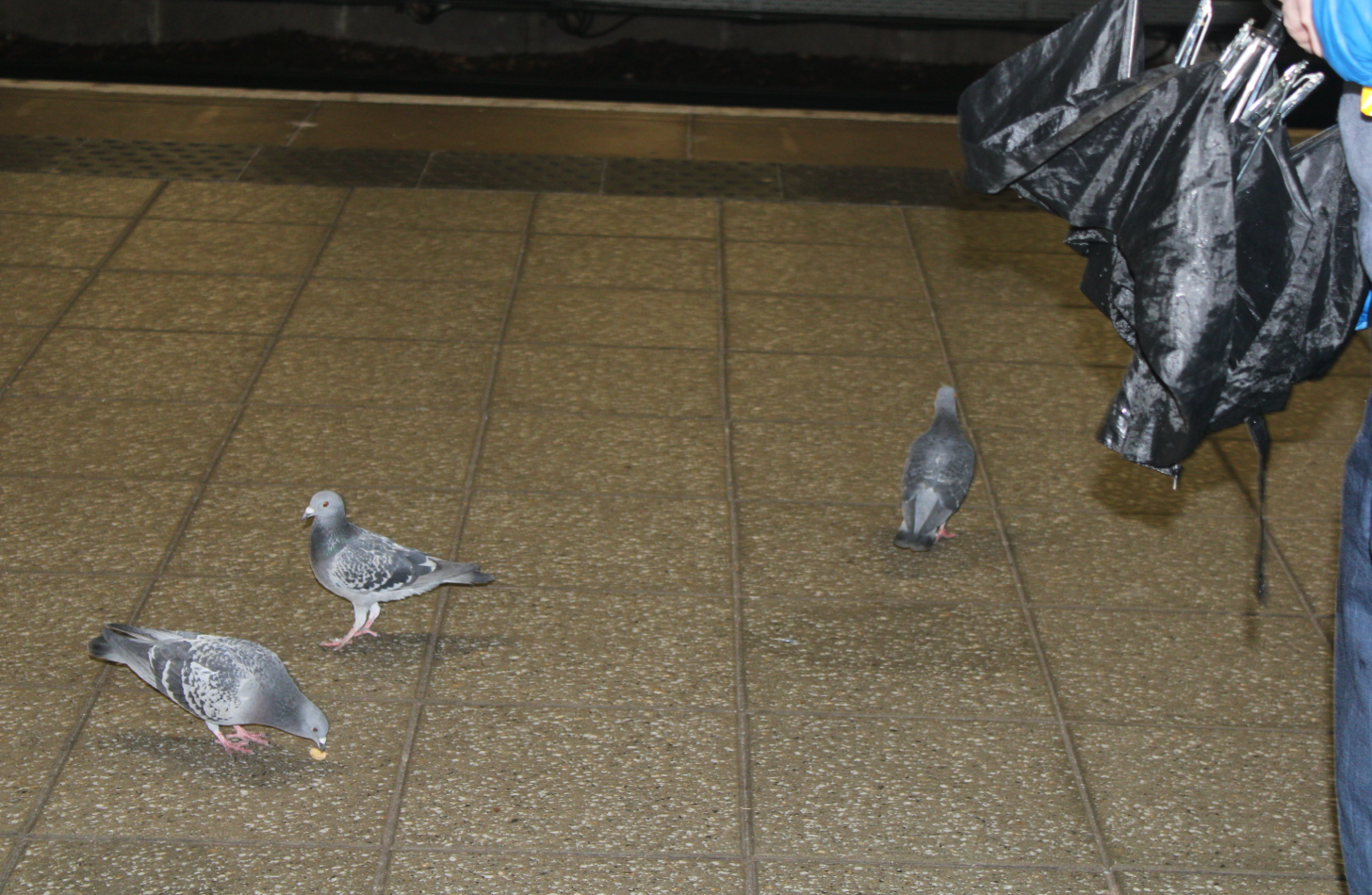
Kevin explains that “Victoria need to understand why the pigeons are using that space in the first place — what’s their motivation?” If the pigeons are roosting, he tells me it’s a simple case of closing off access to the roosting area. If they’re nesting, raising chicks, you can remove the nests, or in the case of very large populations, Victoria could use the ‘loft method’ popular across Europe: give them a designated nesting area in a disused part of the station, “and once or twice a week you remove any eggs they lay”. But the main reason a Feral Pigeon would be hanging around Victoria is for the same reason I do: Greggs. “Pigeons are typically there for food,” says Kevin. “If you can remove the food source [ie. keep the station tidy, and discourage littering] it removes the motivation for being there in the first place.”
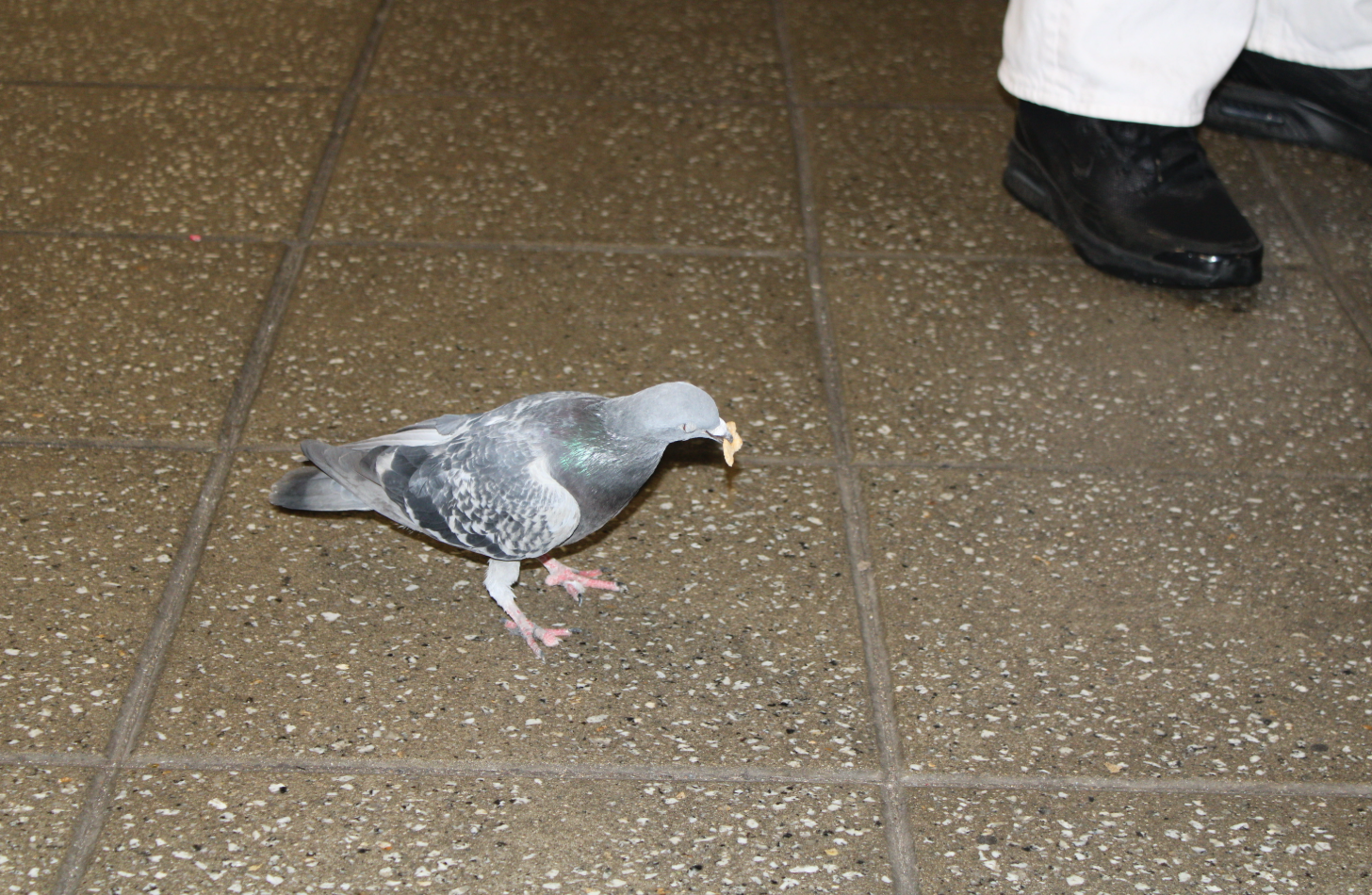
This is the main reason why culling doesn’t work. If the motivation remains, new pigeons will simply replace the old ones. A city the size of Manchester will be home to multiple pigeon flocks, “and if one is reduced by culling, it opens the area for more pigeons to move in,” Kevin tells me. According to him, York Station has tried culling their pigeons on at least four occasions, to no tangible avail (I have not been able to verify this statement). And Kevin says they’ve got an actual pigeon problem — “I don’t think Victoria has a bad problem at all!”
I tried to get in touch with Northern Railway and Ecolab for an interview on the benefits of pigeon culling, but neither offered me more than a pre-written statement, and ignored my questions (‘Is it true that pigeon culling is ineffective? What non-lethal methods did you try? Why were pigeons injured and not killed? and so on and so forth). The only member of staff at Northern who actually agreed to speak to me was my train-driving friend Baron. He told me he didn’t know about the culls, and that while he’s hit a few pigeons in his time (“loud bang and a bunch of feathers”), Northern has no policy on pigeon-killing that he’s aware of, and the little he’s done to help them with their problem has gone unrewarded.
The one thing we do know is that Northern have stopped the culling. Four days ago, under pressure from Manchester Pigeon Rehab, they announced that culls had been ceased across all stations operated by Northern effective immediately. GMP are investigating the culling. The pigeons had lost the battle, yes, but they won the war.
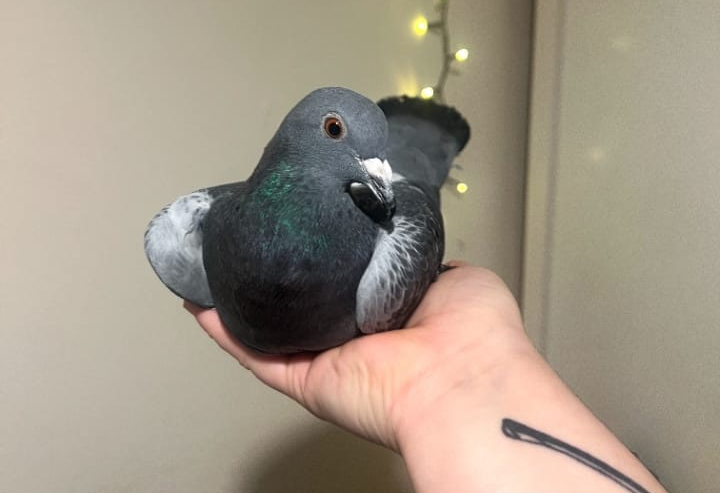
And what happened to our Victor? After his leg was amputated, he was able to make a full recovery — though not before several gruelling weeks of pigeon physiotherapy. He’s now “living a life of luxury” with a member of the rehab team, Mia. “It took him a couple of weeks to warm up to me, but now he never leaves my side,” Mia tells me. “His personality is one of a kind… the way he has adapted to life with one leg is commendable, and he’s a fighter for certain!”
Joining The Mill today gets you four editions every week, including brilliant investigations, in-depth political coverage and insights into the people and places who make your city what it is. You'll also be supporting the revival of high-quality local journalism in Manchester and you'll be minimising the chances any pigeons get massacred in the future.
If someone forwarded you this newsletter, click here to sign up to get quality local journalism in your inbox.