
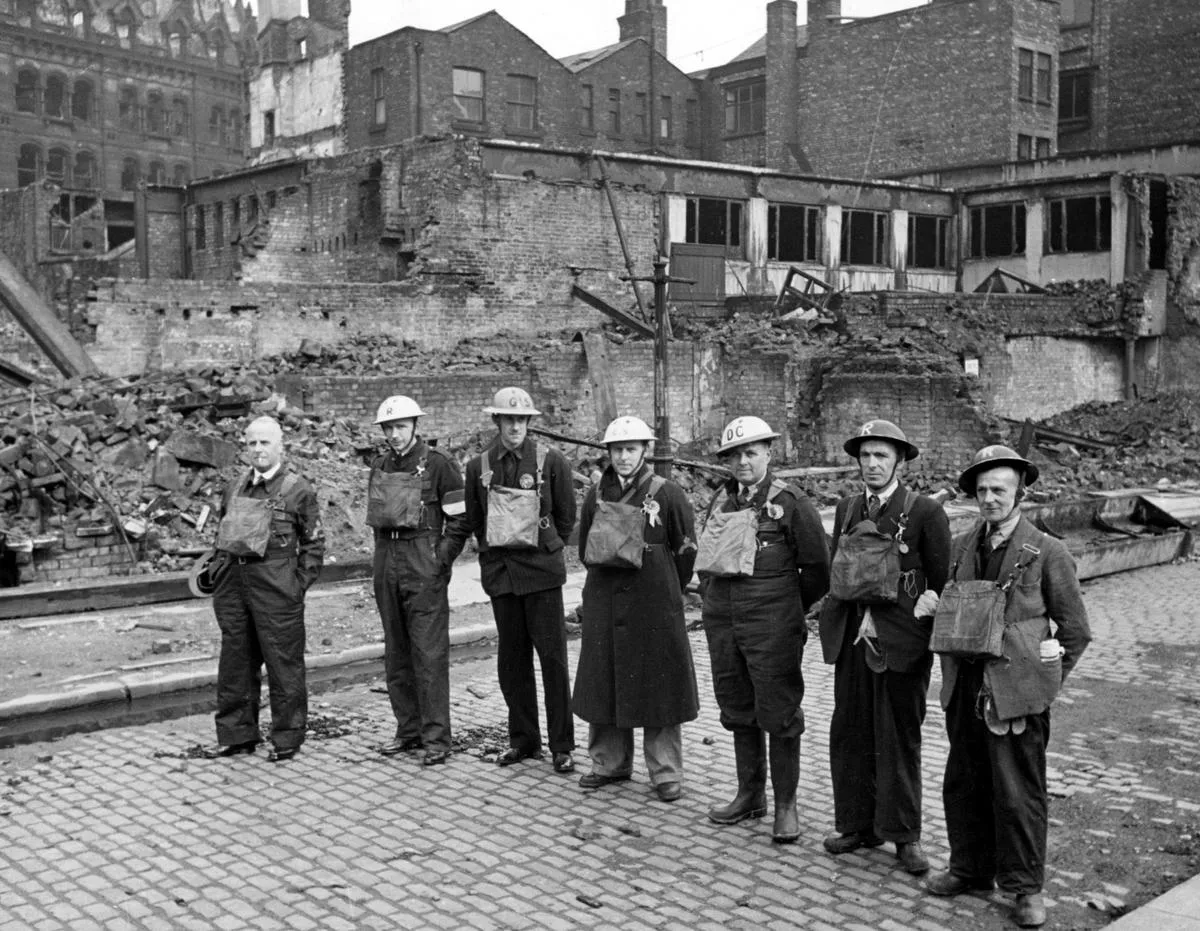
Dear readers — here we have it: part two of our trio by the Three Wise Freelancers. This Christmas marks the 85th anniversary of the Manchester (and Salford) Blitz, an attack on the two cities during the Second World War that cost hundreds of lives. Today, Dean Kirby looks past the statistics at the individual stories — people who lost their lives, people who saved the lives of others, and the people who wouldn’t let a few hundred bombs stop them from popping into town for a new hat. We hope you like it.
By Dean Kirby
It was just after dinner on Sunday 22 December 1940 when the bombers came. Observers on the coast saw them first: two waves of 270 planes droning across the English Channel and swarming north towards the world’s first industrial city region. As they approached – carrying 1,000 incendiary bombs and 272 tons of high explosives – the Luftwaffe pilots used the glossy black River Irwell as their guide.
Up until then it had been Christmas as usual in the theatres, shops, and households of Manchester and Salford, where people had been trying to make the most of the festive season despite the constant threat of air raids looming over their heads. At Lewis’s department store on Market Street, children queued for the toy fair and to visit Santa’s grotto. Cinderella was on at the Opera House, Robinson Crusoe at the Palace, and Hulme Hippodrome was putting on a production of Goldilocks and the Three Bears. Belle Vue Circus was inviting people to book early to watch the “crazy clowns” encounter the lions on Christmas Eve.
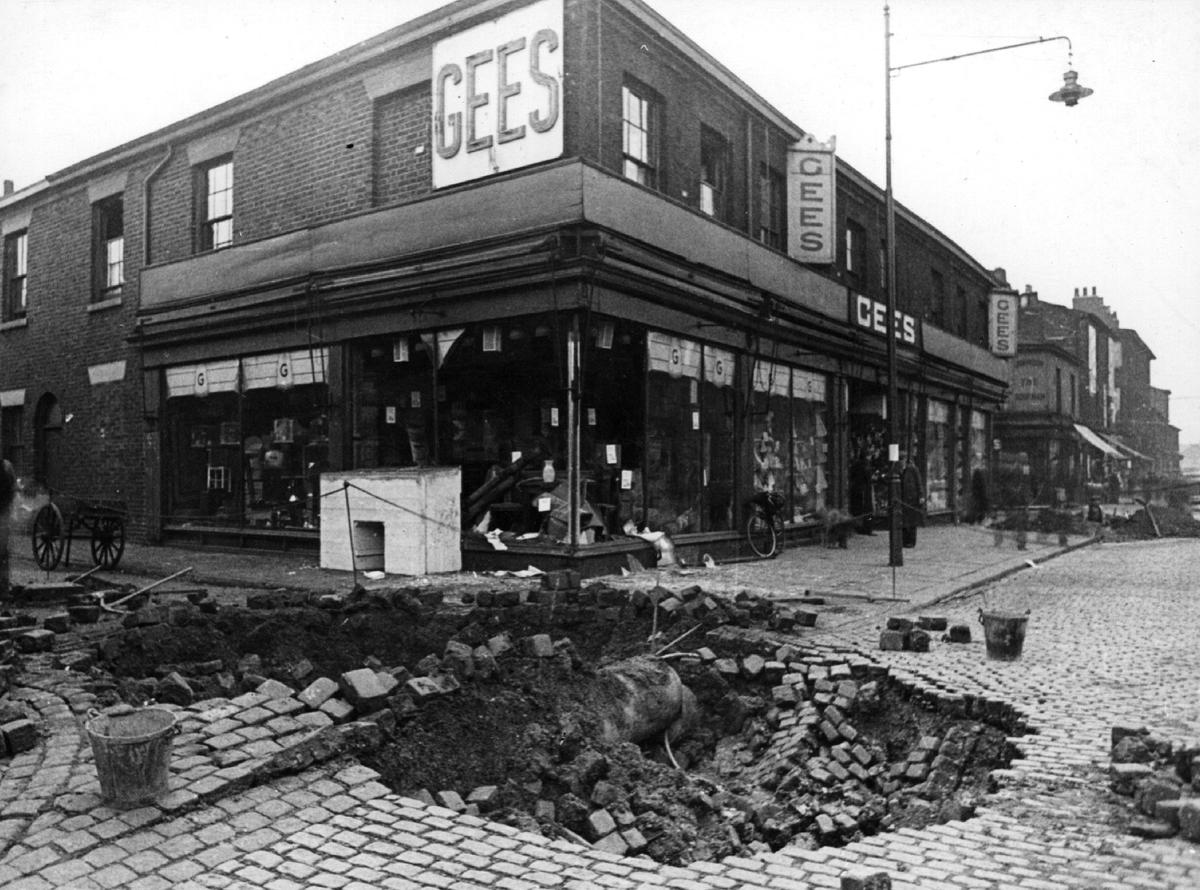
On one of Manchester’s busiest thoroughfares, Oldham Street, shops and their shoppers remained equally unfettered. “Never before has the public done its Christmas shopping so early and has so much care been taken to choose really useful presents,” one local newspaper wrote. Alongside the popular gifts advertised were brick bomb shelters, starting at £25.
In the quiet of St Ann’s Church, the pastoral team was busy wrapping presents for 500 of the city’s poorest children, who were preparing to spend Christmas Eve in hiding below the ground. The team were to tour the shelters and put toys on the bunks of sleeping children. It was 7pm when the first bombs fell in Albert Square.
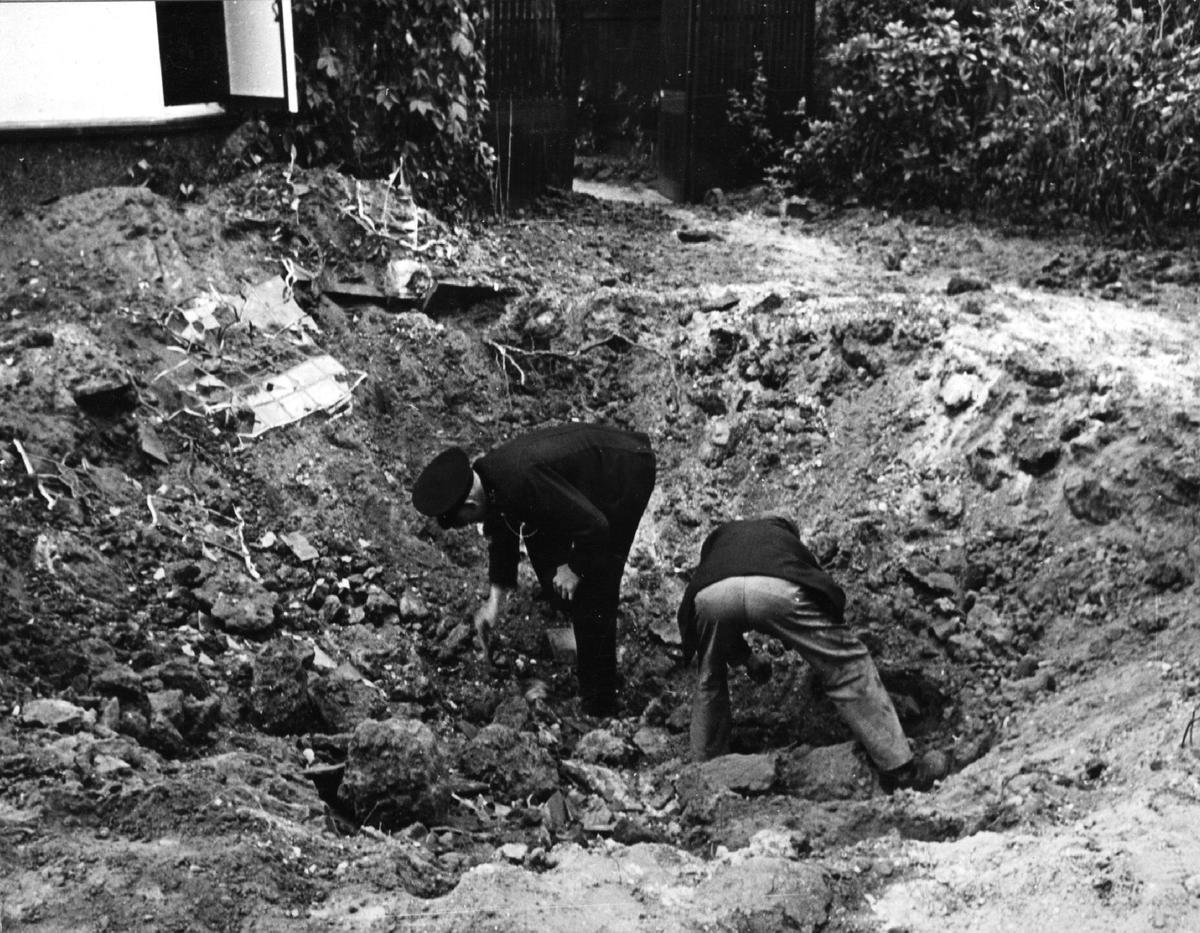
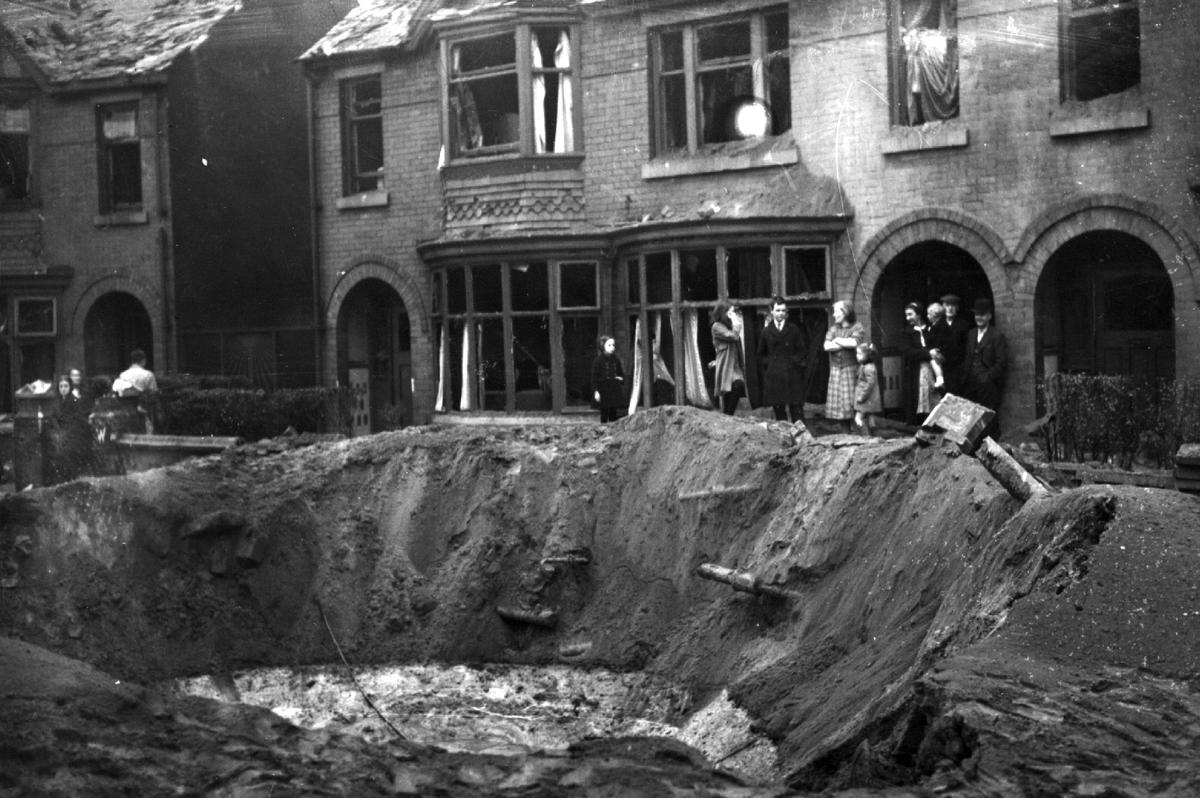
This Christmas marks the 85th anniversary of the Manchester and Salford Blitz: two relentless nights of bombing during which over 680 people died and 2,000 more were injured. It’s easy, perhaps, to see casualties killed before most of our lifetimes as nothing more than statistics, but original accounts give us clues about the people who lost their lives over those fateful few days: 11 people died when a bomb hit a Christmas house party on Gilda Brook Road, Eccles; a teenage girl, taking shelter in a bus where she thought she would be safe, was killed when a bomb crashed through the arches in Greengate; six police officers died when a landmine destroyed their station in Stretford.
Buildings too were among the casualties. In and around Piccadilly, so many warehouses were ablaze that commentators later described the scene as the worst in England since the Great Fire of London. The sky above Manchester glowed a hellish red that could be seen for many miles beyond the city. Among the burning buildings were the Royal Exchange, the Victoria Hotel, and Manchester Cathedral — which took a direct hit so strong that it lifted the building's lead roof, then sat it back down.
But through the flames, the two cities bore witness to incredible acts of courage. At Salford Royal, local schoolboys carried patients on stretchers to safety, and two nurses at Manchester Royal Infirmary smothered a firebomb that had fallen down a chimney into a ward. Bicycle messengers peddled through the falling bombs to report what was happening to the civil defence officials at Manchester Town Hall. Outside St Augustine’s Church on Oxford Road, four priests left the security of their shelter and took to the streets, putting out incendiary bombs and giving absolution to the dying. By the end of the bombing, two of them were gravely injured, and one of them was dead.
But on the morning of Christmas Eve, when the last of the bombs had fallen and rescue workers strove to pull bodies out of the rubble, something remarkable happened: people began arriving in Manchester to finish off their Christmas shopping. One of the shoppers, Grace Boardman, had brought her husband into town to show him the hat she had always wanted. “Incendiaries have burnt my house roof and finished off my turkey at the shop, but that’s not got me down,” she told the Manchester Evening News. “I’ll brighten myself with a new hat.” One man went into a tailor’s shop to enquire about a suit he had ordered for Christmas. Although the doors and windows had been blown out, the tweed suits were said to be “still draped in their elegant folds” as the shop assistants welcomed him inside.
Office clerks auctioned off a solitary banana salvaged from their bombed building to raise 21 shillings to buy more food for the fire crews who had been working to put out fires for two nights. Other stories that emerged in the days ahead included that of a young soldier who was buried for four days under the rubble of a hotel. When he was finally pulled out, he ate a hurried meal and then spent eight hours working with a rescue party before he disappeared – his name forever unknown.
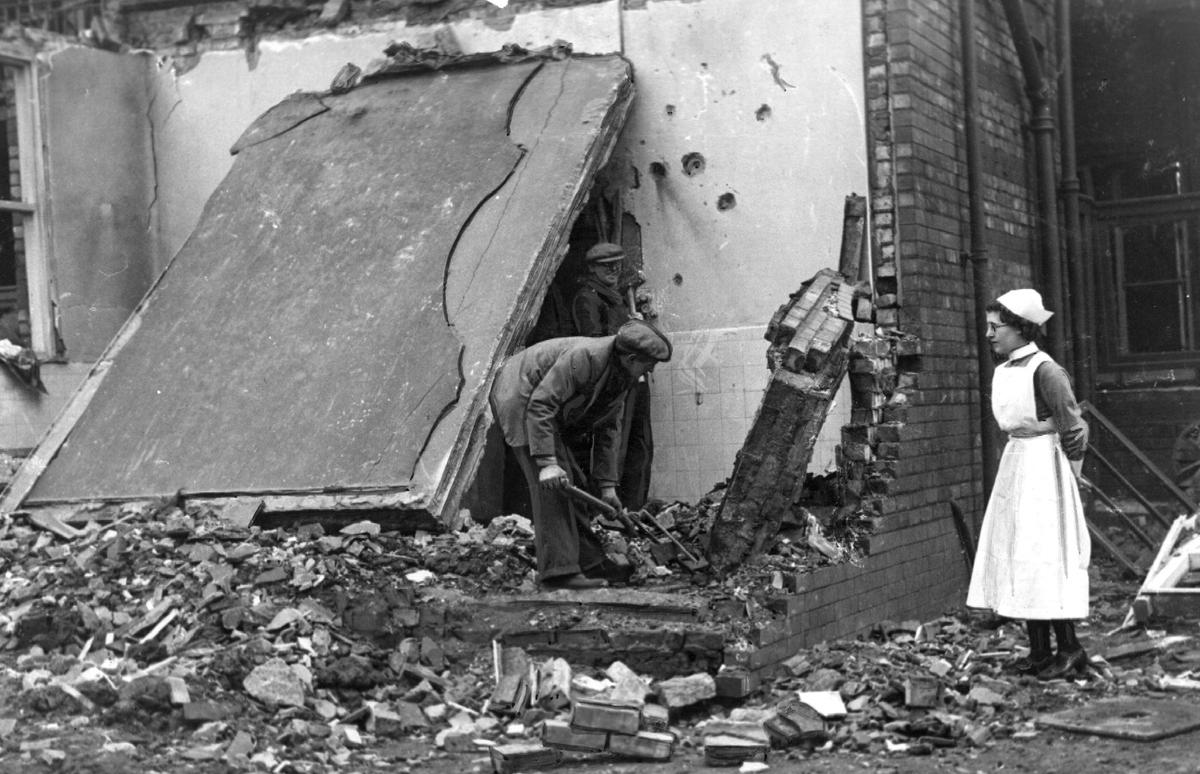
By some miracle, many families across Manchester and Salford managed to salvage Christmas Day in spite of the devastation all around them.
But, for those who lost loved ones in the Blitz of December 1940, Christmas would never be the same again.
Dean Kirby is a historian and author behind the Manchester History Club Substack. He also leads guided history tours in Manchester city centre.

If you enjoyed this article and you're not yet a Miller, here's how to change that.
The Mill produces great reporting and peerless writing about everything from education to politics, crime to conservation in Greater Manchester.
The Millers, our readers, get all our stories direct to their email inbox, and are part of a brilliant community that sends us story ideas and debates the issues of the day in the comments. Just hit that button below to join up for free.
If someone forwarded you this newsletter, click here to sign up to get quality local journalism in your inbox.