
Good morning Millers. While you sleep, The Mill’s investigations team sits up, bathed in the flickering light of an oil lamp, and trawls through property records. That’s how we spend the money we get from our paying members: buying up Land Registry records for unassuming terraced properties in north Manchester one by one, trying to find patterns.
As it happens, we found an interesting pattern recently: 130 properties around Moston, Harpurhey and Blackley, all purchased by four groups of companies that seem to be linked to each other in interesting ways. Even more interesting: In the year ending March 2025, we estimate that Manchester City Council paid at least £12m to two of these groups.
A lot of the conversation about Manchester’s property market focuses on the gleaming glass towers that loom over Deansgate. But we think there’s a lot we can learn about how the city works from studying this rather less salubrious corner of the market – specifically, how the housing crisis has resulted in masses of public money being paid into private hands.
Today's story about 130 Manchester properties being snapped up by a network of connected companies is the latest in our long-running series on the city's housing crisis. Our previous reporting has led to council investigations and serious revelations about the companies in charge of housing Manchester's homeless.
These stories are important, but they can take a long time to come together - a lot of staff hours and frankly, a lot of money. For that reason, today's is behind a paywall.
Remember: the Mill exists because of our 3,500 paying members. Without them, we wouldn’t be able to carry out in-depth reporting projects like this one, or our investigations into the University of Greater Manchester or the collapse of Manchester Pride.
If you'd like to take out a paid subscription to The Mill there has never been a better time to do so. You can sign up now with the button below for £4.95 per month. That's a £4 discount. In return for signing up, you'll get four newsletters a week and total access to our vast back-catalogue. We hope you get on board.

Reader survey: Since 2017, Colony has grown from a small cluster of coworking desks in Ancoats to eight fully fledged venues across the city – now they want to hear your opinion. Today we’ve teamed up with our sponsor to ask our readers five quick questions about how they work.
The survey is completely anonymous and takes 30 seconds to complete.
Your Mill briefing
🎒 Manchester City Council’s Children’s Services have been rated outstanding by Ofsted, eleven years after being rated inadequate. Julie Reid, the council’s executive member for early years, children and young people, told The Mill that the turnaround entailed “a whole change in culture,” with a focus on reducing staff turnover so that individual social workers aren’t overburdened with high caseloads. “We look after our social workers and our staff and that makes us want to stay.” Ofsted inspectors were particularly impressed with the council’s engagement of young people with experience of care, be they care leavers or carers. Called care consultants, these young people are paid by the council to help shape the services provided to those currently in care, and are involved in staff recruitment too. “As a result, services are becoming increasingly responsive, inclusive and child centred,” to quote the report. “Children told inspectors how their participation and engagement are contributing to their positive self-regard and self-worth.”
👷 Legendary actor Robert De Niro was in Manchester to break ground on what will be the site of the city’s tallest building, and tallest UK building outside of London. The tower, Viadux II, is being built by Salboy (owned by Fred Done, the founder of Betfred) and its upper floors will contain a high-end restaurant run by De Niro’s Nobu restaurant group, which has outposts all over the world. De Niro admitted to not knowing much about Manchester — which is kind of refreshing, honestly — but said “everyone is very nice, we're having a very nice time.” The tower was designed by Ian Simpson, the architect behind pretty much every other tower that makes up Manchester’s skyline. In fact, people kept referring to Simpson as the Godfather of the Manchester skyline with a hearty nod and wink. De Niro, apparently, paid no attention to the joke.
🏠 Speaking of groundbreaking, work has also started on a new sustainable materials and manufacturing centre in Atom Valley. One of Greater Manchester’s designated Mayoral Development Zones spanning Bury, Rochdale and Oldham, Atom Valley is expected to create a new manufacturing hub host to over 20,000 jobs, as well as 7,000 new homes. At a launch event, Andy Burnham said the new centre marks the beginning of an “ambitious decade of growth in Greater Manchester”.
💵 Between 2012 and 2024, Greater Manchester Mental Health Trust has paid over £5m in clinical claims to individuals or families whose relatives have died, been seriously injured or have otherwise been failed while in its care — according to data released via Freedom of Information.
🚍 OPEN NEWSROOM: Got strong feelings about the 192? Memories, fond, harrowing, or otherwise? Get in touch with Ophira about them (please) here.
The companies snapping up Manchester homes - and earning millions from the council
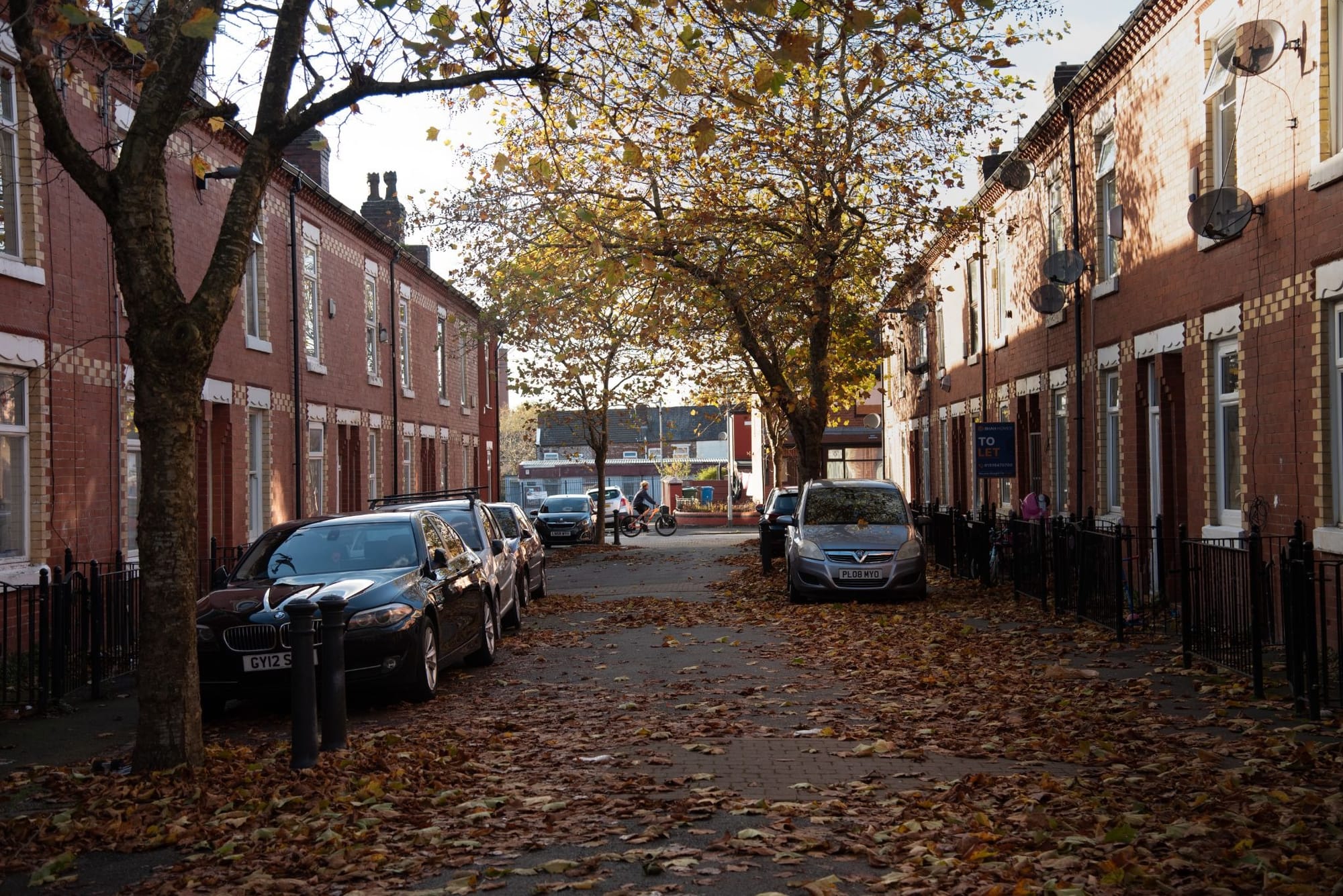
There’s nothing special about Silton Street in Blackley. It looks just like much of north Manchester: streets at right-angles, lined by modest redbrick terraces.
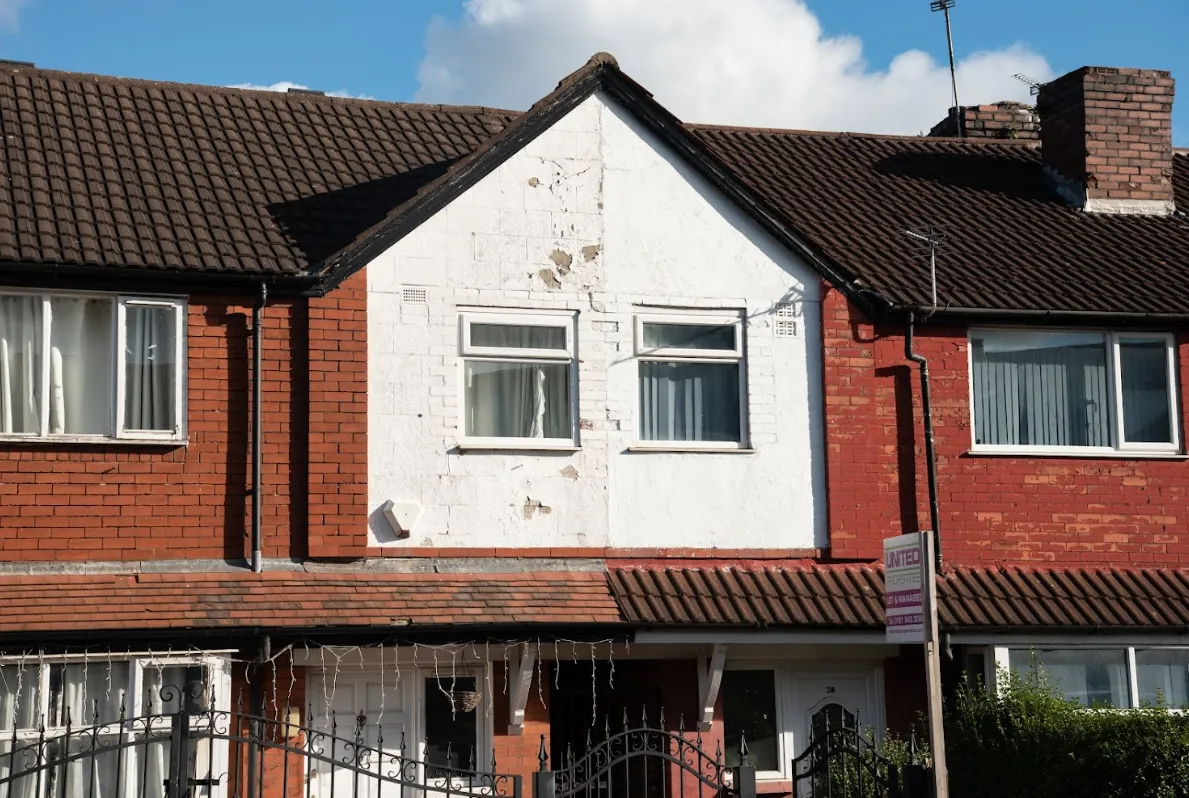
One particular two-bed house on Silton Street looks just like its neighbours: the same white PVC doors, one window per floor, upstairs and downstairs. Almost every window on the street displays the same anonymous nylon net curtains. But this house helps to tell the story of a side of the housing crisis in Manchester that can be hard to get a grip on.
Silton Street is only a few miles away from where gleaming new tower blocks jostle on the Manchester skyline. On the face of it, this is a different world. But it turns out there are opportunities even in Blackley for investors looking to profit from the housing crisis.
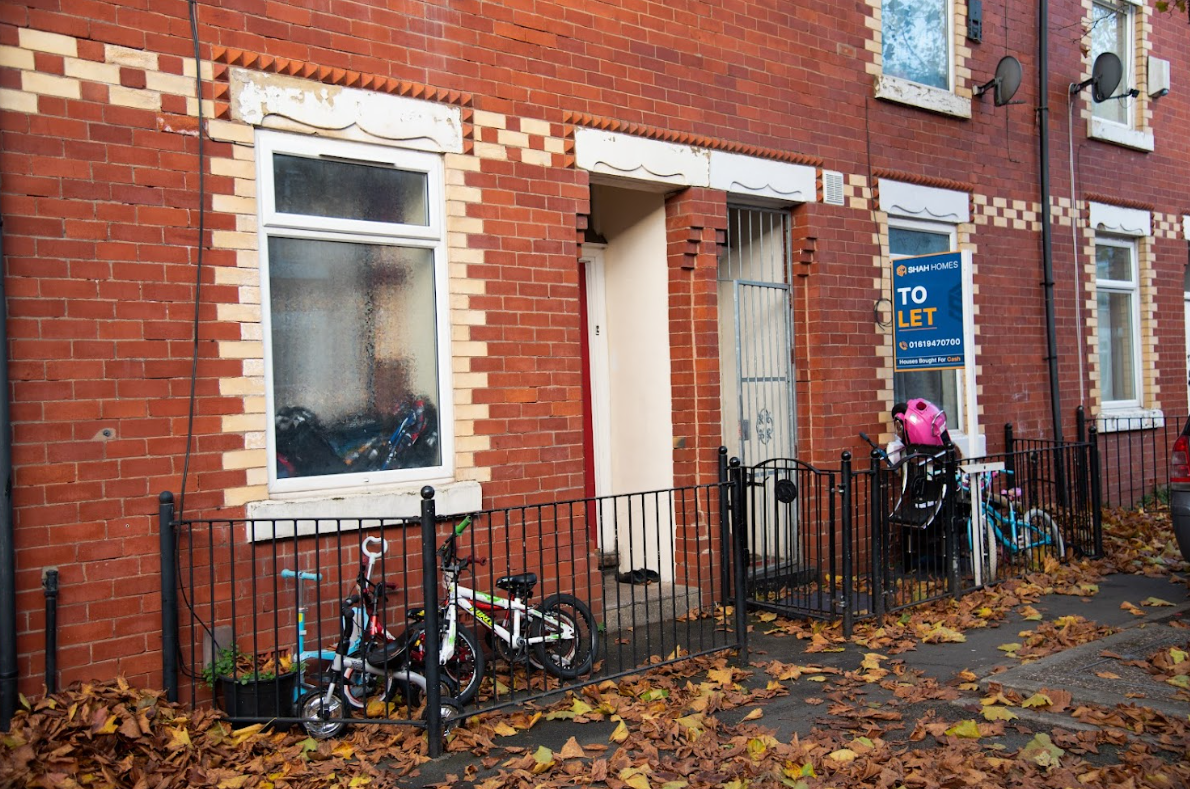
Our story is about four property investor groups that have been buying houses such as the one on Silton Street. They’ve been especially active in M40, M8 and M9 (including Moston, Harpurhey, Blackley), where they have collectively bought at least 130 properties, according to Land Registry records examined by The Mill.
Both Manchester and the UK in general are full of property investors – so what makes these four groups special? One thing is their combined scale and rate of growth. Twenty years ago they owned little or no property; today we estimate they own at least 130 properties in these three postcodes alone, for which they paid over £13m.
A second is their close relationship with the council. In the most recent financial year ending March 2025, we estimate Manchester City Council paid at least £12m to just two of these groups, much of which seems to be for housing homeless people.
But the most interesting aspect of these four groups is the hard-to-find connections between them. Publicly, the groups say little or nothing about these links. Uncovering them means poring over Companies House filings and social media accounts.
To be clear: there is no suggestion of wrongdoing here, either in the housing investments or in the links between these groups. But anyone who lives in Manchester should be interested in seeing what’s going on below the surface of this particular crisis.
A Manchester City Council spokesperson told us: “While demand for temporary accommodation exceeds the available supply of social and council housing, we – like councils across the country – need to source accommodation from private landlords on an ongoing basis. The scale of the challenge means that this necessarily includes working with landlords who run multiple properties.” They added that every house they use is inspected to ensure it’s of a reasonable standard and “we would not work with providers who we did not believe to be operating properly and providing acceptable value.”
Meet the buyers
The first of these four groups needs no introduction for regular Mill readers. We first wrote about Guy Horne and David Searle’s rapidly growing HSPG (Hornsearle Property Group) back in August 2022. In July last year we traced the way HSPG managed to generate a £1.2m (or 213%) overnight profit by flipping a property in Harpurhey. Manchester City Council, which found itself paying rent to this property’s now-defunct buyer, later described the HSPG deal as “market manipulation”.
You can help make great journalism happen.
At The Mill, we believe Manchester deserves high-quality journalism. By signing up as a member, you don’t just get the rest of this story — you get four great features delivered to your inbox every week, and the knowledge that you’re supporting a new model of local news, that puts quality and honesty first.
SubscribeAlready have an account? Sign In