
In 2001, George Young was working at Warwickshire Museum when she was set an unusual task by her boss. She was to climb in the back of a transit van and accompany an ancient, mummified person on a journey from Warwickshire to Birmingham.
It was dark in the back of the van. At first, Young thought she was there simply as a courier, caring for an object in transit. But as the journey went on, something began to trouble her. “We don’t do this for anything else,” she remembers thinking. “Am I a companion? Am I a watcher?” It forced her to reflect on how differently museums treat human bodies from all other artefacts.
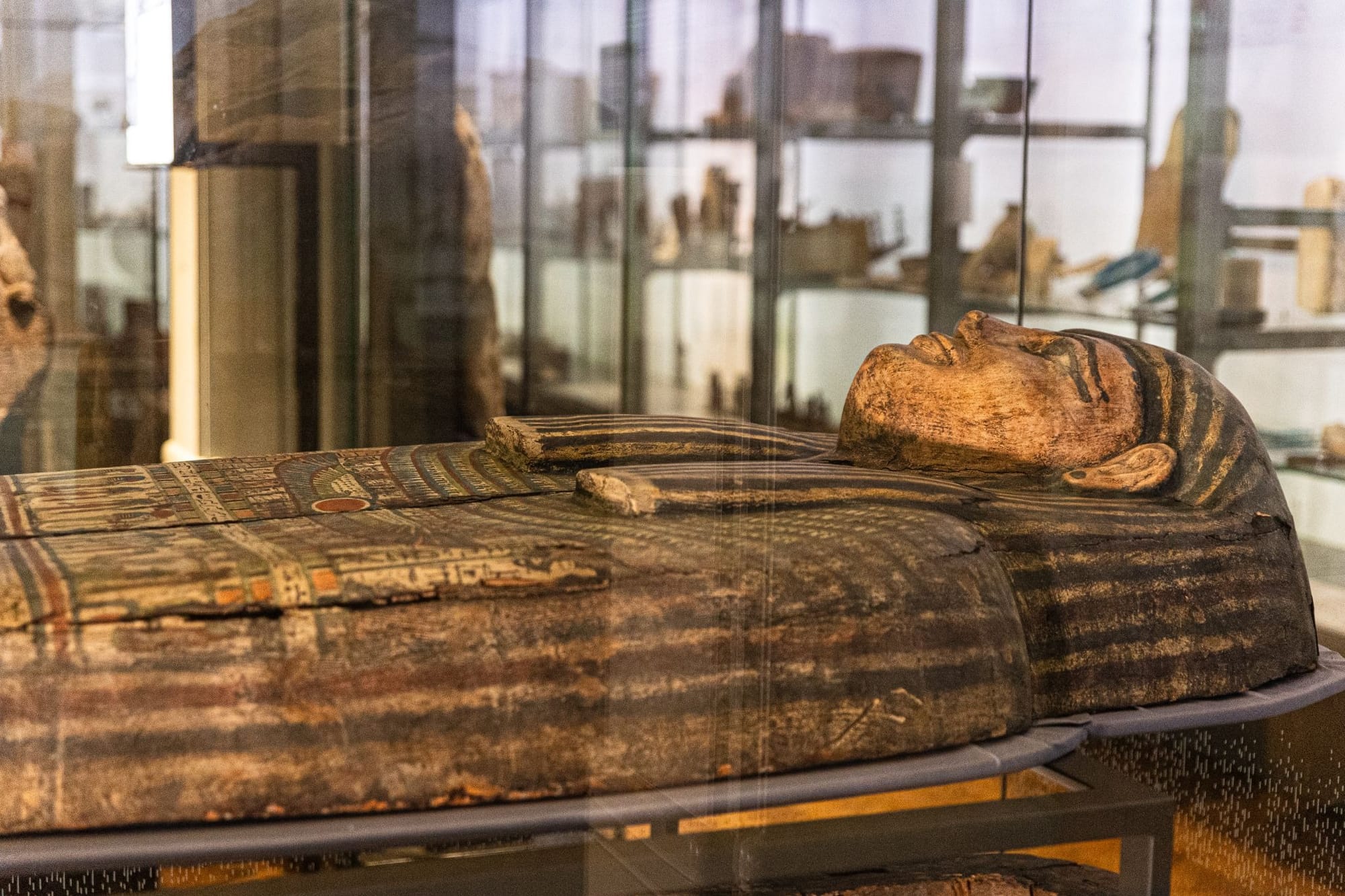
More than two decades later, Young is Manchester Museum’s head of collections and exhibitions, where a much bigger conversation about precisely that distinction is underway. The speakers are gathered to discuss a momentous decision recently taken by the museum: removing the body of a mummified Ancient Egyptian woman, Asru, from display. Asru died around 2,700 years ago, and for the last 200 of those years has been on display in Manchester.
The museum’s decision prompted a fair bit of backlash in some quarters, with the Daily Star running the story on its front page, under the headline: “WOKE LIKE AN EGYPTIAN.”
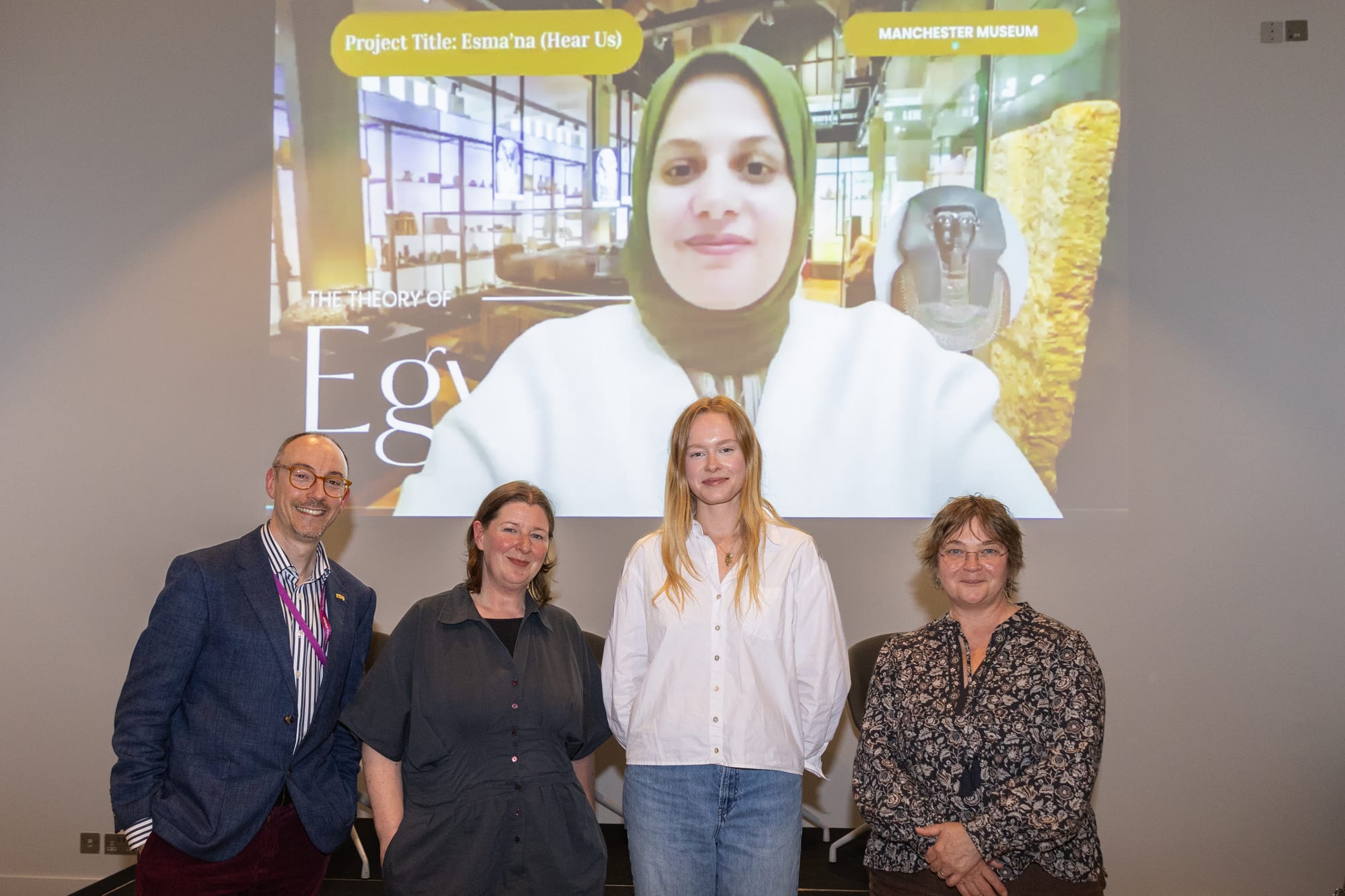
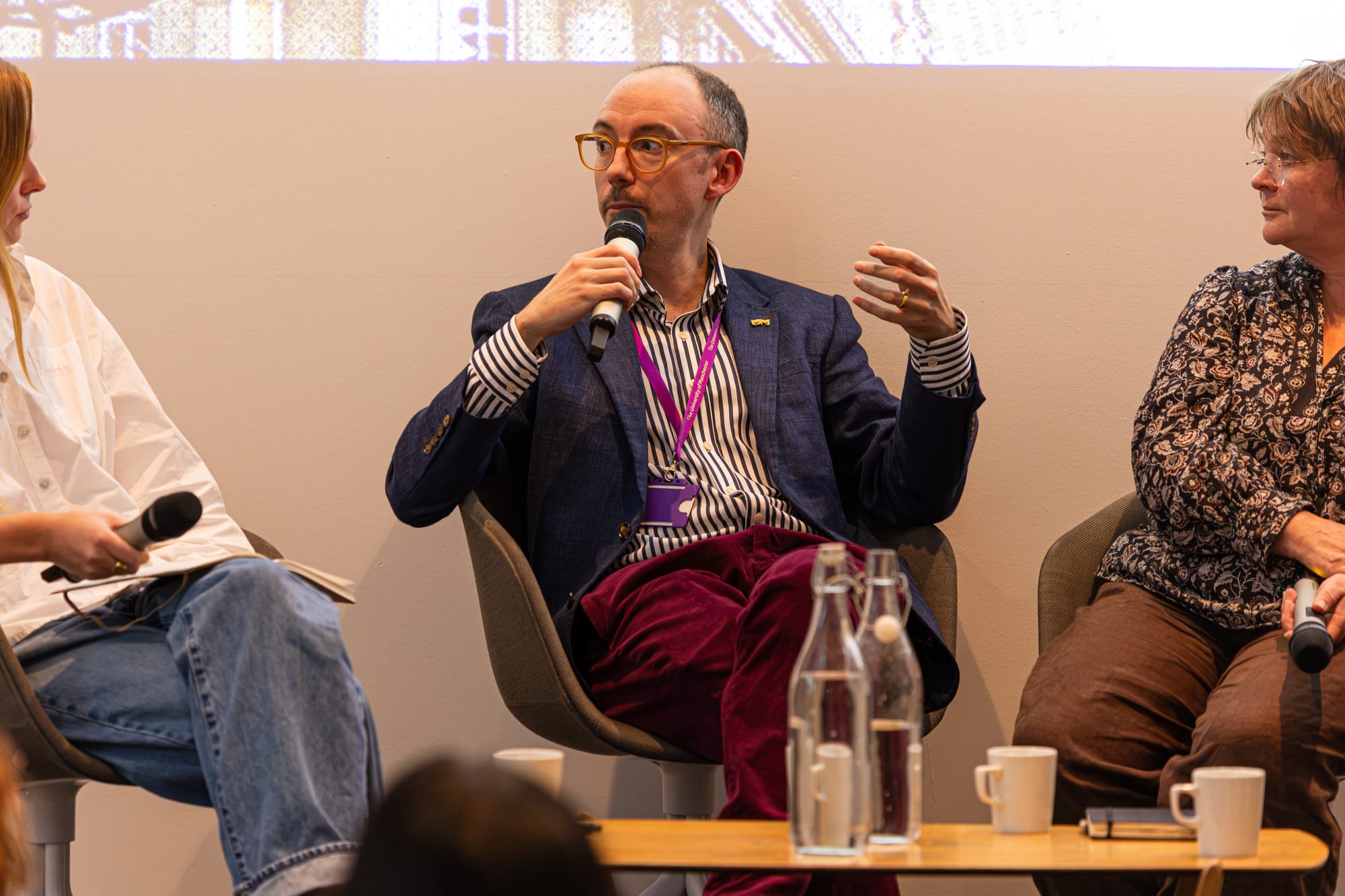
On 24 September, Dr. Campbell Price, curator of Egypt and Sudan, Professor Mel Giles, professor of European history, and Marwa Elhosary, a researcher specialising in Egyptian cultural heritage, joined Young on stage for a discussed convened by The Mill, to ask: why did the museum take this decision — and was it the right one?
Changing perspectives
In 2020, Manchester’s Museum's ‘Golden Mummies of Egypt’ exhibition opened to much fanfare. The showcase toured internationally, from the USA to China, featuring the CT-imaging technology visitors have come to expect, which means they can look beneath the wrappings of the mummified bodies on display. But when the exhibition returned to Manchester, after much consideration, Price and the other curators made a significant decision. They would no longer show images of CT scans alongside the bodies. Why not? “I really wanted to focus on the ancient sources, which say the dead have become divine,” Price says.
For Ancient Egyptians, mummification was a process of transformation, of becoming God-like — it was not simply about physical preservation. Price argues that modern biomedical investigations, like x-rays, undermine to that understanding.
This was a first step towards reconsidering whether Asru’s body should really be on display at all. One of the museum’s guiding principles has been to try to understand what Asru herself would have wished for.
That’s not easy, so many years on. “I cannot tell you what Asru absolutely wanted. I can make a best guess based on studying Egyptology for 25 years,” Price says. As a curator, he “wanted to make this point that you are encountering a transformed form that's not really human at all.” “An Egyptian would want to distance themselves from a CT scan that pointed out all their human bits that went wrong,” he continues.
But, as Giles — whose work has focused on Iron Age civilisations — argues, we should think carefully before removing the dead from among us. While she respects the museum’s decision to remove Asru, she says there’s a strong argument to be made for keeping human remains on display. Human societies have had complex and sometimes contradictory relationships with the dead for thousands of years; practices across the Neolithic or Iron Age involved a “hands-on relationship with the human body”, she says.
There’s a real educational value to encountering human remains, Giles believes, especially in a culture like ours that often lacks literacy around grief and death. Encounters with the ancient dead, within a safe environment like a museum, can open up discussions around a reality we will all confront. “The dead act then as kind of ambassadors to help us understand more about time, mortality, and our own identity, our own wishes,” Giles says. For her, removing every body from display risks feeding into a different kind of problem, where death is made even more distant from ordinary life — she says it would even be “anathema” to some ancient civilisations.
Elhosary, on the other hand, offers a different perspective. She describes the practice of displaying ancient bodies as a “disregard for human dignity”, drawing on research she has conducted with Egyptians, where all her participants rejected the practice of displaying Ancient Egyptian remains. Importantly for Elhosary, the stories of the dead can be better told without their bodies on display, either through video or audiovisual displays.
And there were other issues when it came to Asru’s display, ones that were less about considering the wishes of the dead, and more about how visitors interacted with the exhibition. Young says that there was no way to section off the part of the gallery where Asru’s coffin lay, so people might be confronted with Asru’s body without expecting it. Then there were those people who might not visit precisely because Asru remained open to the public.
This mattered to Young because a fundamental principle underpinning the guidance on human remains in museums is to do no harm. 20 years ago, Young says it was easier to brush off the idea that Asru’s public display constituted harm, but as societal expectations have shifted, that position has become harder to maintain.
Splits in opinion
There was no decisive mandate for removing Asru. After a year-long consultation, Young describes the split between those who supported keeping her on display and those who supported removing her, as being within a “hair’s breadth”.
Yet while there was no obvious public outcry that the museum was responding to, the consultation did reveal competing ideas about what museums are for, and interesting cross-consensus on the treatment of human remains. Young says the same themes arose again and again: education, respect, care. The disagreement was over what those words actually required when it came to storing the dead.
While Manchester Museum ultimately chose to remove Asru from display, Young is careful not to suggest that putting her in storage has resolved the ethical problem. It “is not a comfortable place for the dead to rest, either,” she says.
So the question of what happens to Asru now has become the next stage of the museum’s thinking, with many visitors having already expressed concern for her whereabouts. Young says they hope to improve the spaces in which human remains are stored, drawing inspiration from other countries where dedicated places of rest have been created at museums. In some circumstances, returning the dead to their descendants and homelands is the right thing to do, but there's no indication yet that this will happen to Asru. Museums, Young acknowledges, are “slow beasts”.
The panel appreciates that there are as many as ten generations of Mancunians who have had a relationship with Asru over the past two centuries, and, for some, that relationship may have just been severed. But Price wants to make one point very clear: “We’re not erasing Asru. Absolutely not. Asru’s story is absolutely central, as we’ve heard tonight”.