

I’m on a Zoom call trying to explain through hand signals to an 83 year old that I can’t get my microphone working. Thankfully she’s learned patience with luddites like myself. Sue Hall worked for two years in what was for a time the tallest building in the country, from the day it opened, and she’s more than happy to tell everyone about it.
Born in a working class Collyhurst pub – The Milan – in the latter years of WWII, Sue and female friends of her upbringing weren’t expected to get fancy office jobs. But at just 15 she joined the Co-operative Insurance Society (CIS). Her first setup was a tall wooden stool and desk in a converted aeroplane hangar in Cheetham Hill. Mice scurried past her feet as she collected files from the basement, and she thought to herself: “What are we doing in this place?”
As the times changed, 34 out of 35 girls from her Moston Lane Secondary class joined the CIS, and at lunch some of them would walk to the shops for sweets or crisps surrounded by smog so thick that she couldn’t see the friend by her side.
But it was a good employer with lots of prospects, so she hung around. Four years later and the city air had cleaned up enough for her to walk south to Shudehill and crane her neck up at the monolith of glass that was soon to be her next place of work: Manchester’s first skyscraper, and the country’s tallest building, the CIS Tower.
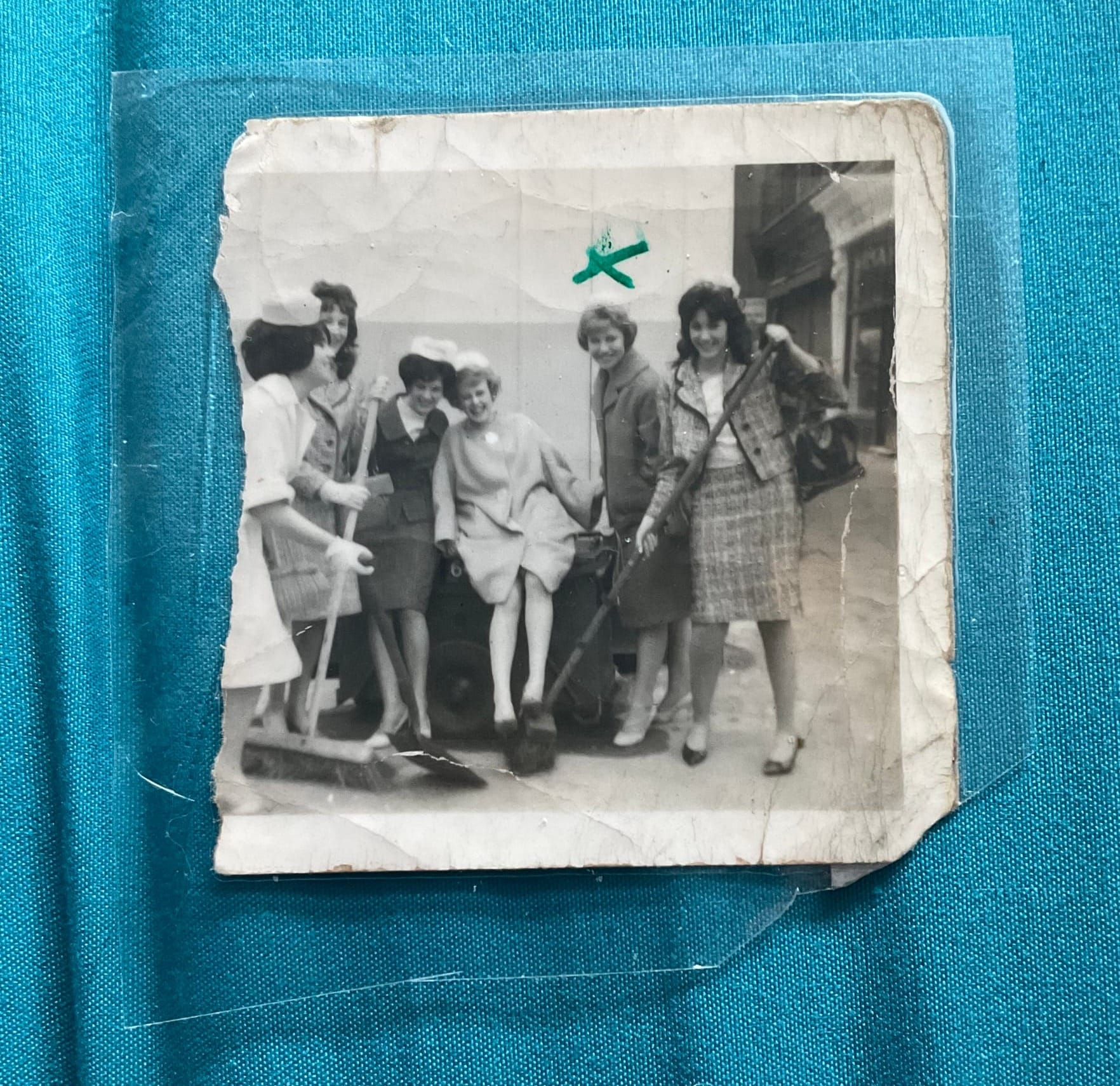
Like the intrepid journalist I am, I ask Sue what sort of fashion people wore then. She seems unsure of how to answer so she tells me “just normal clothes”. Her daughter Lynda is on hand beside Sue in her plush-cushioned tall-back arm chair. Lynda shows me a picture of Sue and her work friends, in kitten heels, pillbox hats and tweed blazers. She says they wore old-fashioned clothes. Sue retorts “You might think they’re old fashioned, but I don’t!”. Sue has mild dementia, but her memories of those years haven’t faded one bit.
Manchester’s first skyscraper
Opened in 1962, the CIS Tower was a testament to Manchester's ambitions in the new age of post-war Americanism: cars everywhere and buildings ever higher. For inspiration, the architects looked to the United States, specifically the Inland Steel Building in Chicago which opened four years earlier. The Co-operative wanted to stride into the modern world with the bravado of its American cousins, so steel and glass were chosen over concrete or stone. After all, it was easier to clean smog off glass than rock.

Hello! Sorry to interrupt, the rest of the piece is in just a sec. I’m Alec, the writer of this article.
I’m sure you’ll all have fond memories of Manctopia’s grandfather figure. I’m also sure many of you will feel a hint of sadness when you walk past its current abandoned state.
I'm glad to say that my curiosity led me to dig a little deeper into the history of this iconic building. It did not disappoint. Still to come is hedonism and hierarchy, and what the future might hold for what was once the country’s tallest tower.
I’m not sure any other modern building in the city will ever be so unique, or hold so many stories. Spending the time researching and then telling these stories is something I can do thanks to your ongoing support.
Sign up today using the link below and you can read not only this piece, but the rest of the quality journalism we’ve been doing since 2020.
This article is for paying members only
Join The Mill for full access to this story, plus four great features delivered to your inbox every week — and the knowledge that you're supporting a new model of local news that puts quality and honesty first.
From £8.95/month · cancel anytime
Get full accessAlready have an account? Sign In