
Dear readers — hello and welcome back to The Mill after a long bank holiday weekend. We hope you all took your briefing-less Monday in relative good grace and found succour in the prospect that waiting for you on Wednesday, if you could just hold out, would be a fascinating little insight into the world of Right to Buy.
Greg Barradale, writing his first Mill piece, has been researching what are now known as ‘yo-yo homes’. These are homes sold by the council to tenants under the government’s Right to Buy scheme, then bought back — often as little as five years later — for significantly more as the council attempts to address the social housing shortfall. The total loss on these 30 homes, we’ve calculated, is £3 million.
This year, The Mill is aiming to reach 5,000 paying members. It’s an ambitious target, we’d need another 700 or so to make it, but it’s only thanks to our members that we can keep bringing in new journalists and taking on more ambitious stories (without the worry of being wiped out by an expensive lawsuit, that is).
By joining The Mill you become part of the solution to a problem we talk about often: The shocking degradation of local news around the UK. While most publications are making cuts, laying off hundreds of journalists in some cases, we are one of the few newsrooms going the other way. Let’s keep that going.
If you do join, you’ll get roughly 10 extra editions of The Mill every month, including beautiful features, gripping investigations and writing that makes you feel closer to the people and places around you. It would be great to have you on board.
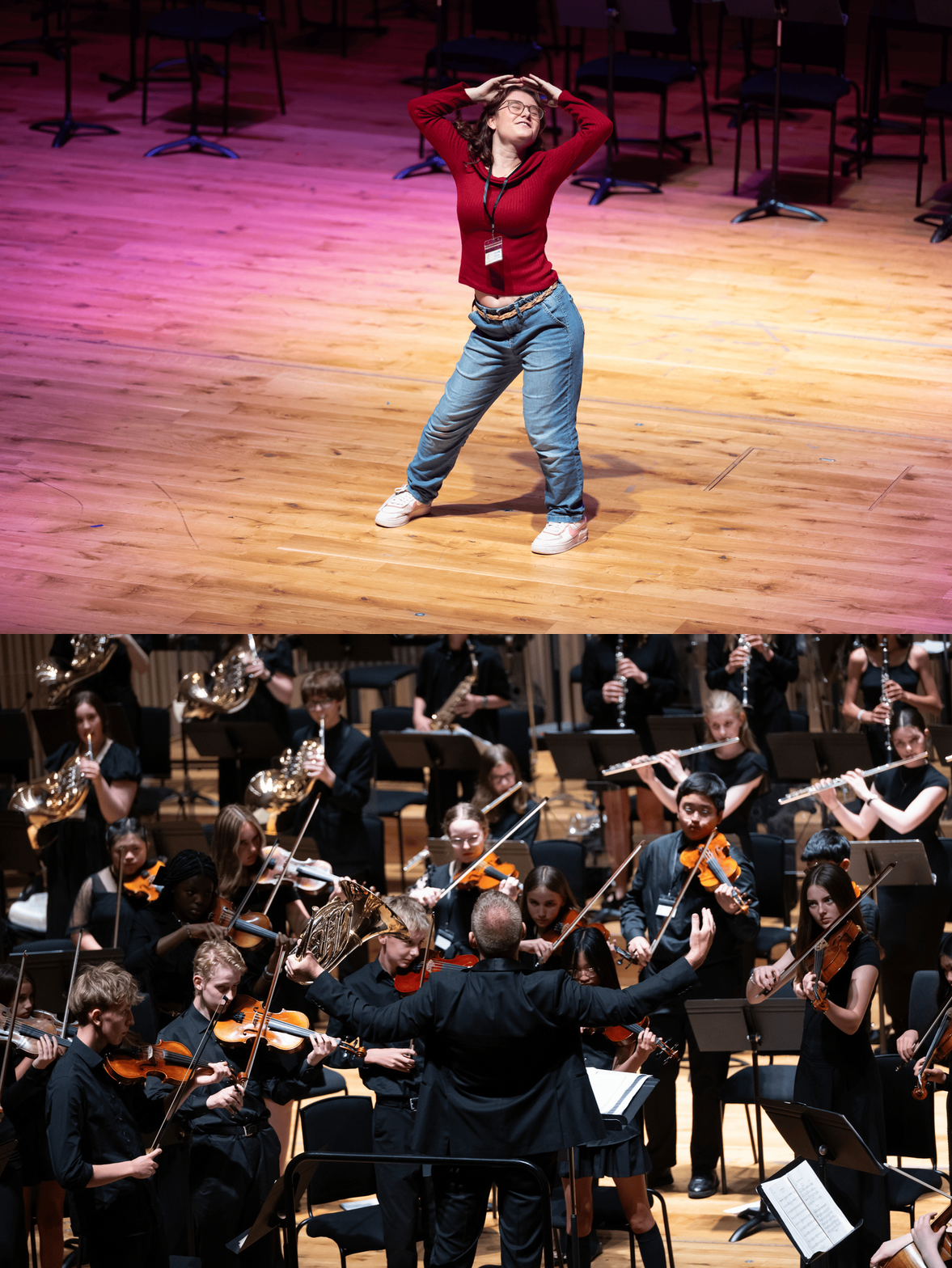
Chetham’s summer school nurtures the next generation of musical greats
Chetham’s School of Music's annual summer school returns from 3rd to 9th August. The week-long course inspires young performers through action-packed days filled with workshops and invaluable personalised guidance. It’s a one-week immersion into the life of a student at the UK’s largest specialist music school, where attendees learn from industry greats, meet fellow young musicians and perform in the iconic Stoller Hall.
Chetham’s is committed to nurturing the next generation of musical talent, regardless of financial background. To learn more about the summer school and the financial support that’s available, click below.
Your Mill briefing
💸 Manchester is officially the “influencer city”. Deansgate’s towers were featured in The Times over the weekend, which spotlighted an influencer boom that’s adding millions to the local economy. The centre is teeming with young content creators keen to capitalise on the “London lifestyle for half the cost”, and students who used to pull pints at the pub to earn some extra cash can now rebrand as micro influencers. If you’re keen to try your hand at the lifestyle, the article says these influencers tend to congregate at certain venues because of their “aesthetic appeal”. As it happens, all three of the places listed (Onda Pasta Bar on Oxford Road, Eggslut on Deansgate and Morning Glory in the Northern Quarter), were reviewed by The Mill for our viral food review article. In hindsight, it seems that, perhaps, The Mill team is rather tasteless.
🏆 Speaking of Manchester, as indeed we always are, the BBC have recently thrown yet another hat into the ‘UK’s second city’ debate, with a radical suggestion: here! To answer their question ‘Is Manchester considered England's second city?’ they turn to friend-of-the-Mill Andy Spinoza, who says as follows: "The second city debate to me is a league table that London is always going to be top of… So once you put London in that category of world cities, I think Manchester has a claim to be capital of the rest of everything.” We love the new title (Capital of the Rest of Everything), even if we are a little confused by it (Andy, feel free to elaborate in the comments).
🤖 The Guardian went along to a gathering at the Motel One on Cross St (right over the road from our offices as it happens) organised by an AI bot named after Elizabeth Gaskell. “Gaskell” is one of a new OpenClaw species of AI assistants, and was left with the responsibility of arranging the gathering all on its own, inviting AI practitioners, speakers, journalists and organising sponsors. The verdict? “It was a pretty good night.” Although it was preceded by the bot trying to get the UK spy agency GCHQ to sponsor the evening, and attempting to order over £1,000 worth of charcuterie boards.
👨⚖️ Yesterday Ben Daye, a 33-year-old artist from Moston, pleaded guilty to two counts of criminal damage after admitting to spray-painting the tag “Howard” in two locations in the city centre. Prosecutors said Daye was in fact responsible for the tag appearing all over Greater Manchester, but he says this isn’t the case. “People started taking it on themselves,” Daye told the court. “It spiralled away from what it was meant to be.” We were the first to interview Daye as the artist behind the Howard tag in December.
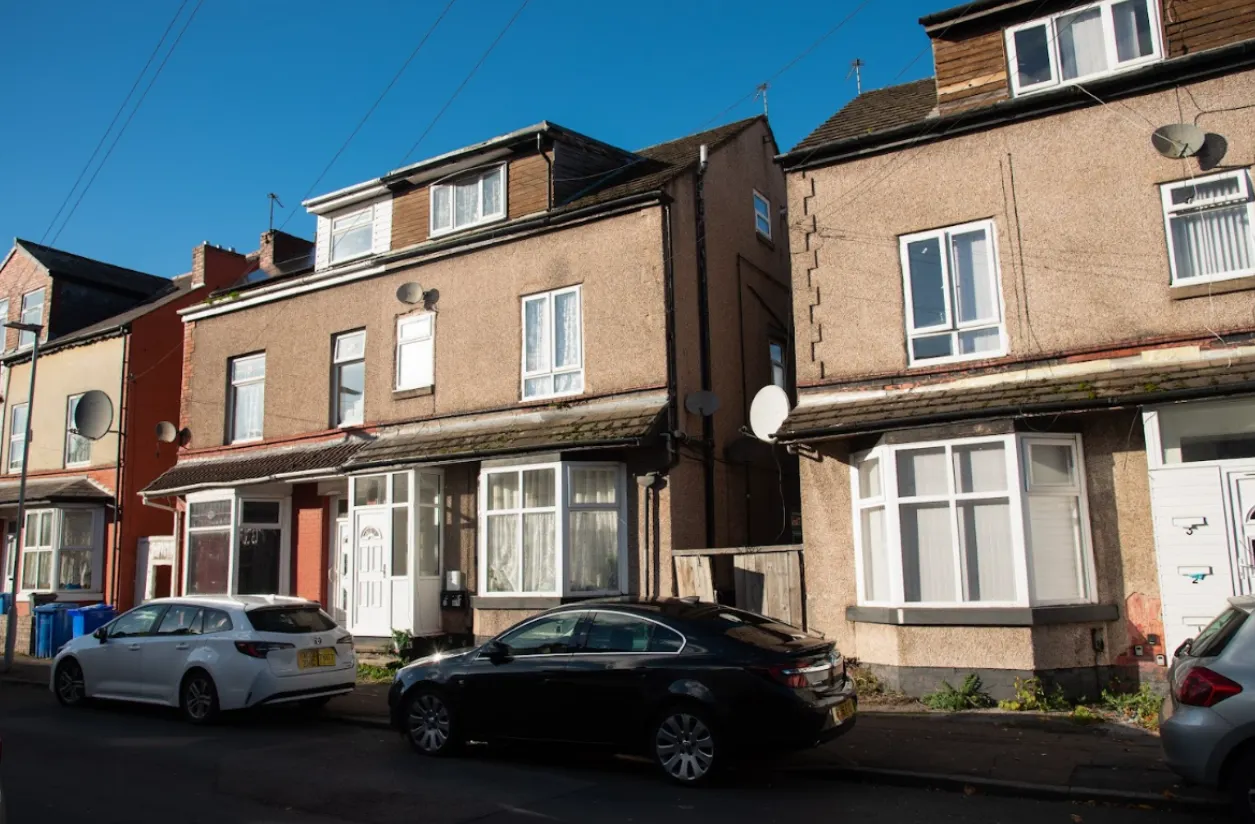
‘Yo-yo homes’: How Manchester lost £3 million on 30 properties through Right to Buy
Top line: Manchester City Council (MCC) has lost £3.3 million since 2020 buying back properties it used to own just a few years previously.
We have discovered 30 properties sold under the Right to Buy for a total of £1.17m, and then repurchased for £4.47m.
These properties have been called yo-yo homes, and are the subject of extensive reporting by the Big Issue. Manchester’s leaders have been purchasing them in a bid to address the shortfall in social housing — a shortfall created in part by Right to Buy.
We reached out to Gavin White, MCC’s executive member for housing and development, who told us the city’s leaders hoped for Westminster to speed up reforms and stop similar profits being made in the future. “The purpose of Right to Buy was that people could own their own homes, and families could live there. If you’re just buying it then flipping it on for profit, that’s not right is it? That’s against the spirit, I think,” said White.
What’s going on? Profits of almost £200,000 a pop are being made in Manchester, as tenants buy homes from the council at a discount and then sell them back. Meanwhile, in effect all MCC has to show for £3.3m of taxpayers’ cash is the same properties it owned a decade earlier.
To be clear, MCC did not choose to sell these properties. The national policy of Right to Buy (first introduced in 1980 by the Thatcher government's Housing Act) means councils must sell to tenants who meet eligibility criteria.
The homes discovered by The Mill were re-purchased between five and 10 years after the initial sale. During this gap the council can’t reclaim any of the Right to Buy discount, but has the right of first refusal when the homes come up for sale.
In most cases, the properties were sold back to the council by the ex-tenant who bought them at discounted prices.
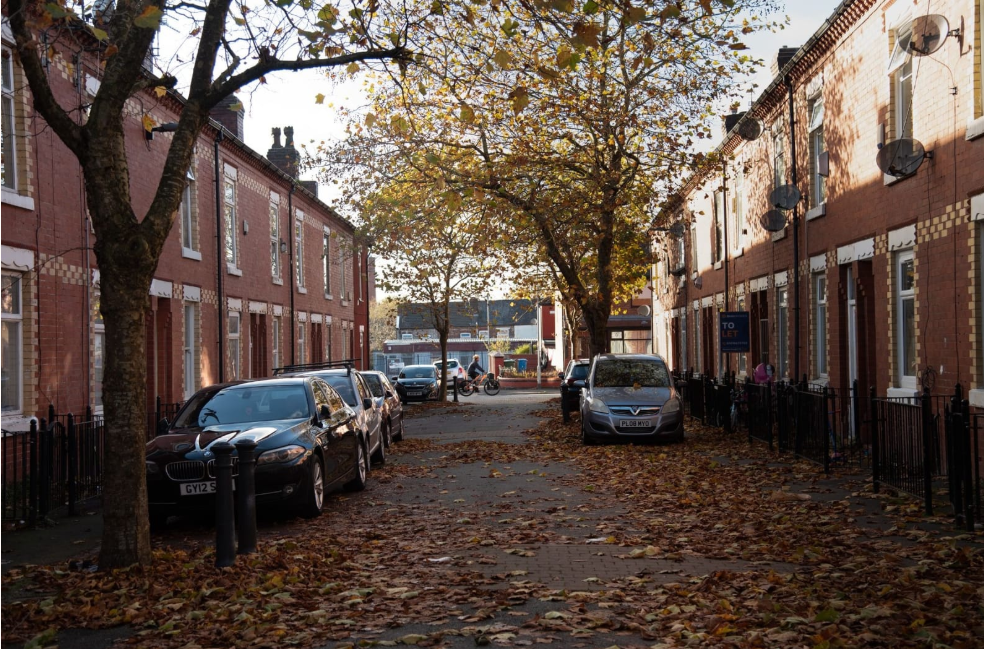
Context: This all comes amid MCC’s efforts to address the 20,000 household-strong waiting list for social housing in the city, and alongside initiatives such as a £2,500 cash offer to those who move to smaller homes.
White told the Mill the majority of the homes re-purchased were in North Manchester and larger properties which were more expensive to build from scratch. The Mill understands most have been rented out as social housing stock – and none have subsequently been sold off again.
You can help make great journalism happen.
At The Mill, we believe Manchester deserves high-quality journalism. By signing up as a member, you don’t just get the rest of this story — you get four great features delivered to your inbox every week, and the knowledge that you’re supporting a new model of local news, that puts quality and honesty first.
SubscribeAlready have an account? Sign In