

This story was published by The Mill: an award-winning email newsletter that sends you great stories, proper local journalism and peerless writing about life in Greater Manchester. 58,000 people have already joined our mailing list. Just hit that button below to join up for free.
I was up in the attic, most definitely not looking for books. It was the fag-end of summer, so I was probably stowing camping equipment away, or looking for one of the things that, when all other hiding places have been exhausted, it was deduced must have migrated up there. But books are hard to avoid in the attic. Unruly stacks of them, never seeming to deplete in numbers despite occasional trips to the charity shop.
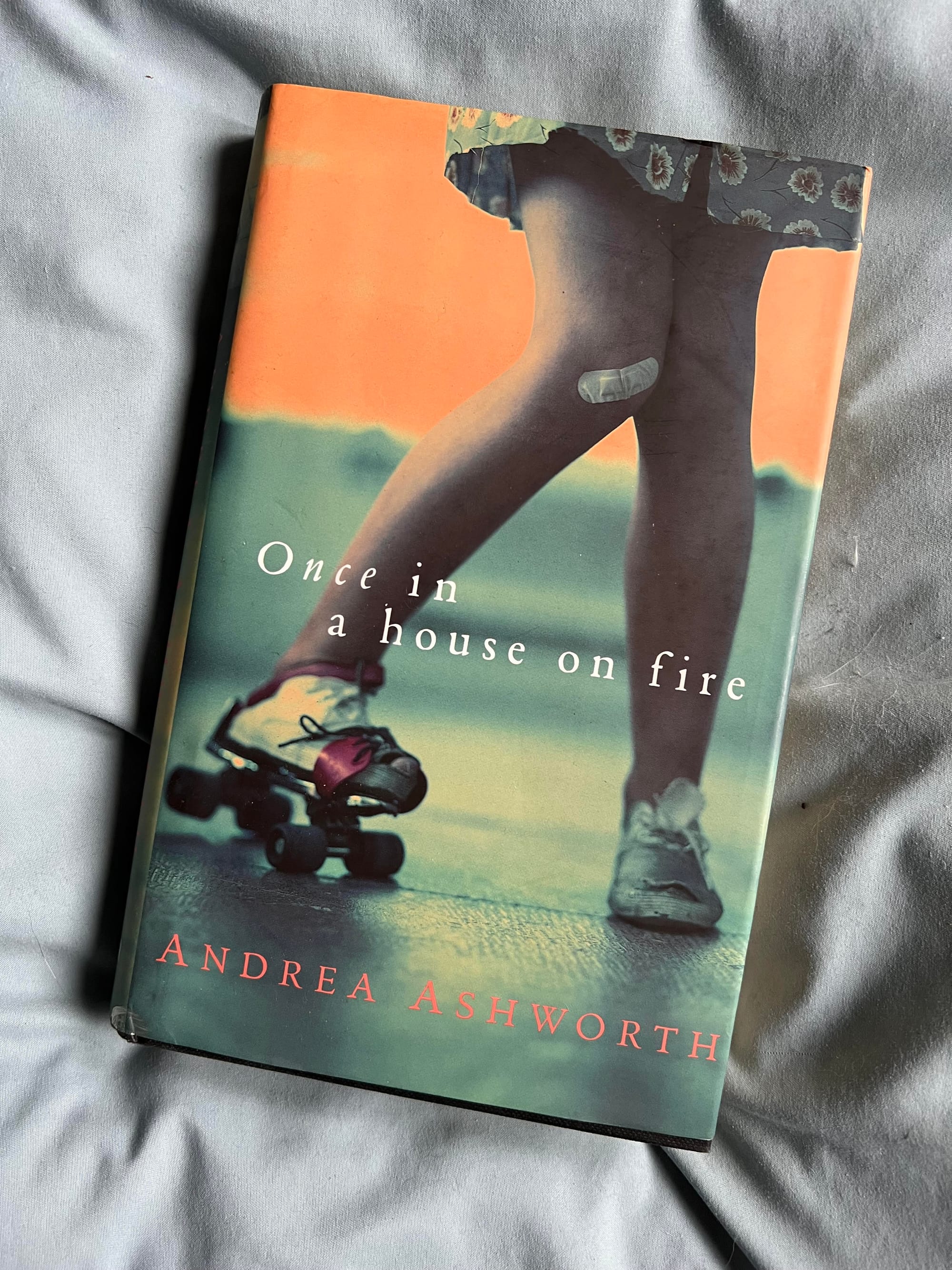
This book was sitting on top of one of the stacks, and when the light from my phone torch grazed over it, the cover of the hardback seemed to shimmer. The legs of a young girl, the hem of her blue floral dress just visible. A plaster on her right knee, one foot shod in the sort of roller skates you strapped over your normal shoes.
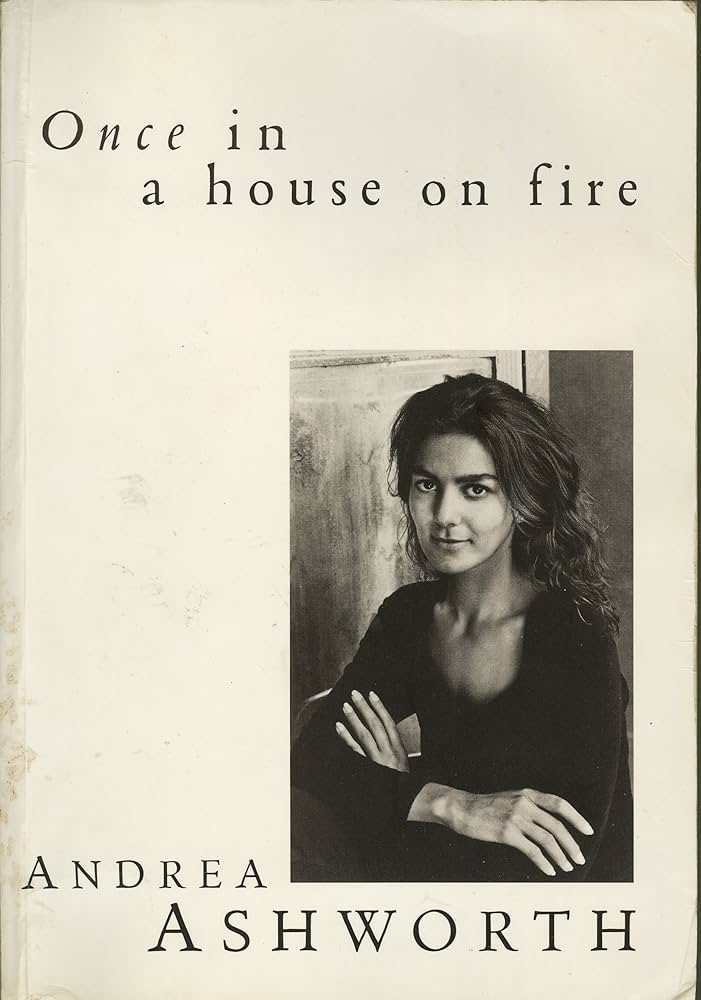
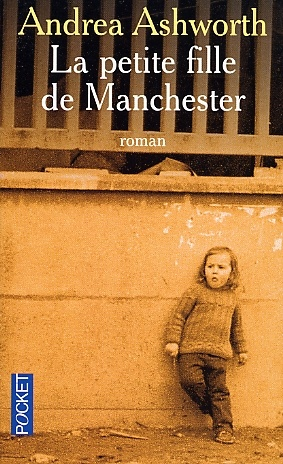
The volume in question was Once in a House on Fire by Andrea Ashworth. My copy has travelled with me for a quarter of a century, one of those books that would never suffer the ignominy of being stuffed into a black bin bag and carted off to a new home. Its too-long sojourn in the attic was bad enough, and though I was definitely not there looking for books, this book in particular seemed to have found me again. And as I crouched down on the dusty floorboards and flipped through its pages, I realised it had never actually left me.
Published in 1998, Once in a House on Fire is a memoir of a working class childhood in Manchester in the 1970s and 1980s. Initially, it’s set around Rusholme and Moss Side and then, after a brief and unsuccessful bid to start a new life in Canada, in Chorlton-cum-Hardy.
The book begins with the death of Andrea’s father, who stopped on the way home to relieve himself, slipped down a muddy bank, hit his head on a rock and drowned in four inches of water: “My father drowned when I was five years old. A picture of me, framed in gold plastic, was fished from his pocket and returned to my mother with a soggy wallet and a bunch of keys. The keys were to our new terraced house, which could now be paid for with his life insurance,” Ashworth writes.
This moment of brutal pathos is also the pivot on which the young Andrea’s life suddenly turns. Up to then, existence has been “normal”. And in one moment of misadventure, everything changes. Everything that later happens to the family calls back to this moment, when things ceased to be “normal”. This, then, is the crux of Once in a House on Fire. Life can turn on a sixpence, and often there’s nothing you can do about it but go with the flow.
From there, Ashworth tells the story of her life from the age of five to when she left her poverty-stricken Manchester home for university at Oxford. It’s a hard read at times, particularly when Ashworth is detailing the domestic violence suffered at the hands of her two stepfathers, who doled out knocks as casually as other fathers might hand out sweets. The style is matter-of-fact, written from the viewpoint of a child who knows no other life. But while that is at the heart of the story, it isn’t the whole of it. This isn’t a tale of victimhood, or revenge, or even redemption. It’s a story about realising that the things that happen to you don’t necessarily break you, but they do shape you.
Upon its release, the book was an immediate sensation. The reviews were glowing: Blake Morrison called it a “remarkable book” and Hilary Mantel said it was “strong and admirable”. The following year, it won Ashworth the Somerset Maugham Award. She even broke America: after appearing on the Rosie O'Donnell talk show, where she shared a sofa with Paul Newman and Tori Amos, the book became an overnight bestseller in the States.
And then, Andrea Ashworth disappeared from view.
A house on fire
Ashworth was born in May 1969, just a few months ahead of me, who staggered over into the 1970s by a matter of days. Though my life hadn't been pocked by tragedy like Ashworth's had, Once in a House on Fire instantly resonated with me when I first read it at the age of 28. Back then, I never wondered why it became so popular. Now though, I wonder how it read to people who hadn't grown up like that, whether there was some element of “poverty tourism” in its success. This was the era of the misery memoir, after all; Dave Pelzer's A Child Called It, detailing his abuse at the hands of an alcoholic mother, had been published in 1995, while Jennifer Lauck’s harrowing bestseller Blackbird followed in 2000.
But it wasn’t voyeurism that attracted me to the Once in a House on Fire. Instead, it was that, in a way, I saw myself in Ashworth’s book, saw a depiction of working class life in the North that was so lacking in popular culture. It was a time when nobody seemed to be talking about northern lives outside of Coronation Street and The Royle Family. I was born and grew up in Wigan, the other side of Manchester from Ashworth, but in the same sort of red-brick housing community, among the same sort of people, with the same sort of schooling and social life.

Ashworth talks of those far-off yet memory-bright days spent entertaining herself with “empty orange crates and high bouncing balls until lunchtime” in back alleys filled with “the pong of dog mess and rotting rubbish”. She and her siblings were “thriving on Jelly Babies and Spangles” and listening to her mother’s old Motown records (American soul music was big in the working class homes of the North West then, with the Northern Soul mecca of Wigan Casino - which I wrote about for The Mill back in 2021 - at its height). When Ashworth goes on a school trip, it’s to the Bluejohn Mines in Derbyshire, at around the same time that I must have done the same. Family and neighbours let themselves into each other’s houses, unannounced. Sundays are boring, the TV full of church services and black and white films, and Ashworth takes refuge in books, despite this drawing the ire of her step-father, who calls her a “freak” for reading. When she does watch TV, it is Andy Pandy, The Clangers, Bagpuss and Mr Benn.
I couldn't wait to see what Ashworth did next. There was talk of a sequel memoir, covering her years as a working class northerner at Oxford, and she mentioned in several interviews that she was working on a novel. Her star was ascendant, and people were on tenterhooks to see what the next move would be for the new darling of the literary world. But years went by, and nothing came. Publishers – and readers – are fickle. After the initial rush of publicity and reviews, once the paperback had come and gone — especially in that just-before-the-internet time — it was easy to forget.
Bringing Once in a House on Fire down from the attic, I wondered what had happened to Andrea Ashworth. Did she write another book that I somehow missed? Google offered me no clue, save a very short Wikipedia entry. She has no social media presence, not even an abandoned Twitter or MySpace page. There were no more books.
There was, however, a slightly incongruous-seeming piece on style bible Vogue’s website, a photoshoot with Ashworth touring the vintage clothes shops of LA in 2005. It seemed a little perplexing, for someone who had so little internet presence elsewhere, until I learned later just how big she and her book had been in the US.
On X (formerly known as Twitter), I posted a picture of the book. It produced a torrent of replies, all from people to whom Once in a House on Fire had profoundly meant something. Like me, they all wondered what had happened to Ashworth.
I tracked down the last person named as her agent, but they hadn’t heard from Ashworth for years, though they promised to send an email to the last address she had for her. Next on the list was Ashworth’s editor at Picador, Ursula Doyle, but she told me she’d lost touch with Ashworth. She thought she’d gone to America, but was interested to hear what I could find out about her. “That book paved the way for so many writers,” Doyle told me.
Nowadays, she says, publishers would promote it as a ‘working class’ memoir. “The thought never crossed my mind; I just thought it was an incredible piece of writing.” Doyle had been excited to see what Ashworth wrote next: a novel was talked about, but never materialised, and after a few years, she “gave up asking”.
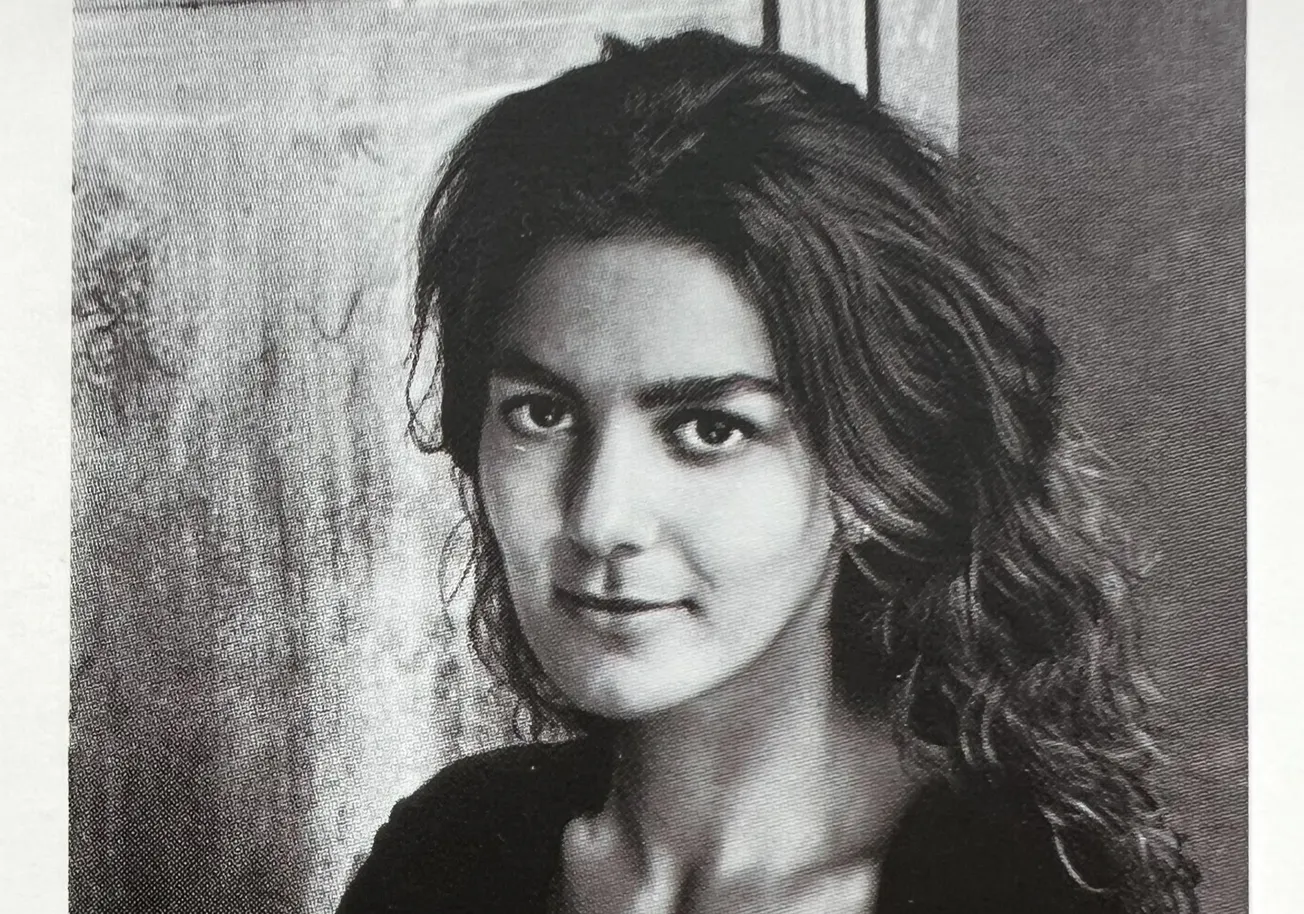
The only other lead I could find was a mention of her on a charity website called the Women's WorldWide Web, but no clue as to how current it was — I fired off an email, but got no reply. I didn’t hold out much hope, and neither did anyone else.
And then, a couple of months later, an email arrived.
An email from Los Angeles
In the end, I didn’t find Andrea Ashworth. Rather, just like her book in the attic, she found me. A few weeks after I'd started looking for her, she emailed me out of the blue to say she'd been “showered with messages from friends around the world who are on Twitter, which I never go on. I've not seen your tweet or any of the replies, but how lovely of you to celebrate the book.”
Ashworth composed her email to me not in Rusholme or Moss Side, not in Chorlton-cum-Hardy, perpetually and apocalyptically rain-swept, not even in Oxford. Instead, in a midcentury house nestling in the sun-blessed Bel Air hills overlooking Los Angeles where, she tells me, coyotes prowl and deer run through oak and birch and stately pines. Gone are her memoir's “blurred pavements” where “wind-bashed brollies shuffle past like birds with broken wings, spat out of the sky”. In their place are “Forests of agave, jade, cactuses and birds of paradise straight off the pages of a Dr Seuss book," she tells me.
And yet, in her bright, airy office, something sits on Ashworth's desk, quite incongruous to the trappings of Californian life, the skateboards and surfboards piled by the front porch in the shadow of towering palm trees. A battered, 30-year-old A–Z street atlas of Manchester.
“A map to parts of my heart,” says Ashworth. She considers the picture she’s just painted with words of her LA home and tells me, “This is all radiantly and surreally unlike the world I grew up in, in many uncountable and unbelievable ways. Manchester is in my soul, but not much evident in this magical realist setting — except, I suppose, in the form of me.”
It was distance from Manchester that gave Ashworth the opportunity to look back and try to make sense of her childhood, to put it into some kind of context and order. Reviews talk of how difficult and unrelenting the poverty and violence seems in the book, but for Ashworth, when she sat down and started to look back on it, it was something of a double-edged sword.
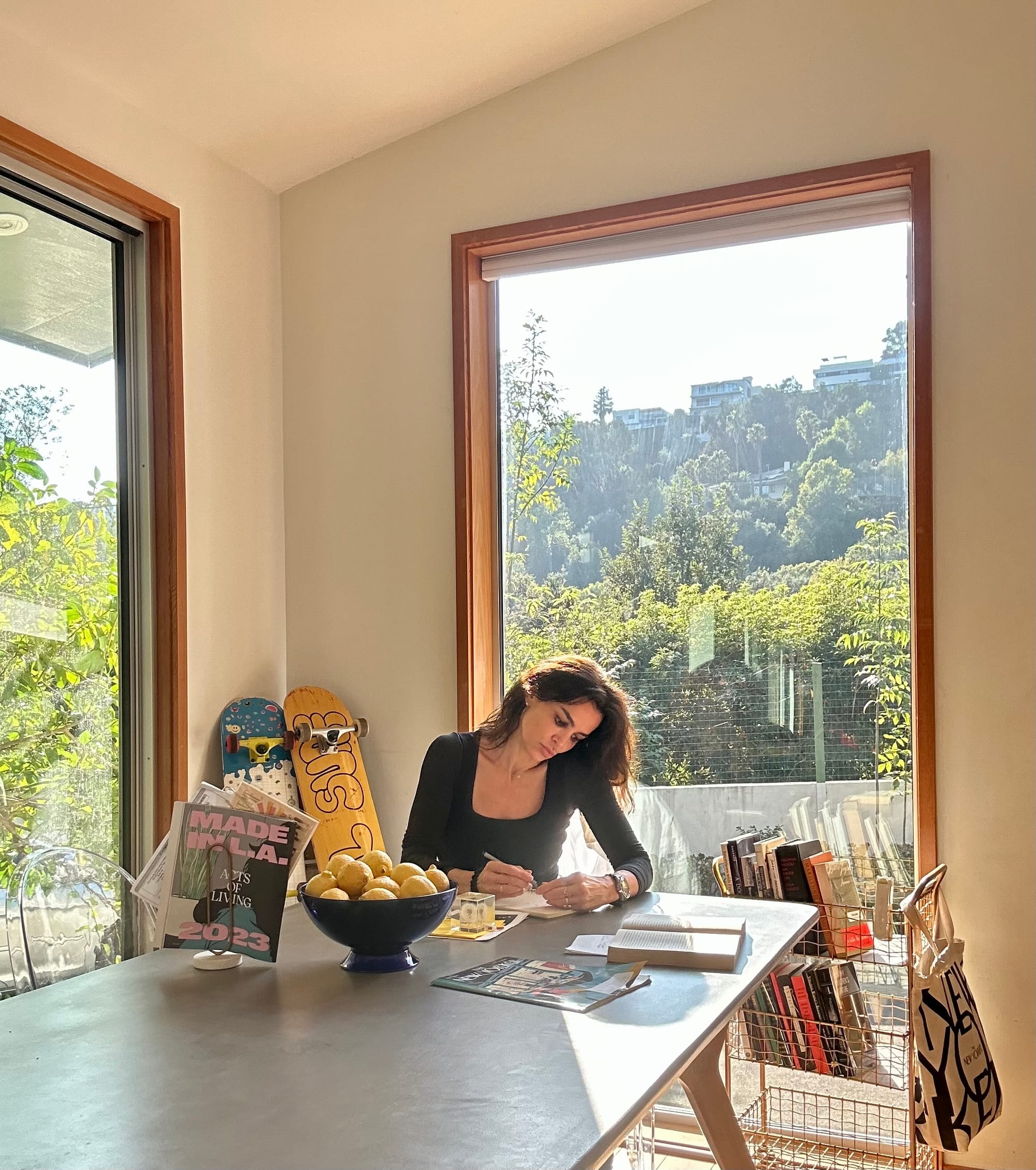
“After I flew so far away, to America, I kept looking back at my chaotic childhood from the perch of my nice, shiny new life as a successful academic, and I found the differences between my past and my present so dizzying, I set out to try to make sense of them,” she says. “The actual writing of Once in a House on Fire was a harder battle than that neat description of reconciling differences between past and present might suggest. And it was at the same time more of a gorgeous, nostalgic adventure than some readers might guess, given the harrowing aspects of what happened in my childhood.” There was a lot of wrestling with ghosts, she says, and it was occasionally painful to revisit those memories: “At times excruciatingly so”.
But she says there was also something “oddly pleasurable” about going back in her mind “to each of the houses and rooms through which my mother and sisters and I had moved, all around Manchester and vividly seeing all the details again — the carpets, the curtains, the ornaments, indoors; outdoors, rainbows in oily puddles in the street, all the different species of clouds, lampposts and hedges with their own personalities.”
Ashworth was in her twenties when she started writing the book. An adult, but still weighed down by her baggage: she had escaped her childhood, but didn’t yet feel free to get on with her grownup life. “I was in a tangle. I didn’t understand — in fact, it was really painfully perplexing to me — how someone could grow up as I had, in that world, and then come to flourish in this world, this life of freedom and privilege, safe from fists and knives and screaming in the night,” she recalls. Like a lot of writers, she looked around for a book to help her understand what she needed to understand. “And, when I failed to find that book, I set out to write it.”
What I really want to know, though, is why she stopped writing after having such a celebrated debut. Perhaps the rush and push of fame from Once in a House on Fire proved too daunting? Maybe, as everyone apparently has a book in them, Ashworth had just one in her, and that was that? Possibly, she wrote her anticipated novel and it wasn’t good enough to be published? It seems strange — particularly these days, when everyone wants a book deal, and prospective authors pitch agents on social media — to have a bestseller and just stop writing.
“The answer to your question,” says Ashworth, “is outwardly boring. It’s largely because I’ve been so thoroughly immersed in creating and relishing my adult life with my loved ones: my friends, my extended family, my beloved sisters and my goddaughter, who has grown up as a big sister to my daughter and son, all revolving around the home life that I’ve made with my husband Mark, and my children here in Bel Air, in the impossibly pretty and almost-always-sunny hills of Los Angeles.”
But really, my question was wrong: Ashworth never actually stopped writing. What she stopped doing was being published.
‘The past doesn’t stay still’
Ashworth relocated full-time to the states in 2000 and got a writing fellowship at Princeton University, where her then-fiancé, Mark Greenberg, whom she met at Oxford, was teaching philosophy. After her memoir came out, she says, she was working on two novels, including a nearly-complete one that Picador was excited about publishing. But she judged that novel to be “not ‘real’ enough, not something I was proud to ask people to spend time reading”. And as she set about rewriting it, her first baby came along.
From what Ashworth says, her life up until publishing Once on a House on Fire had been non-stop: “I’d been hurtling along, just going and going, living in fast-forward mode, surviving my childhood, helping to shepherd my younger sisters along, straining to keep my mother alive and in some state other than desperate, suicidal misery, all while jumping through academic hoop after hoop to escape my childhood of poverty and violence by studying, doing exams, winning scholarships.”
In the following years, she tells me she poured her greatest energy into creating a joyful family life in LA, immersing herself in a hands-on, constantly-there way, even homeschooling for several years, in order to “give my children — and, in the end, myself — the bright, safe yet adventurous, carefree childhood that life never allowed my own mother to have with my sisters and me.”
She says that she faced “a sort of E=mc² of energy and commitments” when her children were little: Throughout the 2000s, she published essays, interviews and reviews, but she found it too difficult to get the solitary time to push a book to completion.
Then something else entered Ashworth’s life: humanitarian work. With her sister, she joined w4.org (the Women’s WorldWide Web), an NGO dedicated to promoting the rights of girls and women around the world. “Humanitarian work, and any volunteer efforts at all, also help assuage the guilt that can arise, and try to haunt you, when you live in paradise and are safe and so roundly loved and fulfilled by meaningful pursuits,” she tells me.

Ashworth didn't really disappear, of course. But after the whirlwind of publicity, she did drop out of the public eye, just as the internet, and the all-pervading light it shines on to all of our lives, was becoming a fact of modern life. Explaining her lack of social media presence, she says she's “impersonally ambivalent about it as a social phenomenon: incredible connectivity, community building, etc vs toxic algorithms.” But as for her own personal use, “I just never got into it because I didn't have time, and I don't love the blurred boundaries between intimate and real friends and social media 'friends'”.
These days Ashworth has “several book-length projects in play”, though those who want to read more of Ashworth’s story after she left for Oxford at the end of Once in a House on Fire may be disappointed. “I have a large backlog of memoir writing that takes the form of basically chronologically-straightforward sequels, which I’ve been writing in sporadic bits and longer chunks over the years,” she says. “I don’t feel any desire to publish these memoir projects, but I may feel differently in the future.”
She’s also been working on a book that captures her life as an Englishwoman in LA, contrasting the life she’s carved out for herself in a canyon in the Los Angeles Hills with her time as a child in Manchester and an academic in Oxford. There are two novels on the go, as well. “One set in Oxford in the late 1980s/early 1990s, and one set in the downtown Manhattan art world of the early 1990s. Also, a book of grownup fairytales, fables and ‘poem-things’, which allow me to indulge my love of magical realism, whimsy, dark irony and poetry.”
Time and distance give Ashworth some clarity when looking back, but also some complications. “I don’t know about you, but I find that the past doesn’t stay still,” she says. “A slight twist or an accidental knock of the kaleidoscope, and all the tiny coloured beads shiver, shifting into new patterns, leaving things looking quite different.” It seems counter-intuitive, in a world where everyone wants to be published, to have had such success and then to not only carry on writing, but make no moves to put that work in front of the public.
“I admire writers who are able to publish regularly, through all the seasons of their lives,” says Ashworth. “My own experience is that being a currently publishing author requires going all in.” When Once in a House on Fire was originally released, she spent a few years travelling around the world, going to bookshops and festivals, and appearing on current affairs TV shows. But the thing she found sustaining was visiting schools and domestic violence shelters to talk about her childhood experiences and hear from other people about theirs — an experience both she and her mother found “therapeutic”.
While her humanitarian work continues, her children growing and becoming independent has meant that she feels, perhaps for the first time since Once in a House on Fire came out, that life in her “sybaritic utopia” might actually allow her to carve out some time to potentially go all in on publishing again.
In fact, catching up with her just this week, Ashworth tells me that she’s making progress on the novel she always said she’d write. It’s set in Oxford in the 1980s and 1990s, and in effect is a direct sequel to the memoir, but in fictional form. She is reluctant to give too much away, but does say: “As it’s unfurling, there’s a lot of Manchester in it — inside/beneath, and in addition to, the Oxford scenes. So my Manchester A–Z is a more precious talisman than ever… It seems you can take the girl out of Manchester and plop her in Bel Air — but you can’t take the North out of her heart.”
Fans of Once in a House on Fire, rejoice. But will we ever actually see this long-awaited new work from Andrea Ashworth? “I don’t feel any need to publish,” she says. “But I do at least feel less shy about publishing nowadays, so we’ll see what happens.”
If you enjoyed this story, please share it with friends using the button above. If you’d like to read David’s past stories for The Mill, try this brilliant feature about Wigan Casino, this piece about the cartoonist Tony Husband or his elegiac long read about watching the collapse of local journalism in the North West up close. Or if literary mysteries are your thing, try this weekend read about reviving the memory of the Rochdale novelist Jack Hilton.
If you enjoyed this article and you're not yet a Miller, here's how to change that.
The Mill produces great reporting and peerless writing about everything from education to politics, crime to conservation in Greater Manchester.
The Millers, our readers, get all our stories direct to their email inbox, and are part of a brilliant community that sends us story ideas and debates the issues of the day in the comments. Just hit that button below to join up for free.
If you’d like to sponsor editions of The Mill and reach over 58,000 readers, you can get in touch at grace@millmediaco.uk or visit our advertising page below