
Dear readers — we at The Mill are certainly no strangers to soft southern media types moving to Manchester. After all, while all our writers are from the upper half of our island (including a certain new writer to be announced very soon…), The Mill’s editor Jack Walton is, regrettably, from Kent, and Mill boss Joshi is from Sussex.
In 2006, when the BBC announced that they’d be moving a number of their departments to Salford Quays, many sceptics wondered whether the fancy journalists from Twickenham were in possession of a big enough jacket. But now, over a decade after the move itself, we find out the truth about how the London expats handled their transfer north — did the move make them into Mancunians? And how many upped sticks and moved back? That’s after your briefing.
If you're seeing this message, you aren’t yet signed up as a Mill member. That means that halfway down today's story, about how life turned out for the BBC relocators to Salford in 2012, you'll meet a paywall.
While we try to make as many stories as possible free for all readers - including our recent piece about the men putting up flags all over the the country - please remember that our paying members fund almost all of our journalism. If no one paid, The Mill would simply cease to be.
What’s more, if you'd like to take out a paid subscription to The Mill there has never been a better time to do so. You can sign up now with the button below for £4.95 per month. That's a £4 discount. In return for signing up, you'll get four newsletters a week and total access to our vast back-catalogue. And you'll be able to read the whole of this piece - which surely you want to!
Your Mill briefing
🏳️🌈 Manchester Pride owes a total of £1.3 million to performers, venues and suppliers, according to financial reports. Last month The Mill broke the news that Pride was on the verge of collapse, with a host of people who had worked with the charity left unpaid. The following week Pride announced it had gone into liquidation. Now, BBC Newsbeat have revealed that a total of 182 companies and individuals are owed amounts ranging from £30 to £330,329. As we reported in our long-read about what led to Pride’s collapse, the report shows that the organisers of the charity made last ditch attempts to shore up Pride’s finances, including by staging a ‘Mardi Gras’ event at the Mayfield Depot this year. The new report details how insiders began to panic as the event grew nearer because tickets weren’t selling. In the end the losses from Mardi Gras cancelled out the profits from the annual Gay Village Party this year. After it became apparent that Pride had lost money for the third successive year, financial advice was sought and the charity was told not to pay suppliers until a full plan was in place. A bid was also prepared to see if Manchester City Council would help bail the charity out, but after “weeks of deliberation” it was rejected. Then, following the failure of the bid to host EuroPride in 2028, it became clear that Pride had run out of road, leading to its liquidation. The organisations still owed money include a company linked to singer Olly Alexander (owed £48,000), headliner Nelly Furtado’s production company (£145,000) and the company in charge of the Mayfield Depot (that’s the £330,329 fee).
🚩 A series of Freedom of Information Requests sent by political campaigner Pablo O’Hana show that the median cost to councils of removing a single Union Jack flag put up during this summer’s Operation Raise the Colours campaign was £100. O’Hara filed the requests to all 383 local authorities in the UK, the majority of which recorded no cost, meaning that there were either no flag removals or the costs were absorbed into the council’s general budget. Those that did, however, were spending about £100 each time, with some councils reporting figures as high as £473 per incident. The Mill has reported extensively on the flag-raising craze, including at the weekend where we looked into key figures behind the movement across five cities, finding people smugglers, sex doll salesmen and a man in Glasgow who was willing to put in a good word for Hitler. You can read that here.
👮 Three arrests have now been made following a brawl in Piccadilly Gardens on Halloween. A video of a man (who we now know is Cozzy Media, a Youtuber known for filming around the city gardens) being hit to the ground by two people wearing bunny ears was shared widely online in the aftermath. Greater Manchester Police announced on Monday that two individuals — both aged 19 — had been arrested in connection with the incident. Both remain in custody. The force added yesterday that a third person, a 29-year-old man, had also now been arrested.
Some said the BBC had ‘lost its marbles’. But was the move to Salford such a disaster after all?
In autumn of 2008, a fat coach full of London media moguls squeezed its way down Lapwing Lane, West Didsbury. Through scratched plexiglass they saw the sights: the deli, the candle shop, the solicitor and the skin doctor. They drove through Whalley Range to see Victorian villas. They bent heavily round the M60. “I realised they wanted to show [us] places that looked like Clapham, or Wimbledon,” one passenger now recalls (the “us” was initially “all these spoilt gentrified people from London,” but I’ve edited the quote to make it kinder). “I can’t remember if we went to North Manchester or not,” he says. “We might have gone to Prestwich.”
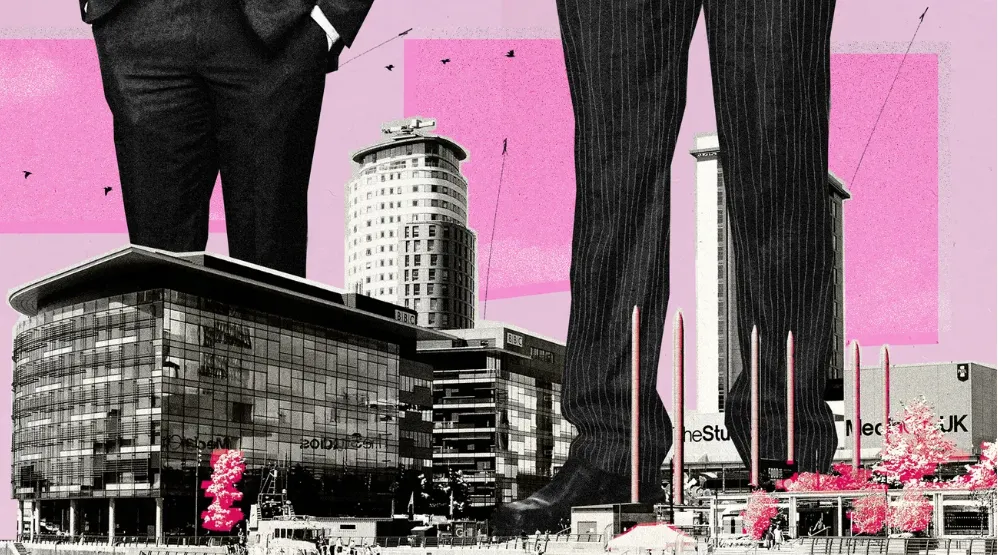
These were the BBC ‘familiarisation tours’: a series of trips from London to Manchester and Salford, designed to persuade hundreds of BBC workers to relocate north. Two years prior, in 2006, the BBC had decided to move a number of their departments out of London and into Salford Quays, to the newly constructed Media City, in the single largest relocation project in UK media history. It was a controversial decision. An article about the move published in the Independent that same year refers to Salford as “Manchester’s perennial poor relation” while the Mail describes the move as “regional correctness”, noting the £1 billion relocation cost which apparently included £50,000 on “local area experts”.
By February 2011, with weeks to go until the deadline, less than half of BBC Breakfast staff had agreed to make the move. It was the country’s most popular morning TV show, and even its best-known presenter Sian Williams was refusing to commit. Sources told the Guardian that many were “still in denial” about the fact the move was going ahead.
In the end, when the actual transition happened in 2012, 854 journalists, radio presenters, producers and tech experts agreed to up sticks and shift northward — 38% of the total staff asked, significantly more than predicted. Much of the panic had seemingly been for little reason. But while so much was written about the move at the time, how did it turn out in the long run? Did the media make Mancunians of the London lot? Or were they unable to acclimatise to hardy backwaters like Chorlton and Didsbury, ultimately giving up and heading home?
Certainly there were teething problems. One Mill-reader tells us about a counsellor friend in Chorlton who told her that “a significant portion of their trade” in the years following 2012 was from “shell shocked southerners” coping badly with locals, accents, and more seriously, cultural isolation. Razz Ashraf, a Mancunian ex-BBC Sports journalist who worked in Media City from 2019, says that the place was “pretty much full of southerners… that brought southern values and southern ways.” He recalls being asked into a meeting to discuss the issue of teenagers riding Sur-Ron bikes around the Media City complex, making members of staff feel unsafe. “I was like, what’s going on here? It’s still Salford. Langworthy’s just down the road. I’ve seen a guy chop his ear off there.”
This article is for paying members only
Join The Mill for full access to this story, plus four great features delivered to your inbox every week — and the knowledge that you're supporting a new model of local news that puts quality and honesty first.
From £8.95/month · cancel anytime
Get full accessAlready have an account? Sign In