
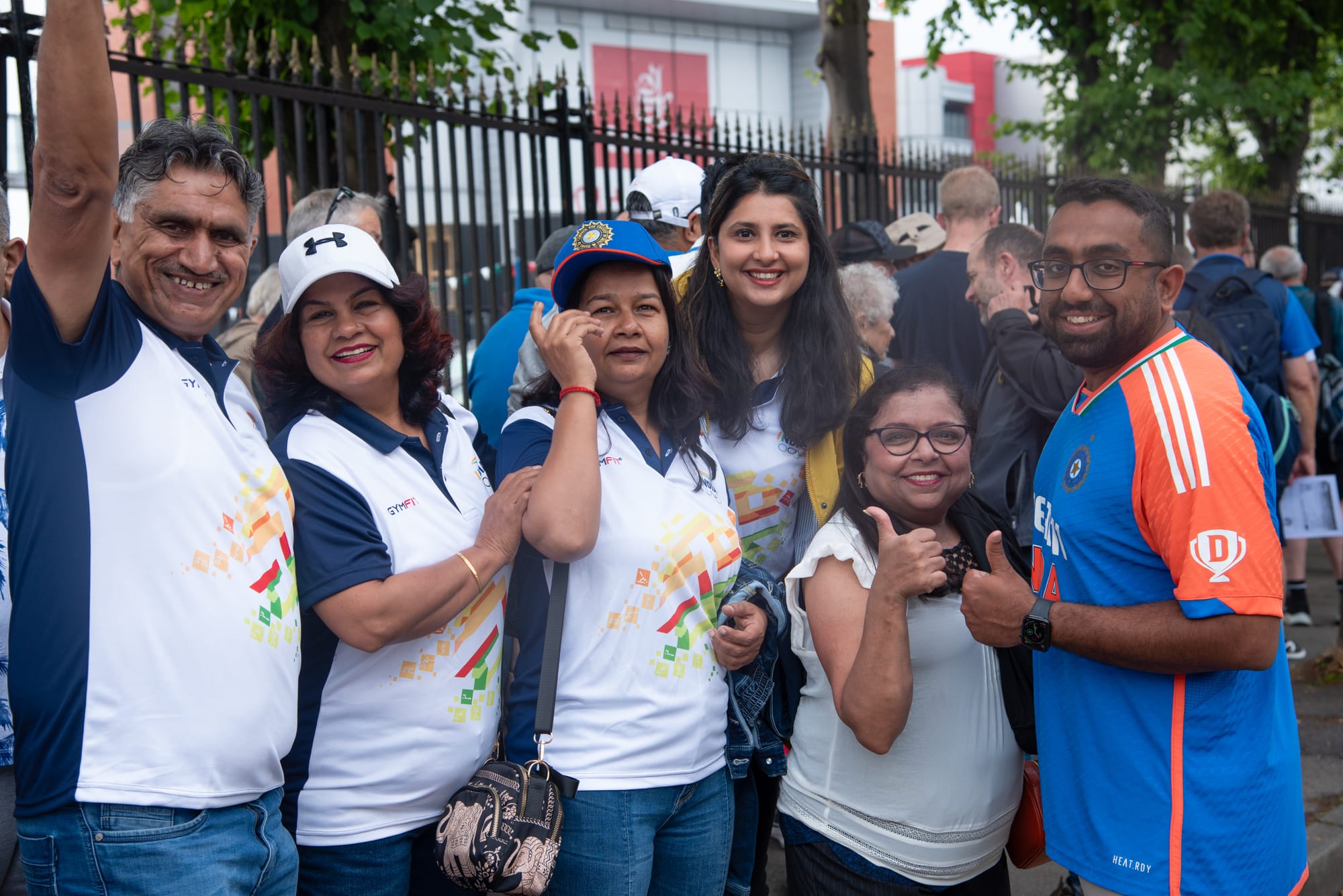
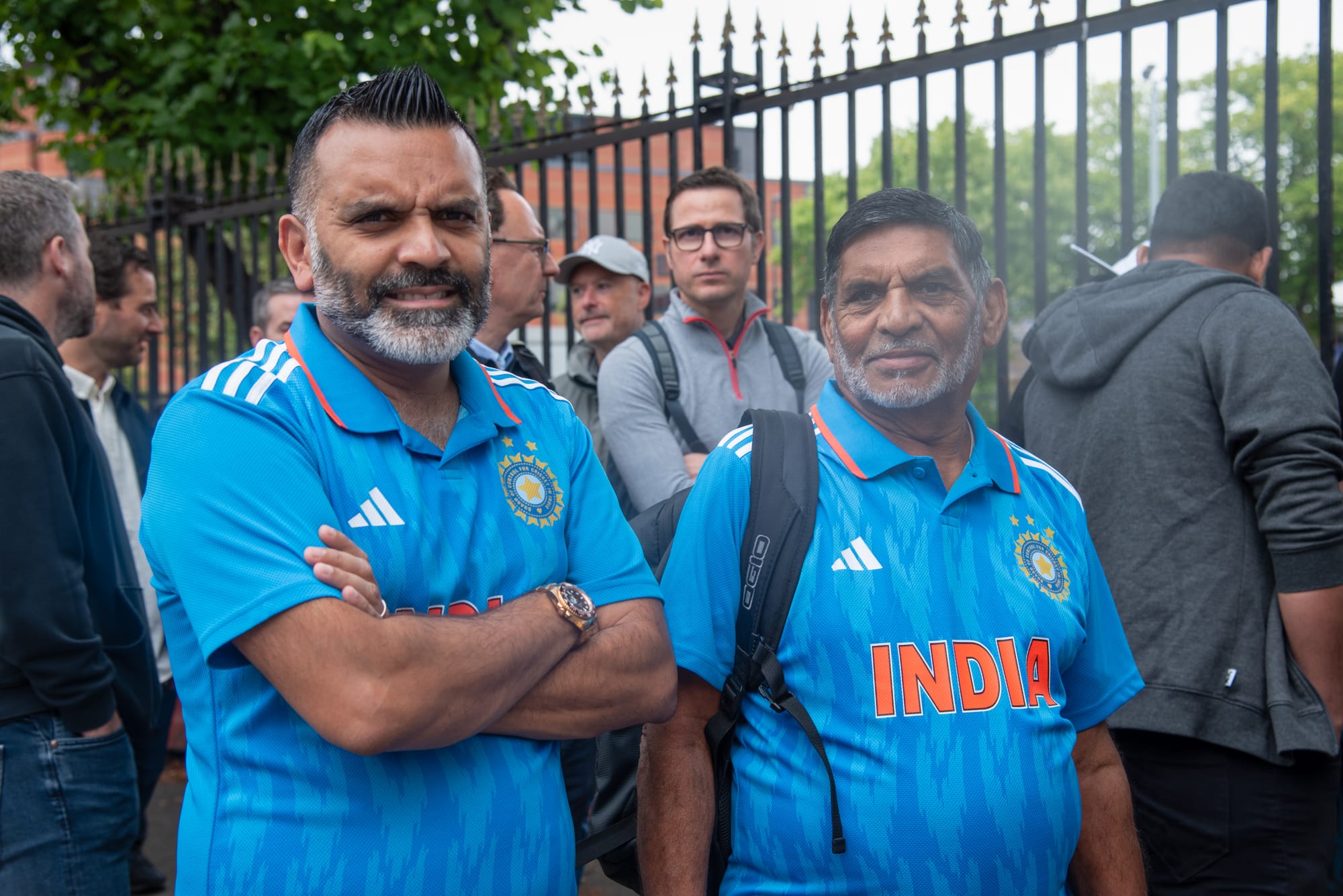
During this week’s hotly anticipated cricket match between England and India at Old Trafford, parts of the crowd have been a sea of Indian blue. Following an influx of Indians from Gujarat, Punjab and Bengal in the middle of the last century, Indians have been one of the largest Mancunian groups, with just over 69,000 people in Greater Manchester identifying as Indian or British Indian in the 2021 Census.
But who are the Indians of Manchester and its surrounding boroughs? The Curry Mile has long since become a hub for Middle Eastern restaurants, and anyway, most of the “Indian” curry houses of recent memory were Pakistani-run. Where does the Indian community live and hang out these days, and how well do the many different sub-communities of India get along?
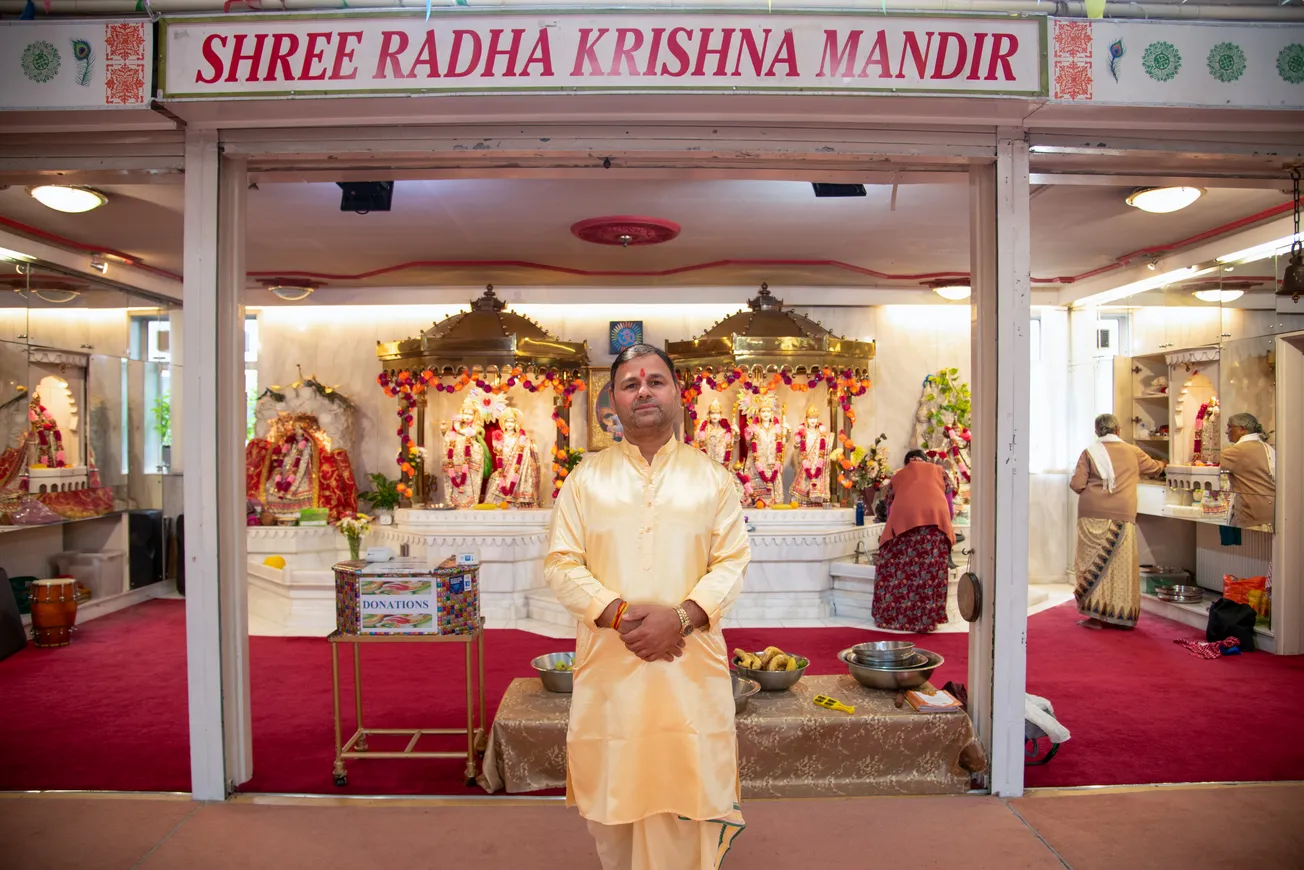
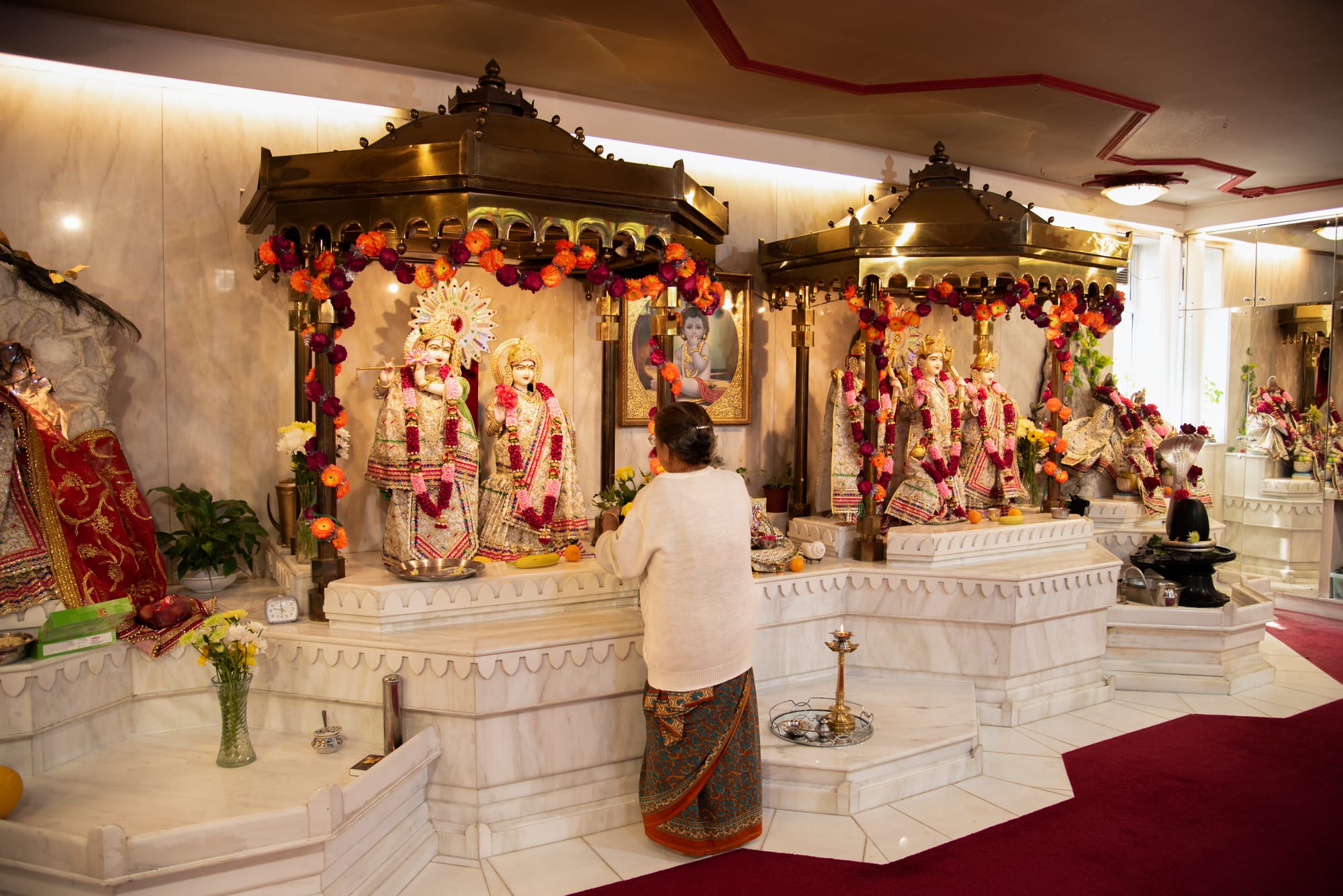
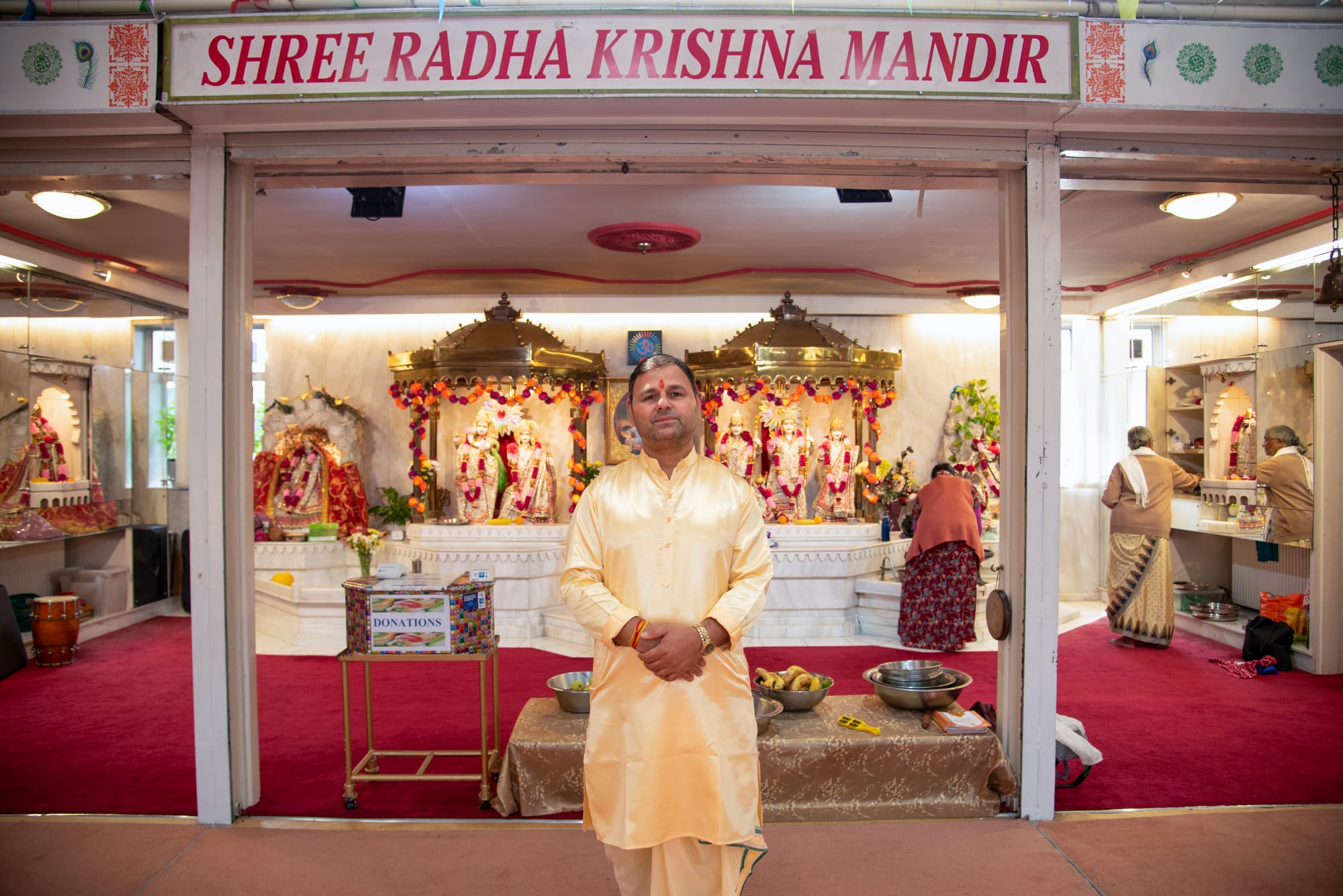
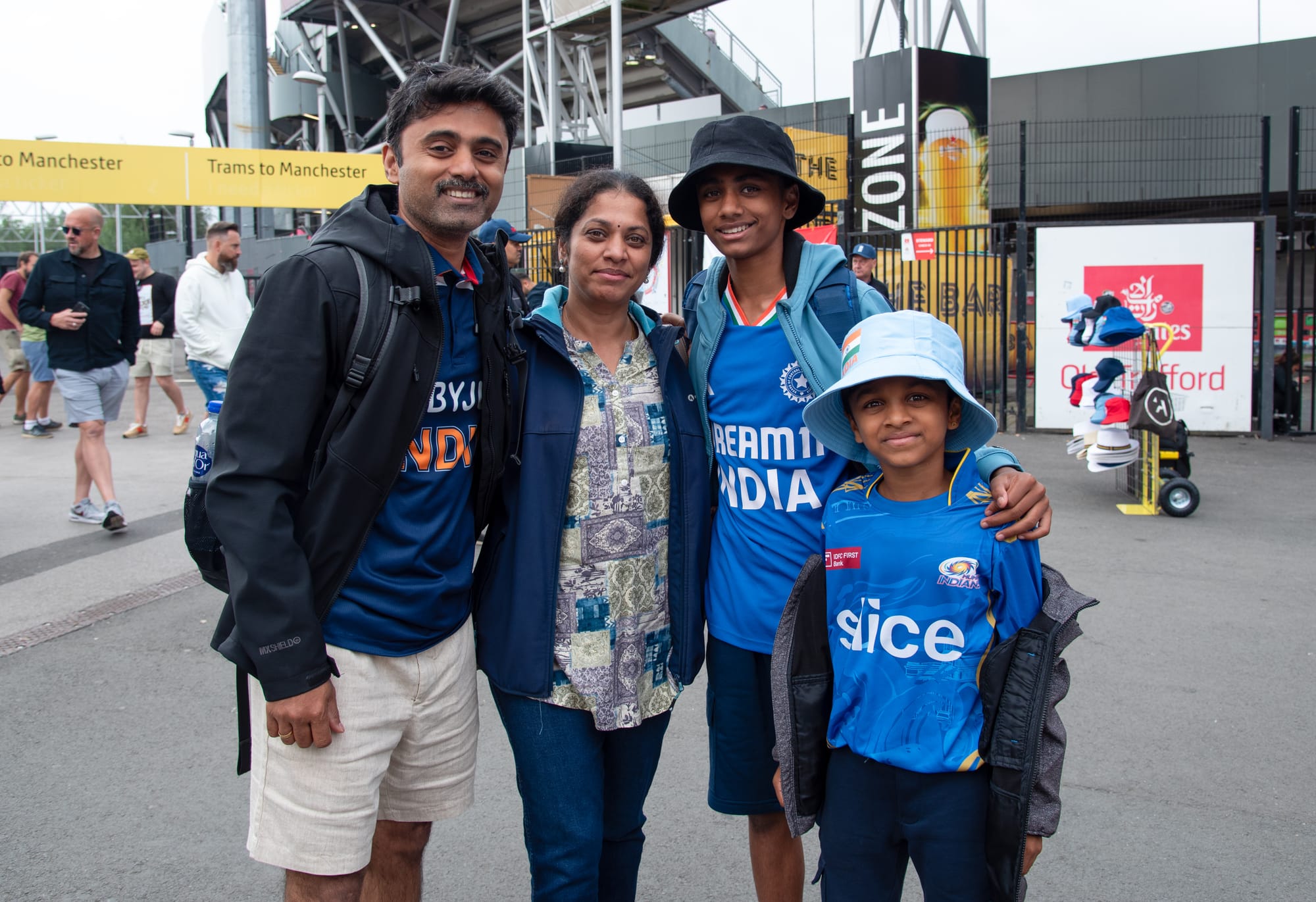
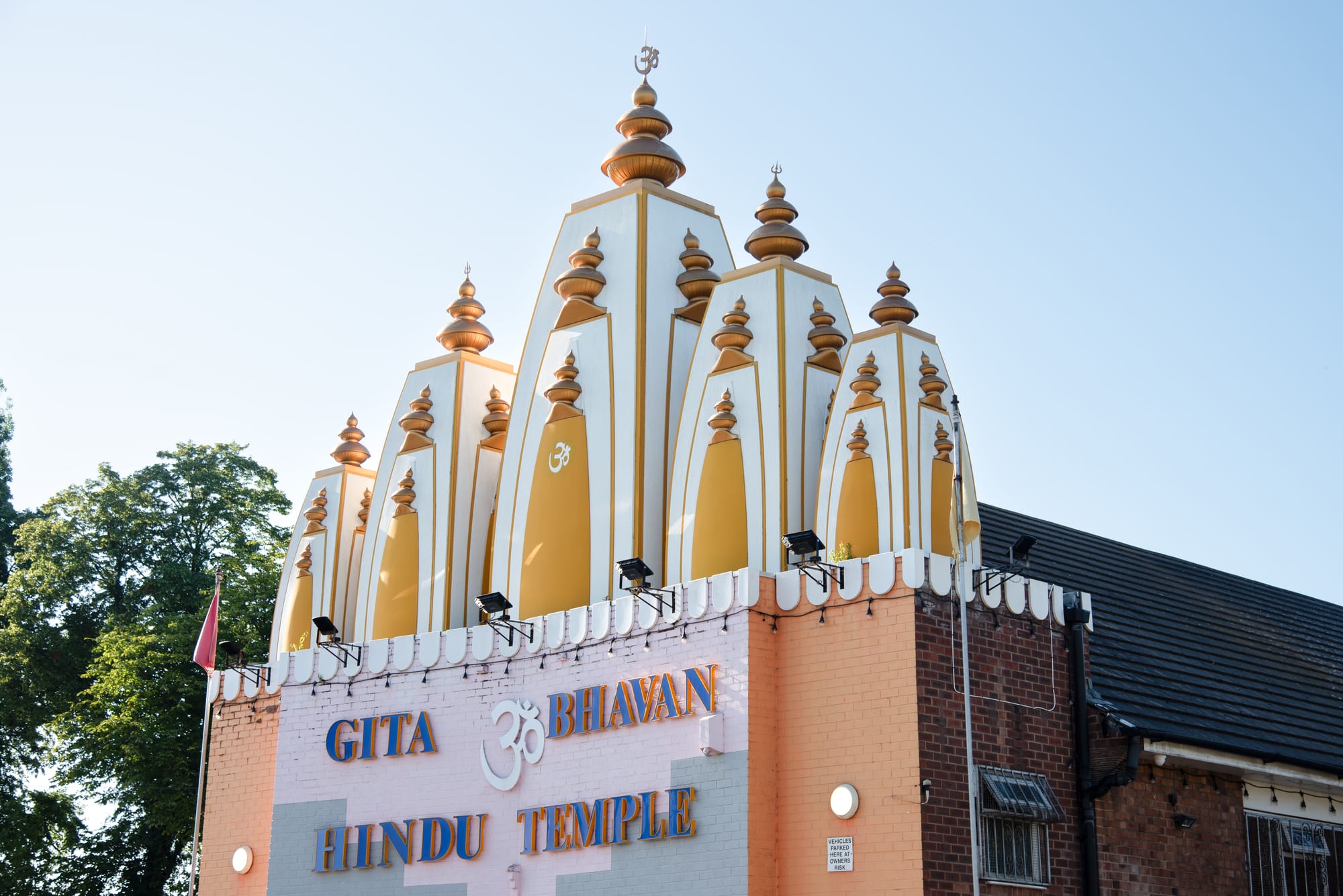
A month ago, the Mill team were sat in the office with Murtaza Rizvi, a freelance photographer from Delhi who came to Manchester a couple of years ago to study. Murtaza is particularly interested in sports journalism, and particularly interested in cricket, so we asked him to go out and document Manchester’s Indian community to coincide with the Test match. His photo essay takes us from the Gita Bhavan Hare Krishna Centre in Whalley Range to the Indian Association in Withington, and, of course, to the first day of the Test match at Old Trafford. He brought our staff writer Ophira Gottlieb along for some of his visits.
From our interviews (for which, you may notice, men were far more eager to take part in than women, despite our best efforts), we learnt of a growing, unified Indian identity in the city, and — at least outside Old Trafford on Wednesday morning — a common love of cricket.
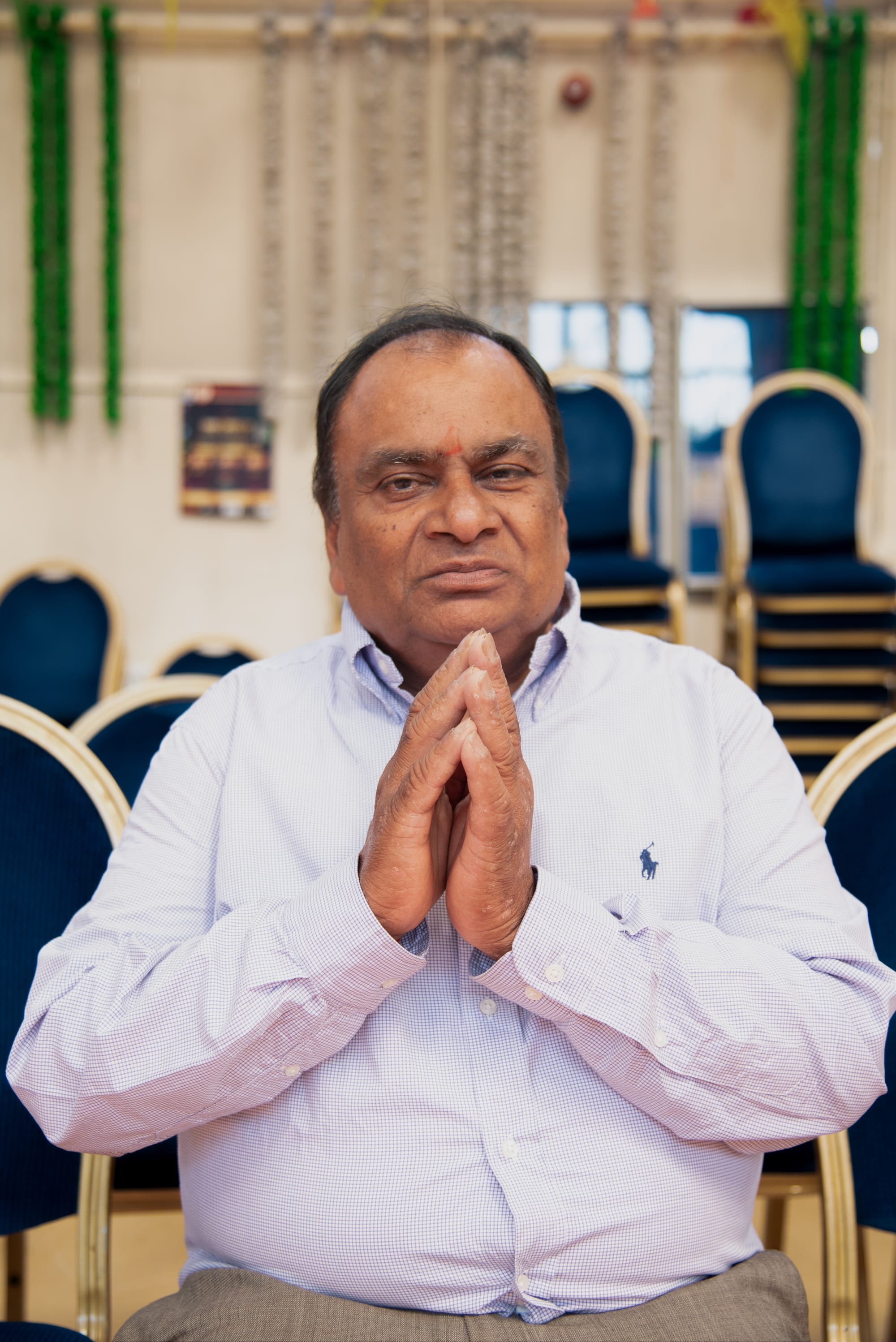
Ramnath Aggarwal, on the changing face of Manchester’s Indian community
“I’ve lived here… one second, let me work it out… 53 years,” says Ramnath. The 71 year old lives in Fallowfield and still works in a wholesale clothing store, as he’s done since he arrived from Punjab, a province in northwestern India that was split in two during Partition in 1947 and which accounts for around half of British Indians. When he first moved to Manchester, he says, Indians mostly lived in Rusholme, Fallowfield and Moss Side. But nowadays many people, particularly from the Hindu community, have moved to the leafier climes of Gatley, Cheadle Hulme, Wilmslow — “because they can afford it. There’s always been a community in Manchester, but gradually it grew.”
When Ramnath first moved here, the only Indian businesses he remembers in Manchester were the State Bank of India, a handful of wholesale shops and Rajdoot: a North Indian restaurant on Albert Square that exists to this day. Even nowadays, there aren’t that many Indian cafes and restaurants, he says, explaining that most are Pakistani owned.
He tells me that this is because most of the Hindu Indian community are now educated professionals. “It’s quite a settled community,” he says. “The younger people have become more English.” Many Hindus in Manchester insist on maintaining their cultures and traditions — Ramnath has four grandsons, three of whom speak Punjabi, “and the other one’s just a baby,” he says. “We don’t want to lose touch with our culture. On the other hand, Hindus are liberal minded. We mix with society, with English people”.
Back in India, relations between Hindus (who represent about 80% of the population) and Muslims (around 14%, but still more than 200 million people, the third largest Muslim population in the world) have become difficult in recent years, partly as a result of the policies and statements of prime minister Narendra Modi. In Greater Manchester, Ramnath says the two Indian communities get on fine. “There’s absolutely no problem between us,” he tells me. “A lot of our friends are Muslims, Pakistanis. We always invite them to our functions and weddings, and they do the same.” However, in his view, Muslim Indians and Pakistanis are less interested in deeply integrating with British society than his fellow Hindus.
Ramnath says that while in the late 1960s and early 70s he heard of racism against Indians, coinciding with the rise of the National Front, but he never experienced it himself. “We just avoided them. It was all just hatred, really.” But he personally has never seen any problems in Manchester. “I don’t have any problem with the English people,” he says. “On the whole they’re OK. If you’re alright with them, they’re alright with you.”
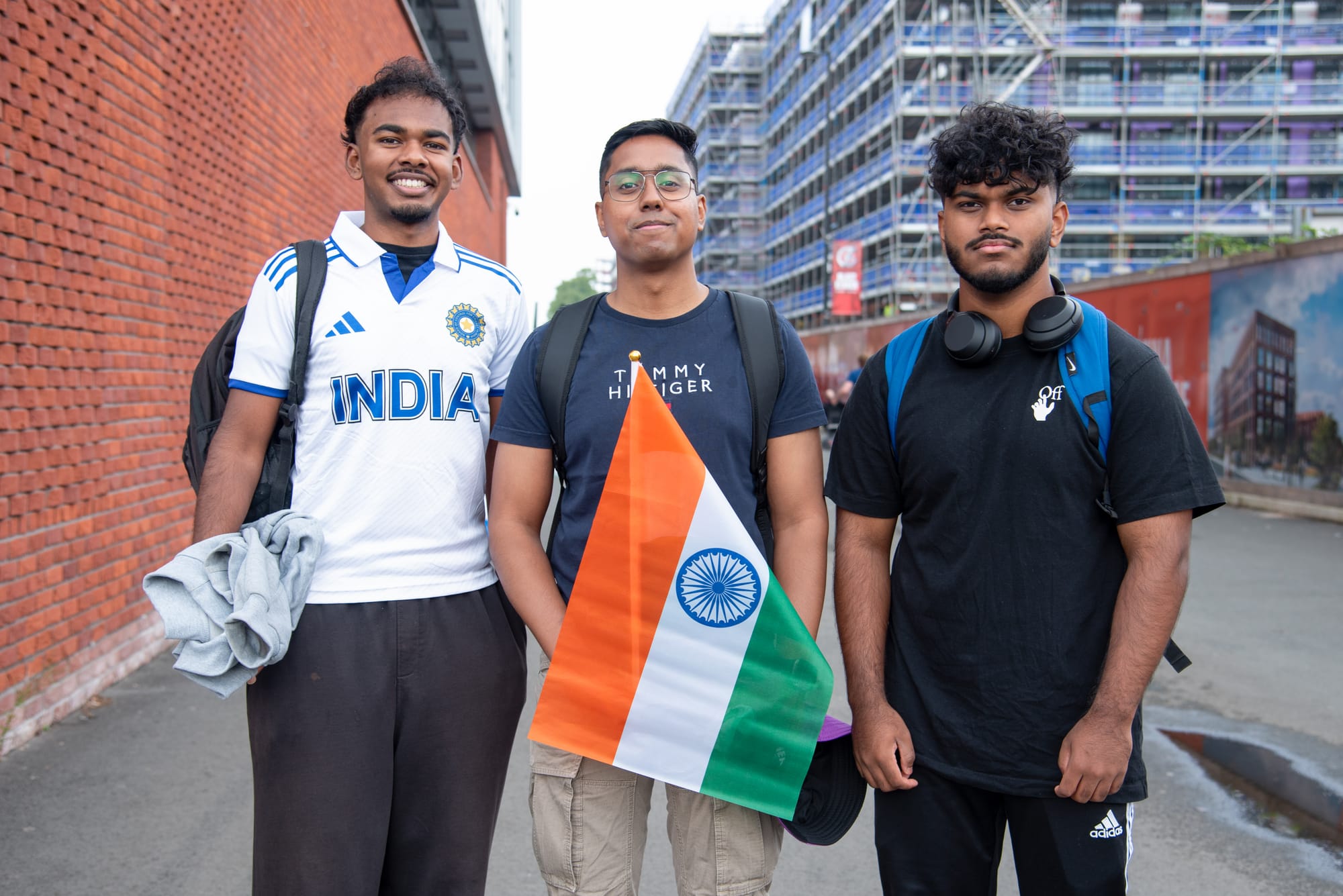
Akshay, Jason, and Arnav, on their love of cricket
“He’s good to watch, but I think his record overseas leaves something to be desired.” Akshay, his friends, and our photographer Murtaza are discussing England’s best batsman, Joe Root. The three friends, aged between 19 and 22, live in disparate parts of Manchester: Ardwick, Wythenshawe and Withington. But they met at Manchester Southern Asia Church, a church for Seventh-day Adventist Protestants, of which there are more than a million in India, and enough to warrant eight different churches in Manchester.
“We discuss this a lot,” says Akshay: Root scores well against Pakistan, he explains, but less so against Australia. His favourite batter currently playing is England’s new wicketkeeper Jamie Smith. He can’t pick a bowler because they’re all pretty good, but he eventually settles on Jasprit Bumrah, India’s star bowler, who is set to charge into the crease against England’s batsmen at Old Trafford, a few hundred yards from where we are standing.
But his favourite player of all time is Virat Kohli. “He’s done so much for the game,” Akshay says, “in terms of his captaincy. In terms of the culture of Test cricket. India didn’t win that many games before he took over.”
The three of them, evidently, are die-hard fans. They even went to Brisbane recently to pay their respects to Australian cricket. Do they play? “We don’t really play for a team or anything,” Akshay says. “We play for fun.”
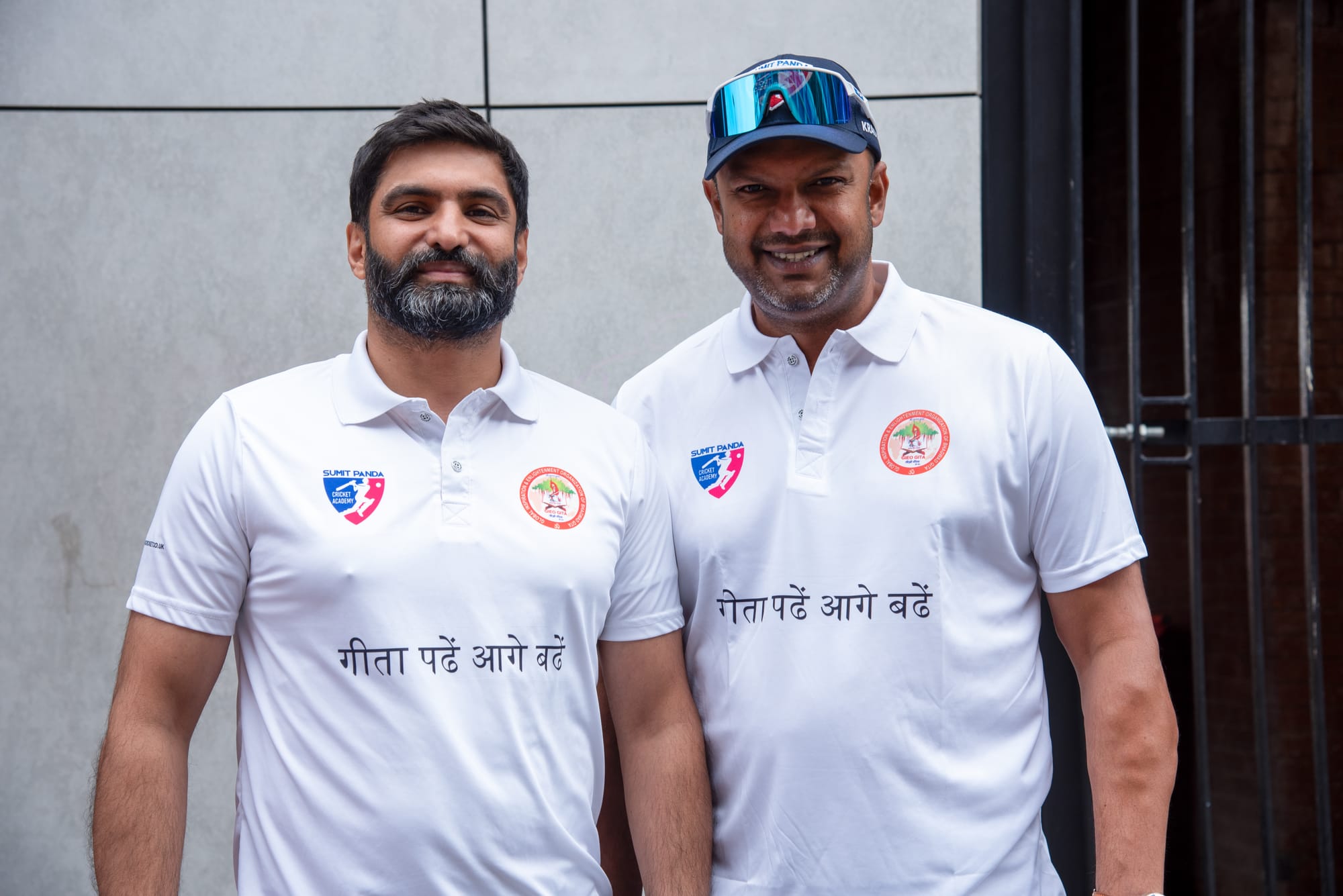
Hetan and Aneet on a growing Indian identity
Hetan was born and bred in Bolton, which according to the 2021 census has more than 26,000 Indians and British Indians, much more than any other district of Greater Manchester (Manchester and Trafford, the next two biggest, have around the same number between them). His family come from Gujarat which, like Punjab, borders Pakistan, and whose descendants represent a large proportion of British Indians. Hetan’s grandfather moved to Kenya in the 50s — a familiar story for many British Gujaratis, many of whose families spent time living in Britain’s East African colonies. In his 60s, his grandfather came to Manchester to work in the mills, arriving with no education and slowly building a life for himself. Hetan’s father started his own business as a building contractor, and Hetan is now a doctor.
Aneet, on the other hand, grew up and still lives in Whalley Range, where he works as a pharmacist, as well as a coach at the very lovely Whalley Range Cricket Club. When his father came to Manchester in 1965, he had been working as a lawyer in Punjab. “A lot of Indians were given skilled worker visas in the 60s,” he explains. “My dad came here thinking he was going to be employed as a lawyer. When he got here, it became quite clear that wasn’t going to happen.” He ended up getting a job as a labourer. “You’ll find that there are probably thousands of people here like my father,” he says. “They were stuck here and had to integrate in any way that they could.”
Being from distant parts of India, the pair speak different languages – Gujarati and Punjabi — so they communicate predominantly in English and, occasionally, Hindi. “India’s a big place,” says Aneet (one survey identified 780 languages across India, and just the players in the Indian cricket team speak Hindi, Punjabi, Gujarati, Tamil, Telegu, Kannada and Urdu). “You can travel from state to state and feel like you’ve travelled from country to country,” Aneet adds. “This is why we’ve been trying to find unifying elements that allow people to identify as ‘Indian’, as opposed to what their culture or language dictates.”
Because of this, Hetan and other colleagues from across the NW founded the Bolton Hindu Forum Sports Mela. Now in its 10th year, the event brings hundreds of Indians from across Greater Manchester together to play a combination of English and Indian sports: volleyball, football, table tennis, chess, carrom (which Hetan describes as “a bit like miniature Indian pool that you play with your finger”) and kho-kho — “a game that you play with your body… to really dumb it down, it’s a skilled form of tig.”
The pair explain how the Indian community in Manchester is slowly finding common ground. Before, “it was probably a bit more fragmented,” says Aneet. “A bit tunnel-visioned and inward.” He explains how differences in cultures, languages and religions formed barriers between the various Indian communities. But Hetan explains that there’s now a growing cohesion, “through collaboration, through unifying factors,” he says. “Cricket’s a major one that brings all Indians together”. Hetan agrees. “It’s the national sport without being the national sport.”
Aneet also describes how, conversely, attitudes towards British Indians have changed as their fellow Brits have become increasingly conscious of Indian identity. “We used to be broadly brushed as ‘South Asian People’” he says — but now, as Indian figures rise to prominence in politics and business, people understand the culture more. Hetan tells me it’s one of peace, love, and harmony: “That’s probably in a nutshell how I’d summarise the modus operandi of the Indian community,” he says.
Want more insights into different cultures from around the city, straight into your inbox? If you've been enjoying our work and you believe in the importance of investigative journalism, please join up now. You will be able to get your membership for just £4.95 a month for the first three months, a £4 discount from our usual price.
In return, you'll get access to our entire back catalogue of members-only journalism, receive eight extra editions per month, and be able to come along to our fantastic members' events. Just click that pink button below.
If you’d like to sponsor editions of The Mill and reach over 58,000 readers, you can get in touch at grace@millmediaco.uk or visit our advertising page below