

Dear readers — for today's lunchtime read we’re delving into Manchester’s seedy past, courtesy of a mostly untold story. In the mid-1800s, twenty-something Mary Evans lived in Manchester. Like many others who had flocked to Manchester during this period, drawn by its burgeoning wealth, Evans had a trade. But her work didn’t take place in factories or mills; she worked from her home on Major Street as a high-class escort and madame, serving the city’s rich and powerful.
Historian Thomas McGrath has used censuses, rate books and newspapers to chart ‘Madam Chester’s’ notorious life in Manchester. Read below. But first, your midweek briefing.
Your briefing
📰 The Sunday Times revisits the story of Karam Elradie, a Palestinian student who won a full scholarship to the University of Manchester and interviewed for his place with shrapnel still lodged in his leg from an Israeli airstrike. When Christina Lamb, the Times’s chief foreign correspondent, spoke to him in July, he was waiting for the Home Office to clear his visa, feeling like he was “trapped in a warzone with an open door just out of reach.” One month on, nine students in Gaza who have Chevening scholarships, which are funded by the Foreign Office, were told by the UK government that plans were underway for their evacuation. But Elradie, like some others, remains stranded. “It’s so unjust,” said Elradie. “It’s destroying us.”
🌈 Thousands of people celebrated Pride in Manchester at the weekend, with this year’s festivities themed around how love has helped queer people be themselves. Alex, an attendee, told the MEN: “Pride means, for me, being able to breathe. It's been a long journey of self-discovery so, to be surrounded by people to be completely authentic, that allows myself to feel freedom.”
🚆 The GMCA has approved £6 million of funding to go towards assessing the feasibility of building a Manchester underground. The funding will also allow the combined authority to outline business cases for new tram routes between Oldham and Bury, East Didsbury and Stockport and protect the potential for future routes to Glossop, Hadfield, Maple and Warrington.
Thomas McGrath uncovers the scandalous tale of Madam Chester in today's edition.
It was the summer of 1852 and Manchester buzzed with promise. Over 300,000 people now populated the industrial powerhouse; industry was at its height, with over 100 cotton mills rattling away, day and night. As a sign of the town’s growing significance, Queen Victoria had paid her first visit just a year earlier.
In the middle of the town, amid a jumbled assortment of houses and businesses, was Major Street, made up of mostly working-class residences. One summer’s evening in June, a cab pulled up outside number 9, and its unassuming brick exterior. A policeman exited and rapped smartly on the door. From inside came the sounds of a heavy velvet curtain — installed to keep out the cold, and prying eyes — being pulled back. Number 9’s household maid, Ann, opened the door. She was initially unperturbed. It was not unusual to find a policeman calling at the house. The officer asked to see her mistress.
“She’s asleep,” Ann told him. Ignoring Ann’s protestations, he pushed past the maid and walked up the stairs. Auburn-haired and beautiful Mary Chester —also known as ’Madam Chester’ — was indeed in her sumptuous bedroom, but she wasn’t asleep.
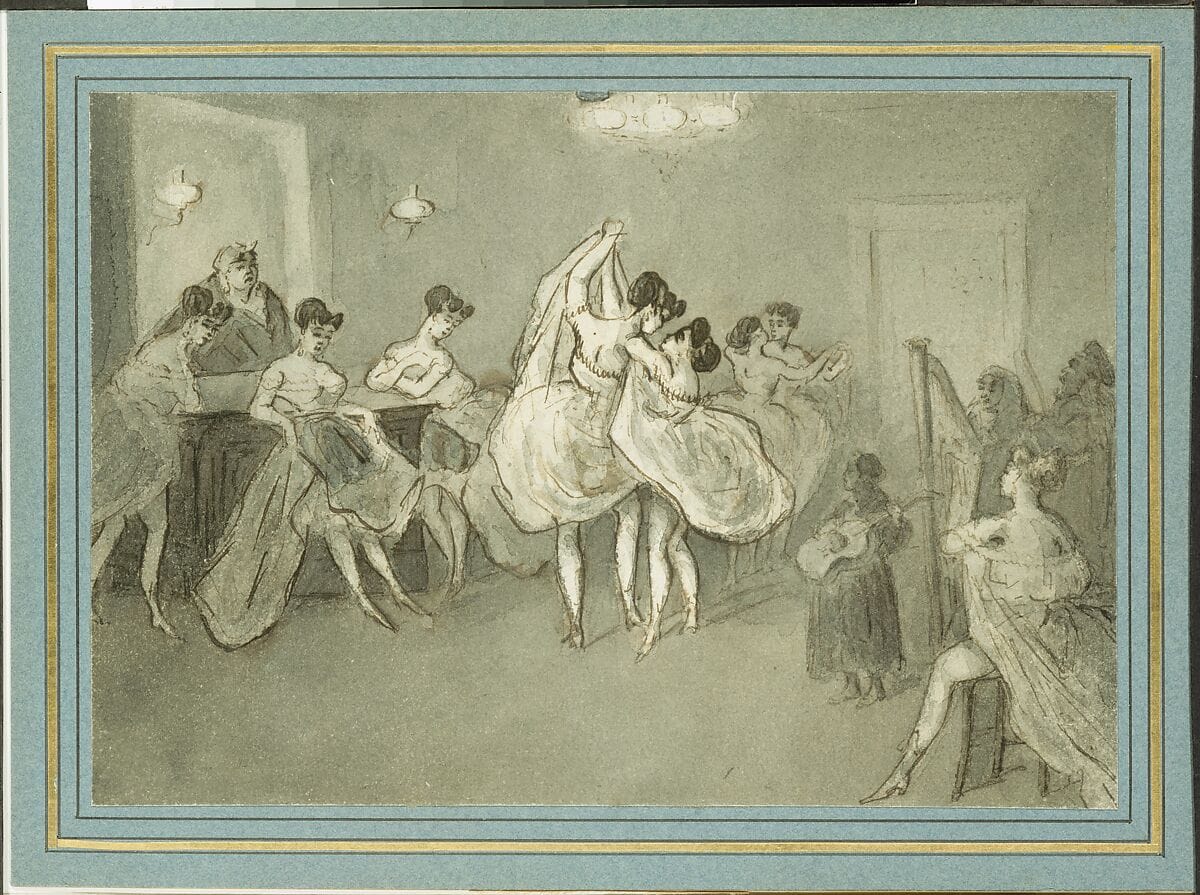
“Hello,” Mary smiled as the policeman entered her boudoir. She was propped up between the pillars of her four-post mahogany bed, which was draped in luxurious scarlet and gold satin.
Her smile quickly turned to stone as the policeman outlined, he was not there for pleasure, but business. Mary and Ann were under arrest.
This was Mary Chester’s first brush with the law but, as we shall discover, it would not be her last.
A Manchester madam
Although Mary Chester rose to become one of 19th century Manchester’s most famous escorts, she wasn’t a Mancunian by birth. Around 1828, roughly 24 years before a policeman elbowed his way into her bedroom, she was born as Mary Evans, near Wrexham. Also known as ‘Polly’, her father died when she was just three-years-old. Her mother was left a single parent, raising six children on a rural Welsh farm. Mary remembered her child self as a “regular tomboy,” climbing trees and running wild. She was initially sent for schooling in Wrexham, but campaigned to be sent to Chester. The vibrant city, with its shops, nightlife and military barracks, would prove “the turning point” in her young life.
At 15 years old, she ran away to Dublin after a flirtation with an officer in the 23rd Regiment. There, Mary enjoyed her first taste of high society. Dressed in silks and cashmere she attended balls and operas. She also learnt about how best to apply her beauty and charm amongst the men in the regiment, to great success; this is when she began entertaining aristocracy. In her 1868 memoir Mary recalled that she had “supp[ed] with Lord H. at Dublin Castle, and had breakfasted with his lordship in the morning”, which is likely her tactful way of saying that she spent the night. Lord H. [Mary never revealed his full name] referred to the teenaged Mary as ‘the Countess of Chester’ to his friends, and this is when she adopted her new surname.
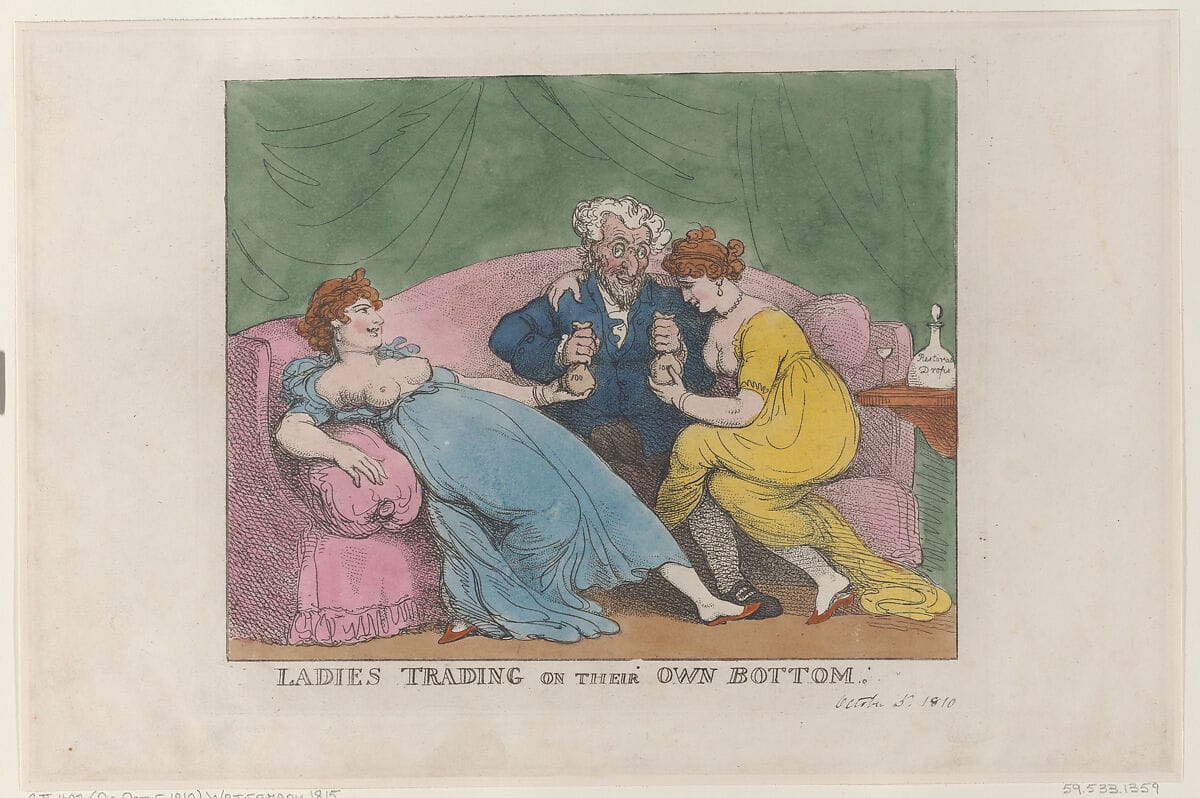
By 17, the ‘Countess of Chester’ had followed the regiment and decamped for Manchester. Eventually, she invested her earnings and set herself up as a brothel keeper, as well as serving as an in-demand courtesan to some of the city’s most influential men. Mary framed her life as one of hedonistic pleasure, boasting of the jewels and furnishings that ornamented her home and herself. It was no backstreet brothel. Rooms were decorated with Sèvres porcelain, crystal chandeliers and velvet carpets. Her piano, for example, cost 130 guineas, which was the equivalent of six years’ wages for a female cotton mill worker. She was bestowed with flowers, jewellery, theatre tickets, and holidays to Paris, London and Ireland. In 1857 Mary was gifted a season ticket for the Manchester Art Treasures Exhibition, where her conspicuous demeanour scandalised the moral middle-class women.
“My dresses were very magnificent and costly,” she recalled, “whilst my bonnets, shoes, and mantles were equally so. We were the talk of the whole Exhibition; and after I became known, certain ladies tried very hard to stop me from going, but all their efforts were in vain.”
Of course, these riches were earned, either from her sexual favours, or drawn from the profit of the women she employed. The brothel was popular. One man kept a set of shirts, collars and socks there as he was such a frequent visitor. Another gave her a bouquet of roses wrapped in a £500 bank note, which would amount to around £67,000 today. She describes how Percy, a favoured admirer, “covered my face and lips with kisses [..] and during our drive home he expressed his love for me in the most impassioned manner, and in the most eloquent terms.”
Behind the glamour, lay the volatile and difficult nature of sex work. Sexual transactions seemed to come easily, but she struggled with affection, or even the illusion of it. Several clients who proposed marriage were refused as Mary “did not feel inclined for matrimony; so [...] laughed at the idea.”
Likewise, some upper-class men, entitled, aggressive and untouchable due to their wealth and connections, had little respect for Mary and her girls, especially when drunk. Mary hardly drank, but alcohol was a necessary evil, as it loosened up the men, and fortified the women, sometimes too much. One visitor’s party trick would be to kick the table over, breaking all the bottles and glasses “at which feat he would roar with laughter until the tears fairly trickled down his cheeks.”
 David Barnett
Three men in particular stand out in her memoirs: Harry, Sam and Jack, the sons of various cotton mill owners. On one occasion, Mary recorded the trio taking her for dinner in Ashton, where their drunken antics became humiliating. The men threw their desserts around and smashed dozens of bottles of wine in the street. Harry then insisted on accompanying Mary home. Despite his violent behaviour, she saw an opportunity to make some money and offload the unwanted baggage on her ‘girls’;.
“As soon as I conveniently could,” she writes, “I left him to the society of the young ladies, who, from their frequent shouts of laughter, appeared to appreciate his eccentric drolleries.” With money at stake, the frightening behaviour of powerful men could easily be reframed as ‘eccentric drollery’.
That wasn’t Mary’s only run in with Harry, Sam and Jack. In another incident, the three men turned up at her house, again drunk, and subjected Susannah, a mixed-race servant, to a humiliating racial attack, holding her head under the tap and attempting to scrub her face. Mary wrestled the brush from their hands, and Harry, the by-stander in the event, sheepishly gave Susannah half a crown later on by way of apology.
In flagrante
It was inevitable Mary would eventually get caught in public scandal; she operated as a deliberately open secret. But the consequences of her trade could be dark. The policeman who arrived at her door in June 1852 was there to indict Mary and Ann on suspicion of having induced an abortion on a young woman named Ellen Ravenscroft.
This story is for paying subscribers of The Mill. If you want to be more informed about your city, and entertained by good old-fashioned storytelling in the process, sign up for a full membership. And with our special introductory offer, you can get all our editions for just £4.95 a week for the first three months.
In return, you'll get access to our entire back catalogue of members-only journalism, receive all our editions and exclusive news briefings, and be able to come along to our fantastic members' events. Just click the button below. Sign up below to support local journalism.
In late 1851, the small, dark-haired and grey-eyed Ellen had been admitted into the lock hospital near Deansgate, suffering from a venereal disease. The lock hospital was a system designed to prevent the spreading infections by physically keeping patients prisoner. She told authorities that she lived with Mary for around three weeks, but Ellen, who had obviously recently given birth, had another story to regale to hospital staff.
Manchester deserves great journalism. You can help make it happen.
You're halfway there, the rest of the story is behind this paywall. Join the Mill for full access to local news that matters, just £4.95 for the first 3 months.
SubscribeAlready have an account? Sign In