

Dave Roscoe, Manchester City Council’s deputy director of planning — a powerful senior officer revered by the developers looking to build towers in the city — stood in his living room in light blue spandex, doing squats. The scene, posted on Youtube in April 2020, was part of a charity workout Roscoe was doing with his wife Julie, Manchester City Council’s director of planning. The workout was to raise money for NHS Charities Together. But scrolling through the list of donations on the JustGiving page, one name leaps out.
Salboy Limited, the prominent developer owned by Betfred founder Fred Done and Simon Ismail. Salboy are a huge deal in the Manchester development community, specialising in “the kind of amenities you would expect in London, New York or Hong Kong,” according to Ismail in a recent promotional video. And their donation of £50,000 was certainly generous; towering over the other £20 and £30 donations presumably made by family and friends.
When we sent Manchester City Council a series of questions about the donation, they gave us a very punchy response. “An officer's effort to raise money for an NHS charity during the global pandemic is completely separate to their role at the Council and to suggest somebody would use a charitable activity as an incentive for organisations who have a working relationship with the Council is patently untrue, egregious and defamatory,” a spokesperson said in an email.
Nonetheless, the timing and size of Salboy’s donation is interesting. The fancy dress workout was set for 26 April 2020, arranged by the council’s head of leisure and events Yvonne O’Malley. Roscoe was asked to take part in the fundraising effort because he’s been putting on free exercise classes for council staff since the 90s. A little over two weeks before the workout, Salboy had filed a planning application for a major office development on Back Turner Street in the northern quarter.
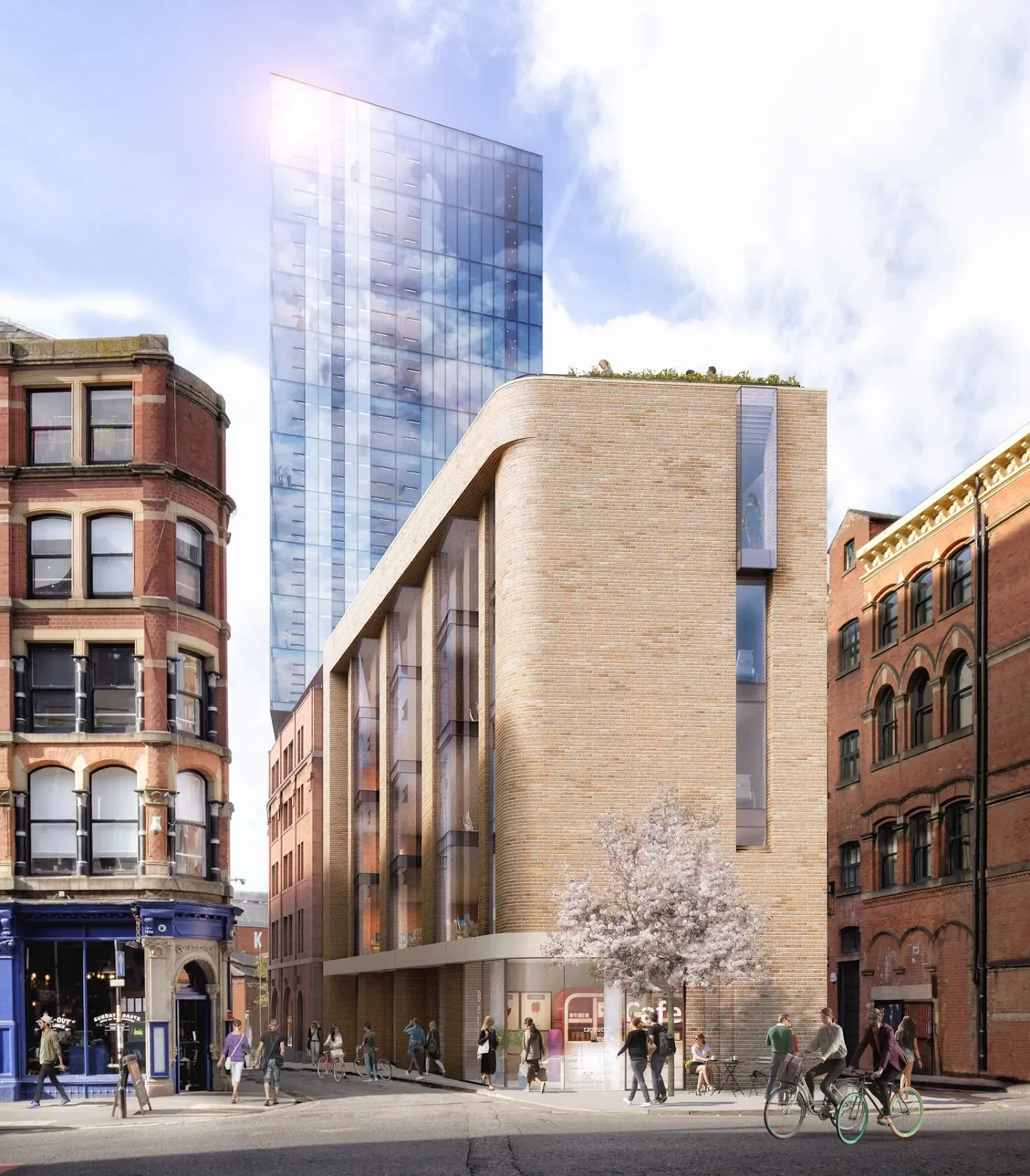
Now called Glassworks, it was a controversial scheme that some felt was a departure from the character of the area. Hundreds signed a petition against it, and local councillor Sam Wheeler said: “I think we’re going to get an ugly 17-storey empty office block blighting an area of the city that’s meant to be a key cultural draw for us.”
There is no evidence to suggest the donation by Salboy to the fundraiser caused the Glassworks application to be permitted. Nor that the Roscoes used the fundraiser as an avenue to attract money from developers looking for favourable treatment (again, they didn’t set it up). But why did Salboy feel it appropriate to make such an outsized donation to a fundraiser linked to the council’s directors of planning? And why didn’t the council and the Roscoes feel a need to avoid any appearance of a conflict of interest?
Salboy had already filed an application for the Glassworks site — a multi-storey glass tower rising above the squat brick buildings of the northern quarter — that had been denied in 2018. Revised plans filed in early 2019 for a residential development were approved, but changed to an office development, with a new application filed on 8 April 2020. The application was approved in late June by a panel of three people. Advising that panel was Julie Roscoe.
At the time, due to COVID-19 restrictions, emergency panels such as this were being used as the full planning committee were unable to meet. The decision to have a stop-gap panel approve such a massive development drew criticism, as it was the last to be approved before full meetings returned that July, and could have been deferred. “The application, because of the sheer size of it, should be in front of the committee,” said Councillor Jon-Connor Lyons. But as one Manchester property insider puts it: “no big planning application in Manchester happens without the Roscoes being involved.”
It clearly has not occurred to those involved that this — a developer making a donation 100x greater than the specified target to a fundraiser linked to planning chiefs — may create a conflict of interest. After all, the donation wasn’t made in secret, it’s there to see for anyone who clicks on the fundraising page. In fact, Salboy wasn’t the only developer to chip in. Virtually all of the money raised came from developers or those connected to them. There was also a £5,000 donation from Mark Slatter, the chairman of Olympian Homes, and £1,850 from the real estate consultant Ben Rose. There were also smatterings of £100 donations from architects, planners and other developers operating in the city.
When we asked the developer if the donation was an effort to curry favour with the Roscoes, they said:
Every year Salboy and its directors make charitable donations to a variety of causes that are close to our hearts. The decision to donate a significant sum to NHS Charities Together in April 2020 — at a point when the NHS was under extraordinary, unprecedented pressure — fell very much in line with our usual philanthropic activities.
When we asked why Salboy couldn’t have just made the donation directly to NHS Charities Together, rather than via a fundraiser linked to the two planning directors the developer was filing planning applications to, we were referred back to the above statement.
While Manchester City Council are adamant that no such donation could be used to win favour with a planning officer, the situation aligns with the fears some in the city hold about how the planning process works.

Dave and Julie Roscoe have been part of the Manchester City Council planning team since the mid-1970s. In that time, the husband and wife rose to the council’s top two planning positions, leading one of the busiest teams in the country and working with the likes of Sir Howard Bernstein and Sir Richard Leese to oversee a property boom that has redefined the city. However, the Roscoes and their department — “very aligned with the Bernstein vision” says author of Manchester Unspun, Andy Spinoza — have long faced rumours that they favour only certain architects, builders and planners. At one point in Spinoza’s book, he describes witnessing such favouritism:
In 2018, a developer who had emerged from a meeting with senior council planners to discuss his plans for a new Manchester hotel told me, ‘I can’t believe what I’ve just heard. I’ve just been told that I have to drop my architect and use one of three named firms.’
When we profiled the architects Ian Simpson and Rachel Haugh last year, they denied they were one of the council’s choice operators. “I get just as much criticism from Dave Roscoe and the council as anybody,” Simpson told us at the time.
But there hasn’t been a tangible piece of evidence that suggests a developer openly tried to ingratiate themselves with Manchester’s top planning duo. Until now.
When we suggested the donation, and other donations, were made so that future applications made by these developers would be looked on more favourably, a council spokesperson said:
The Council has a professional working relationship with a wide range of developers and we are always open to hearing from and working with organisations who are committed to Manchester's ongoing success - and can deliver high quality investment for Manchester that meets the city's growth ambitions.
The planning process in Manchester is a robust, quasi legal process that is guided by both national and local planning frameworks. Every planning application that is received by the local planning authority is judged on its own merits with regard to these frameworks and site-specific considerations. They are determined in accordance with planning policy and the relevant legal framework. As part of that process they are also open to public consultation and decisions are open to legal challenge.
The miraculous jazzercise fundraiser of 2020 isn’t about the city council extorting developers and it isn’t even about a particular development winning favour because of a charity donation. It’s about something that seems to have become Manchester’s Achilles’ heel: the impression among many that the city has allowed itself to become too chummy with the property industry. The appearance of a conflict of interest can be a problem in itself. Next time senior officials do a fundraiser, they should probably circulate it among friends and family.