
Millers who signed up to our free list following our by-election coverage (and a warm welcome to all 1169 of you) will perhaps not yet be aware of the war we waged earlier this year with the Manchester Evening News.
The MEN had not long launched their ‘Premium’ service — a £4.99-a-month subscription that gets you content made “exclusively for [their] subscribers”. The problem was that a significant number of these articles were actually written by Local Democracy Reporters, funded by our TV license fees, and available to all local newspapers for free — including The Mill.
So, in January, we vowed that every time they tried to pass off journalism that you’ve already paid for as exclusive content (and tried to make you pay for it again) we’d publish that same article ourselves, for free. Since then we’ve not caught them at it — until yesterday, when they published a handy LDR-penned explainer on the difference between capital and revenue funding for councils. Save yourselves a fiver, you can read that for free here.
Explainer on the difference between capital and revenue funding
by Local Democracy Reporters
Every council across the country is seemingly circling the drain when it comes to public finances. At least that’s the message that local authorities across Greater Manchester will be saying as we head towards budget setting in the coming weeks.
All councils across the city-region are planning to bump up council tax by 4.99 per cent, with Trafford council upping theirs by 7.5 pc for the second year running in a bid to stave off bankruptcy. This annual rise is always unpopular amongst residents, who tend to see less for their money as town hall bosses make cost savings.
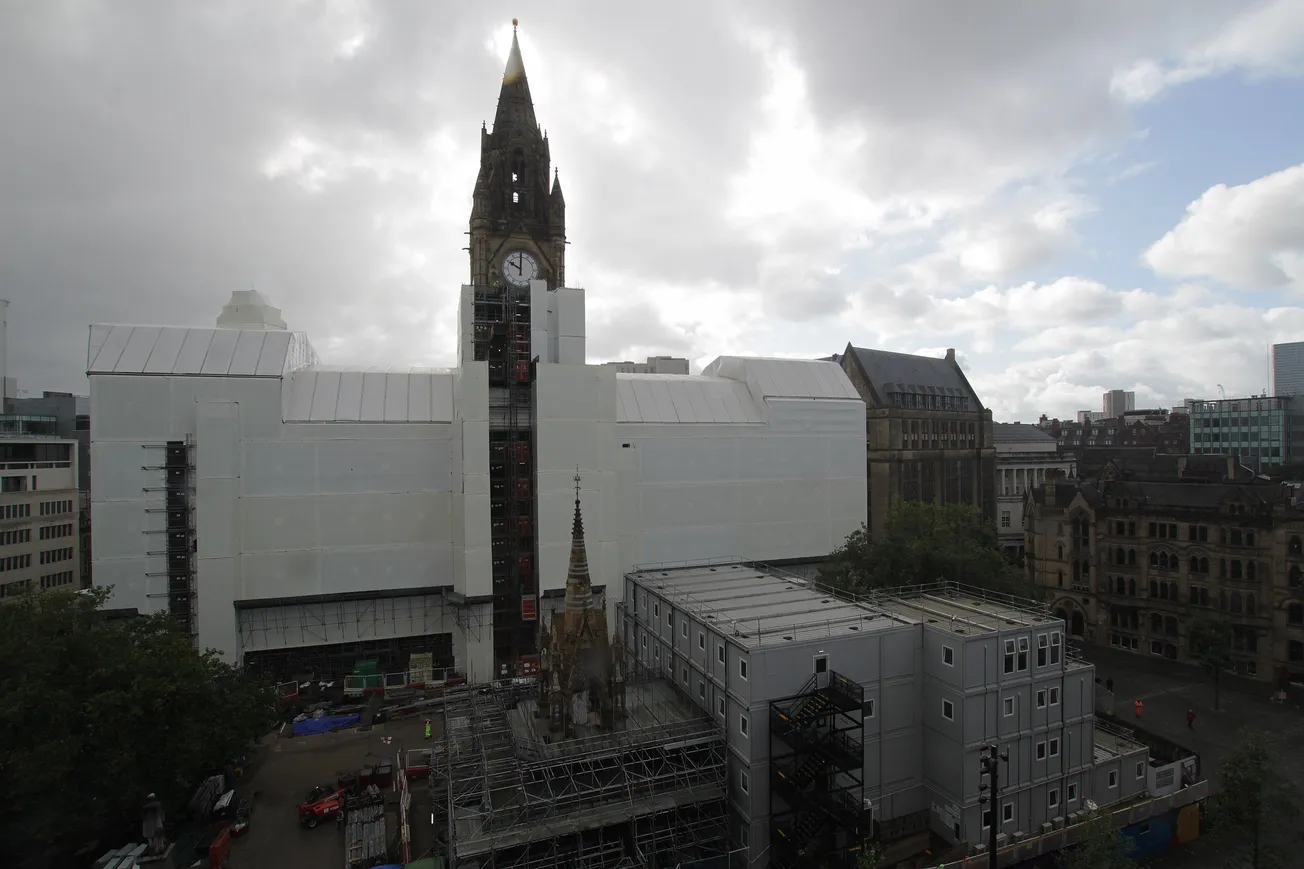
For many across the city-region, this begs the question why Manchester council can afford to spend hundreds of millions on their town hall renovation and why Bury council can fork out tens of millions on a market overhaul. At the end of last year council bosses in Manchester formally signed off the extra £95m to finish work on their town hall, taking the total budget to £525m.
Finance boss at Manchester council, Rabnawaz Akbar, explained that due to ringfenced cash, he couldn’t spend money going towards the town hall on the revenue budget even if he wanted to.
Similarly in Bury, the council has plunged £33m of funding into updating the market in the town centre. The works include a ‘flexi-hall’ for events and a new roof over the traders.
Around £20m of the funding comes from government funding – and £13m directly from the council. Yet the local authority is currently facing a £14m budget gap – and is making cuts to services and jobs to help balance the books.
Bury’s finance boss coun Sean Thorpe explained this is because the council receives the money it spends on day-to-day services separately to the funding it receives for big infrastructure projects like the market. Put simply, funding public services and spending on capital projects comes from two pots of money that cannot cross over.
Examples of capital projects used earlier are the Manchester Town Hall and Bury Market renovations. The same money used for these two schemes cannot be spent on providing services such as waste collection, social care or libraries.
Money spent on services is from the council’s revenue account. The main reason councils need to raise council tax is because it is one of the few ways in which they can generate income for the revenue account to fund services.
The other funding avenues are through business rate collection, charging for services and government grants. Capital funding is not as strict and councils can take out loans in order to improve infrastructure in their areas.
The reason for this is that these projects are seen as investments in the council area and add value. The capital investment into Bury is supposed to ‘future-proof’ the market, to continue bucking the trend of ‘dying high streets’ seen around the rest of the country.
As well as creating new community spaces and retail units for local businesses – which supports the local economy and keeps neighbourhoods alive – the council supports its own income by increasing the amount of business rates or council tax it can receive.
Cash spent on children’s services for example is money that will not see a return on investment – but it is an essential service that needs to be properly funded.
Councils are responsible for delivering these vital services. If local authorities go bankrupt, it may lead to failures in the delivery of these vital lifelines many people take for granted.
Councils going bust can have disastrous repercussions. Local authorities issue a Section 114 notice when they declare bankruptcy, which means they can ask permission from the government to generate income from other streams.
In recent history, this usually results in councils selling off assets (land, buildings, commercial investments). But this is a desperate measure that would impact the council financially in the long-run.
One example is Birmingham City Council, who announced bankruptcy in Autumn 2023. They have reportedly sold off over 1,000 assets to generate £230m to bridge their budget gap.
The knock-on impact of that bankruptcy were huge budget cuts, which led to bin strikes that brought waste collection services to a standstill. Rubbish bags piling up in the streets of Birmingham have been well documented in local and national media.
Additionally, Birmingham council chiefs have hiked up council tax by 17.5 pc, made huge service cuts and sold off assets over the last two years.
This situation may be just around the corner for many other councils. More than a third of councils responding to a recent Local Government Association (LGA) survey say they are likely to have to apply for emergency government bailout agreements to set budgets in the next three years.
While funding levels have risen over the last few years and multi-year settlements provide much-needed certainty, costs and demand pressures continue to outstrip the overall amount of funding available to councils, according to the LGA. The consequences of under-funded local government are fewer neighbourhood services, reduced investment in prevention, growing pressure on those who rely most on local support and more communities feeling like they are not seeing an improvement in their local services.
The LGA has called on the government to provide a significant increase in resources to protect the financial sustainability of councils and our local services and empower councils to unleash growth and service reform at scale. The LGA also believes Whitehall needs to commit to deeper, long-term reform of local government finance, including a cross-party review of council tax, business rates retention and other funding sources.
Coun Louise Gittins, LGA chair, said: “This research underlines the reality facing councils.
“Councils are doing everything they can to protect the services people rely on but demand and costs continue to rise faster than funding, leaving many with no choice but to consider emergency financial support.
“Short-term fixes will not address these challenges. Councils need sustainable funding and reform so they can focus on prevention, growth and delivering the services communities expect.”
The LGA survey shows budget-setting will be another hugely challenging task for many councils this year and beyond. It found that, of those which responded:
Almost six in 10 councils told the LGA it will be fairly or very difficult to set a balanced budget in 2026/27.
While eight in 10 councils feel they will be able to meet their minimum legal duties in 2026/27, this number halves to 43 per cent by 2028/29.
More than a third (34 per cent) of councils have already applied or are very or fairly likely to apply for Exceptional Financial Support (EFS) in at least one of the financial years between 2026/27 and 2028/29.
Bury
Coun Sean Thorpe, deputy leader and cabinet member for finance and transformation, said: “Councils receive separate funding for their revenue and capital spending and their financial systems and must be able to separate the income and expenditure on revenue activities from the income and expenditure on capital activities.
“Money spent on improving the council’s assets is capital expenditure, and includes purchasing new assets, such as land, buildings and roads, but also refurbishing and improving existing ones. Capital expenditure is funded through capital income sources such as capital grants, capital receipts, developer contributions and borrowing.”
Thorpes added the council is ‘currently undertaking significant regeneration activity in a number of Bury’s towns’ which will ‘deliver significant housing growth in addition to enhanced business rates income, whilst safeguarding the sustainability and vitality of the town centre’.
Manchester
Coun Rabnawaz Akbar, executive member for finance at Manchester council, said: “We understand why people ask us ‘how can you justify raising council tax when you are spending large amounts of money on big building projects’. The simple answer is that there are very strict rules about what councils can spend their money on and how that spending can be funded.
“The one-off costs to buy major assets such as land, buildings and equipment, or to carry out significant repairs and maintenance to those assets, are called capital costs. These deliver longer-term benefits and can be funded by borrowing, money raised through the sale of council-owned land or buildings or by securing external funding, such as government grants.
“The ongoing costs of running the council and providing services are called revenue costs. By contrast these cannot legally be funded by borrowing or money raised through the sale of council-owned land.
“So it is completely wrong to suggest that if we hadn’t invested money in long-term capital projects such as the Our Town Hall project, which look to the future, we could have spent it on easing the pressures on our everyday budget. These challenges are the product of unfair cuts to our government funding and unfunded pressures, which have left us having to make hundreds of millions of pounds of savings since 2010. While our financial position has improved under the current government, enabling us to invest more revenue funding in the services that matter most to Manchester people, we are still dealing with that legacy.
“In the case of the town hall building, it’s also important to remember that there would have been a very real cost to doing nothing. The Grade I-listed icon of the city was seriously showing its age, and allowing it to slide into decay and disrepair would have either meant larger repair and maintenance bills in the future or large parts of the building having to be mothballed.
“Either would have been a shameful dereliction of duty. Instead we have taken the once-in-a-century opportunity to safeguard the town hall for current and future generations while improving public access to the building and its historic artefacts, creating jobs for Manchester people and transforming Albert Square into a world class events space. The benefits of these improvements for the city will be felt for decades to come.
“Other examples of capital spending include new social housing in Ancoats, highways maintenance across the city and the refurbishments of council-owned sports facilities such as Manchester Aquatics Centre and the National Cycling Centre – again with real benefits for residents.”