
Last Friday, a story broke that pricked ears on all sides of the political spectrum: “School book banning escalates in the UK”. A school, here in Greater Manchester, had allegedly made a list of over 130 titles to be removed from its library, against the wishes of the school’s librarian. Several Mill readers asked us to report on it, as did Index on Censorship, the press freedom group who broke the story.
One piece of information was missing, an omission which made it difficult to get the full picture. That is: the name of the school.
Some of the titles on the list of ‘inappropriate’ books tackled tricky topics such as misogyny, gender, and race — We Should All Be Feminists by Chimamanda Ngozi Adichie, for example, and Pageboy by Transgender actor Elliot Page. Others appeared entirely innocuous. See: Second Innings, the autobiography of the cricket player Freddie Flintoff, or The Woman in Me by Britney Spears.
The story has been shared widely on social media and has today been picked up by various news outlets, such as the Metro, GBNews and LBC. Among the thousands of predominantly outraged responses were some of the authors whose titles appeared on the list of banned books. Erin Enkins, the author of the book Queerly Autistic, which was among the 130 titles, described the culling as a “moral crusade”.
The story originates with the school’s librarian, who had been working there since 2023 and has now left. According to reporting carried out by Index on Censorship, the librarian was threatened with safeguarding action and even told she could be reported to the police for including inappropriate titles in the school library. Under severe stress, she resigned, describing it as the worst period of her life.
To look into a story like this, we obviously needed to speak to the school, which hasn’t been mentioned in any of the previous coverage. Finding the school wasn’t easy — we only had the information provided in the Index piece, alongside one small clue we’d received from a conversation with the Index reporter. However, after two days of sleuthing, we managed to confirm both the name of the school, and the librarian.
We have not spoken to the librarian, despite our attempts to do so, and we are choosing not to name her to protect her anonymity. But we think it’s important for our local readers – many of whom are parents – to know the identity of the school, particularly given the very serious allegations being made. More than anything, it’s a critical piece of information to understand why this book-banning might have happened and who is responsible for it.
This kind of reporting takes time, and the only reason we can dedicate two days to online sleuthing is because of the backing of our paying members. High-quality journalism about Manchester isn't free to produce, so if you want to support The Mill, and get access to all of our members-only stories, consider signing up today.
As it turns out, it isn’t an ordinary school. The alleged book-banning took place at the Lowry Academy, a state secondary in Salford that received national celebrity and years of negative headlines after starring in the TV show Educating Greater Manchester. The school has since changed its name and is now part of the country’s largest multi-academy trust – a vast organisation which has a Christian ethos and counts the Archbishop of Canterbury as a patron.
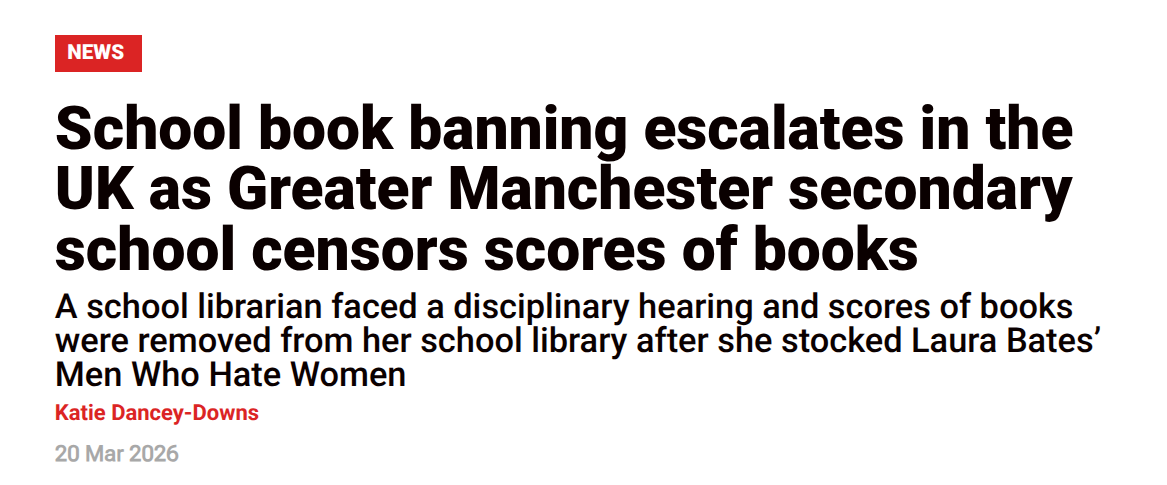
The Lowry Academy told us they “don’t recognise” the librarian’s version of events. In a statement sent to The Mill, they said: “It is not the case that books have been ‘banned’ by the school. Following concerns that a number of books within the library were neither age nor content appropriate, an audit was conducted. Following this, books have been placed into age-appropriate categories and returned to the shelves. A very small number of books were deemed inappropriate even for older children due to their content and have been removed.”
Local Labour MP Yasmin Qureshi told The Mill that “school libraries exist to open young minds, not to reflect the cultural preferences of senior leadership”.
‘It was killing me’
When Emily – the pseudonym given to the librarian by Index on Censorship – came into work one school day last November to find gaps in the shelves of her library, she knew at once that something was wrong.
As she tells it in the Index story, she had recently been instructed by the school’s head teacher to remove Men Who Hate Women by Laura Bates – a popular 2020 book about extremist misogyny – from the library shelves, because it exposed students to misogynistic beliefs. “I was disappointed and upset, but it was just one book,” Emily told Index. She removed the book accordingly.
What followed was a seemingly rapid escalation. The school allegedly launched an investigation into Emily’s conduct as a librarian, and she was called into a meeting with the school’s designated safeguarding lead and the head of HR. “I went home that night feeling very uncomfortable and kind of knowing in the pit of my stomach that things were about to get very bad,” Emily told Index, “but I had no idea quite how bad.” The morning after the meeting, she arrived to find the library shelves missing numerous books.
Because we haven’t spoken to the librarian, it’s difficult to fill in some of the gaps in the story as reported by Index. We are told that Emily was asked to conduct an audit of books in the library (this appears to be after some books had been removed), based on three AI-generated criteria: books that were not written for children, books with themes that could be upsetting to children and books that could be inappropriate or constitute a safeguarding risk (Emily says that no definition of “inappropriate” was provided). Emily removed around 15-20 books in accordance with this list. “[A]nd it was killing me,” she says.
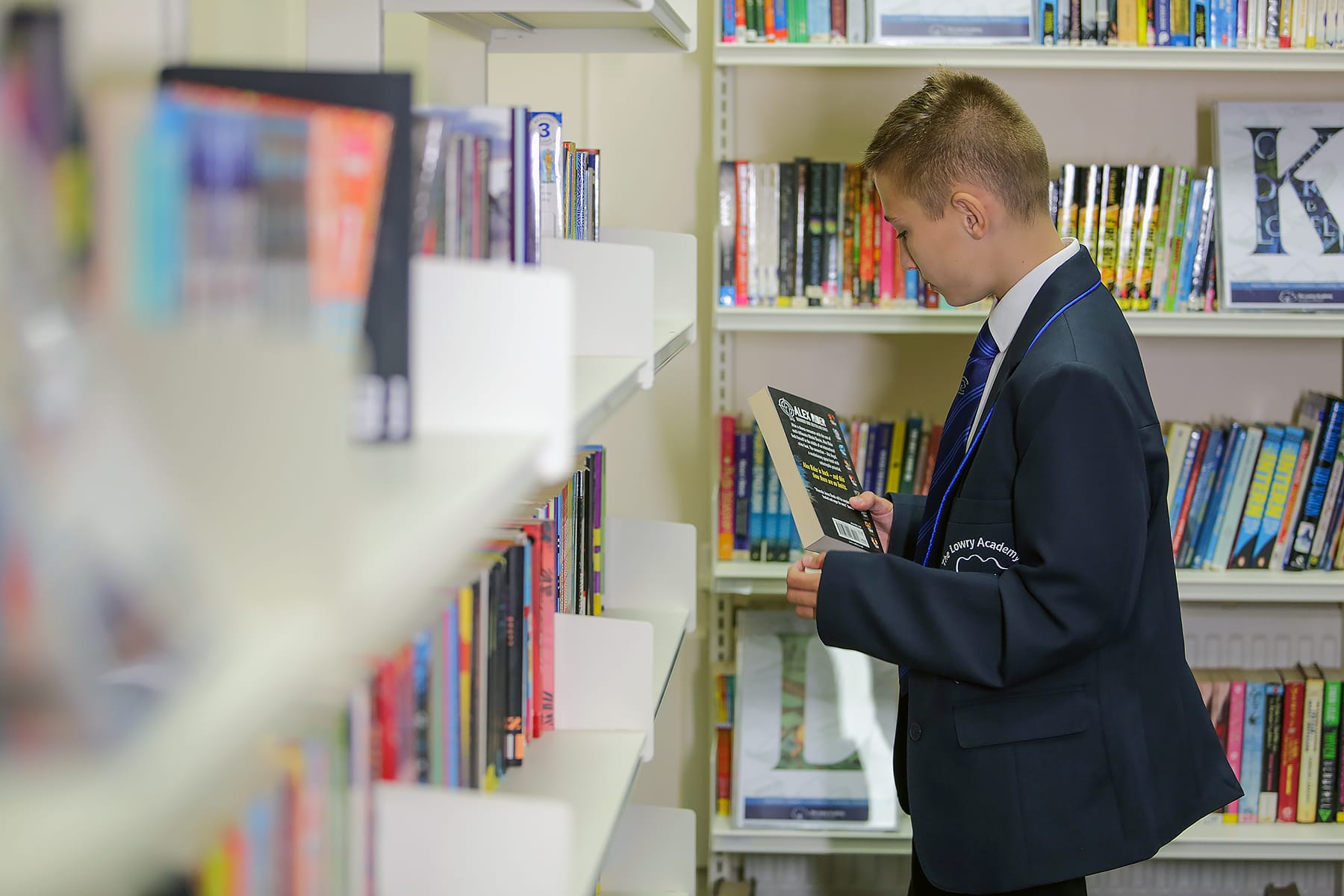
Some time after this, Emily was allegedly shown a list of books deemed inappropriate for the school library, titled “Final List of alleged books with inappropriate content”. The titles are a motley crew. Among them are Stopfordian boxer Ricky Hatton’s autobiography, a graphic novel version of 1984, and Will by the actor Will Smith. Some people sharing the Index story online noted that many of the books seemed to address themes of gender and sexual identity. Among them: What’s the T; The Trans Guide to Mental Health and Wellbeing; Pageboy; The book of non-binary joy; and Queerly Autistic.
But the Index report is ultimately only half a story: an anonymous librarian; an unknown school; with gaps in the timeline and only one perspective. Since Monday, countless Mill readers have been in touch with us via email, Whatsapp, and social media, asking us to investigate which school was involved, as so we did exactly that.
‘I haven’t heard a whisper’
First — a quick note on revealing the school. Emily made clear that she desires anonymity, and we will not be revealing her identity in this piece. However, a mainstream publicly-funded school banning books is a matter of significant public interest. Parents, particularly those with vulnerable children, have a right to know if their child is attending a school that is banning books from their library. As the author of Queerly Autistic put it: “This moral crusade only hurts young people – particularly young autistic people.”
I began my reporting on Monday afternoon by speaking to the journalist behind the Index report. She refused to reveal the school, but advised that I speak to a number of Manchester-based, library-related organisations, for broader comments about the ban. Every one of these organisations was already mentioned in the Index article itself, bar one: the Greater Manchester Learning Partnership, so I took particular interest in this one.
The GMLP has no contact information on its website, but its home page features a letter from its independent chair, one Margaret Woodhouse MBE. Woodhouse herself was difficult to find a contact for, but a quick Google search revealed that she was also the CEO of a school: the Lowry Academy in Salford. I emailed them asking if they could put me in touch with Woodhouse, but they didn’t reply.
Around this time I had also begun looking at recent job listings for school librarians in Greater Manchester. The Index report made clear that Emily resigned around November, so I specifically searched for listings made since then.
The fourth listing that appeared was for the Lowry Academy. It was a school in Greater Manchester, as opposed to Manchester itself, had children between the ages of 11 and 16, as specified in the Index article, and they had advertised for a librarian in early January.
On a section of their school website titled ‘The library and reading routes’, they name the genres available in their library, among them “Gothic/Horror” and “Manga/Graphic”, two genres mentioned in the Index piece. I also found the surname of the pre-job-listing school librarian, let’s call her Mrs Everton (I have since asked them to remove this information, and it’s no longer available on their website).
By Monday 8pm, I messaged the chair of the Manchester School Library Association: “It wouldn't be anything to do with the Lowry Academy would it? That's a name that keeps popping up for me.”
“I haven’t heard a whisper,” she replied.
At this point, the evidence pointing to the Lowry Academy was pretty weak, and it was only one of three school names on my list. But on Tuesday evening, I found a social media post that appeared to be posted by a friend of the librarian. This person wasn’t linked to the librarian directly on social media, but one of the people who had liked one of her photos was a pseudonymous social media account that had previously posted under another name: the same name as the former librarian at the Lowry Academy.
We were now fairly sure this was the right school. So I turned up there yesterday morning to try to speak to the head teacher.
A famous school
If you don’t recognise the name the Lowry Academy, that’s likely because it’s only been called that since 2021. Better known is its previous name Harrop Fold: a school made famous when it featured on the 2017 Channel 4 documentary Educating Greater Manchester, and which received a second bout of notoriety when its then-celebrity head teacher Drew Povey was barred from teaching after he was found to have been “off-rolling” pupils by removing them from school without officially excluding them.
Povey was suspended from his position in 2018, and later resigned to be replaced by Claire Coy, who grew up in the local area and studied at Manchester Met. In 2021, the school changed hands from being a comprehensive administered by Salford City Council to an academy sponsored by United Learning, a vast organisation that operates schools across the country including Stockport Academy, and primary schools in Gorton and Crumpsall. Their state-funded schools are free to attend and accept students of “all faiths and none”, but their ethos is billed as an expression of their “Christian roots”.
United Learning traces its roots back to 1883, when it was founded as the Church Schools Company by a committee that included the Archbishop of Canterbury (every Archbishop since has been a patron). Its first academy, Manchester Academy, opened in 2003, and it now employs 9,000 staff, including 5,000 teachers, according to one of its school websites, making it one of the largest charities in the UK. In 2016 it received a donation of £5 million from Alan Howard, co-founder of one of the world’s biggest hedge funds and a major Conservative Party donor. David Cameron described this donation as one of the most generous to schools ever in the UK.
The year United Learning took over Harrop Fold is the year it changed its name to the Lowry Academy. It received a Good rating in every category when Ofsted last inspected the school two years ago.
When I arrive at the school, the receptionist tells me that Mrs Coy is busy at the moment, but she could see if the librarian is free to talk to me. “Who is the librarian?” I ask. She can’t remember; they only started here last week. “And the previous librarian was Emily Everton, right?” I ask. “That’s it!” she smiles.
As it transpires, the new librarian is busy too, so the receptionist recommends that I simply email the school. I do so immediately, letting them know that I’d like to speak to them about book banning, and that I’m downstairs in their reception. Within five minutes I’m greeted by the vice principal, Mrs Jones, who refuses to answer any of my questions, and refuses to speak to me in a private room until I mention book-banning out loud, at which point she pulls me immediately into a private room and tells me not to talk about that in front of the parents.
I leave the school without responses to any of my questions — indeed without the opportunity to ask them. However, after sending an extensive list of questions, I later receive an email from United Learning telling me that “the school does not recognise this version of events [as detailed in the Index report] or accept the allegations being made”. I ask them if they’re denying the events as told, or if they’re denying any involvement with the story, and they confirm the former, also, finally, confirming that the Lowry Academy is indeed the school in question.
What the school hasn’t done is provided its own account of what happened, or offered up a senior figure for us to interview about it. In a statement sent to us just before we published this story, the Lowry Academy said:
“It is not the case that books have been ‘banned’ by the school. Following concerns that a number of books within the library were neither age nor content appropriate, an audit was conducted. Following this, books have been placed into age-appropriate categories and returned to the shelves. A very small number of books were deemed inappropriate even for older children due to their content and have been removed.”
‘Kids should be able to read what they like’
We sent a reporter to speak to parents outside the Lowry Academy this morning – none of whom had heard about the alleged banning. “It’s ridiculous, the banning of any books,” one parent told us. “Kids should be able to read what they like, you know, as long as it’s appropriate.” One mother, who had recently moved to the UK, was shown the list of banned books, and told us that children “shouldn’t be sheltered from these issues. These are real problems in society and children should be equipped with how to understand them.”
One father told us that he was particularly surprised about the alleged removal of books pertaining to misogyny, as he finds this to be an increasing issue amongst young boys. He himself has two sons, and is concerned about what he overhears them saying while playing Xbox. He also adds it’s particularly important to have books on race in a school as diverse as the academy.
“They should have notified the parents… it’s part of their education,” a different mother tells us, while one mother who works as a Social Worker with young boys adds that “kids should be sheltered from some ideas, but they need to know how to balance it out, and what to reject and keep.”
“It’s fear I think,” she says of the school’s behaviour. “They’re frightened of parents' reactions, or government bodies.”
Yasmin Qureshi, Labour MP for Bolton South and Walkden, tells us that “school libraries exist to open young minds, not to reflect the cultural preferences of senior leadership.” She went on: “Every child deserves access to books that reflect the full breadth of human experience, and the librarians who curate those collections deserve our support, not disciplinary proceedings.”
If you know more about this story, please get in touch. Please let us know what you think about this story in the comments.
This story features additional reporting by Cameron Baillie.
If someone forwarded you this newsletter, click here to sign up to get quality local journalism in your inbox.


