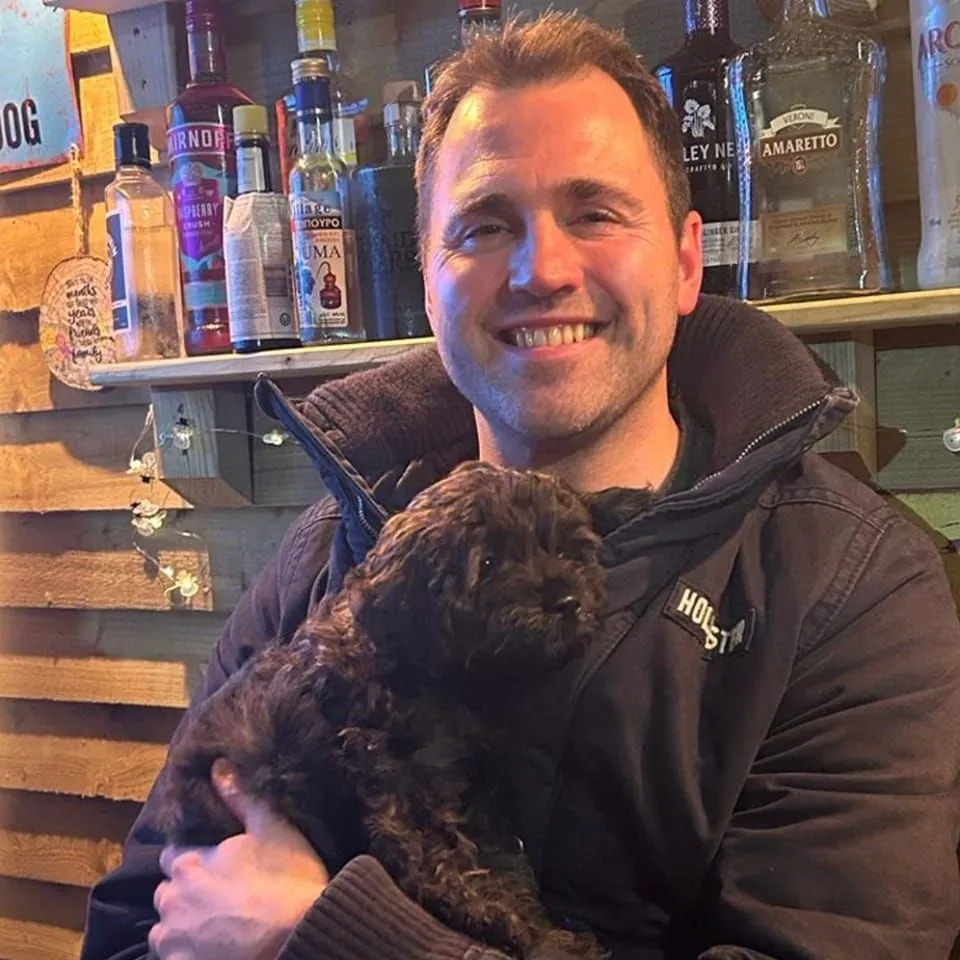
Last summer I watched in horror as Reform UK’s first ever councillor in Greater Manchester was catapulted from an off-road dirt bike. For a second, with councillor Allan Hopwood suspended mid-air, I felt a burden I have never felt before or since: That in my bike oil-greased hands rested the fate of Reform in the borough of Tameside.
Hopwood landed, this was in the middle of our interview, surviving the fall, but lay helpless among long grass like a wounded gazelle. I had a decision to make. I could hop on Hoppy 69 (he has this written on his dirt bike), turn it up full whack, and run the councillor over, finishing him off. Had I done so, Reform UK would be again reduced to zero Tameside councillors. They’d have lost their little ledge in the borough, and the momentum it carried. But I couldn't do it.
Reform’s presence in Tameside was little more than the subject of an off-beat, off-road Mill interview last year, but in recent weeks it’s become a matter of national importance. To understand how we’ve got to this point, you have to understand Gorton and Denton itself. And the first thing you have to understand is that it isn’t just Gorton and Denton in Gorton and Denton. Those are just two titular components of one of the strangest and bitty-est constituencies in the UK — one containing both half-mast Union Jacks and £10 plates of cabbage.
In a Denton pub, a few people around the bar draw comparison between the two halves of this constituency. “Yeah, it’s shite here,” a man says. “But it’s shite in Gorton too.”
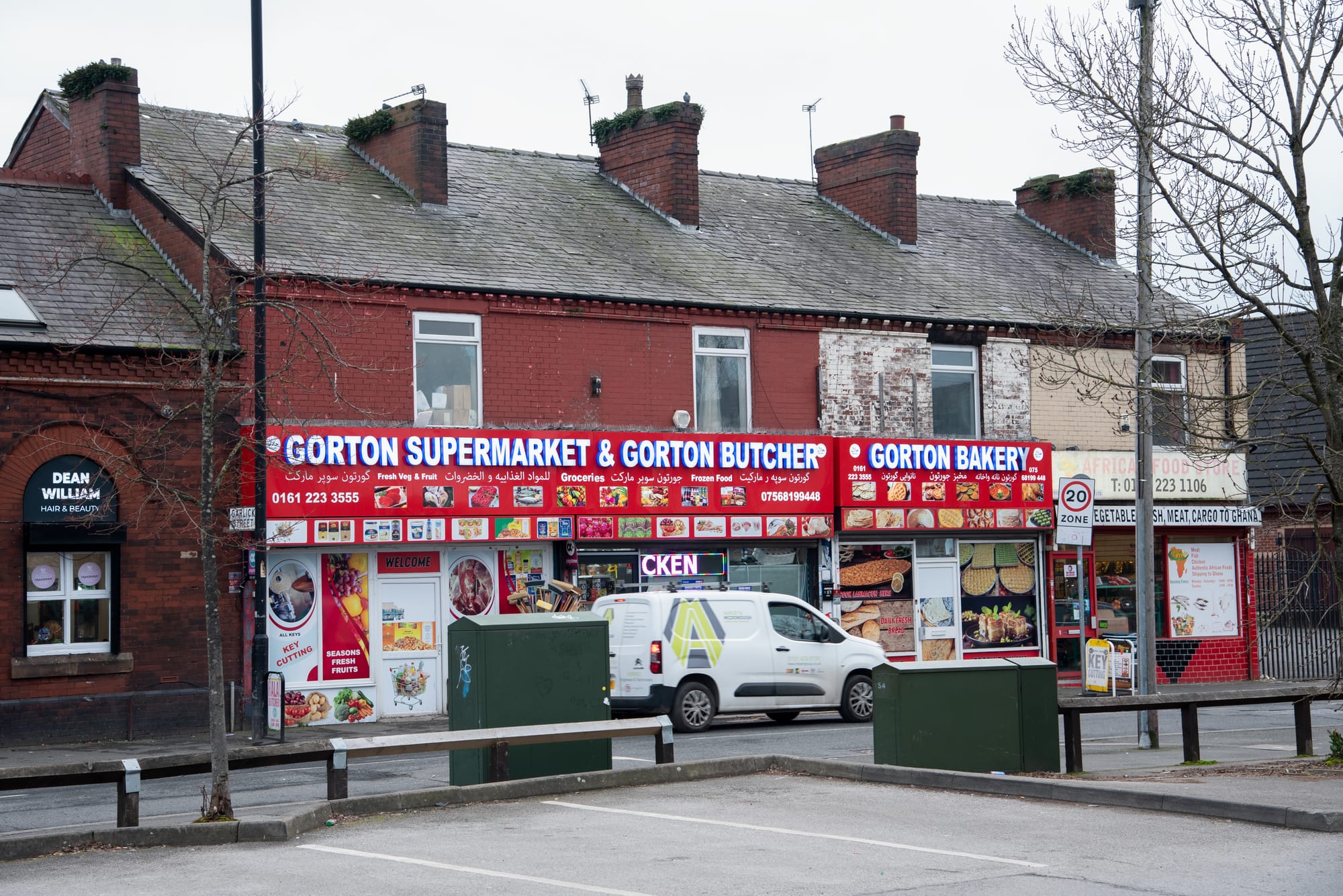
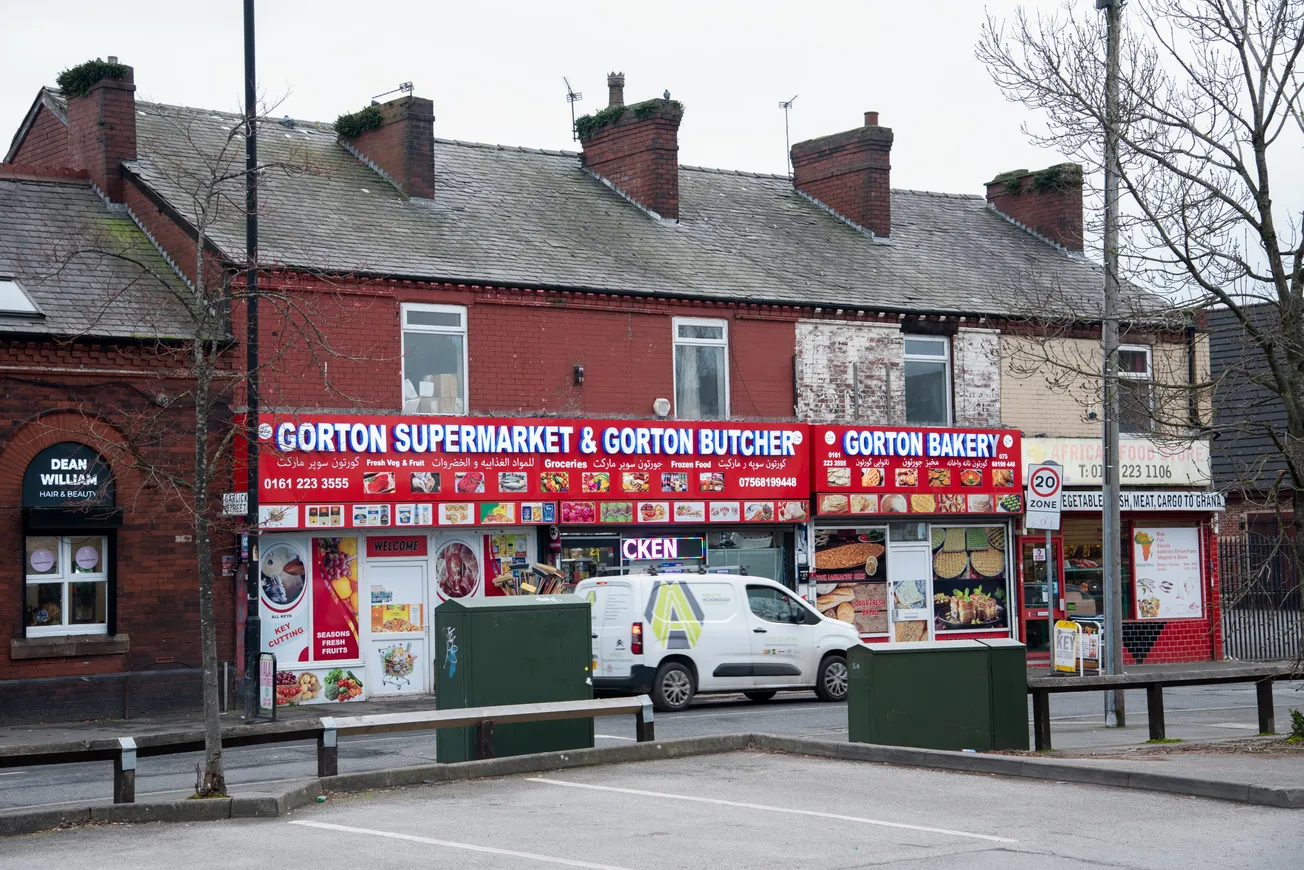
Is this fair? I decided to walk all the way from Manchester to Denton and back. The walk isn't the kind to pop up in a hiker’s guide, but it has its moments, taking you past the vestiges of Gorton’s lost industries, pubs like the Steelworks Tavern, and Pugin’s Gorton Monastery, also known as Manchester’s Taj Mahal. It’s when you arrive in Gorton that things get more difficult — over 65% of households are deprived in at least one of the categories laid out by the Indices of Deprivation. Near the big Tesco, a woman called Mary tells me that Labour will get what’s coming to them after the Burnham-blocking.
“I’m appalled, I really am,” says Mary, a lifelong Labour voter in her 60s. “Can you hear it in my voice?” I can. She thinks Sir Keir Starmer has done little less than gamble on the country’s entire future: that opening the possibility to a Reform win here could have huge ramifications down the line. She “hates” Reform, she clarifies, but believes a victory for them would be a twisted form of comeuppance.
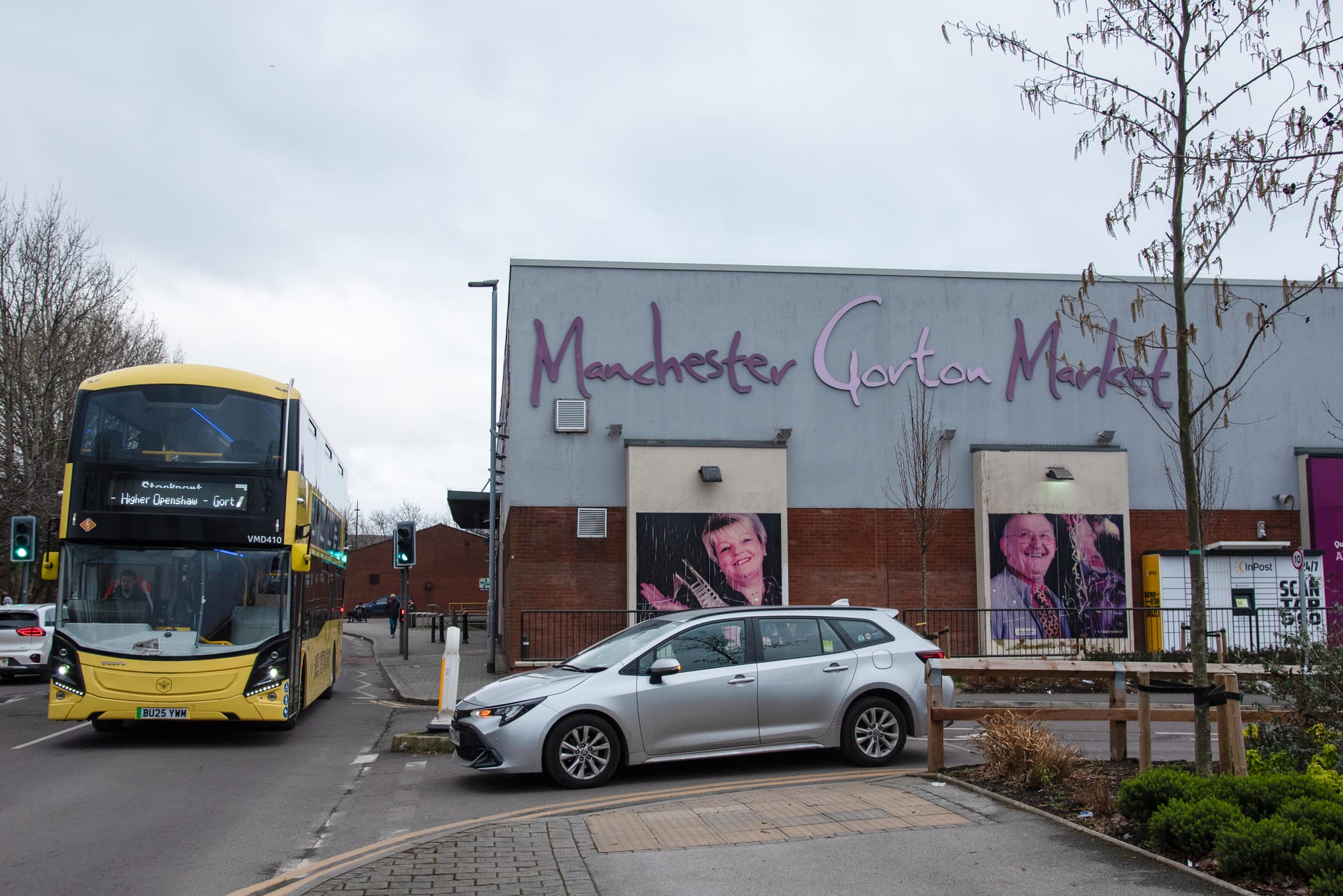
Moving on to Gorton’s large indoor market – which sells fantastic smelling Afro-Caribbean food and over-indexes on nail bars – I meet Abdul, a smiling 40-something who works for Uber, and believes that a Reform win is the best possible outcome for the area. He tells me he’s an outlier among his friends, an outlier even in Gorton — naturally, Reform won’t be expecting to make huge inroads with the large Muslim population here. His dissatisfaction at Labour, and Starmer, seems to be a dissatisfaction at the world, or at least this patch of it. “Look around everywhere,” Abdul says, both incredibly vaguely and with surprisingly clarity. “It just needs sorting out”.
This means of course that Abdul will be voting for Matt Goodwin, who was the first candidate from the three competitive parties to be announced. Goodwin is a right-wing political commentator and academic who is best known for his prolific online presence, but on Tuesday he made a foray into the real world, at a pub in Denton. I am a real and normal man, declared Goodwin, with a story about how he used to deliver pizzas at record-breaking speed. Watching Goodwin adjust to his human form was like the inverse of an avant-garde sci-fi film where a man becomes trapped in a computer, but with some of the conventions of body horror (the nearby presence of Lee Anderson). I ask Abdul if he’s heard of Goodwin. He hasn’t.
Gorton and Denton is being described in the national media as “a seat of two halves”: The more left-wing Manchester half, with its higher graduate and Muslim populations; and more promising-for-Reform Tameside half, whiter and more working class. This is more or less true, according to the highly respected Rob Ford (political scientist, University of Manchester) in this excellent blog post. But it doesn't quite tell the full story. Unlike the gentrifying parts of the Manchester-wing (such as Levenshulme), few would consider Gorton an upgrade on Denton. Don Berry tells me that before he was born, his father moved from Gorton to Denton, which was a move in the right direction, Gorton having dinky terraces, Denton boasting its up-in-the-world semis.
This remains broadly true. Denton is still largely working-class aspirational, its suburbs considered mostly pleasant, its town centre able to sustain an Ornella’s — a hole-in-the-wall Italian selling lobster ravioli. On the two-mile stretch of my walk that links the two, I pass Denton Golf Club. There is no Gorton Golf Club. That said, the ‘town centre’ of Denton is mostly built around Crown Point shopping centre, with its Aldi and TK Maxx.
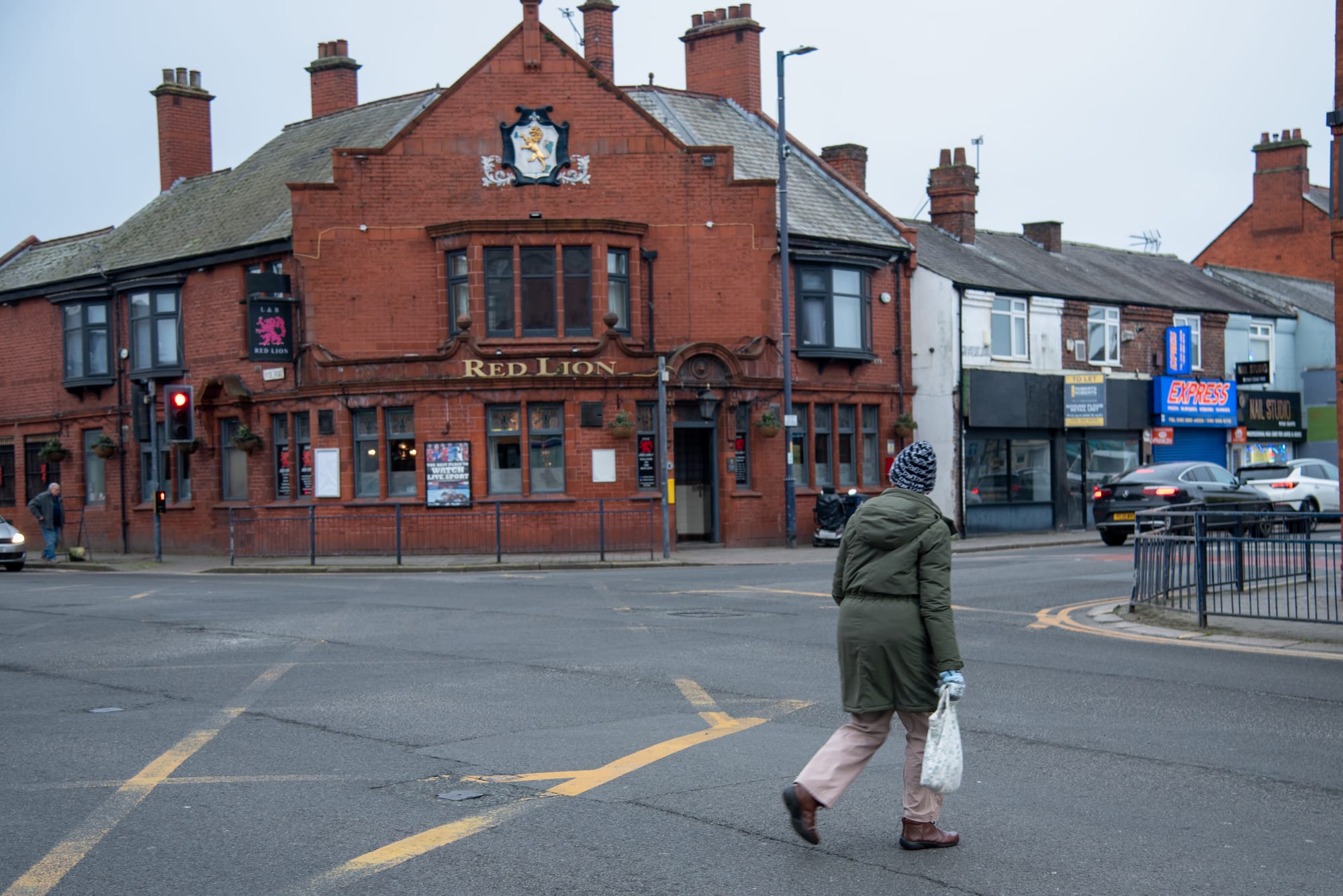
I enter the Red Lion in Denton, where a man is regaling the barmaid and a fellow drinker about his erstwhile career as a singing coach. His best advice? “Get the back straight and clench the buttocks”. Then my ears prick up. Earlier in the day the group had a visitor: Reform UK’s Matt Goodwin. “What was he called, Tom something?” asks the barmaid. “I don’t care what he’s called,” proffers the singing coach. “He’s from bloody St Albans… and he had a stupid southern accent”.
Another media man with a stupid southern accent who came to Gorton hoping to leverage the deep unpopularity of a Labour government was Winston Churchill, grandson of Sir Winston Churchill. It was 1967, and Gorton was in byelection mode after the death of its Labour MP. There’s a great documentary about that byelection called Situation Vacant, produced by Granada TV, which depicts Gorton as a “grim, dull, grimy” place where the broad sense that the country has gone to the dogs means Labour are flapping (“to me, politics is a load of rubbish,” one voter tells us, timelessly). In the end Labour held on by a slim margin, a greatly reduced majority and an early indicator of the defeat awaiting the government at the next General Election.
You wouldn’t need to have mastered the art of spotting historical patterns and parallels to decipher the point of that interlude. The winning Labour candidate, Kenneth Marks, did hold onto his seat as the country swung right in 1970, though, eventually passing it on to Gerald Kaufman, whose name is remembered by Sir Gerald Kaufman Close: an anachronistic cluster of houses in Gorton, given that they were built after 1950. Manchester lost Kaufman, one of its highest profile Labour politicians, and one of its most outspoken, in February 2017, when he passed away. Two months later it gained its new highest profile politician, Andy Burnham, who won by a landslide to become mayor.
Burnham has his critics, certainly, but were he running in this race I’d be striding into the Denton William Hill branch with breezy equanimity. In Gorton, Denton and Levenshulme I speak to voters for whom Burnham would be the only thing to keep them voting Labour, while one woman from Denton wrote in to tell us 15 separate family members of hers will be abandoning Labour for Reform now that Burnham’s off the ticket. Now, the person hoping to fill that Burnham-shaped void in the Labour offer will be Angeliki Stogia, a Labour councillor in Whalley Range.
And what we observe now is how the martyrdom of Burnham has become a popular pastime, as opposed to a mere preoccupation of headline writers. He’s not just a good politician, not even just a good man, but “too good” of a man to be allowed (back) into the halls of Westminster, says Rita, in Gorton. And when you say no to Burnham, you also say goodbye to Rita's vote. “I’ll see what the Greens have to say for themselves,” she adds, qualifying that it’s now a toss up between them and a lie in.
I wander into Levenshulme and begin my search for a Green by flagging down a group walking around with Green Party leaflets. Their candidate was the second of the main three parties to be announced: Hannah Spencer, a plumber from Hale. One of them tells me they spent the morning bearing witness to nothing but fury at the Labour government. “People could not be angrier”.
And crucially, this side of the seat, the Manchester side, the side where the Greens have got a good shot, is just bigger. As per Prof. Ford, it has 55,000 registered electors, to the Tameside chunk’s 26,000. This is the challenge Reform faces. This bigger bit has more graduates (30.3% to 22.5%) and far more Muslim voters (39.5% to 5.9%) than the Denton bit.
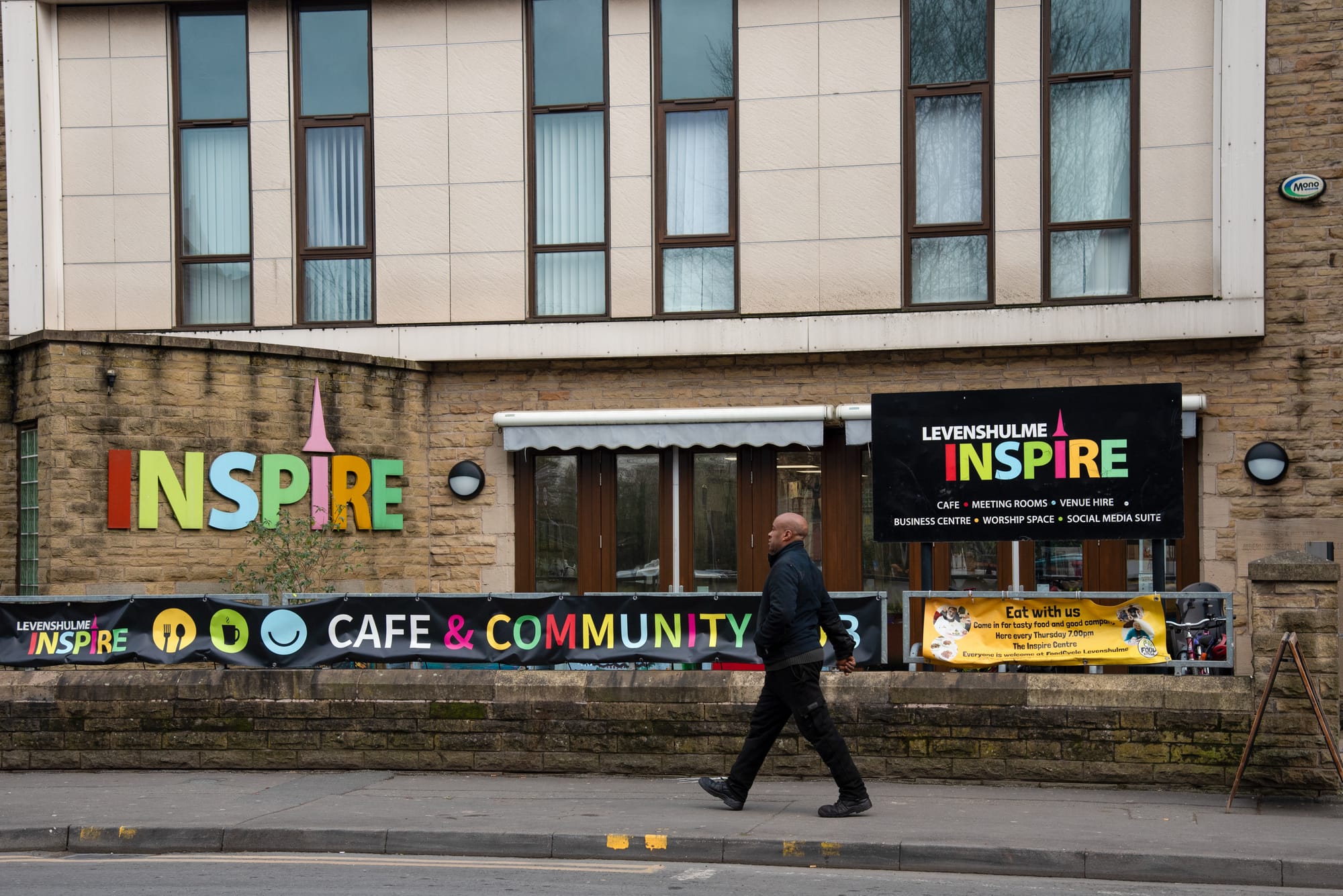
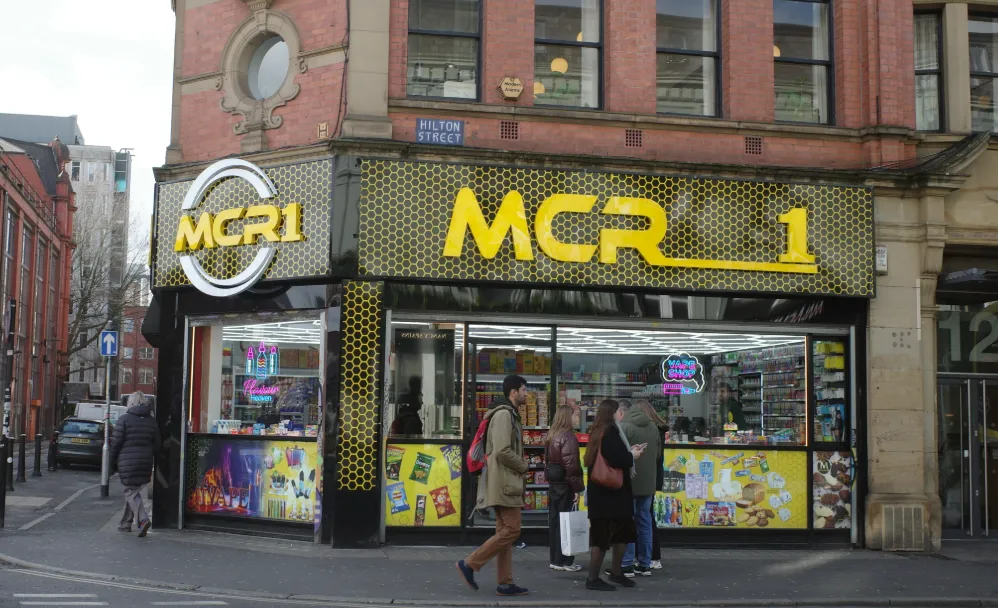
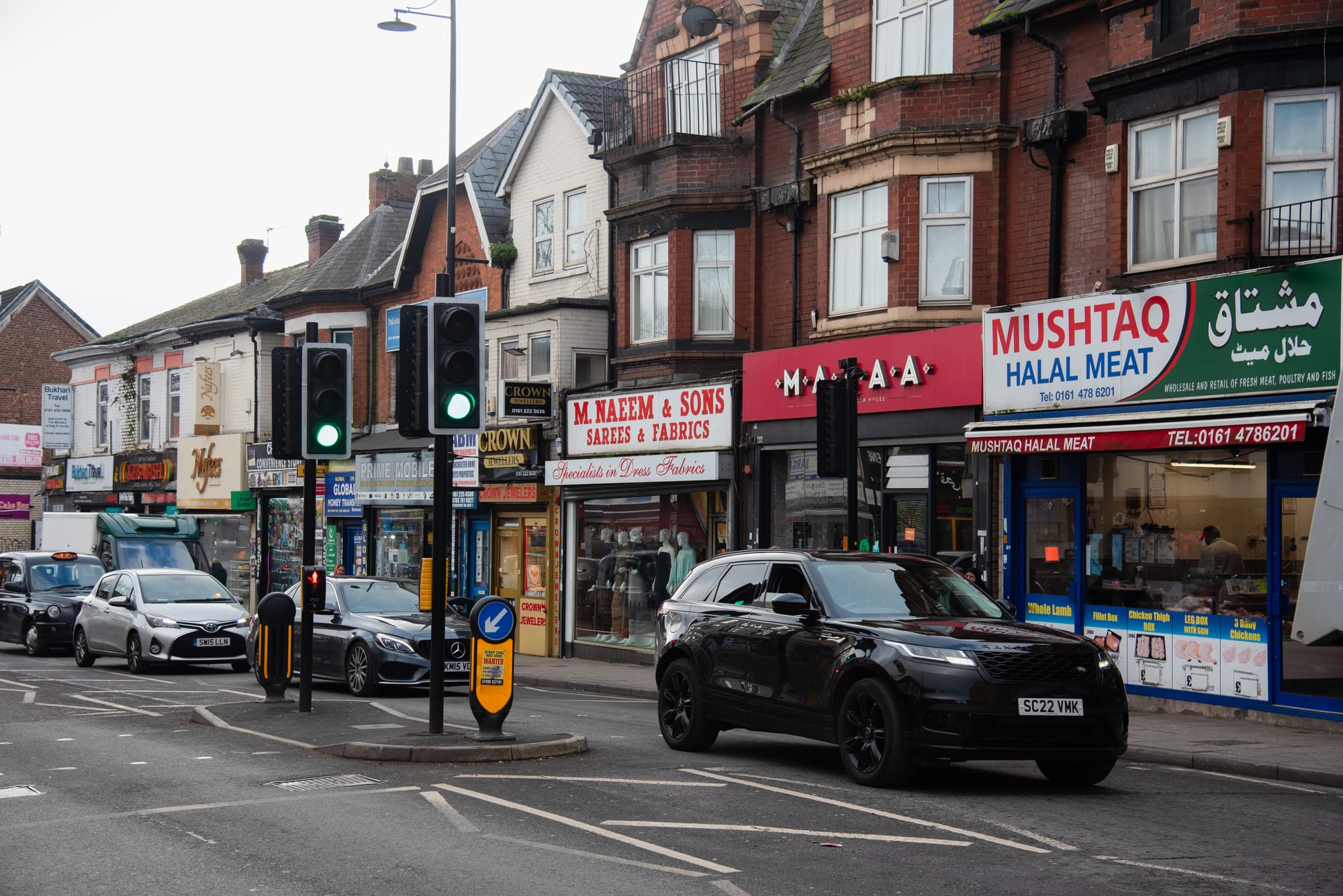
But despite the stereotype of Levenshulme as a poster child for gentrification (my £10 cabbage line near the start of this piece wasn’t flippant, you can indeed find a £10 plate of cabbage in Isca), you can also walk along parts of the long Stockport Road and feel like you’re almost back in Gorton, with its mix of Asian boutiques called House of Serene or Rogue Fashion, and where pubs like The Horseshoe and The Levenshulme represent the area’s less-discussed working-class community. And yes, the Green Party will surely believe the big Muslim population presents an opportunity, due to anger at Labour over Gaza, but the pork-pied-piper of anti-Labour protest votes, George Galloway, will also be fielding a Worker’s Party candidate (among the options are Shahbaz Sarwar, a big figure in Longsight's Muslim community, and Galloway himself). If he splits the left-wing protest vote he won’t only be damaging Labour, but the Greens too, and strengthening Reform.
The group of Greens busy themselves spreading the G-word (Green), and the other G-word (Gaza). I talk to another of them, who rebuffs the above by telling me the Labour vote has collapsed even more spectacularly at the left-end of its coalition. “The people we’re talking to are so, so angry. [The Worker’s Party] might win some votes but truthfully, there are a lot of votes to be won”.
Anyway, I can’t tell you who will win. Rob Ford is leaning Green, and he’s got his head screwed on much more than I do. Instead, allow me a joke, which hopefully captures what an incredibly complicated seat this is. Gorton and Denton, then, is a constituency which belies simple categorisations. To reduce it to G&D, say, would be to ignore B, B and L (Burnage, Belle Vue and Levenshulme) although it is both a potent cocktail of a constituency, and one in need of a little lift.
Thanks for reading our story about the Gorton and Denton by-election, which we will continue to bring you all the latest about over the coming weeks.
This piece, like most of our weekend reads, is free for anyone to read, but journalism like this still costs money to produce. For this to work, we need the subscribers that pay to support our journalists, so they can put in the time and energy to properly report, and give Manchester the kind of journalism it deserves.
If you’d like to join as a paid subscriber today, it’d cost you the price of a few coffees a month, and it’s even better value if you take out a yearly subscription.
If someone forwarded you this newsletter, click here to sign up to get quality local journalism in your inbox.