
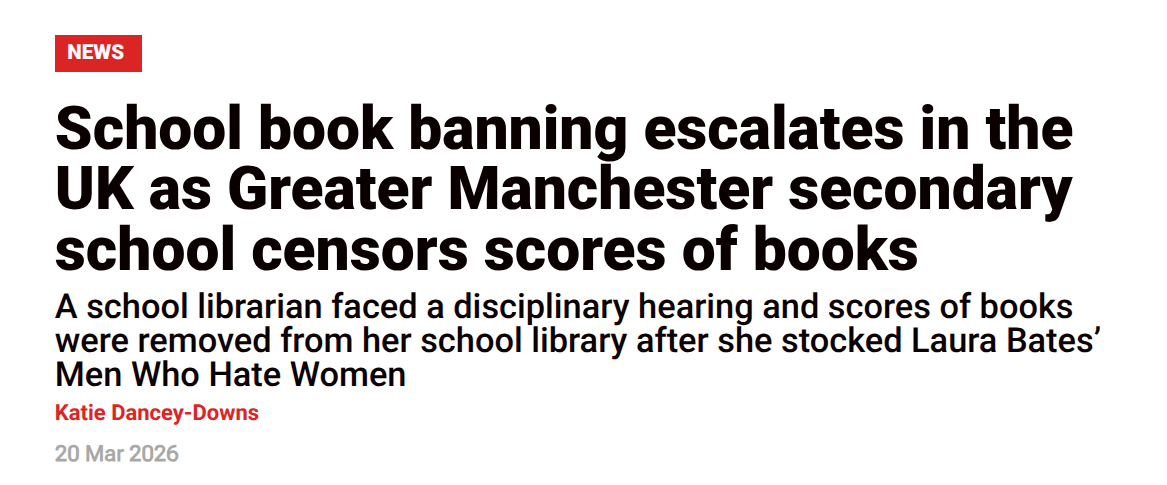
Last Friday, a story broke that pricked ears on all sides of the political spectrum: “School book banning escalates in the UK”. A school, here in Greater Manchester, had allegedly made a list of over 130 titles to be removed from its library, against the wishes of the school’s librarian. Several Mill readers asked us to report on it, as did Index on Censorship, the press freedom group who broke the story.
One piece of information was missing, an omission which made it difficult to get the full picture. That is: the name of the school.
Some of the titles on the list of ‘inappropriate’ books tackled tricky topics such as misogyny, gender, and race — We Should All Be Feminists by Chimamanda Ngozi Adichie, for example, and Pageboy by Transgender actor Elliot Page. Others appeared entirely innocuous. See: Second Innings, the autobiography of the cricket player Freddie Flintoff, or The Woman in Me by Britney Spears.
The story has been shared widely on social media and has today been picked up by various news outlets, such as the Metro, GBNews and LBC. Among the thousands of predominantly outraged responses were some of the authors whose titles appeared on the list of banned books. Erin Enkins, the author of the book Queerly Autistic, which was among the 130 titles, described the culling as a “moral crusade”.
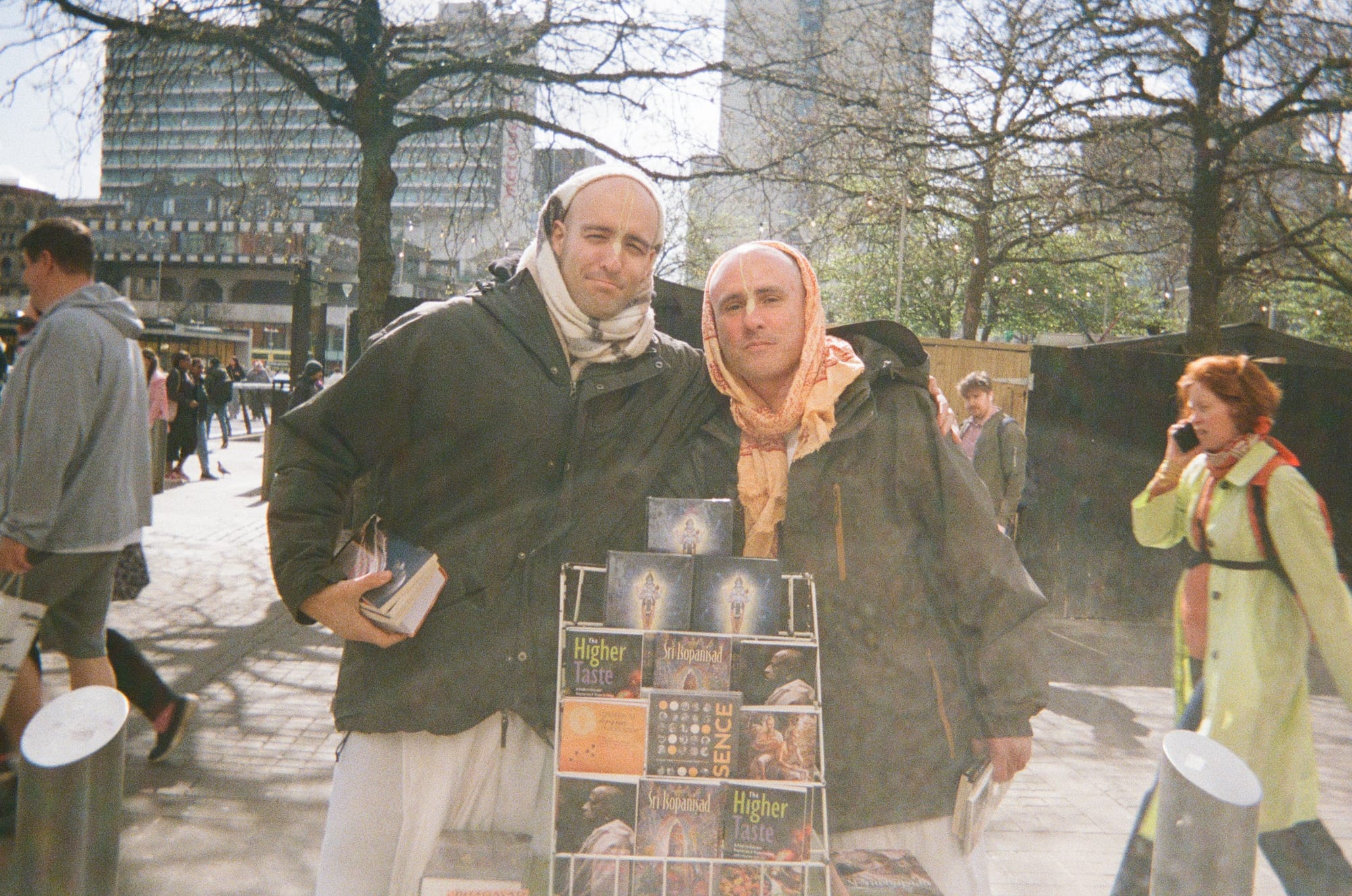
The story originates with the school’s librarian, who had been working there since 2023 and has now left. According to reporting carried out by Index on Censorship, the librarian was threatened with safeguarding action and even told she could be reported to the police for including inappropriate titles in the school library. Under severe stress, she resigned, describing it as the worst period of her life.
To look into a story like this, we obviously needed to speak to the school, which hasn’t been mentioned in any of the previous coverage. Finding the school wasn’t easy — we only had the information provided in the Index piece, alongside one small clue we’d received from a conversation with the Index reporter. However, after two days of sleuthing, we managed to confirm both the name of the school, and the librarian.
We have not spoken to the librarian, despite our attempts to do so, and we are choosing not to name her to protect her anonymity. But we think it’s important for our local readers – many of whom are parents – to know the identity of the school, particularly given the very serious allegations being made. More than anything, it’s a critical piece of information to understand why this book-banning might have happened and who is responsible for it.
This kind of reporting takes time, and the only reason we can dedicate two days to online sleuthing is because of the backing of our paying members. High-quality journalism about Manchester isn't free to produce, so if you want to support The Mill, and get access to all of our members-only stories, consider signing up today.
As it turns out, it isn’t an ordinary school. The alleged book-banning took place at the Lowry Academy, a state secondary in Salford that received national celebrity and years of negative headlines after starring in the TV show Educating Greater Manchester. The school has since changed its name and is now part of the country’s largest multi-academy trust – a vast organisation which has a Christian ethos and counts the Archbishop of Canterbury as a patron.
The Lowry Academy told us they “don’t recognise” the librarian’s version of events. In a statement sent to The Mill, they said: “It is not the case that books have been ‘banned’ by the school. Following concerns that a number of books within the library were neither age nor content appropriate, an audit was conducted. Following this, books have been placed into age-appropriate categories and returned to the shelves. A very small number of books were deemed inappropriate even for older children due to their content and have been removed.”
Local Labour MP Yasmin Qureshi told The Mill that “school libraries exist to open young minds, not to reflect the cultural preferences of senior leadership”.
‘It was killing me’
When Emily – the pseudonym given to the librarian by Index on Censorship – came into work one school day last November to find gaps in the shelves of her library, she knew at once that something was wrong.
As she tells it in the Index story, she had recently been instructed by the school’s head teacher to remove Men Who Hate Women by Laura Bates – a popular 2020 book about extremist misogyny – from the library shelves, because it exposed students to misogynistic beliefs. “I was disappointed and upset, but it was just one book,” Emily told Index. She removed the book accordingly.
What followed was a seemingly rapid escalation. The school allegedly launched an investigation into Emily’s conduct as a librarian, and she was called into a meeting with the school’s designated safeguarding lead and the head of HR. “I went home that night feeling very uncomfortable and kind of knowing in the pit of my stomach that things were about to get very bad,” Emily told Index, “but I had no idea quite how bad.” The morning after the meeting, she arrived to find the library shelves missing numerous books.
This story is free to read - you just need to join our mailing list. And why wouldn't you? By becoming a Mill subscriber, you'll get our scoops, features, and insights into Manchester, in your inbox, the second we hit publish. No card details required.
Already have an account? Sign In