
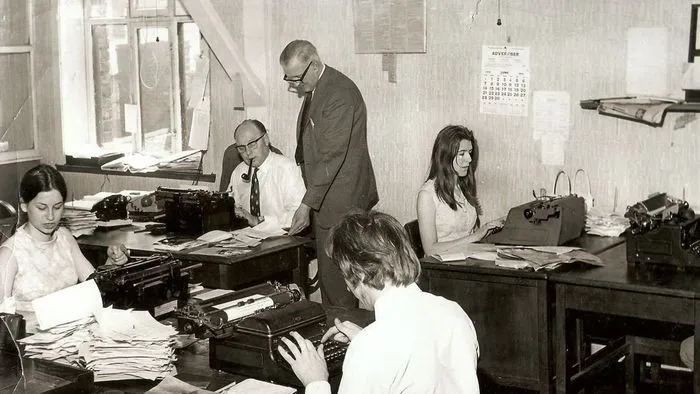
Sometime in the middle of the nineties, with Oasis a few years into their journey to superstardom and local news a few years out from its impending collapse, a young reporter called Lorraine Eames stood at the doorstep of Peggy Gallagher in Burnage.
Mrs Gallagher was already accustomed to these visits — reporters from the Sun or Daily Mail were often showing up asking to chat to her increasingly newsworthy boys. Gallagher usually said no, but Eames wasn’t working for a national newspaper, she was working for the South Manchester Express. “Oh ok, my sons have told me we don’t talk to nationals but we’re very happy to talk to you,” came the reply.
Eames gave her number and went back to her flat, which she shared with another young reporter, Alison Bellamy of the Stockport Express. Finally the phone rang: “Hello there it’s Noel from the band Oasis…my mum asked me to give you a ring”.
“You don’t really realise it while history is happening,” Bellamy tells me, three decades on. She means the music history, or the cultural history, that right-place right-time thing she experienced working in this city in the 90s. Running around after the Gallagher brothers, spotting the rumoured-to-be-dating Peter Hook and Caroline Aherne outside a pub but not daring to approach, or Bonehead drinking in the Red Lion in Didsbury every Thursday night.
But a different kind of history was also happening, whether or not it was clear at the time. In her own words, Bellamy worked at the Express “just before the horse bolted” – the horse being the business model, mainly print advertising income, that once sustained thriving newspapers in all 10 of Greater Manchester’s boroughs.
When people talk about the decline of local news in these parts, they tend to focus on various gripes about the MEN – a paper that sustained an enormous newsroom by selling hundreds of thousands of copies and was so profitable that it subsidised its former corporate stablemate, the Manchester Guardian. But the story is much bigger than that.
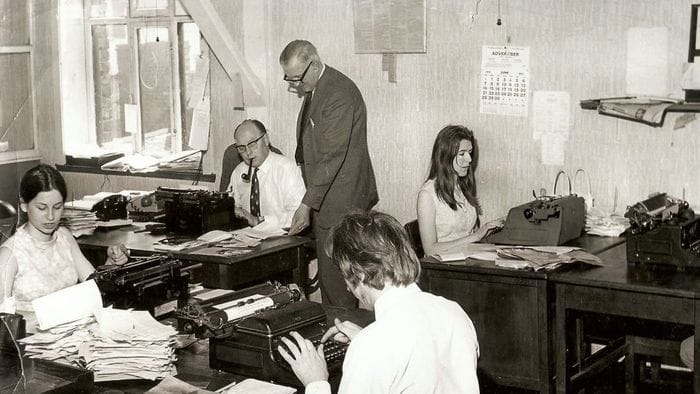
The MEN is now the only local newsroom in Greater Manchester that has more than a handful of staff reporters, but go back 25 years and it would have been one of a dozen. Grand old titles like the Oldham Evening Chronicle and the Bolton Evening News used to inhabit imposing buildings which were buzzing with staff. In 2011, the Chronicle had 22 journalists and 76 total staff at its Union Street offices.
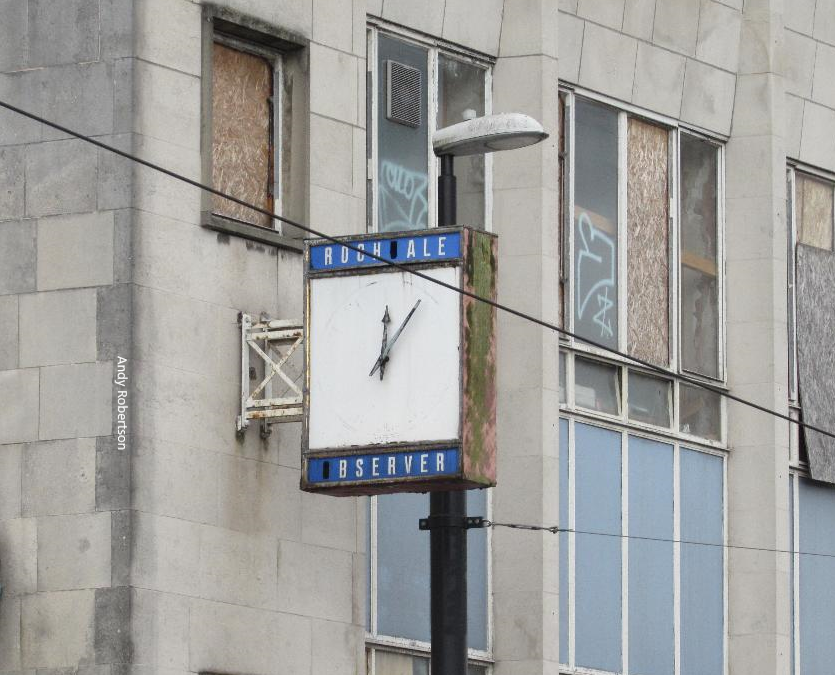
When my editor Joshi Herrmann posted about these old newspapers on LinkedIn recently, he received more than 150 comments from former hacks, remembering “the smell of hot oil and ink” and floors of “busy people with incredible knowledge and experience”. Mike Crutchley, a longtime Mill reader who was once assistant editor at the Bolton Evening News, remembered an office that seemed “permanently full of people” in which “the phones never seemed to stop ringing”.
By Bellamy’s estimate, there were around 12 news reporters at the Stockport Express in the mid-nineties, plus four sports writers, a couple of feature writers, maybe four sub editors, a librarian and a newsdesk secretary. In total something like 40 people worked in the building, putting the paper together. Its editor, Peter Greenwood, a master of print layout, came from just down the road.
The Stockport Express still exists, but things have changed a bit. It does have an editor, but he also edits two other papers: the Sale and Altrincham Advertiser, and the Stretford and Urmston Advertiser. Its reporters don’t focus solely on Stockport either, nor do they come to work in Stockport. The Stockport Express later moved to a business park in Chadderton after being gobbled up by the company that owns the MEN, now called Reach Plc. It’s a familiar tale.
I moved to Manchester in 2021. As part of my journalism course, I had to get an internship at a local paper, so I emailed the Wigan Post and they agreed I could come in one day a week. When the first Wednesday came around, I rolled out of bed an hour after my alarm clock went off, panicked and spent £50 on a taxi to Wigan to try and save at least a bit of face. I braced to push open the newsroom doors to find the newspaper staff suddenly silenced by my presence at 9:45am, like saloon-bar drinkers locking eyes with an interloper from a rival town.
Instead, the door swung open to an office the size of three broom cupboards. One man, the editor, smiled back at me half-apologetically.
The Wigan Post I walked into that day wasn’t really the Wigan Post. Not the paper that had served its town so well for the previous 70 or so years. Phil Wilkinson, who joined in 1999 as a news reporter, before moving over to Sport, can recall a paper with 12 reporters and six photographers. “I learned so much,” he tells me. “Soft skills, such as interviewing techniques, debates about intros, how to develop stories – skills I fear many young reporters miss out on when they’re working remotely.”
Beyond the work, it was just the experience of the office and its camaraderie that appealed to him. Like the seasoned hack whose habit of grabbing the phone without even looking led to another reporter switching it out for a banana. When the phone rang he grabbed the banana and shouted “Hello, newsroom,” at it. The whole room erupted. By the time Wilkinson left in 2021, he was working from home.
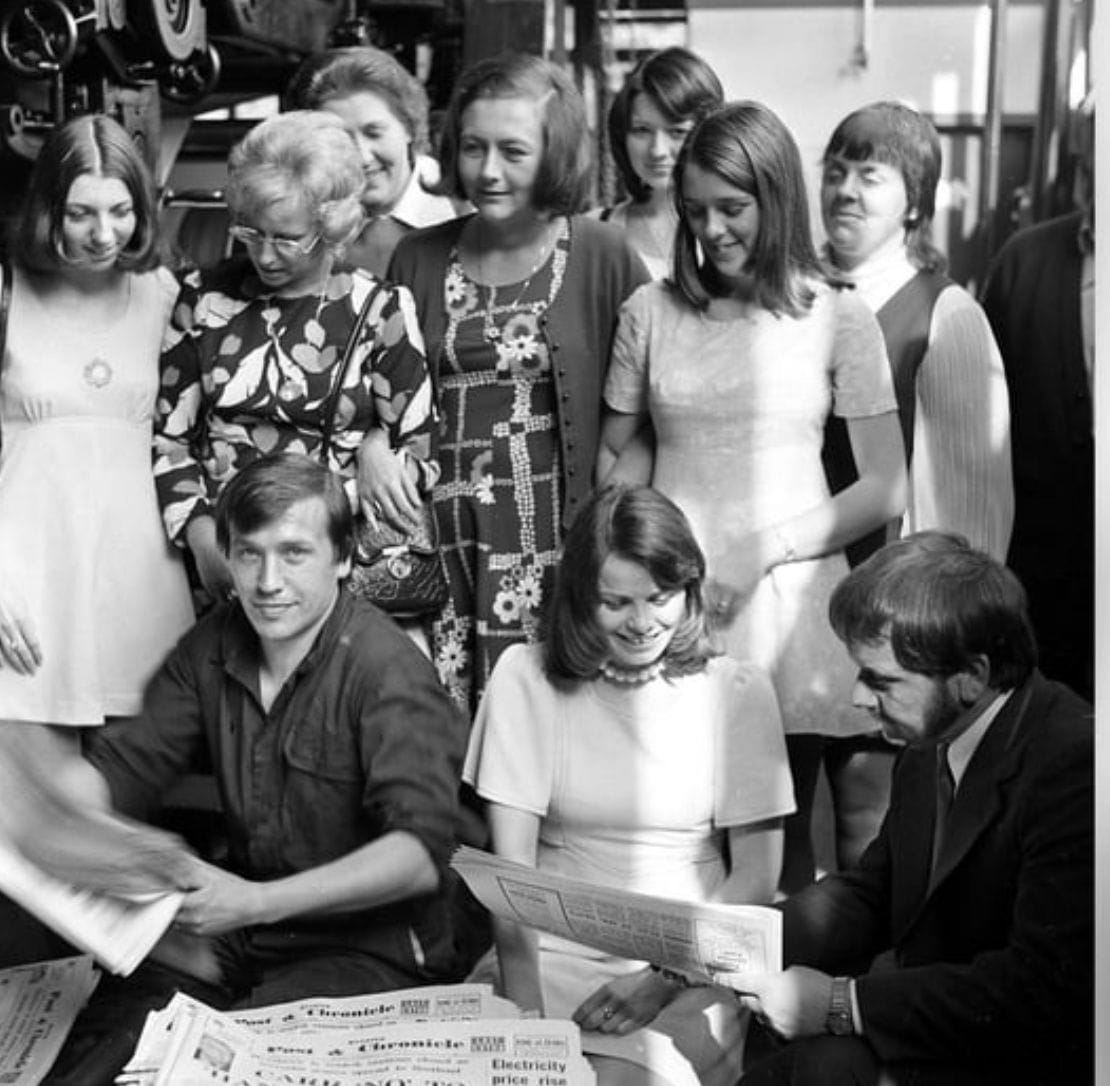
Like the Stockport Express, the Wigan Post was once a mighty institution. It wasn’t the only one either. In the late eighties, David Barnett did work experience at the Wigan Observer (now a sister title of the Post) during his final year at secondary school. “It felt like I had stepped into Narnia,” he wrote in these pages in 2021. “I was sat down next to actual local celebrities, journalists such as Richard Bean and Geoffrey Shryhane. The place was never quiet — there were people on the phones, doing interviews and scrawling rapid shorthand notes.” The Wigan Observer of the 1980s had 15 people on its editorial team. While I was at Wigan Today, the office seldom had more than three people in it, and one of those was me, scrolling through local Facebook groups.
Let’s go back a bit further — to January 1974. Guy Hodgson was 18 years old and wasn’t sure what to do with his life, so, like his father before him, he turned to the local paper. This was the Cadishead and Irlam Guardian, which — despite only serving an area of 10,000-odd people — had an editor, a chief reporter and three or four reporters. Hodgson’s Dad told him to give it three months and he’d know if he loved it or hated it. He worked in newspapers for much of his career.
These papers were part of their communities and they were everywhere. Small towns and boroughs could sustain bustling newsrooms, even little villages would have a few journalists poking about, pestering vicars for tips. In 1997, Paul Newman strode through the doors of the Knutsford Guardian. He found the chain-smoking chief reporter with the folios of copies in-hand, shouting aloud to himself: “this feels like a lead to me”. The chief reporter soon dispatched Newman to his first council meeting, where the Lord Mayor dropped dead from a heart attack. It was his first scoop.

Jamie Whitehouse, meanwhile, began work in 1999 at the Middleton Guardian. Back then, the paper was under the leadership of the pipe-smoking ‘Mad’ Frank Davies. The office was a place where people could just walk in off the street, and so they did: murderers, gangsters, snake charmers and all. When Davies left he was presented with his leaving gift: a gardening book by Charlie Dimmock. He launched it at the wall, shouting: “is that all I get after 10 years”. Then there was chief reporter Dave Edwards, who “could go to the Dusty Miller at dinner, come back steaming and still write four pages leads from what he'd discovered in the pub.”
It wasn’t all pipes and piss-ups though. On a May morning in 1990, a five-car convoy of police officers and social workers appeared on the Langley Estate in Middleton. They banged on doors and dragged children from their beds, operating under the belief that six families on the estate were involved in what was then known as 'satanic ritual abuse’ of children — 21 of whom were placed in foster care.
It became a national story. Journalists from London papers were arriving on the Langley Estate, then heading home to write about ‘Satan’s Garden Suburb’. Lurid tales about grave-robbers and satanic orgies, during which babies were allegedly slaughtered, found their way into the press.
It was thanks to the work of the Middleton Guardian, and Dave Edwards, that the truth eventually came out: there was no evidence of satanic abuse on the Langley Estate. The whole affair had been a monstrous injustice, started by innocent children's tales and fueled by irresponsible reporting.
These days the paper – now called the Heywood & Middleton Guardian – is run, like the Stockport Express, from Reach Plc's Chadderton office. Neither of them features much original local journalism.
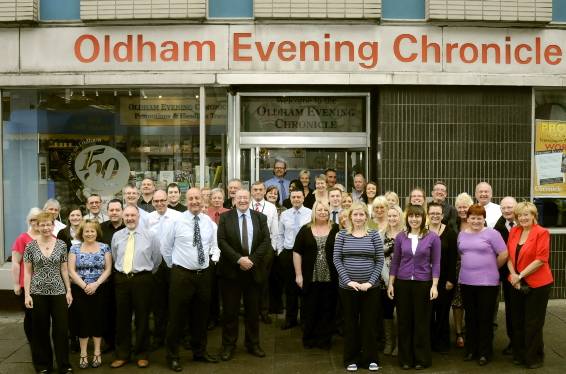
I could keep going. The Bury Times once had an editor, a news editor, seven reporters, two on the sports desk and some departments that no longer exist: four inputters (who entered the stories onto the computer system), seven subs and five photographers. Nowadays if you go on the Bury Times website, you’ll find eight names listed under its staff — which doesn’t sound too awful. Then you notice that five of these don’t actually work for the Bury Times, they cover all of the North West titles controlled by Newsquest, the US-owned media giant that runs hundreds of local newspapers across the country.
Of the three remaining journalists, one focuses on digital content, one is a trainee, and one “supports” the other titles alongside her primary work in Bury. (It actually took me ages to carry out this simple-sounding piece of research because every time I tried to click on one of their names on the website, a massive advert for Bisto gravy appeared). The point here isn’t about the people – I know from experience that very talented journalists still work for these titles – but about the way in which the teams covering great towns and communities across Greater Manchester have been cut to the bone.
What happened? Did these communities tire of local news and turn their attention elsewhere? That might be part of it. The advent of the internet certainly allowed people to read about — and then watch viral videos about — much sexier topics than the local news diet of meddling councillors and neighbours at war over parking spaces.
But really, it wasn’t demand for local news that collapsed but the supply. Local newspapers had been profitable because they held a virtual monopoly on local advertising: if you were selling your home, or advertising a job, or publicising your hairdresser, you did so in the local paper. And then, with stunning efficiency, the internet provided better places to advertise all of those things, and the money evaporated. By one estimate, income from classified ads in UK local papers – the extremely lucrative ones in the middle of the paper – dropped from around £2 billion in 2007 to less than £200 million in 2022. That's a 90% decrease, lost revenue that would equate to funding roughly 50,000 jobs.
As my days trawling local Facebook groups for the Wigan Post showed me, people still really care about what is happening in their communities. Of course they do. People want — and need — to know what’s going on. But social media networks owned by billionaires like Elon Musk and Mark Zuckerberg — where local zumba classes mix in with hateful conspiracy theories — are a bitter replacement for the local newspapers we’ve lost.
"It’s a disaster for democracy,” US senator Bernie Sanders said about the crisis in local news when he visited The Mill’s office a couple of years ago. “How can you be a good citizen and participate if you do not know what's going on?" Sanders is right, of course, but speaking to former journalists from Greater Manchester’s lost newspapers this week has reminded me that communities lose something else too, something hard-to-define but powerful: the sense that a particular place matters; the connection you feel when you see your life and the life of your neighbours being taken seriously.
The knowledge that a group of people are going to work every day to chronicle not just any little corner of the planet, but your corner.
If you’ve read this far, you’ll know what’s been lost. So here’s what we can do about it. Over the past five years, The Mill has been building a newsroom in many ways similar to the grand old offices that once stood in Bolton and Bury. We’ve got a team of journalists who actually go out into the city to meet the people they’re reporting on — rather than sitting at their desks turning around clickbait.
The world of advertising funding local journalism has gone. The model that works is readers funding the journalism that they think is valuable. That’s why we’re running a massive campaign to try and add 1,000 members in the next few weeks. It’s an ambitious target but we need to be ambitious: cities need thriving newsrooms with dozens of journalists working hard on the stories that matter. In an ideal world, there would be 10 Mills around Manchester in order to make up for what’s been lost.
To help us hit that target we’re offering you the opportunity to pick your price for your first two months of membership. If you don’t think you’re getting good value in that time period you can simply quit and lose nothing. But if you do want to stay you’ll become part of our mission to rebuild what has been lost in the past few decades. We hope you’ll take a chance on us.

Comments
How to comment:
If you are already a member,
click here to sign in
and leave a comment.
If you aren't a member,
sign up here
to be able to leave a comment.
To add your photo, click here to create a profile on Gravatar.