

It would have been just another day at work, had it not been for the tape measures. Chris had been working at Central Library for years by this point but they had never seen anything like this before. On the upper floor, a group of middle managers were measuring the shelves. Figures were jotted down and the findings were checked and double checked. But the unhappy fact remained: the sums didn’t add up.
As Chris and another colleague from the time allege, the architectural plans for the refurbishment of Central Library had one key flaw: there wouldn’t be enough shelving to house all the books. The knock-on was clear: the library would have to dispose of a massive swathe of its book collection, and at enormous speed.
The refurbishment of Central Library took place well over a decade ago — between 2010 and 2014. Yet in quiet suburban homes across the North West reside retired librarians for whom the subject is far from over. These former staff members harbour theories about how and why a quarter of a million books were disposed of, higgledy-piggledy, and what this sudden exodus of books meant for Manchester.
Are they the last keepers of a dark Mancunian literary secret? Or are their claims muddled and — as the council would have it — their evidence anecdotal, amounting to nothing more than a curiously persistent conspiracy theory?
By the time the renovation began, I was long gone. I left this city in 2006 for university and despite the existence of the internet, entirely missed the coverage. I stumbled across the controversy over a decade after the library reopened thanks to an errant comment under a blog about books set in Manchester. Naively, I assumed this delay might work in my favour. So much time had passed that surely those involved would be able to speak more freely. Either I’d prove the shelving miscalculation or I’d debunk a rumour that had persisted — easy.
Back in 2010, the man who ran Central Library was Neil MacInnes, a gregarious Glaswegian who has been working in mostly library-related positions on city councils (first Glasgow, then Manchester) since 1985. If his name sounds familiar, it’s because MacInnes’ career has only gone from strength to strength: for the past six years, he has acted as the Head of Libraries, Galleries and Culture at Manchester City Council, where he has worked for a total of 20 years.
Nuance is important, but in this case, the situation seems reasonably black and white to me. Either MacInnes was unfairly maligned by the accusations made at the time and his name should be cleared — or he oversaw a mistake that cost this city a portion of a vast and historic book collection.
Before we get any deeper, let me confirm your suspicions: this has not been an easy story to report, mostly because of the reluctance of staff who worked at the library during this time to speak to me. Emails or messages were often met with silence, but those I did speak to told me they were afraid of repercussions from the council if they spoke openly.
Given this, the librarians from the time who agreed to interviews did so on the condition that they not be named. As such, two of my three main interviewees will be cited under pseudonyms: Chris and Alex.
Central Library has always felt like a particularly special place to me: a cultural jewel in the city centre. I’d assumed this was pure sentimentality — except that, the more I dig into its history, the more I discover that Central Library is a special place by design. Manchester was the first local authority to respond to the 1850 Public Libraries Act, which empowered local boroughs to open free public libraries. The Manchester Free Public Library opened in 1852, albeit in a different spot, close to the current Museum of Science and Industry.
A history of Manchester public free libraries from 1899 recounts how the library’s first book collection was amassed. The same parliamentary bill that had made it possible for town councils to establish public libraries contained a strange condition: none of the money the local authority could raise to set up their public library could be spent on the purchase of books. This meant the sum to buy books was almost entirely raised by “canvassing for further subscriptions” from the public.
Eventually £12,283 was amassed — approximately £2.2 million in today’s money — and spent on 18,000 books. The reference library was formed with three ideas in mind: the inclusion of a section of Commerce, Trade and Manufactures; a Local History collection and a section “of books locally printed, or written by natives of the city.”
Soon before the library opened, Queen Victoria’s husband Prince Albert expressed his regret to Manchester’s mayor that he could not attend the opening ceremony and sent a donation of eighteen volumes. But while Prince Albert couldn’t make it, plenty of big literary names could, including Dickens and Thackeray.
By 1934, the library had moved to the building we all know, which was designed by the architect E. Vincent Harris in response to a city-council-held competition and built in the early 1930s. It was considered an architectural triumph — a symbol of regeneration, pushing back against the dominance of London. According to one 2009 book, “In essence, (it symbolised) a desire to create a ‘new Manchester’.”
But as the years passed, the beautiful building deteriorated and there was a need to modernise: priorities included improving the disabled access and giving the public greater individual access to the books, so fewer of them were stored away in the basement in stacks. It would be these same stacks that would be removed by the renovation, which meant that the book sorting would primarily focus on non-fiction reference books. The collection ran the gamut of post 1850s knowledge, with volumes on everything from political science to geography to literary theory to Victorian fashion. In June 2010, Central Library closed for renovations and a temporary library opened in Elliot House, a stately red-brick building on Deansgate.
At the time, the library was being led by MacInnes, who had joined Central Library in January 2010. Alex recalls MacInnes, an energetic, charming middle-aged man, as a particularly welcome addition at the start. “He was such a breath of fresh air. He liked new ideas.” MacInnes helped the library secure financial backing for initiatives like the Big Gay Read, a Manchester Central Library spin off of the BBC’s Big Read idea that ended up being adopted internationally.
Alex recalls the moment they began worrying about the refurbishment: on seeing a colleague walking into Elliot House one day, probably in the second half of 2010. “And I remember he came into the office, a couple of us were there, and he looked really shocked and he said I've just found out something so awful and I've got to tell you.” When they asked him what was wrong, this same colleague explained that he’d just been at a staff meeting with the architects. This colleague knew roughly how many books would need shelving and at the meeting, he discovered how much shelving the architects had included in their plans. At this point, he did a quick mental calculation — the shortfall in shelving would mean disposing of 295,000 volumes, as he put it at the time (the council disputes this numbers, saying that in the region of 210,000 items were disposed of, including periodicals and pieces of sheet music).
Soon after, Alex and three colleagues went to see MacInnes, telling him they were worried about what would happen to all the books, and Alex recalls him being sympathetic. MacInnes thanked them for bringing the issue to them — he would go back and talk to the architects, he told the group, and he wasn’t quite sure what had happened here. “We came away from the meeting feeling relieved and thinking ‘Oh, this is a mistake. It’s a bloody massive one, but it’s a mistake. It will get dealt with.” But as weeks and then months elapsed, this feeling of relief gradually waned — no further meeting was ever scheduled.
Alex explains that they were never sure how to interpret MacInnes’ reaction. “We debated among ourselves whether this was a major error or deliberate policy and we never got to the truth,” they said. If it was an error, they reasoned, the subsequent scrapping and selling of thousands of books took place to cover the mistake.
Either way, it seemed to them that the books were being sorted in a way that was unusual. As Chris tells me, there had always been an open skip kept at the ‘tradesman’s entrance’ of Central Library for general rubbish. ‘Weeding’ or sorting library books is a normal part of maintaining a healthy book collection, and prior to the renovation, Chris remembers a small number of worn out or out of date withdrawn books being disposed of in the skip.
“What happened during the period after the announcement of the redevelopment plans was a vast increase in the numbers of books going into the skip,” they recall. “It was filling in a couple of days and the books, stamped with a small Cancelled stamp, appeared to be in good condition.” As they tell it, at some point there seemed to be a realisation that it didn’t look good to be publicly ditching so many books. The skip was removed and some of the books began being sorted at Universal Square, an office campus in Ardwick. In addition to this, Central Library set up a contract with Revival Books, whose vans were regularly seen coming to the library to pick up books.
Chris remembers the sorting process with a particularly metaphorical bent: “It was a sinking ship with not enough lifeboats.” They stress that considerable efforts were made to preserve valuable books or collections, such as retaining anything of local interest and anything dated before 1850. “However, the whole process had to be done in a very short time frame. And it had to be done concurrently with the stripping out of the building.”
I hear a similar version of events from Alex, who visited Universal Square one day, and was upset by what they found. “It was like a production line and they were chucking books out and barely looking at them. They didn't have time. They had to get on with it.”
As concerns built, a sort of umbrella group was created — Friends of Central Library. There was an understanding — whether tacit or explicit remains unclear — that the librarians were not permitted to speak to the press about the book sorting. The group would enable the librarians involved to have a shield of anonymity and also to allow others beyond Central Library to speak up on its behalf. Initially, the umbrella group was a handful of librarians and ex-library workers: “Obviously, we saw each other every day at work, but we had to be a bit careful about meeting,” Alex tells me. Instead, they met at places like the Portico Library and at Chetham’s Library, which was supportive of the campaign.
The idea was to shine a spotlight on the aspects of the book sorting process they felt were the most poorly conducted in order to put the council under pressure to stop the weeding and carry out a detailed consultation with the public. High profile figures like Carol Ann Duffy, then the poet laureate, were public supporters of the campaign.

“I was a chair of governors at a local school in Hebden Bridge,” Kevin Duffy tells me, “and I know the worst thing local authorities hate is being humiliated on a national stage in the press. They will do anything to stop that.”
In June 2012, perhaps tiring of the press attacks, MacInnes released a long statement on social media: “We do not envisage Central Library being a ‘storehouse of non-fiction reference volumes’,” he wrote. “We want it to be a living, active, dynamic place that inspires Manchester’s people to be creative and to explore their potential, not a mausoleum.”
Three weeks later, the group scored that same national stage Duffy had described when the Guardian published an open letter they had written to MacInnes. It’s clear to see how much star power was behind the campaign when glancing through the names that signed in support: poet Simon Armitage, poet John Cooper Clarke, novelist Jeanette Winterson, Coronation Street creator Tony Warren, then-artistic director of the Royal Exchange Sarah Frankcom and the writer and DJ Dave Haslam, being just a few.
The Friends of Central Library were worried that the library’s hand had potentially been forced: that this mass disposal of books could be taking place essentially due to a miscalculation in shelving. Many of the librarians in the group were also distressed by the fact that subject specialists were not being used to sort such a valuable collection, something they perceived as shoddy weeding.
I assume they’re probably right on the subject specialists point, and then check myself: how would I know? I’m not a librarian. I reach out to a weeding expert with experience but hopefully limited bias — they’ve presided over large-scale book weeding exercises and have no connection to Manchester. Like almost everyone I speak to connected to the library world, they demand anonymity. According to them, it would be nice to have subject specialists but this is rarely a luxury afforded a library, even when doing sorting on such a grand scale and with such a valuable and historic collection.
Ultimately, the Friends of Central Library enjoyed a small victory, followed by a big loss. In October 2012, perhaps due to the glare of the media spotlight, the council called a halt to the book weeding. Alex remembers learning of this via phone from another colleague in the group: “[They] said ‘You’ve won!’ And I said, ‘No, we’ve won,’ and started crying, I was so happy.” The group celebrated at Chetham’s Library with a bottle of champagne and Alex tells me most of the group thought that was it: the library had seen the light, and perhaps they would now re-think the process. Instead, after six months, the sorting started quietly back up again.
While I reached out to Neil MacInnes and his team for an interview on multiple occasions, a Manchester City Council press officer told me that since it was a story dating to over a decade ago that was addressed at the time, they would give me a statement instead.
“The transformation gave us a once-in-a-lifetime opportunity to review the general reference collection to ensure it was fit for purpose,” the council says. The statement goes on to explain that all rare, valuable, historic and local historic items were retained in the collection and alludes to the fact that all items published pre-1850 and rare books and treasures from the special collections are now housed in secure, fire protected, environmentally-controlled vaults for the first time in the history of the library.
It’s striking how differently the council characterises the disposed-of books compared to the former librarians I’ve been speaking to — it’s like the two camps are describing two different worlds. The statement says: “By contrast, the type of general reference material which was withdrawn includes duplicates, paperback editions where the library held a hardback copy, ‘coffee table’ books, multiple editions, out of date textbooks, material now available as an electronic resource, items in poor physical condition, items with missing sections and chapters, foreign language information material and out of date directories and year books (retaining every 5th and 10th year.)” Notably, the statement essentially gestures three times (duplicates, paperback/hardback, multiple editions) to having multiple copies of the same books.

This isn’t how Simon Rennie remembers things. Rennie is now an Associate Professor of Victorian Poetry at the University of Exeter. In April 2009, he was finishing up a BA in English Literature at MMU and was temping at Central Library. He would spend the next six months helping the library prepare for the refurbishment by going through what he estimates were the half a million books in the stacks and taking out anything that had been published prior to 1850. These books would be stored hundreds of feet underground in the salt mines in Cheshire while the refurbishment took place. Experts told the Manchester Evening News these mines provided the perfect conditions for preserving the manuscript.
Rennie calls the council’s defence of the books they got rid of being only outdated material, books beyond repair and duplicates a lie. “That's one thing that I did not see when I went through 500,000 books, lots and lots of two copies of everything,” he says. They would have been kept together since they would have been labelled and ordered according to the same Dewey Decimal System digits. “That just didn't occur.”
A team of five people were tasked with sorting most of the reference books. I quote the council’s line on this to Rennie — that between them, they had 130 years of experience, but Rennie disputes that having worked at a library for many years makes a person an expert on what that library should retain. Rennie goes on to tell me about another member of the five-person team responsible for sorting the books — a library manager. “They used to call him the Grim Reaper because he was well known for being very enthusiastic about getting rid of as many books as possible.”
As an example of the sort of judgement that was exercised, he refers me to a “puff piece” in the Manchester Evening News about the book weeding uncovering rare treasures.
One of the treasures that they had a photograph of was a Penguin first-edition of Wuthering Heights, he tells me.
Wow, I say. I am only half listening, thinking up my next question.
Up until this moment, I have understood myself to be someone who knows at least a little about books. I studied literature at university, publish the odd book review and my first job was working as a PA in the editorial department of — yes — Penguin Random House.
“Well, people said ‘wow’, but that's only people who don't know much about publishing,” Rennie retorts.
The whole point about Penguin, he says, is that they published hundreds of thousands of copies at a time. As such, a Penguin first edition of Wuthering Heights from the fifties isn’t at all rare. “They were so ignorant that they used this as their example of one of the treasures that they saved. Which shows anyone who knows anything about literature how poorly this was being run.”
When I put this to the council, they argue they never cited this copy of Wuthering Heights as being an example of something special or exceptional. They explain the reporter came along to view the process and saw this book being sorted. “He took an interest in it and subsequently – without our involvement – chose to angle his piece on it. So it would be disingenuous to imply that it somehow reflects something about the council’s process.”
What I expected to find when I started speaking to librarians from the time about this story was a smoking gun: a book disposal that revealed the true horror of what had taken place. But when I ask for an example of a really valuable or historic book that they saw being placed on the skip or sold to Revival, none of my interviewees are able to provide this.

If you're enjoying Sophie's unspooling of the great mystery of the Central Library books, good news: there's plenty more where that came from!
The Mill produces great reporting and peerless writing about everything from education to politics, crime to conservation in Greater Manchester, as well as beautifully written features like this one. What's more, half of everything we publish is totally free to read.
The Millers, our readers, get all our stories direct to their email inbox, and are part of a brilliant community that sends us story ideas and debates the issues of the day in the comments. Just hit that button below to join up for free.
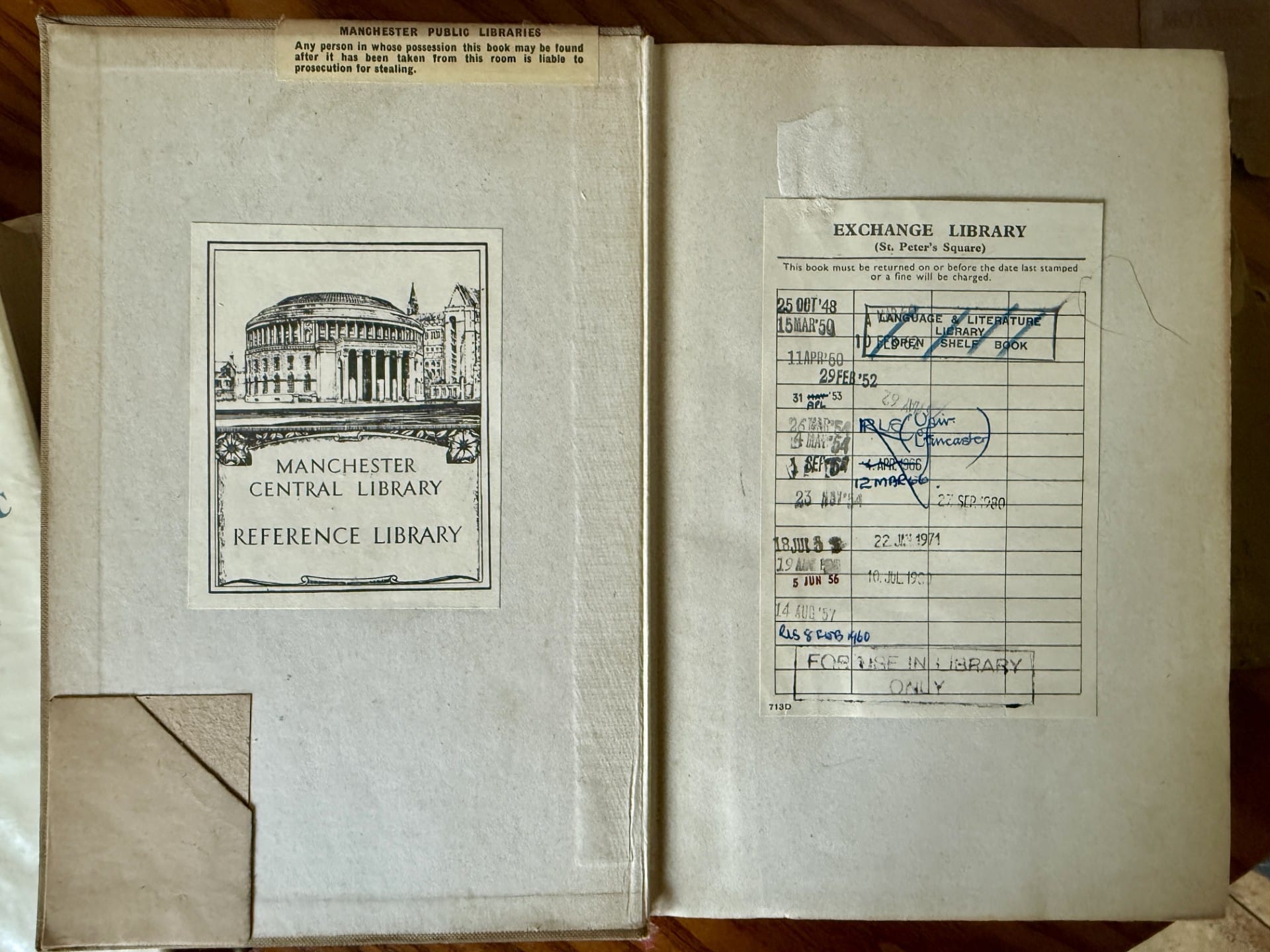
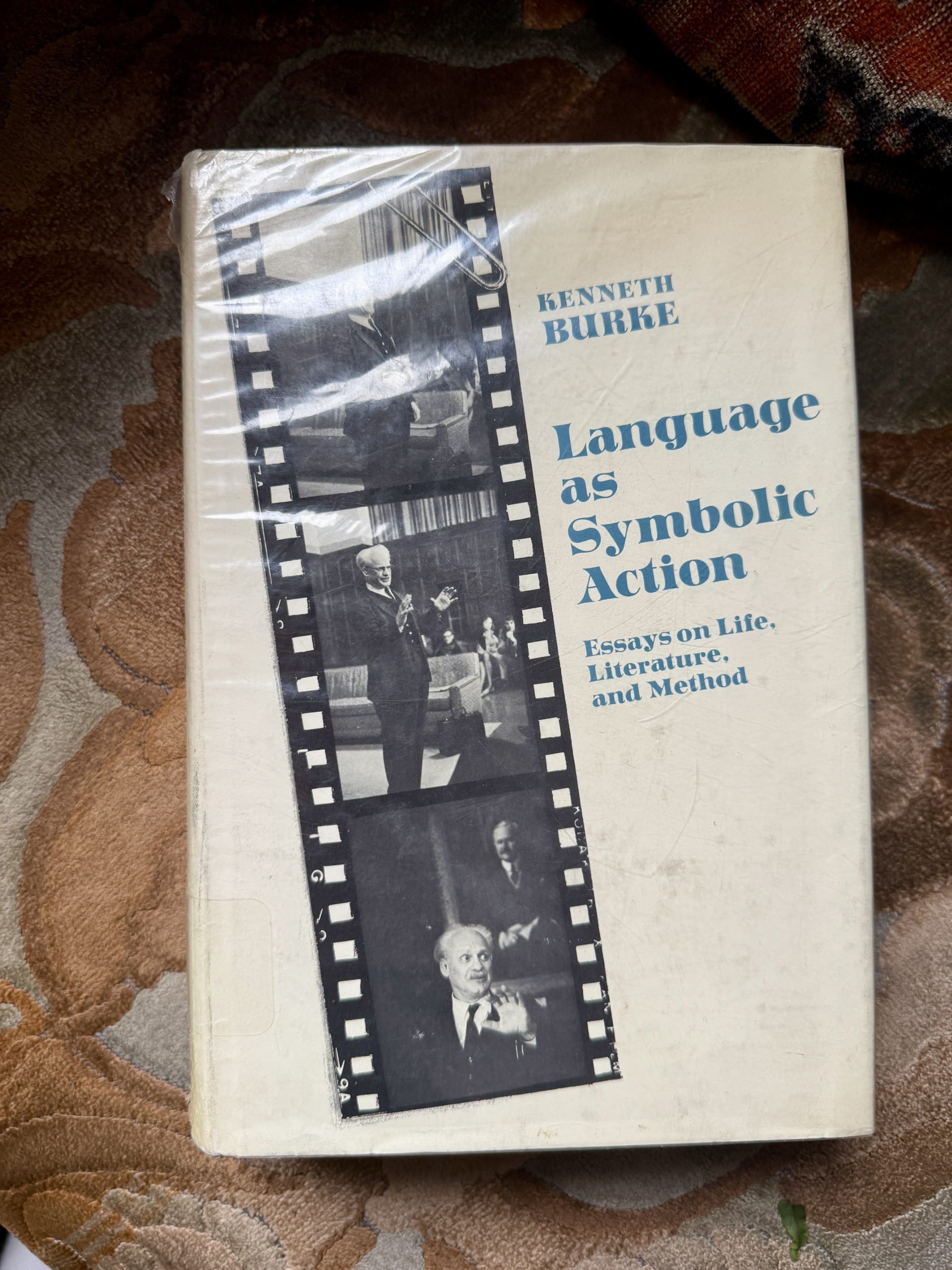
Rennie gives me the closest version of this when he recalls taking some books out of a skip outside the library. “They're not exactly treasures, but they're quite rare — hardback books by the philosopher Kenneth Burke. Big, thick, dusty books from the 1940s and 1950s, American published, hard to get hold of.” He sends me a photo of one of the books he rescued: a first edition of A Grammar of Motives. At the time of writing, the cheapest first edition for the American copy is on Ebay for $69 (£51). “This is just a minor example,” he tells me.
It means that the claims being made against the council are mostly anecdotal. It’s also worth stating that this country has a long history of getting extremely upset over book collections being weeded, even when that’s what a collection may need (the weeding expert in a different city tells me that their fear of talking to me openly is, in part, because the public gets so emotional about book sorting and they can’t deal with another press furore).
And yet, something doesn’t feel quite right here. For example: there’s the Freedom of Information Request I submitted to the council last February. I wanted to try and puzzle out the thing nobody had — what proportion of the books had been disposed of. I asked for the number of books the library had in June 2010, July 2010, August 2010 etc. as well as many other questions about the details of the renovation.
Requests are supposed to be dealt with within 20 working days, but I heard nothing until months later, when I received an email telling me the team dealing with FOI requests had been understaffed and to be patient. Last August, half a year after sending my email, I received the response to my FOI: the council would be unable to supply a single detail I’d asked for, since all of this took place too long ago.
In the same BBC radio interview I referred to earlier, MacInnes cites examples of the sort of book that was being disposed of — titles like Labour Relations in Norway or The Hungarian Economic Yearbook from 1939 or a book titled The Republic that was never taken out.
In the absence of any hard evidence provided by either side, I start to wonder if this is not villainy but a difference in viewpoints. MacInnes clearly thinks these titles he cited do not deserve their place in a library — they are not being regularly consulted and so deserve to be sold or pulped. As the mausoleum quote earlier suggests, his priority was about making the library more modern — a word that can mean almost anything shorn of context.
Perhaps a clue to his understanding of ‘modern’ can be found in the same interview, when MacInnes talks about how up until the renovation, only 30% of the library was available to the public and the rest of it in storage. He wanted to reverse that ratio. I would assume he has achieved this: the library has no shortage of space to move through, and there’s a nice cafe (admittedly there was a cafe in the cellar before, but according to staff from the time, the coffee there was “legendarily bad” and the staff mostly went to a nearby Starbucks). I don’t know that I agree that footfall is the only way to measure a library’s success, but it’s certainly well used: the last available figures from 2020 show it had over two million visits that year.
But when I read out MacInnes’ examples of the sort of titles they were getting rid of, Alex laughs. “To me, that would have been the very reasons why we would have kept (the books) because they're not available anywhere else. And somebody doing a study of Hungary in the 1930s would probably be fascinated to read a yearbook of Budapest.” They say that prior to the renovation, Manchester was known as the British Library of the North due to its reference book collection and people came from all over the region to do research on the most obscure subjects imaginable. “And we would have a book. We would always have something.” The problem is, they stress, specialist interest, old books like this don’t tend to get digitised. So when they’re gone, they’re gone forever.
It seems possible that what was being fought over here was not only the books, but two competing visions of this city. On the Friends of Central Library’s side: a proud intellectual Manchester which treasured culture and cherished its past. And on the council’s side, a city of glass towers and commerce: a Manchester which prioritised pragmatism and growth. Alex told me in our first conversation that Central Library’s refurbishment ended up seeming prophetic: it was one of the first British libraries to have so many books cut away to make space for things like computers and screens and a cafe. Plenty of other libraries would follow suit.
Looking about us, it’s clear which vision of Manchester won out. The post-2014 version of the library was considered a success by critics at the time (“To spend an hour wandering the shelves and corridors of this venerable but rejuvenated institution is to understand why the project to reinvent Manchester Central Library has been so widely celebrated” is typical of the reception). All the same, it’s hard — very hard, as my year of reporting testifies to — not to think about what this version cost: the loss of hundreds of thousands of books and the trust and goodwill of a sizable slice of Manchester’s literary community. Was it worth it? That all depends on what you value more: access to the Hungarian yearbook from 1939 minus a schlep to London, or access to a decent cappuccino minus a trip to Starbucks.
2026 has arrived and we've got a feeling we already know your resolutions: read more long form journalism; get to know your city that bit better; and support your local, independent press.
Well in that case there's no better time than now to take out an annual subscription to The Mill. With a year-long subscription you get two months free, and you'll know everything there is to know about Manchester for the whole of the year, including in-depth local politics coverage, stories about the people who make the city tick and beautifully-written features like this one, about the mystery of the Central Library books.
You'll also get access to our entire back catalogue of scoops, stories, history-pieces and juicy features. Just click the button below.
If someone forwarded you this newsletter, click here to sign up to get quality local journalism in your inbox.