
Dear readers — forgive us, but we’re sending you this email from Leeds of all places, where we’ve gone to meet our colleagues over at our newest sister paper, The Exchange! By the time you’re reading this, we’ll hopefully be frolicking in the rain around Kirkstall Abbey.
Speaking of new things, today’s article marks the first piece written for us by our joint-newest recruit, Ethan Penny, since he became a full time Mill reporter. It’s a history piece about the tragedy that befell Manchester’s Italian community during World War II — and, in particular, the important story of Father Gaetano Fracassi. That’s just a few scrolls down if you’d rather get right to it.
If not, then before that, here’s an update on the right honourable Sacha Lord.
In his declaration of financial interests as an MP, Andy Burnham disclosed that his former night time economy advisor Sacha Lord donated £35,390.20 to the PM’s Makerfield by-election campaign. One £20,000 donation made in late June was specifically to “my campaign for Labour leadership”. In 2024, we revealed that one of Lord’s company’s misled the Arts Council into giving it a £400k grant during the pandemic. After multiple investigations, it was ruled Lord’s company needed to repay the money and he resigned as Burnham’s advisor last January. This February, the company was liquidated, while still owning the Arts Council — i.e. the taxpayer — the £400k. It appears Lord prioritised funding his friend’s leadership bid ahead of making sure his company repaid the money it owed the government. And Burnham accepted donations from someone he knew owed money to the government he would soon lead.
Ok, now here’s the story…
Win your FPL mini-league in 2026/27
The Premier League kicks off again tomorrow, which means fantasy football players everywhere are putting the finishing touches on their squads. If you want to leave your friends and family in the dust this season, then sign up for free to LazyFPL: a short weekly newsletter that arrives 24 hours before each FPL deadline, packed with the essential info you need. It includes injuries, favourable fixtures and chip strategies, meaning you can make the best changes without doing hours of research.
All that, and it's a good read to boot. Click that button below to sign up for free.
The final prayer of an Ancoats priest
Father Gaetano Fracassi raised his arms in fervent benediction, a huddle of Italian men about him. A month earlier he had said these same words behind the altar of his modest parish in Ancoats. Here, on the tilting deck of a torpedoed liner foundering into the Atlantic – his black robes hanging soaked and the men pressed close to hear him – they would form his last prayer.
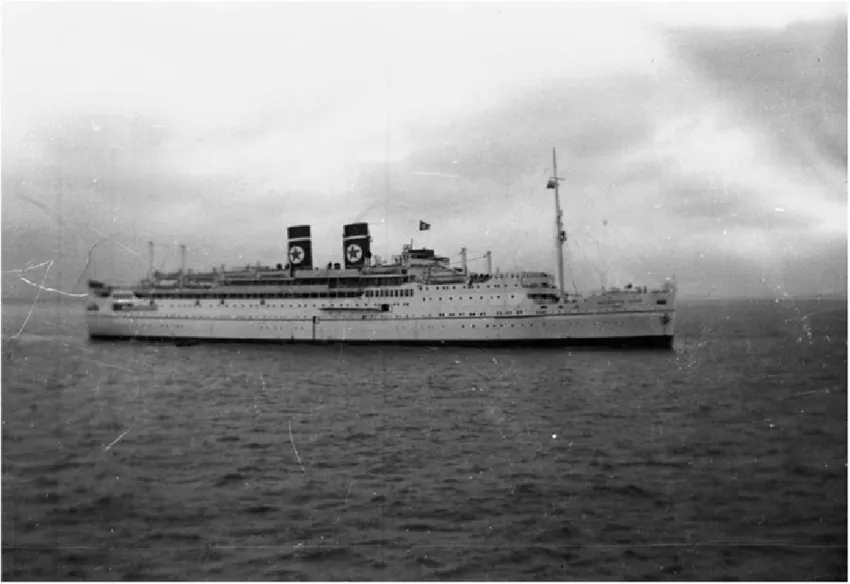
The SS Arandora Star left Liverpool for Newfoundland on 1st July 1940, unescorted, into the treacherous Western Approaches. There, Gunther Prien, a Nazi U-boat commander, was homeward bound. His last torpedo ripped a cavernous hole in the ship’s hull.
A rash wartime policy ordered the detention of hundreds of Manchester Italians in a prison camp in Bury, and sent many to their deaths on a camouflaged military vessel in the Atlantic. Amongst them were ice-cream sellers, bakers, shopkeepers and a priest. Why were they there at all?
The life of Father Fracassi
Fawcett Street has been forgotten since the ungainly slum clearances of the 1960s, but in the ‘20s it was in flamboyant swing. Mill workers' cottages astride the Rochdale Canal were joined by a footbridge grandly dubbed Ponte Vecchio, after the famous stone arch in Florence. Milk boiled in whitewashed cellars to be churned and vended as ice cream on wheel carts, hand-painted with lush scenes of the Tuscan countryside, while old-school Mancunians danced to the cranked tunes of the “hurdy-gurdy” players.
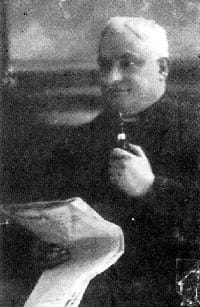
Father Fracassi was a heavyset man with silvering hair and small dark eyes, born in Italy but ordained in Salford in 1898. He climbed the rungs of the diocese by way of a chaplaincy in Blackley and a curacy in Failsworth. St Alban's, on Fawcett Street, was the first parish of his own.
The Italian pavement economy of ice creams and cranked music kept households going, but it didn't make many rich. So when the school at St Alban's fell into disrepair, only borrowed cash could finance improvements and the construction of a new club room, for meetings. The debts racked up quickly. The parish owed £7,000 — upwards of £350,000 in modern terms — just as the slum clearances began to wipe out swathes of the congregation. In 1933, under the weight of it all, Fracassi had a nervous breakdown.
Collar the lot
In June 1940, on the balcony of the Palazzo Venezia in Rome, Benito Mussolini declared war on Britain and France. Within hours, mobs formed outside Italian shops in a dozen British cities.
Police rushed to the Stanley Road district of Liverpool, where loud cheers followed hurled missiles. A mob in Soho chased businessmen with shouts to "Lynch him!" Up and down the country, shattered glass and ice-cream wafer biscuits scattered the cobbled slums.
But not in Manchester. Save for the new labour of daubing Union Jacks over the ice cream cart landscapes, the MEN noted that it was business as usual. There may have been no smashed shop fronts in Ancoats, but the air had certainly changed.
Three hundred Italian men had been taken from Manchester homes, or lifted from their ice cream rounds by detectives working through the night. With Italy’s declaration of war, the Cabinet was gripped by fear of a fifth column – a secret network of fascists sabotaging the war effort. “Collar the lot”, Churchill had ordered.
“All our boys have gone to fight for England gladly", a Manchester mother of five lamented after her husband was taken in the night.
Father Fracassi, now an ailing old man, was taken from his presbytery at St Alban's. The Bishop of Salford pleaded with the Cardinal, who pleaded with the authorities that Fracassi was “an invalid” and should be repatriated to Italy. But the authorities would not be moved. He may have been an invalid, but there was reason to believe he was a fascist.

Hey – sorry for interrupting you just as the story gets going. It’s Ethan here. This is my proud first piece as a Mill staffer, and it’s the product of many furrowed hours in Manchester’s wartime archives.
Because we're reader-funded, our writers have the support to investigate the city’s big scandals. But we also get the time to write stories like this one. Deep dives into unstudied corners of the city's past, and the compelling figures who helped build modern Manchester.
Subscribing unlocks this article, and up to 12 more each month. That’s a trove of scoops, features and cultural writing. On top of that, you’ll be backing a new model of independent local journalism.
It’s £8.95 a month, or £1.71 a week if you sign up for a year.
This article is for paying members only
Join The Mill for full access to this story, plus four great features delivered to your inbox every week — and the knowledge that you're supporting a new model of local news that puts quality and honesty first.
From £8.95/month · cancel anytime
Get full accessAlready have an account? Sign In