

This story was published by The Mill: an award-winning email newsletter that sends you great stories, proper local journalism and peerless writing about life in Greater Manchester. 58,000 people have already joined our mailing list. Just hit that button below to join up for free.
Listen to our latest Manchester Briefing podcast about the synagogue attack, in which Jack and Ophira discuss their reporting, and why we chose to publish a much more personal - and hopeful - piece a few days after the story broke.
Since Jihad Al-Shamie attacked Heaton Park synagogue on 2 October, police and the media have been trying to find out everything they can about him. The frenzy immediately following the attack reached such a pitch that journalists were seen errantly interviewing one another in Prestwich bakeries, hoping to learn something, anything, about the man.
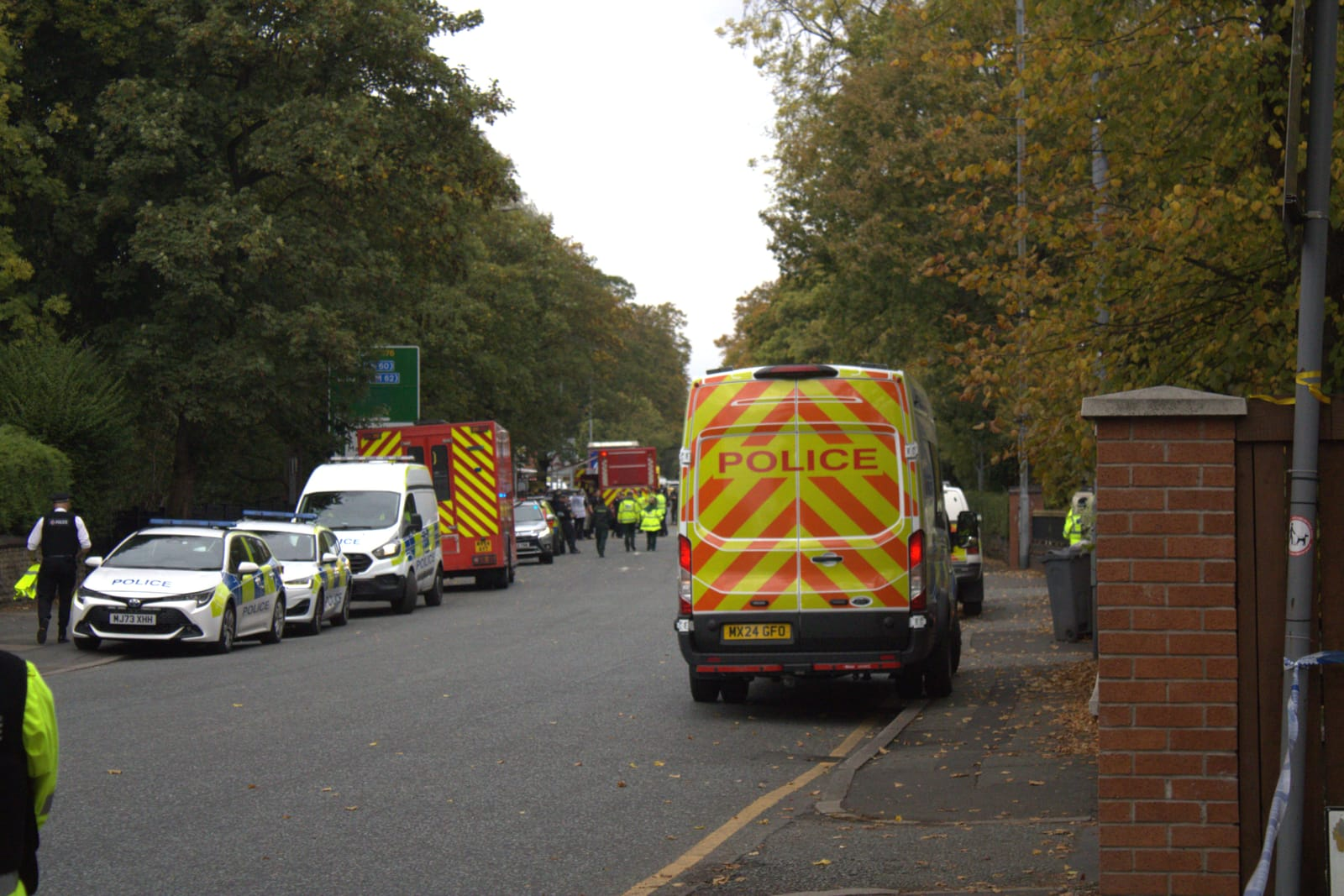
Al-Shamie, a naturalised British citizen born in Syria, was seen acting suspiciously outside the synagogue just after 9am that morning. He was confronted by security and walked away. Then he came back in his car, which he drove into the people arriving to pray before getting out and stabbing those he found outside. He was stopped from getting into the synagogue by congregants bravely barricading the door, and was then shot dead by armed police.
Reporting in the past week suggests the attacker’s life was disordered. He had relationships with multiple women despite being married. He smoked cannabis, dropped out of university and was said to be addicted to violent video games. He had previous convictions and at the time of the attack was under investigation for two alleged rapes.
We’ve also learned about his family. His father, a trauma surgeon called Faraj Al-Shamie who is currently in France, posted in support of the October 7 attackers who massacred 1,200 civilians in southern Israel, led by Hamas. He called them “God’s men on Earth.”
In the past few days, the Times found that the mosque Al-Shamie attended – in Nelson, Lancashire – had been reported to the Charity Commission over an antisemitic sermon delivered by its imam, Abdul Abbas Naveed. A look at the mosque’s social media pages turns up further sermons in which Naveed described Yahud — Jews — as “treacherous” and called Israel a “murderous Zionist regime”. The National Secular Society, which filed the complaint against the mosque, said it was “fuelling antisemitism and division, as well as potential support for Hamas and other anti-western actors”
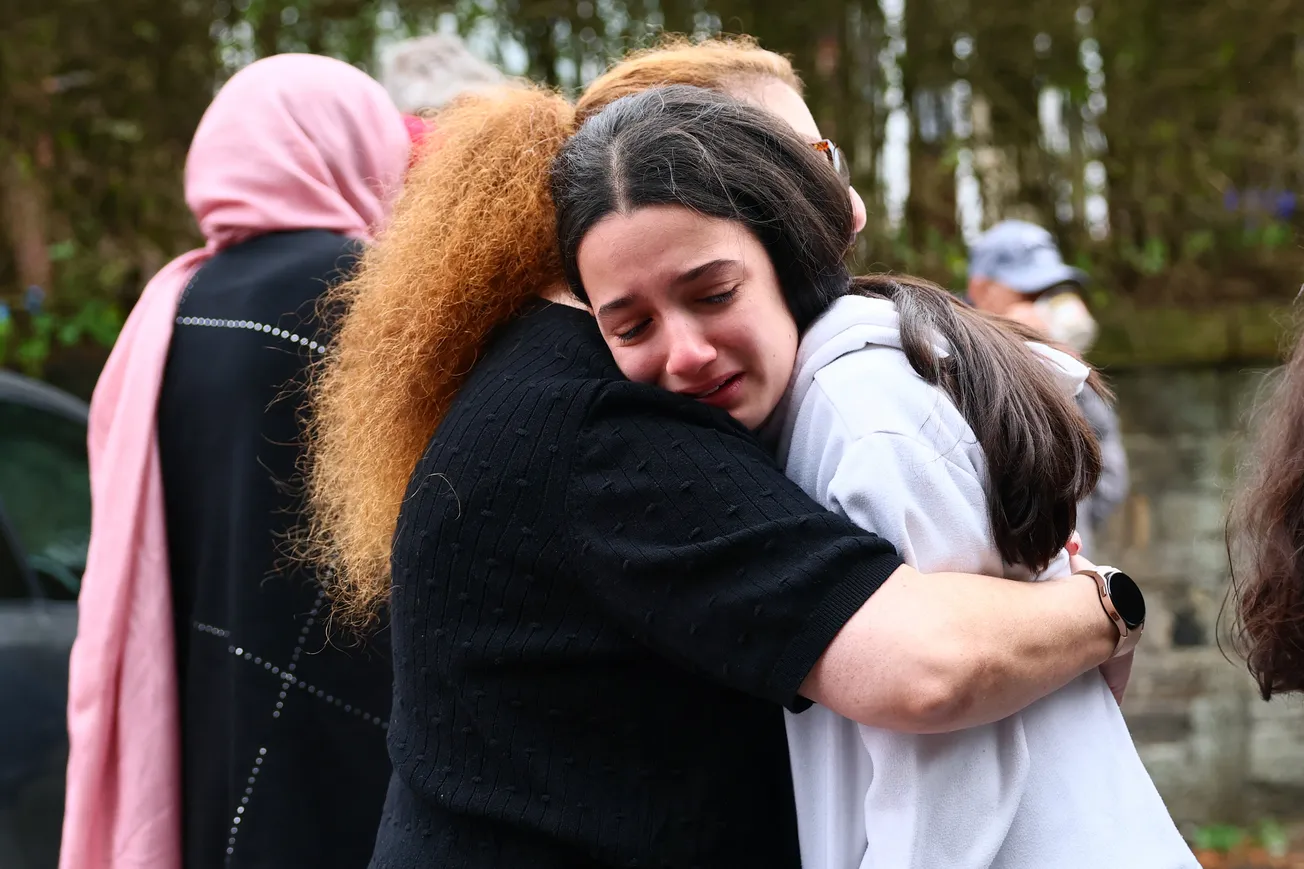
The pattern of revelations — a man from Manchester’s Arab-Muslim community with a father with Islamist leanings, who had a history of drug-use, delinquency and worshipping at mosques later found to have allowed bigotry — has created an image of Al-Shamie some felt they already knew.
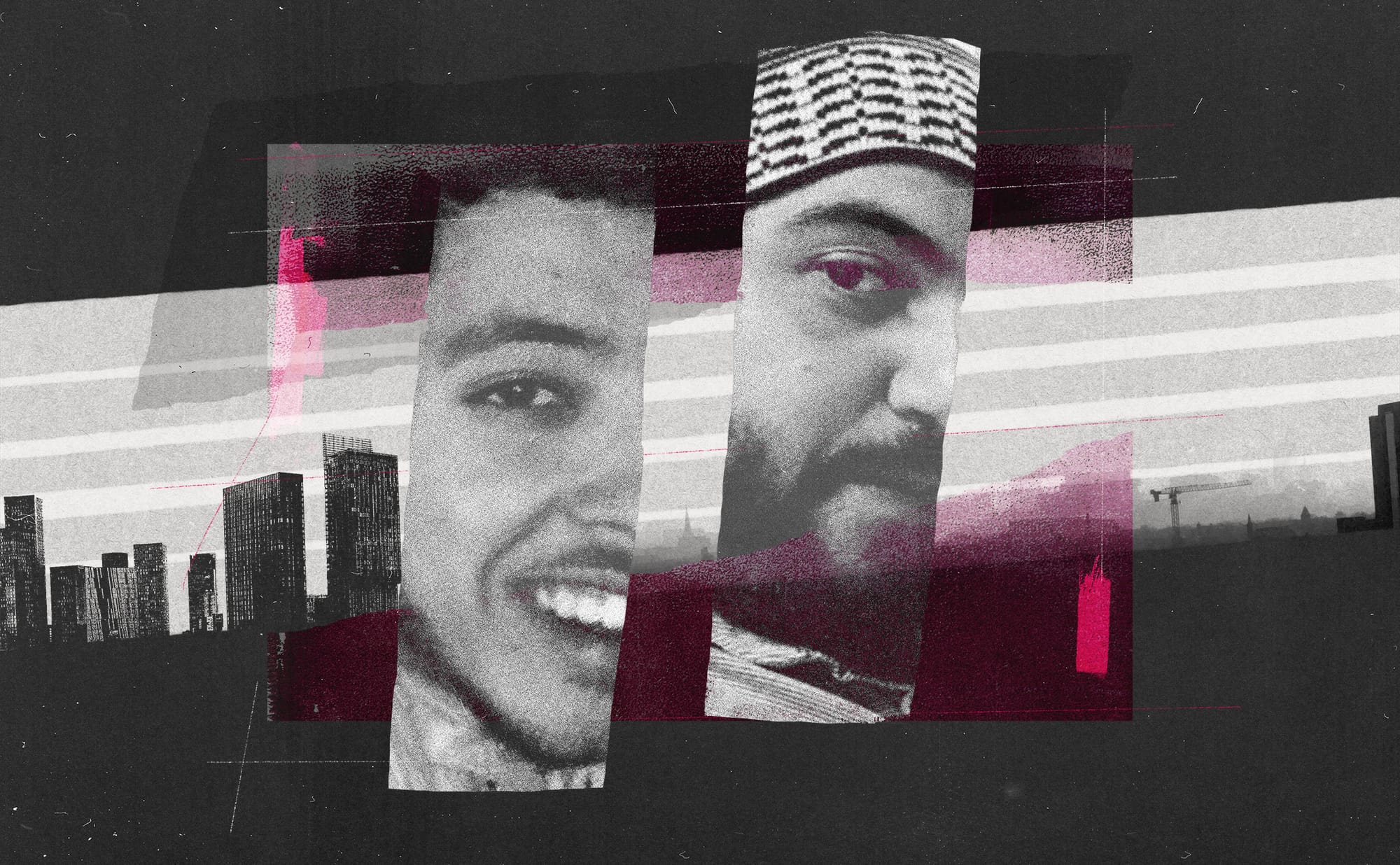
“Look at Jihad Al-Shamie and Salman Abedi,” one person from Manchester’s south Asian community, who works in local government, texted me last week referring to the Manchester arena bomber. “I can’t help but see the links.”
On the phone, we discuss what she described as “a radicalisation process that seems to be very internalised to Manchester”. What does she mean? That certain Muslim communities in this city – particularly Arab communities – are more marginal than the dominant south Asian groups, and might be more vulnerable to members feeling disenfranchised.
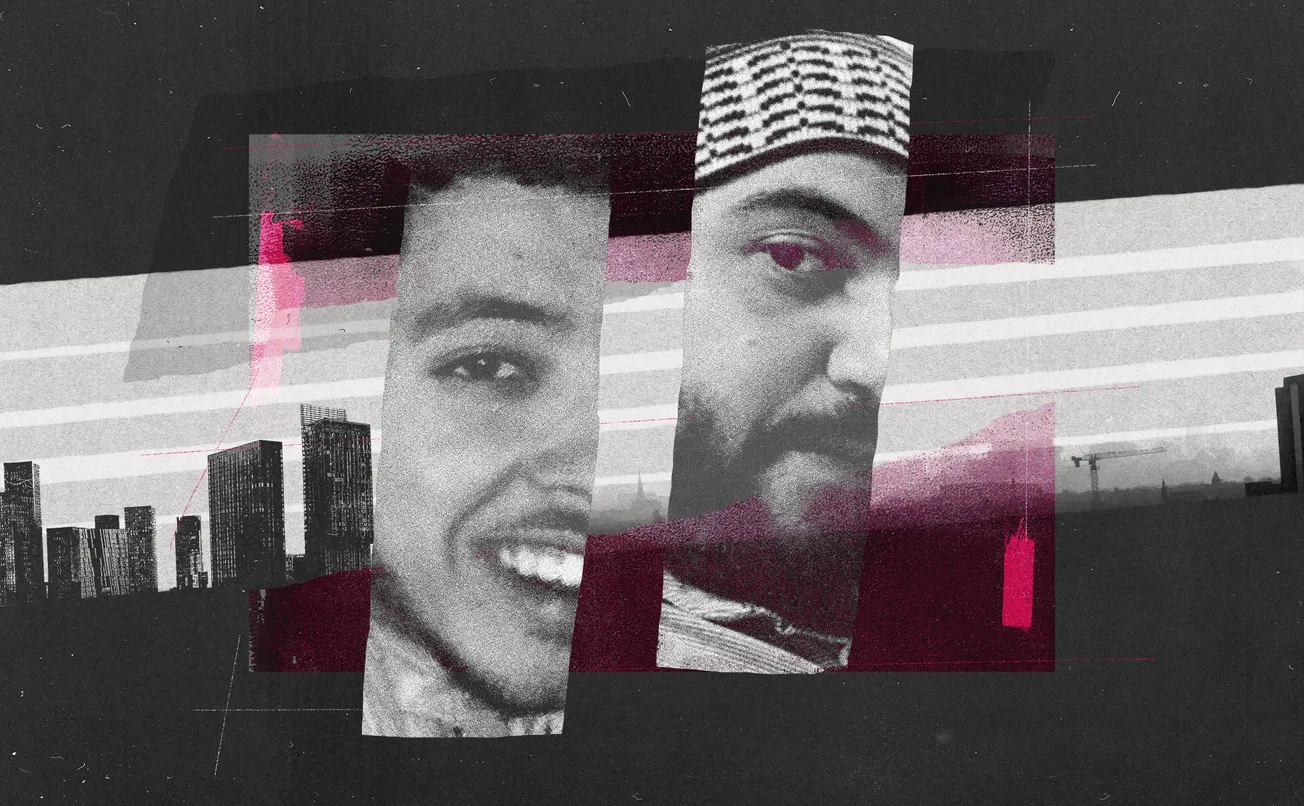
“These two lads seem to mirror their journey together,” she adds, encouraging me to explore the similarities between the men.
In the 1990s, Manchester suffered a terrible one-two punch of terrorist attacks, starting with the car bombings on Parsonage Gardens and next to the cathedral in 1992 and followed by the catastrophic bombing of 1996, which blew a hole in the city centre. Both were carried out in the name of Irish republicanism by the Provisional IRA, although no one has ever been prosecuted for either attack.
In the past decade, the city has suffered two more acts of terror: the 2017 arena bombing – targeting an audience of mostly children at a pop concert – and the attack on Jewish worshippers in Crumpsall earlier this month. In both cases, the attack came from within – local men inflicting unspeakable brutality on their fellow Mancunians. And in both cases, they were Muslims who seem to have been motivated, at least in part, by ideas about violent jihad.
It’s natural to wonder if anything can be learned from studying the men behind these attacks. Are there similarities between Al-Shamie and Abedi that can help us to understand the nature of modern terror in Manchester? Is there something in the dynamics of the city that is putting young men on a path to extremism? As you might imagine, those are not questions that appear to have straightforward answers.
Contrasting attacks
Salman Abedi, who killed 22 people on 22 May 2017 when he detonated a homemade bomb in the foyer of the arena, was born in Manchester in 1994 to Libyan parents who had fled Muammar Gaddafi’s regime. His father, Ramadan, was a member of the Libyan Islamic Fighting Group, an Islamist group that opposed Gaddafi. Abedi grew up in south Manchester’s Libyan community, attending Didsbury Mosque. But his father’s influence, and the trips to Libya — spending time with known Islamist militants — were later seen by the Manchester Arena inquiry as significant factors in Abedi's radicalisation.
“Abedi, in the summer holiday period, was fighting in Libya,” David Collins, the Sunday Times’s northern editor and author of Saffie, a book about the bombing centred on its youngest victim, tells me. It meant he would have been exposed to not just jihadist ideas but also methods. He learned how to make bombs and learned counter-surveillance techniques to avoid investigators.
To quote the Arena Inquiry’s third report: “Ramadan Abedi instilled in his sons extremist views and encouraged them to put those views into practice when he exposed them to training with and combat alongside Islamist militias.”
The same can’t be said, at this stage, about Al-Shamie. Unlike Abedi, it wouldn’t appear at this stage his family were involved in any militant groups or took part in violence. His two brothers are successful 30-somethings, one a locum pharmacist and the other a software engineer.
“We don’t know enough about his movements in and out of the country,” Collins says of Al-Shamie. “We don’t know if he ever travelled to these conflict zones.” It could also be the first clue as to why, in comparison to Abedi, Al-Shamie’s attack was so crude. “There was a higher degree of sophistication to what Abedi did,” says Collins.
There seems to have been more forethought and collaboration involved in Abedi’s attack than Al-Shamie’s. Four weeks before the arena bombing, Abedi’s parents left the city for Libya. He arrived back in Manchester from Istanbul four days before the attack and began conducting renaissance around the arena, speaking to staff and watching people queueing in the city room in which he would eventually detonate his device. He built the bomb himself in a rented room on Granby Row.
Al-Shamie didn’t seem to have the same level of planning. He arrived at the synagogue at around 9:15 on Thursday morning, and after attracting the suspicion of security volunteers, he left. He drove his car into worshippers at the entry of the synagogue about 15 minutes later, before trying to enter the building with a knife. Had he managed to do so, the number of Jews killed and injured may have been much higher.
After Abedi’s bombing, Islamic State claimed responsibility on his behalf, and police have said that Al-Shamie called 999 himself to pledge his allegiance to the organisation before being shot. But there is so far no indication that Al-Shamie was linked to other known extremists in the way that Abedi was, or that he had any help preparing his attack.
In both cases, family and friends were arrested straight away. But while 22 people were arrested after the arena bombing, there have been just six arrests in connection with the attack in Crumpsall. All would have been taken to Counter Terror Policing’s north west base, which shares a building with Greater Manchester Police’s custody office in north Manchester.
Those arrested under the Terrorism Act can be held for 14 days and some held in relation to Abedi’s case were. But two of the people arrested in relation to Al-Shamie’s attack were released without charge within a few days, and the rest earlier this week.
Though one was re-arrested at Manchester Airport on Thursday — for not disclosing information about an act of terrorism — the number of people arrested and their quick release suggests Al-Shamie was acting alone. So far, all of the people arrested have either been close family members or ex-partners and their own family members, The Mill understands. Again, this suggests counter terror police have not found connections to wider terror cells or networks.
Following the Arena attack, Didsbury Mosque was heavily scrutinised in the way Al-Shamie’s mosque — Masjid Sunnah Nelson, in Lancashire — has been in the last few days. In 2022, the Arena Inquiry found that the Didsbury Mosque “turned a blind eye” to extremism in its midst and sidelined a liberal imam who spoke out against armed jihad. The mosque pushed back afterwards, saying it had been demonised in the wake of the attack and had been put in danger of violent reprisals. There was an arson attack on the mosque in September 2021 that was treated as a hate crime by police.
The imam of Masjid Sunnah Nelson said he remembers Al-Shamie coming to a “knowledge conference” in mid-2022, essentially a set of religious theory classes spanning three days, and seeing him in the mosque. In a message to one of his former girlfriends — one of whom spoke at length with the MEN about her relationship with Al-Shamie — he said that he did “rly love the mosque.”
But its imam denies that the mosque helped push Al-Shamie towards violence. In fact, he said Al-Shamie likely didn’t find what he was looking for at the mosque, and was then pushed towards the internet. “That might be his journey,” the imam told the i Paper. “He wasn’t a very good Muslim, he goes to a mosque and doesn’t find what he’s looking for there so he gets it on a Telegram channel.”
It’s notable that both Abedi and Al-Shamie are described as fringe figures in their communities. Abedi was characterised as mostly self-radicalising on the periphery of Manchester’s Libyan community. In a statement following Al-Shamie’s attack, Rethink Rebuild, a charity that advocates for Manchester’s Syrian community, said no one in its network was able to identify him.
Emergent communities?
If the two men were fringe figures, can it also be said that they came from fringe or “emergent” communities in the city, as was suggested by the reader who got in touch with me last week?
It’s certainly true that Greater Manchester’s Arab communities are much smaller than other Muslim groups: numbering in the tens of thousands compared to hundreds of thousands of people who claim Pakistani or Bangladeshi descent. While there is a long history of Arabs in Manchester – going back to traders from the Ottoman Empire in the nineteenth century – a proportion of today’s Arab communities are more recent arrivals to the city whose families fled the Syrian civil war and other calamities in the Middle East.
These Arab communities tend to receive less outreach from the authorities and can feel more isolated from the life of the city, says the reader. “There’s not been much in terms of engagement,” she tells me. “They work every hour God gives, and they’ve brought kids here who were either preteen or could be in their teens. And, you know, they’ve had to do a lot of growing up pretty fast, going from one culture to another which is quite foreign to them.” Al-Shamie, for example, came to the UK from Syria in the 90s, and was naturalised as a British citizen in 2006, when he was 16.
There is also the fact that Manchester’s South Asian-Muslim communities have stronger institutions and representation. There is the Greater Manchester Pakistani Association and Bangladesh Welfare and Community Project, for example. They offer social support services, coffee mornings, sewing classes and Jiu-Jitsu classes (which, it’s worth noting, are open to everyone).
On a national level, reports have found that Arab civil society organisations tend to be underdeveloped and underfunded. And, that many public service models (like mental healthcare) have developed to better engage South Asian Muslim groups, and might not suit Arab Muslim communities that differ in dialect and cultural norms.
The vastness of Arab identity also means it is rendered “largely invisible, often ignored as a BAME community, or subsumed merely as British Muslims, which of course is erroneous” according to the Council for British-Arab Understanding.
The sense that the Arab community is disenfranchised could lead to those on its fringe — the Abedis and Al-Shamies — feeling even more unmoored and vulnerable to extremist thinking. As a leader from Manchester’s Pakistani community puts it: “it’s easier for these individuals that feel like failures to grasp onto something that makes them feel useful.”
But the Libyan and Syrian communities — Manchester’s only Arab heritage councillor Amna Abdullatif tells me — are amongst the more established Arab groups. “Part of the issue I have with calling these emergent communities is that they’re not emergent communities. It’s just that nobody gave a shit about them until now.” She says that Manchester’s Arab community hasn’t benefited from the same institutional support as other Muslim communities and that this can cause a level of disengagement. “The only time there is an interest is when something as horrific as what Salman Abedi did and what this individual did more recently at the synagogue [happens],” she says.
So now, as with the Libyan community in 2017, Manchester’s Syrians will have to bear the mark of our latest terrorist, even though it’s perfectly possible that Al-Shamie’s story tells us very little about the world he came from. Terrorists are, of course, not representatives of a community but terrifying outliers whose violence might have as much to do with personal crises and mental health as it does the people they grew up and worshipped with.
Abdullatif describes how one violent individual can distort how a whole group of Mancunians, themselves horrified by their actions, is seen. “The Libyan community, from which I am from, was massively impacted by the arena attack,” she says. “It’s soul destroying for the community to think that’s what we get to be known for in the city.”
"Unbelievable journalism, the kind which is so ridiculously Manchester specific whilst also being enjoyable to those that haven’t had the pleasure of following this in real time over the last 10-15 years."
Dear readers: you should become a paying Mill member today. Not only will you be supporting our journalism, but you will also get access to must read pieces like Ophira's hilarious feature about Manchester's warring tour guides (see comment above).
It's been described by another commenter as a "a delicious piece", and you can read it for less than the price of a Kale & Cauli Macaroni Cheese at Pret by joining now via our insanely cheap introductory offer: just £4.95 per month for your first three months. You'll also get access to all our members-only work, our live events and our fantastic community. Give yourself a treat and hit that pink button.
If someone forwarded you this newsletter, click here to sign up to get quality local journalism in your inbox.
Listen to our latest Manchester Briefing podcast about the synagogue attack and what it was like to report on it.
If you’d like to sponsor editions of The Mill and reach over 60,000 readers, you can get in touch or visit our advertising page below