

David Blake was walking along a marina in Barcelona when he noticed a crowd on the beach. It was about 9pm, and groups of Spaniards had gathered to watch some sort of racket sport, the onlookers drinking and chatting. “I’d always played racket sports,” Blake tells me over the phone. “I stood for like half an hour trying to figure out the rules. The courts were packed.” The sport, he eventually discovered, was padel. Two years later, in 2023, it would be Blake who would soon open Manchester’s first court.
Padel, for the uninitiated, is a Spanish sport invented in 1969 — a kind of blend between tennis and squash. It’s played exclusively in doubles, on a 10x20m court enclosed by four walls. In the last three years, padel in Manchester has exploded in popularity. These courts, which charge anything between £30 to £60 per hour, are in ludicrously high demand. Indeed, a recent stat released by Playtomic (and more on them later) found that Manchester’s padel courts are used 15% more than the ones in every other UK city.
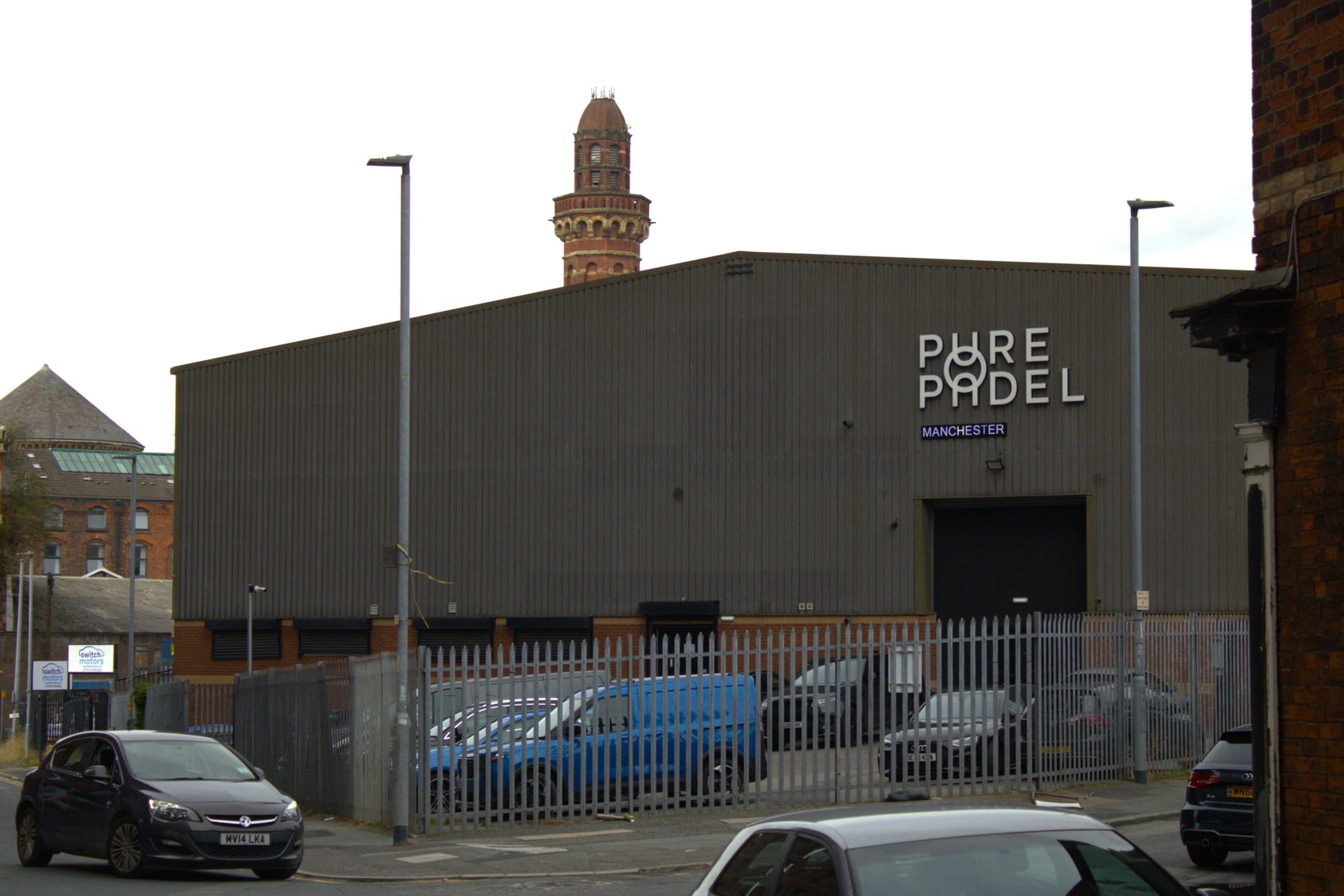
It makes Manchester the centre of the UK’s fledgling padel scene, and tennis clubs, landlords, property investors and general del-boy types are now wondering how they can cash in. “It’s a bit of a gold rush at the moment,” says Blake.
But the sport has its haters in the city, too. When The Mill put a call-out for reader’s thoughts on padel, it was variably referred to as a “gentrification indicator”, “Tory squash” and, unsusually, “Grindr for management consultants”. One reader wrote: “It’ll be a dead sport in a few years”. As it happens, they might be right.
While Blake was setting up his courts, he was approached by a man who had driven a lorry from Sweden, the back of which was filled with the fences and boards of dismembered padel courts. Back in Sweden, the sport had seen a massive rise in popularity. But all of a sudden the bubble burst. Hawkers were scrapping the shuttered clubs, and selling the parts to new padel founders in – you guessed it – Manchester.

This is not a paywall! Jack here, the author of today's piece on whether Manchester's padel boom is doomed to burst.
This piece is free to read, you just need to sign up as a member. But, if you do join the Mill as a paid member, you'll be supporting independent local journalism in the city that you live in and/or love. Remember, without our paying members, we couldn't do any of what we do. Just hit the button below to join. Thanks!
This story is free to read - you just need to join our mailing list. And why wouldn't you? By becoming a Mill subscriber, you'll get our scoops, features, and insights into Manchester, in your inbox, the second we hit publish. No card details required.
Already have an account? Sign In