
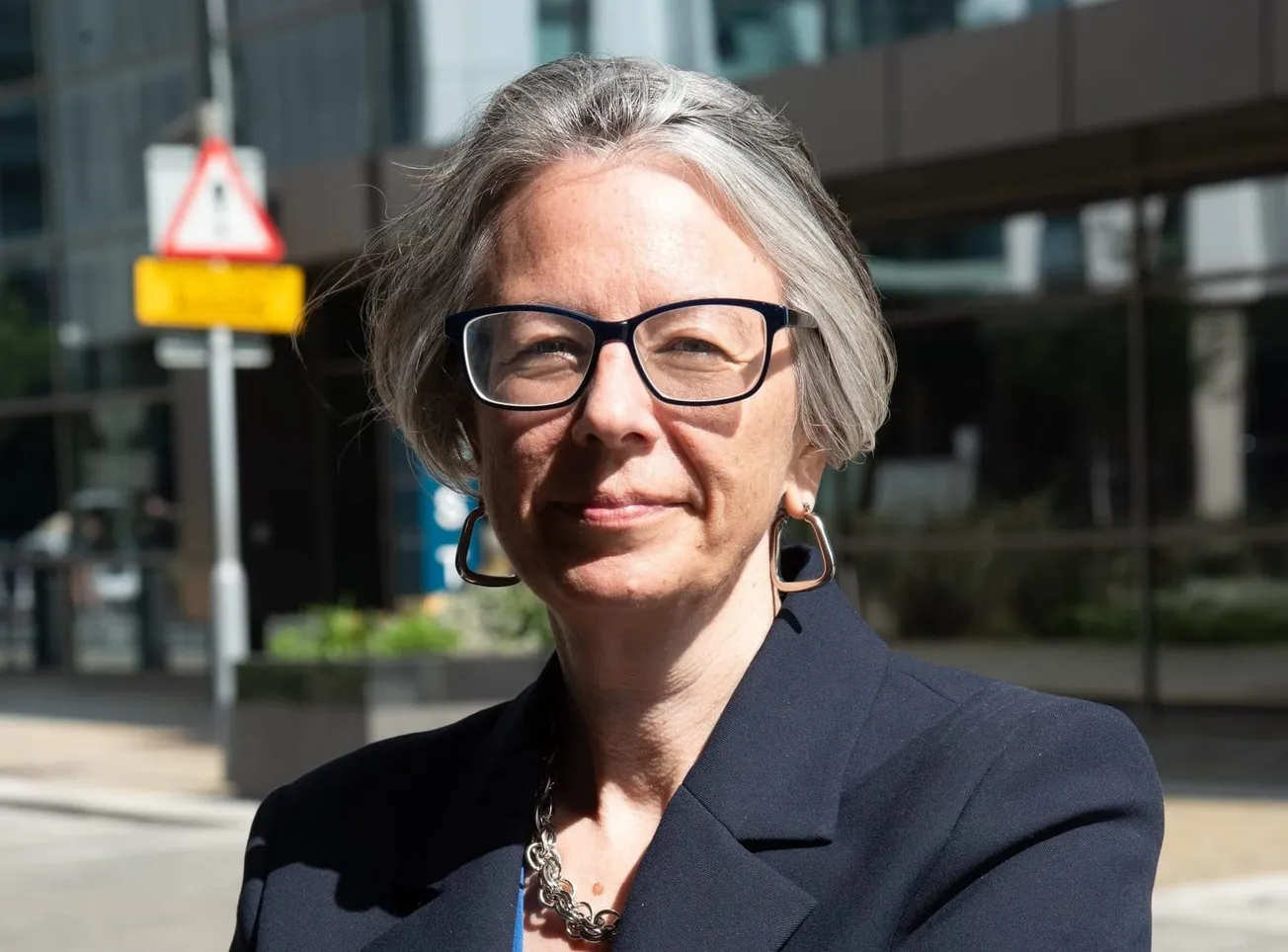
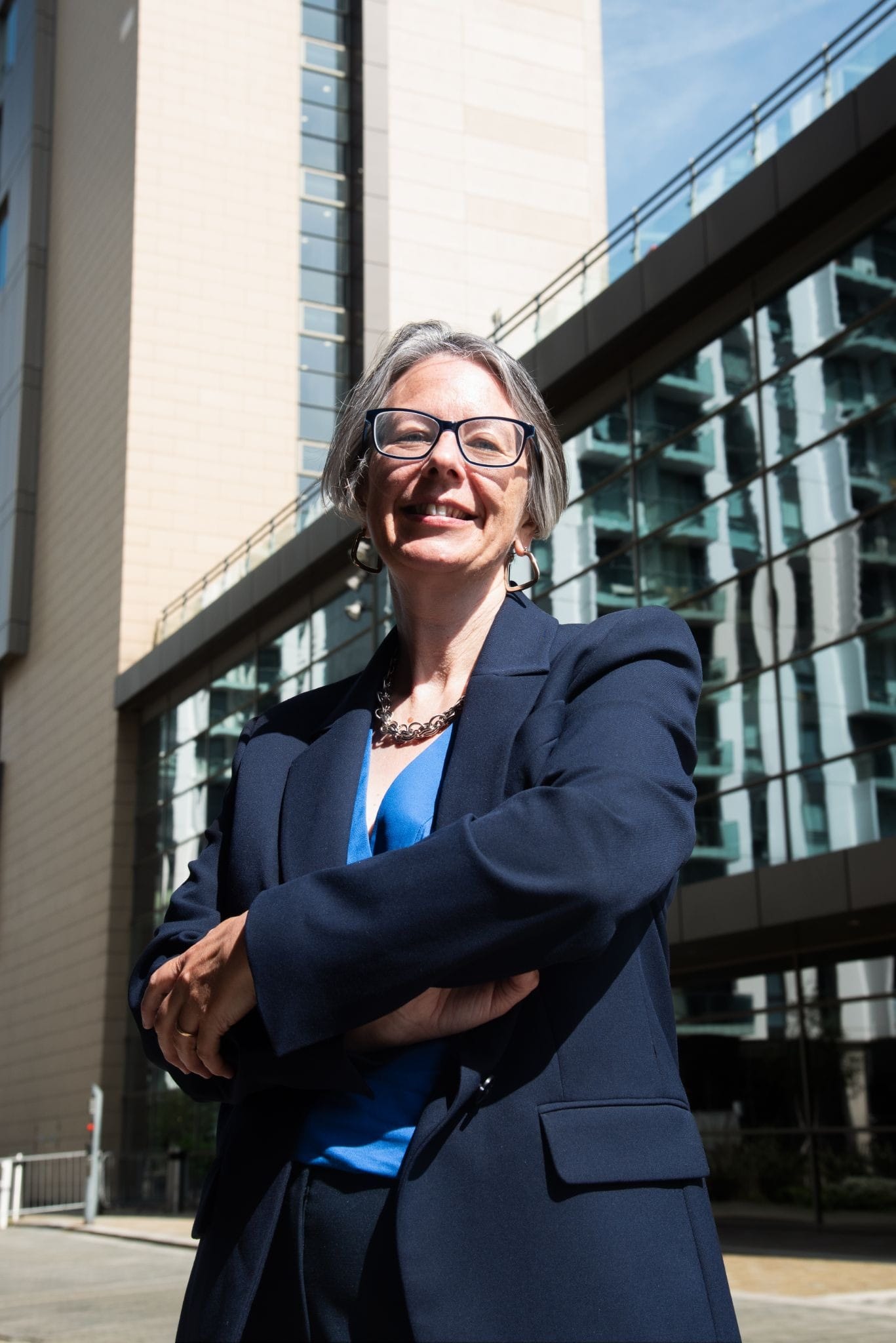
Before politics, one interest dominated the life of Geraldine Coggins, leader of the Trafford Greens, candidate for Greater Manchester mayor, and that was metaphysical nihilism. The now-politician harbours a lifelong love of philosophy, studying the subject up and down the UK and Ireland — at Trinity College, then St Andrews, and on to Durham for her PhD. A career in academia followed. In 2008 she began writing a book entitled Could there have been Nothing? Against Metaphysical Nihilism, which would become the first ever book-length study on the subject.
What is metaphysical nihilism? When I ask her, Coggins seems reluctant to discuss it, directing me instead towards the book’s synopsis. “The content is very abstract,” she tells me, “and doesn’t affect my worldview now.” Maybe Coggins is trying to draw a distinction between the rarefied questions that occupied her as a philosopher, and the decidedly more concrete demands of a mayor. Or maybe it’s just difficult to explain. The same year the book was published, in 2010, Coggins joined the Green Party, never to return to academia.
And what a time in the Green Party it’s been. When I meet her, drinking matcha outside a glass-fronted MediaCity cafe, she runs me through the last decade-and-a-half in her Irish lilt: a councillor for eight years, a group leader for four; becoming one of Trafford's first Green councillors in 2018, dethroning the Conservatives who’d long controlled the council. She’s stood in every general election since 2015 – once for Stretford & Urmston and three times for Altrincham & Sale West – though never successfully.
Coggins possesses a demeanour at once warm and authoritative, and it’s this unlikely mix that I’m told helped her win the favour of Altrincham’s electorate in 2018, when, alongside councillor Daniel Jerrome, she made history.
Two seats were vacant in the ward that year, and the pair stood as the Green candidates. Jerrome recalls a febrile atmosphere on polling day, with neither opposition parties nor the press able to predict what was to come.
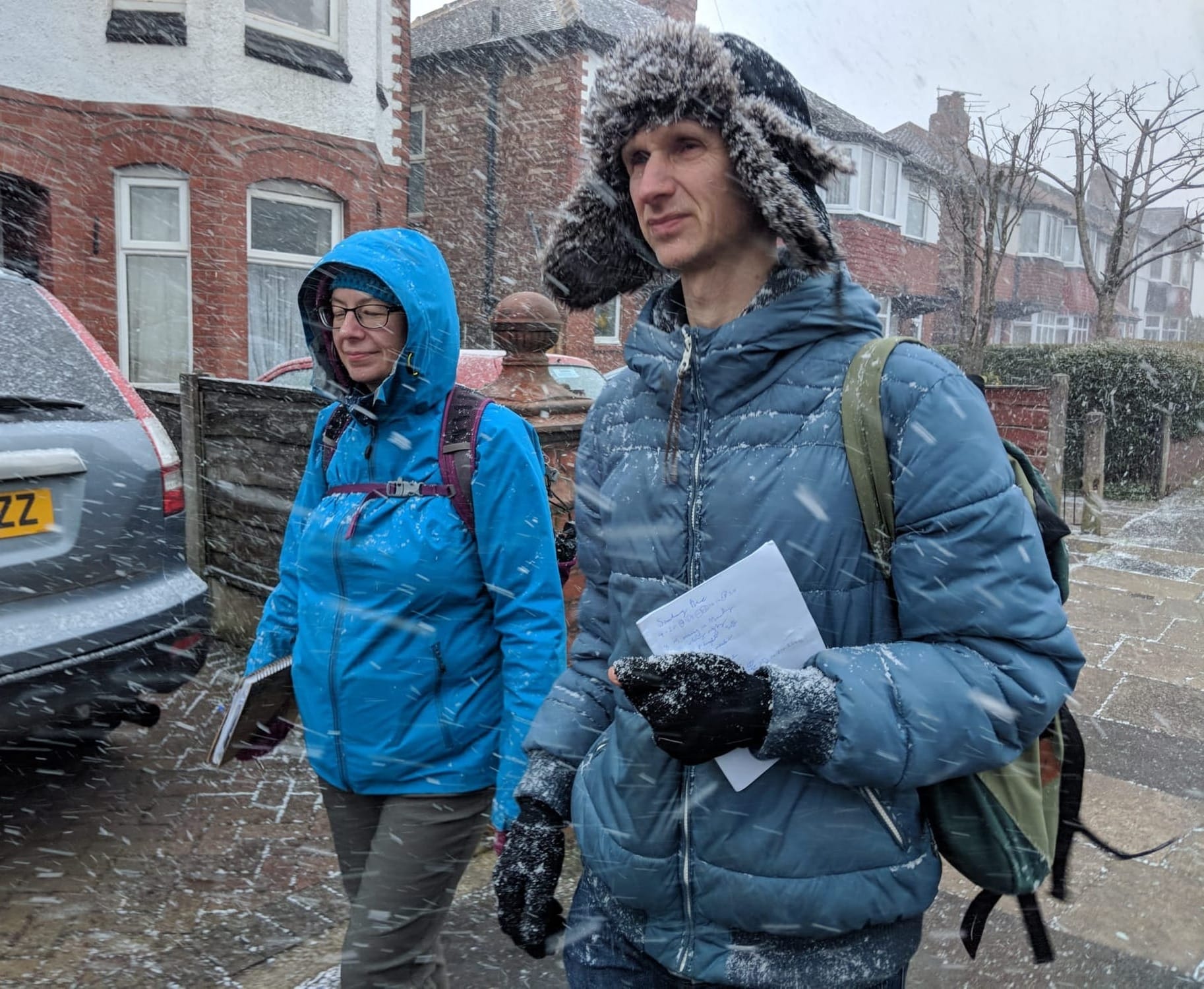
The Conservatives lost seats, while Labour gained four and the Green Party gained two (the first two in Trafford's history), leaving the council in no overall control and shattering the Tories' 14-year stronghold. Jerrome says that, at 4am, the council’s chief executive herded him, Coggins and the Liberal Democrat councillors into an emergency meeting, because between them they held the power to flip the council. The difference in seats between the Conservatives and Labour was now so razor thin that Jerrome, Coggins and the Lib Dems could play kingmakers by choosing to support either of the two leading parties.
Jerrome was taken aback, but Coggins remained composed; she’d already prepared for this, and had consulted the party on negotiating positions. Five hours later, they were brought into meetings in quick succession, first with Trafford Conservative Council Leader, and then the leader of Trafford Labour, each vying for their support. While Jerrome supported negotiations, he says Coggins’ prep work meant they held the cards, ultimately remaining neutral, while the Lib Dems propped Labour up. “Geraldine led on those negotiations… I’ll never forget that,” he says.
It’s this unflappability that took Coggins from councillor, to council party leader, to now mayoral candidate. She tells me she initially joined the Greens because she had two young children, and knew that the climate crisis was the biggest problem they were likely to face in their lives. Her reasons for running for mayor are much simpler: she wants to stop Reform.
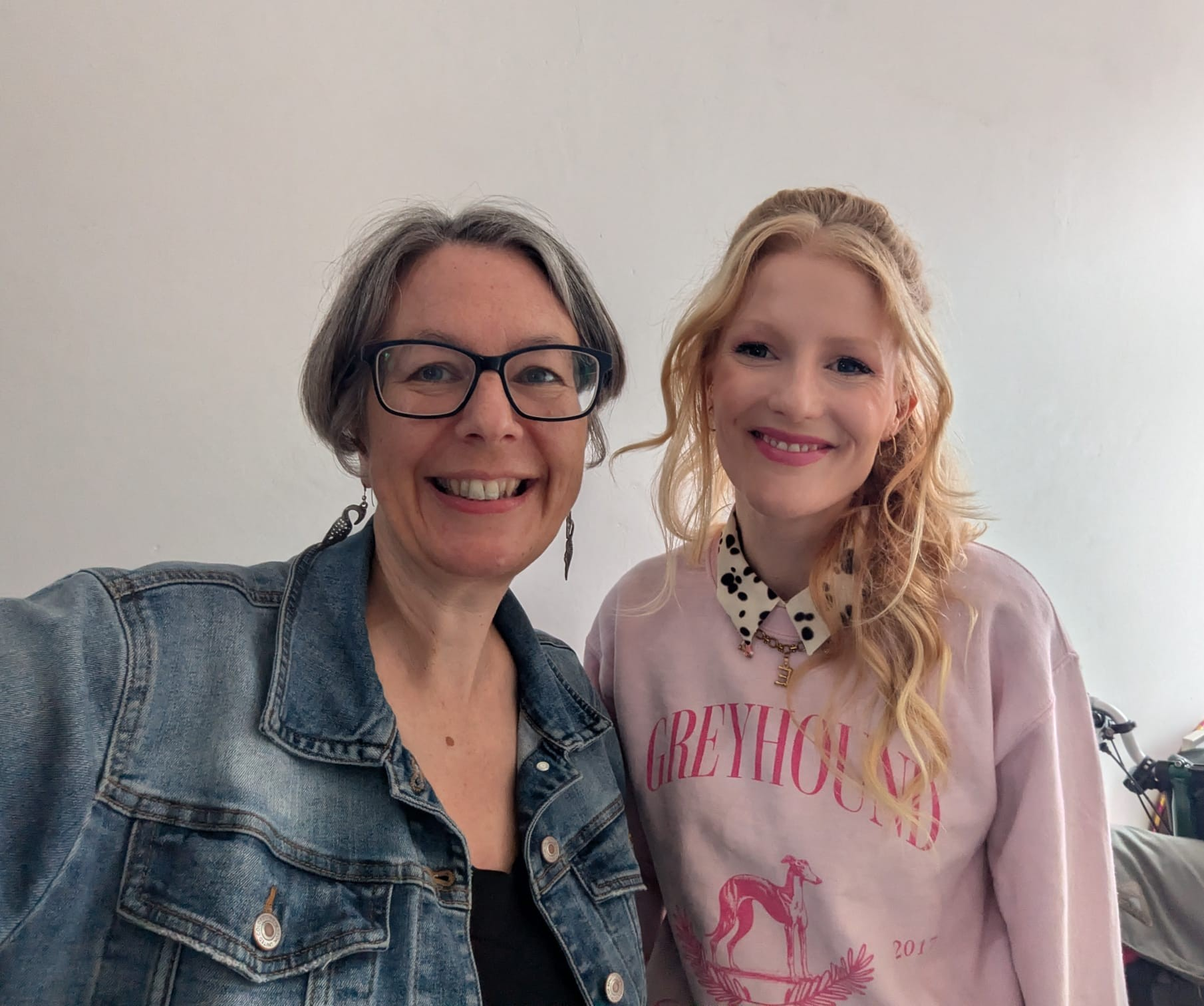
And in this sense Coggins is as evasive about her intentions as mayor as she is about her philosophical theories. Following closely the Hannah Spencer playbook, her campaign so far centres around the message of what she’ll prevent, not achieve. Indeed, a photo of the philosopher and the plumber side by side at Coggins' candidate announcement last weekend shows her clutching the party’s first campaign leaflets, and it is Spencer’s face and not Coggins’ on the front of them, beside the text: “Vote Green. Let’s Stop Reform. Again.” Her manifesto isn’t due out for at least another week, but her candidate application sent to Green members emphasised an interest in free bus travel for under 22s, and greater energy efficiency in buildings. When I press her on this, she tells me that these are “things I feel passionate about… so yeah, watch out.”
What is it that we have to watch out for? Sources to the left and right of Coggins have been in our ears for some time now, telling us about a chasm widening in the Green Party, which Coggins in a sense is indicative of. On one side are the Coggins’s — long-standing Green Party members with an old-school interest in the environment. On the other are the younger, newer Greens, whose interests lie internationally — namely with the war in Gaza. It was this discrepancy that just months ago saw a vote of no confidence raised – but never passed – against Coggins.
Allow us to set the scene. It’s March of this year and the Green Party’s Spring Conference is in full swing. Around 2,000 members have gathered onto a Zoom call to vote on a number of motions, among them one of the party’s most hotly contested: that ‘Zionism is racism’. Chairing the conference, of course, is Coggins.
But as members flood the call, the internal voting system crashes. Coggins senses growing impatience from the group. Eventually, after consulting someone more familiar with the software, she announces that votes will instead be taken via the ‘raise hand’ button on zoom.
To some in the party, this episode was indicative of her pragmatism: Coggins, once again unflappable under pressure. To others, it suggested that she herself was caving to Zionist demands, because the alternative system may have allowed opportunistic non-party members to vote on the motion.
Eleanora Folan, the somewhat infamous personality behind the X account ‘Stats for Lefties’, was the one to table the vote of no confidence. “[Coggins] is attempting to hold an illegitimate and insecure vote on an amendment of great consequence, and I do not believe that [she] is showing neutrality or an unbiased position,” she wrote. Comments on a Canary article on the matter called it an “institutional capture by Zionists pretending to be progressives.”
“This is not infiltration,” wrote another, “but an exposure of the reality of Green parties.” A Green Party spokesperson told us Coggins acted impartially, in line with democratic processes and "did not make any decisions about alternative voting arrangements". Coggins survived the vote of no confidence, cementing the trust and the reputation she’d built within the party over her 11-year political career.
So, what does all of this mean for Coggins’ chances as mayor of Greater Manchester? The Greens, as ever, are framing this by-election as a two-horse race between themselves and Reform. But if our understanding of March’s events is correct, it could mean that Coggins’ greatest threat isn’t Reform’s as-yet-unnamed candidate, but infighting between the old-guard and new-guard of the Greens. Otherwise, if our understanding of metaphysical nihilism is correct, it could just be nothing.
Greater Manchester has suddenly been thrust to the fore of British politics, and The Mill has been leading coverage throughout. Just as in Makerfield’s by-election, we will be bringing you in-depth reporting on candidates and parties over the next few weeks, the kind you aren't going to find anywhere else. To stay in the know, sign up to The Mill today. You won’t just get profiles like this; you’ll be receiving exclusive insights into the people and parties who might soon be shaping the city region, food reviews, absorbing culture pieces and hard hitting investigations. It’s just £8.95 a month, or £89 if you pay for the year.
If someone forwarded you this newsletter, click here to sign up to get quality local journalism in your inbox.