
Late one evening in Belfast in April 1997, I got a call from an Army intelligence officer about a high-stakes operation in Northern Ireland. The SAS had stormed a border farm where an IRA sniper team was preparing an attack, and the source was providing me with the names of the suspects who had been caught. I didn’t realise it at the time, but this conversation would later help me to work out who was behind the 1996 Manchester bombing.
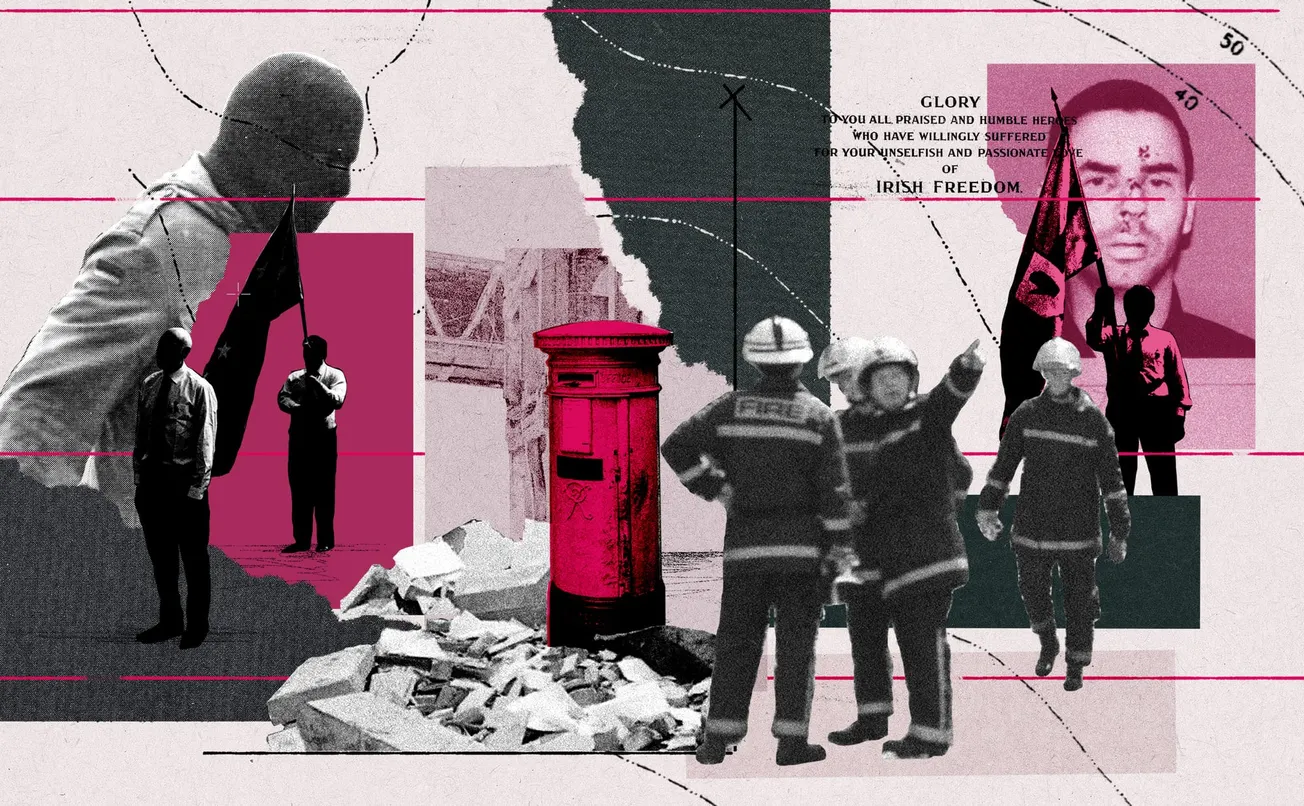
As police continued to investigate the attack on Manchester, the IRA in South Armagh sought to step up its military campaign at home. Mock road signs in the area warned of a “Sniper at Work”, the red triangle framing the silhouette of a masked gunman waving a rifle. Between 1990 and 1997, there were 24 recorded single-shot attacks, believed to be from an American .50 calibre bolt-action Barrett and a Belgian 7.62 mm FN rifle, most of them involving a vehicle used as a mobile firing platform that could speed away once a shot was fired. Nine members of the security forces were killed.
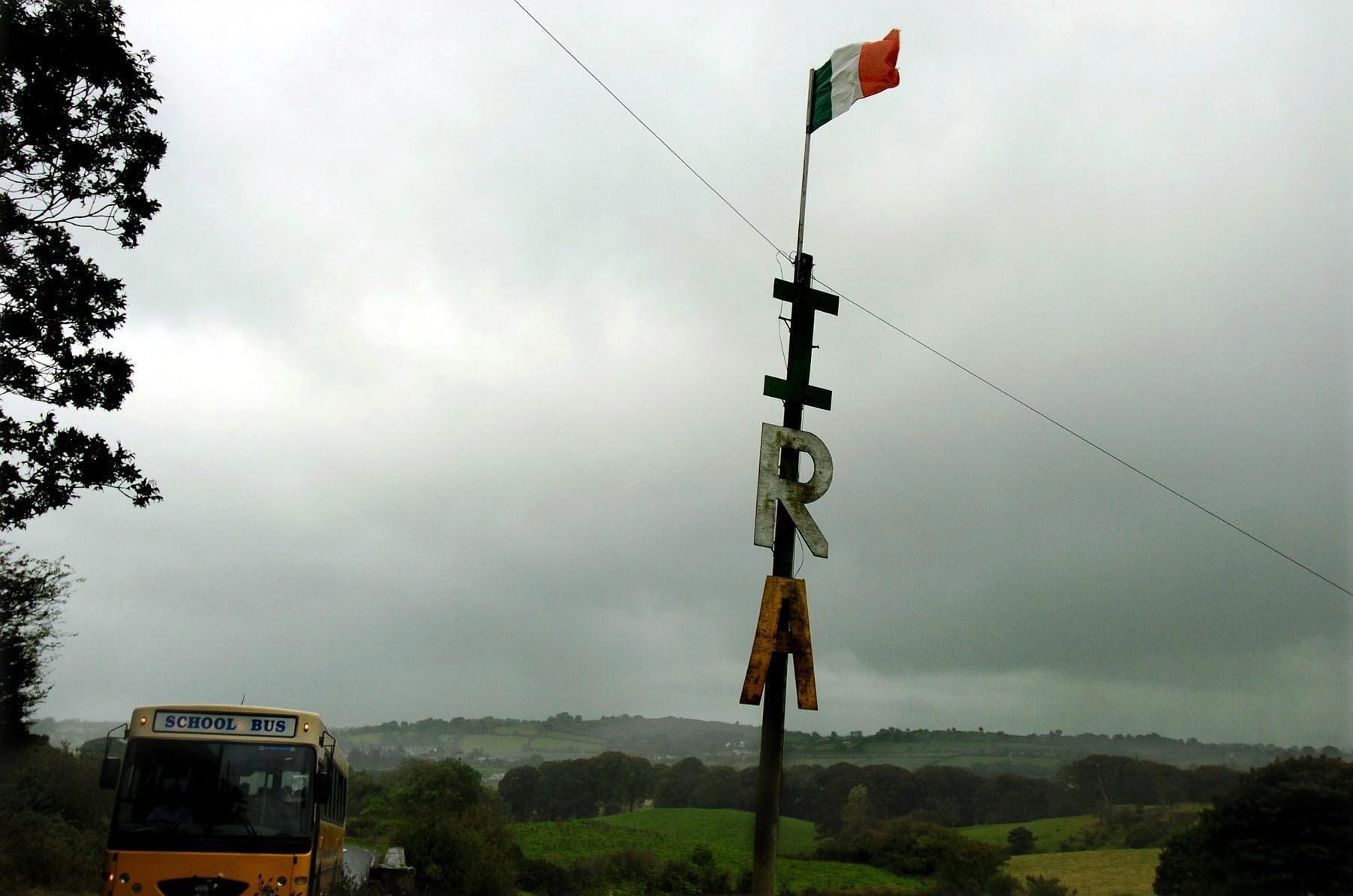
The .50 calibre round was devastating. I remember looking at the autopsy photos of Guardsman Daniel Blinco, who was 6 ft 6 in tall, shot outside Murtagh’s Bar just off Crossmaglen Square. The bullet had entered the side of his torso and passed right through him, leaving an exit wound the size of a tennis ball. Blinco, 22, from Derbyshire, cried out “I’ve been shot” and remained conscious for about 20 seconds as the other soldiers frantically tried to revive him, shouting: “Keep your fucking eyes open, Danny”.
Young soldiers on foot patrol experienced an almost paralysing fear that at any moment a sniper might strike with a bullet so powerful they would have no chance of survival. That changed on 7 April 1997 when an IRA sniper team was tracked to a farm at Cregganduff Road, outside Crossmaglen. Information about the farm, which had been used for previous sniper attacks, had probably been supplied by an informer to intelligence officers, who had arranged for listening devices to be installed in outbuildings.
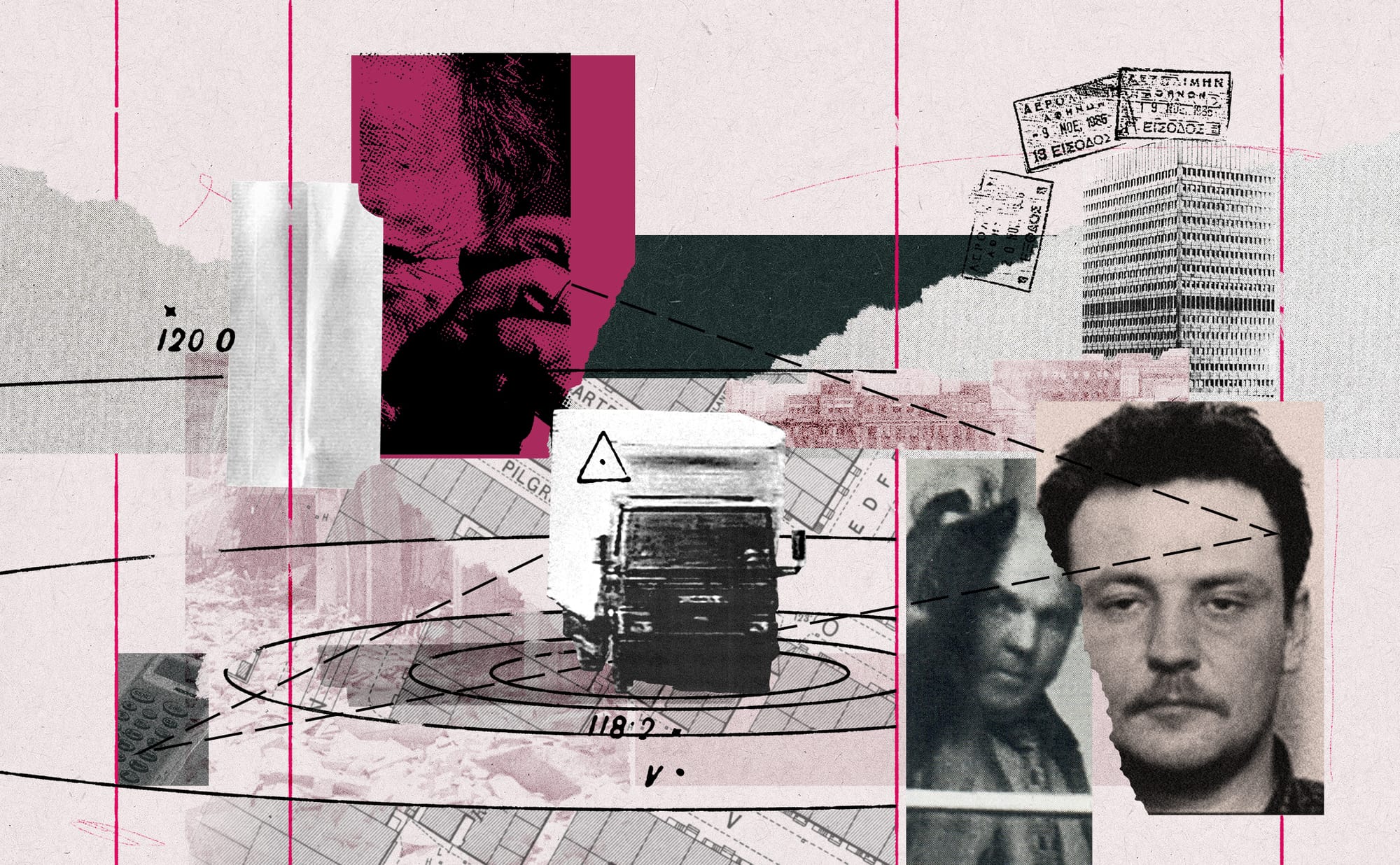
Around midday, 16 SAS troopers in two unmarked vans stormed the farm complex and subdued three IRA men — including Seamus McArdle and Bernard McGinn — with fists and rifle butts. A fourth man — the sniper — was apprehended as he ran along a hedgerow and disappeared into a gorse bush. The excited call I got was from an Army intelligence officer who had been involved in the SAS operation and wanted to pass me the names of the IRA men they’d caught. Two of them, McArdle and McGinn, are central to our story.
As it turned out, the IRA sniper team was linked to the Manchester and Docklands bombs. The Mazda 626 they planned to use for an attack that day had been stolen from Castleblayney, close to the home of Terence Fitzsimons, who acted as the suspected “quartermaster” for the Manchester operation. The car also carried licence plates registered to Declan McCann, a leading suspect in the Manchester attack. During the Docklands operation, a ferry journey had been booked in the name McCann, while “Mr. McCann of Castleblayney” was one of two men who bought a pair of cars at a Carlisle vehicle auction.
The police discovered that impressions from McArdle’s thumb matched those found on a Truck and Driver magazine on waste ground in Barking, an ashtray at a Carlisle truck stop and a ferry ticket stub at Stranraer. This evidence confirmed he had been the driver of the Docklands bomb. McArdle had been behind the wheel on at least one sniper attack.
Back in 1996, neither McArdle nor McCann had ever been arrested or fingerprinted, making them “clean skins” ideal for operations in England. They were close in age and lived a mile apart. The IRA tended to stick to what had worked before and to use people who had already shown they could get the job done. One British intelligence officer, speaking recently, theorised that McArdle and McCann had carried out the Docklands bomb together and then been tasked to do the same in Manchester four months later.
During our investigations this year, The Mill established that Manchester detectives questioned a man, whose similar name means they may have mistaken him for Seamus McArdle, in the weeks after the June 1996 bombing. It’s unclear whether this man was questioned because they were looking for McArdle, and Counter Terror Policing would not comment when we approached them.
The weak link in the sniper team was Bernard McGinn. Trying to seek a deal with Royal Ulster Constabulary (RUC) detectives, McGinn, who died in 2013, described how he had been among the IRA men who mixed over five tons of explosives in a cattle shed near Donaghy’s crossroads one evening in January 1996, the shed we visited recently and wrote about in Part 1 of our investigation.
At one end of the cattle shed was a stack of sacks, each containing a hundredweight of ammonium nitrate agricultural fertiliser. As one man split the sacks, the others shovelled the contents into an electric barley crusher plugged into the power shaft of a tractor. The barley crusher, designed to break down animal feed, was used to grind the fertiliser granules into tiny particles.
The next day, the shed reverted to being a cattle byre; all that had been required to transform it into a bomb factory had been a friendly farmer and a watertight roof. Although McGinn was only told that there was about to be a bomb in London, the amount of material he mixed suggests it was almost certainly for Manchester too.
I learned in 1997, from information supplied by McGinn, that the IRA had planned to bomb Birmingham after Manchester but called off the operation when they believed its operators were being followed.
Given that the IRA’s sniper team had probably been compromised by an informer, it stands to reason that its England Department — run from South Armagh — was also penetrated. Indeed, John Crawley, a member of the IRA team that plotted to blow up the power grid, codenamed Operation Airlines by the Metropolitan Police, told me that questions put to him by police interrogators in 1996 indicated that an informer had compromised his unit.
What I did not know until my recent reporting for The Mill was that McGinn, according to detectives close to the case, had named a man living in the Manchester area as an IRA supporter who had facilitated the June 1996 bombing. This “inside man” had allegedly provided logistical assistance and perhaps helped select the Arndale Centre as the target and devised the route for the bomb lorry.
Remarkably, McGinn said that the South Armagh IRA was contemplating bombing Manchester a second time. The name of the inside man was passed to RUC Special Branch. This information may have prevented a follow-on IRA attack and saved Mancunian lives. The man’s name has never been revealed. No prosecution was contemplated, probably because MI5’s ability to track him to gain intelligence about future attacks was judged to be more valuable than any conviction.
McArdle was twice tried in London. At his first trial, members of the jury — whom lawyers suspected had been threatened — failed to reach a verdict. During his second trial, he admitted to driving the Docklands bomb lorry but claimed he did not know it contained explosives and he was simply doing a job for a man he called “the Boss”, an apparent reference to Thomas 'Slab' Murphy, the South Armagh farmer and smuggler who was the IRA’s chief of staff and the man in charge of its so-called England Department, responsible for bombing the likes of London and Manchester.
Sentencing McArdle to 25 years in June 1998, the judge described him as a “trusted and manipulative” member of the IRA. But the Good Friday Agreement, reached two months earlier, meant that all paramilitary prisoners were being released and McArdle would only serve two years — he was freed in 2000 using the Queen’s royal prerogative at the request of Peter Mandelson, then Northern Ireland secretary.
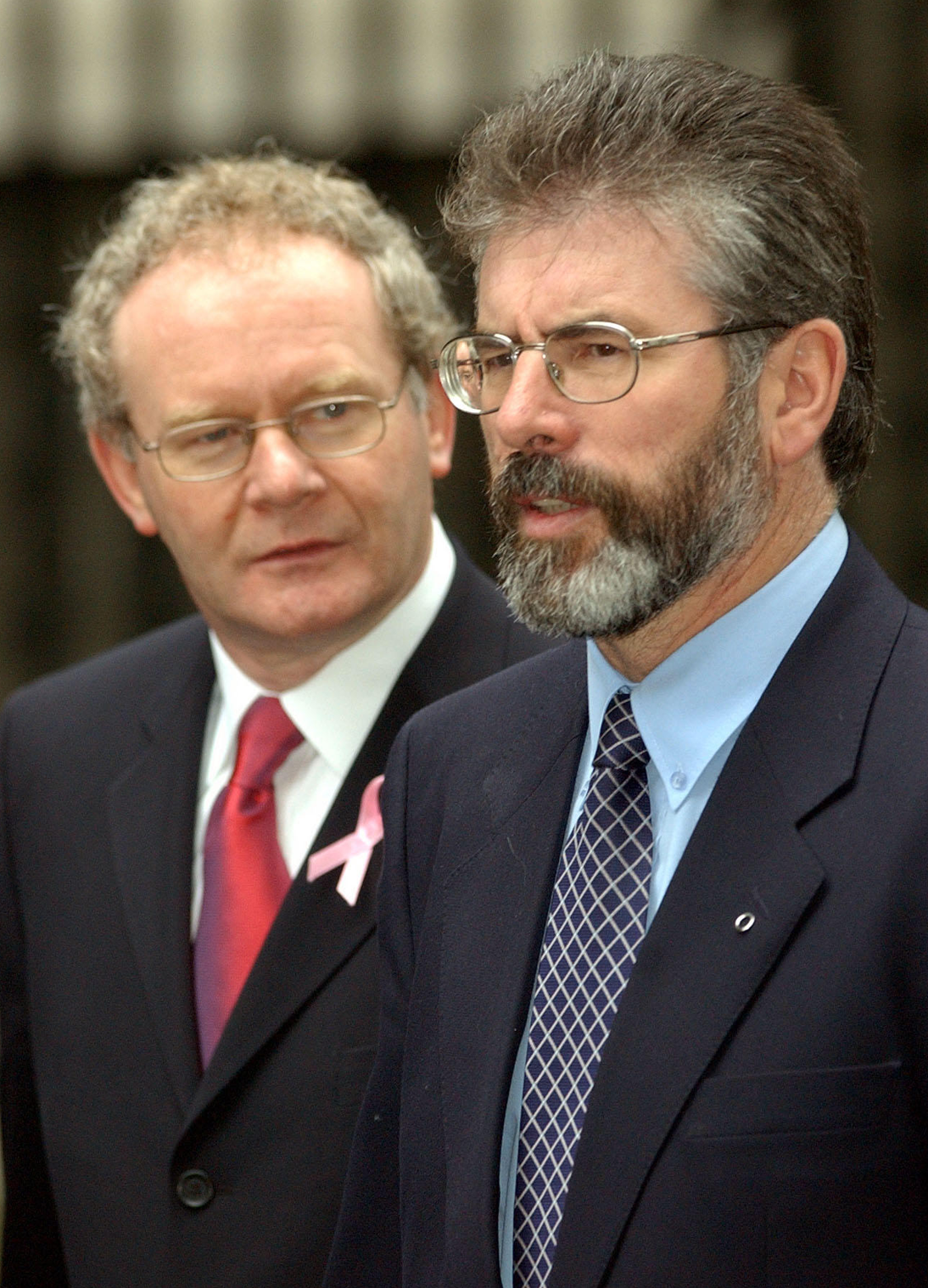
It’s important to remember the political context at the time of the Manchester bomb. The IRA had ended its ceasefire with the Docklands bomb to exert pressure on the British government. Gerry Adams and Martin McGuinness, Sinn Fein’s leaders, argued that they should be admitted into talks to prevent further IRA bombs. The week before Manchester, Sinn Fein had been excluded from political talks at Stormont in Belfast.
Recently released government documents, viewed by my Mill colleague Jack Dulhanty, show that aides to prime minister John Major — Tony Blair was 11 months away from being elected — were wedded to keeping Sinn Fein on board. John Holmes, Major’s principal private secretary, stated in a memo on behalf of the then prime minister a few days after the attack that “obviously we need to do everything possible to catch those responsible for the Manchester bomb.”
Sinn Fein sought to portray the Manchester bomb as the work of hardliners who were opposed to the “peace process”. In fact, we now know that, according to four separate security sources on either side of the Irish Sea, it was approved by the IRA’s Army Council.
This month, I met a former RUC Special Branch officer, who once specialised in electronic intercepts and worked extensively in South Armagh, in a Belfast working men’s club, where we discussed the oversight of the operation. “It was an Army Council decision,” he said, citing signals intelligence and information from informers. “They entrusted Murphy with making it happen. It was a very deliberate ploy to exert pressure on the British government, because they had figured out, quite accurately, that if they had spectaculars in England, that put the British government under immense pressure to solve the problem.”
If you're enjoying this piece: we're The Mill and we publish proper journalism about Manchester via email. Join up for free now - we publishing everything by sending it straight to your inbox.
No Manchester arrest
When I interviewed John Grieve, the Metropolitan Police’s anti-terrorism chief, in early 1998, he made clear that his job was one of the most politically sensitive in Britain. He spoke of “brinkmanship over Docklands” and “an element of political will” when the Attorney General decided whether to prosecute. He also told me that “there's a lot known about Manchester” and “they did an absolutely brilliant job, Manchester police”.
By 1999, however, it was apparent to Manchester detectives that there would be no arrest of the prime suspect, Declan McCann, despite there being what the police regarded as “compelling evidence” against him. Remarkably, the leaked investigation report revealed that Special Branch detectives had twice tailed McCann as he returned to Manchester. At 11.20pm on 14 December 1997, they watched as he walked, alone, to the scene of the bombing. Manchester police, dismayed by a lack of cooperation from the Garda, travelled to Ireland to make secret inquiries, and even tried to eavesdrop on conversations in a Castleblayney pub that Fitzsimons was known to frequent.
In April 1999, Steve Panter, crime reporter of the Manchester Evening News, published a bombshell story naming McCann. Two days later, his solicitor, Gerard Trainor, said the allegations against McCann were false and could endanger his life. “My client was not in Manchester in 1996,” he told the newspaper. “He is a man with a young family who has never been in trouble with the police.” By that time, the Crown Prosecution Service had stated that there was no realistic chance of McCann being convicted.
Former RUC and Army intelligence officers are convinced that political considerations played a key role in the decision. Certainly, the bombings in England added urgency to the political talks, just as Adams and the IRA had hoped. Blair’s adviser Alastair Campbell said in a recent podcast that “things like the Manchester bomb almost became like an impetus to do more”.
According to multiple security sources, the Blair government apparently believed that a Manchester prosecution could alienate the South Armagh Brigade, which had reluctantly backed the Adams strategy. The threat of a resumption of violence was always in the background. Rather than taking McCann into custody, Manchester police arrested one of their own, Detective Inspector Gordon Mutch, who was accused of leaking the investigation report to Panter.
Mutch was prosecuted but acquitted, leading some to remark ruefully that the case against McCann was far stronger. Now retired and spending much of his time on canal boats, Panter, 72, is convinced that politics played the key role in the McCann case. “The peace process was the big thing at the time,” he told The Mill. “That was the bigger picture.” He added that the lack of fatalities in Manchester — two were killed by the Docklands bomb — probably also played a part. “I believe to this day that if somebody had been killed, they would have made an arrest.”
Back to South Armagh
Before visiting the shed near Donaghy’s crossroads, I drove to Clones, County Monaghan, an hour or so away, to see John Crawley, who was part of the IRA power stations team that was arrested a month after the Manchester bomb. Now 69, Crawley is retired and recently wrote a book, The Yank: My Life as a Former US Marine in the IRA. He grew up in Chicago and trained in demolitions during his four years in uniform before returning to Ireland, where he’d moved as a teenager.
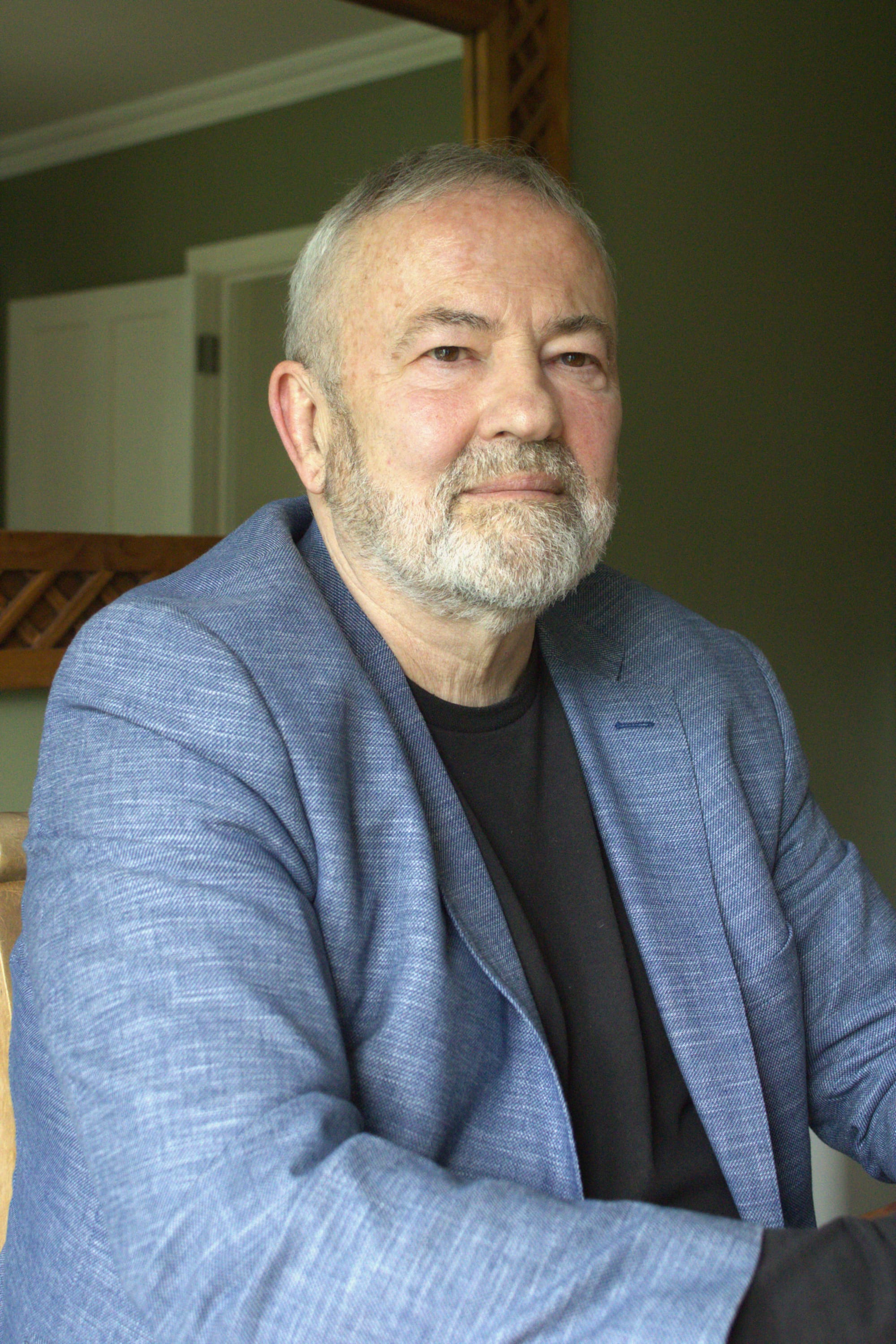
We sat at his dining table, where his wife served us tea and cakes. Crawley, a genial and inquisitive man — he completed an Open University degree in political science while in prison — now believes he and the other IRA men sent to England were “pawns” duped into settling for much less than the united Irish republic they fought for. “I realise that we were over there as part of negotiating capital with the British, to potentially do something that would worry them enough to bring Sinn Fein into talks.” Perhaps ironically, his view echoes the analysis of the former RUC Special Branch man in east Belfast.
The veteran IRA man is an admirer of Patrick O’Callaghan, Murphy’s number two, who died in 2021 aged 70. In my book, I was only able to refer to O'Callaghan as the Undertaker, but we can now use his name. O’Callaghan broke with Murphy over the Good Friday Agreement, a schism in South Armagh that led to a bitter feud and contributed to the death of Paul Quinn, who was beaten to death by alleged IRA members at a farm coincidentally very close to the former home of Terence Fitzsimons. Crawley suggested that O’Callaghan, as the British authorities suspect, played a command-level role in the Docklands and Manchester bombs.
“I don't know specifically what he would have done in England, but I'm sure he knew a good bit about what was going on here, where stuff was being mixed in sheds and that.” Crawley pointed out there was no amnesty for IRA offences so he could only talk about things he had been convicted of, but he insisted he was not involved in bombing Manchester. “The truth is, the first I knew about Manchester was when I saw it on the news that night,” he said.
Crawley approved of the bombing, if not of the part it played, in hindsight, in the Sinn Fein strategy. What did he think about the Manchester attack at the time? “My reaction would probably have been, ‘That's a good operation, a lot of economic damage to the British state’” he told me, adding that it was “a good propaganda thing and nobody killed, so, a good day.”
If you want to read gripping, insightful local journalism about Greater Manchester every week, join our free mailing list. We're a newsletter, so it's the only way to get our reporting when we publish it.
The men involved
My reporting for The Mill in recent months has given me a much clearer picture of who bombed Manchester – not just the bombers themselves but the IRA command structure that stood behind them. By speaking to retired British intelligence officers, former IRA men, ex-soldiers, and police on both sides of the border, we can fit most of the jigsaw together, even in the absence of prosecutions by the state.
We can now be confident that the bombing was ordered by the IRA’s Army Council and was not the work of a rogue element or hardliners who opposed the “peace process.” Below the Army Council, the IRA’s chain of command was Murphy, O’Callaghan and then the man who, according to McGinn, led the mixing team. For legal reasons I was unable to name this figure in Bandit Country, so I referred to him as the Surgeon. In 2001, lawyers representing a South Armagh man named Sean Gerard Hughes, who is now 64, said he was the Surgeon and claimed Hughes could not get a fair trial on fraud charges because of my book.
Another key figure was Michael “Micksey” Martin, once convicted of buying Stinger missiles in Florida. Seamus McArdle, Micheal Caraher – the sniper apprehended in the gorse bush – and Frank McCabe all mixed the England bombs. The most likely scenario based on the available facts is that Fitzsimons acted as quartermaster, McCann and McArdle drove the lorry, and another person, perhaps the mysterious ‘inside man’ in Manchester described by McGinn, drove the Granada.
Crawley lives in a modest semi-detached house. In contrast, many of the IRA men who stayed loyal to Adams and Sinn Fein own palatial properties. The IRA has long been involved in smuggling and racketeering in South Armagh and has recently made extensive inroads into the drugs trade. “These days, IRA members are no longer involved in terrorism,” a former Garda officer who works near the border told me. “They’re using their previous titles to live off pure criminality.”
Some South Armagh republicans have branched out into what they insist are legitimate business activities. In 2016, the Sunday World reported that Declan McCann and his older brother John owned around 50 apartments in Dublin’s north inner city, an area riven by gangland feuds. McCann had bought property, the newspaper claimed, from an alleged crime boss known as the Monk. In 2013, a member of McCann’s extended family was a suspect in a botched robbery in Dundalk in which a Garda officer was shot dead.
At some point after the Manchester bomb, Murphy diversified into property, and by 2005 he owned an estimated £30 million housing portfolio in the same city the IRA had bombed. “Somebody in the republican movement must have enjoyed the joke,” an RUC officer remarked at the time. “After blowing up Manchester, Murphy has decided to take a slice of it for himself.” In 2013, Murphy agreed to hand over nine houses in Greater Manchester to Irish and British revenue officers.
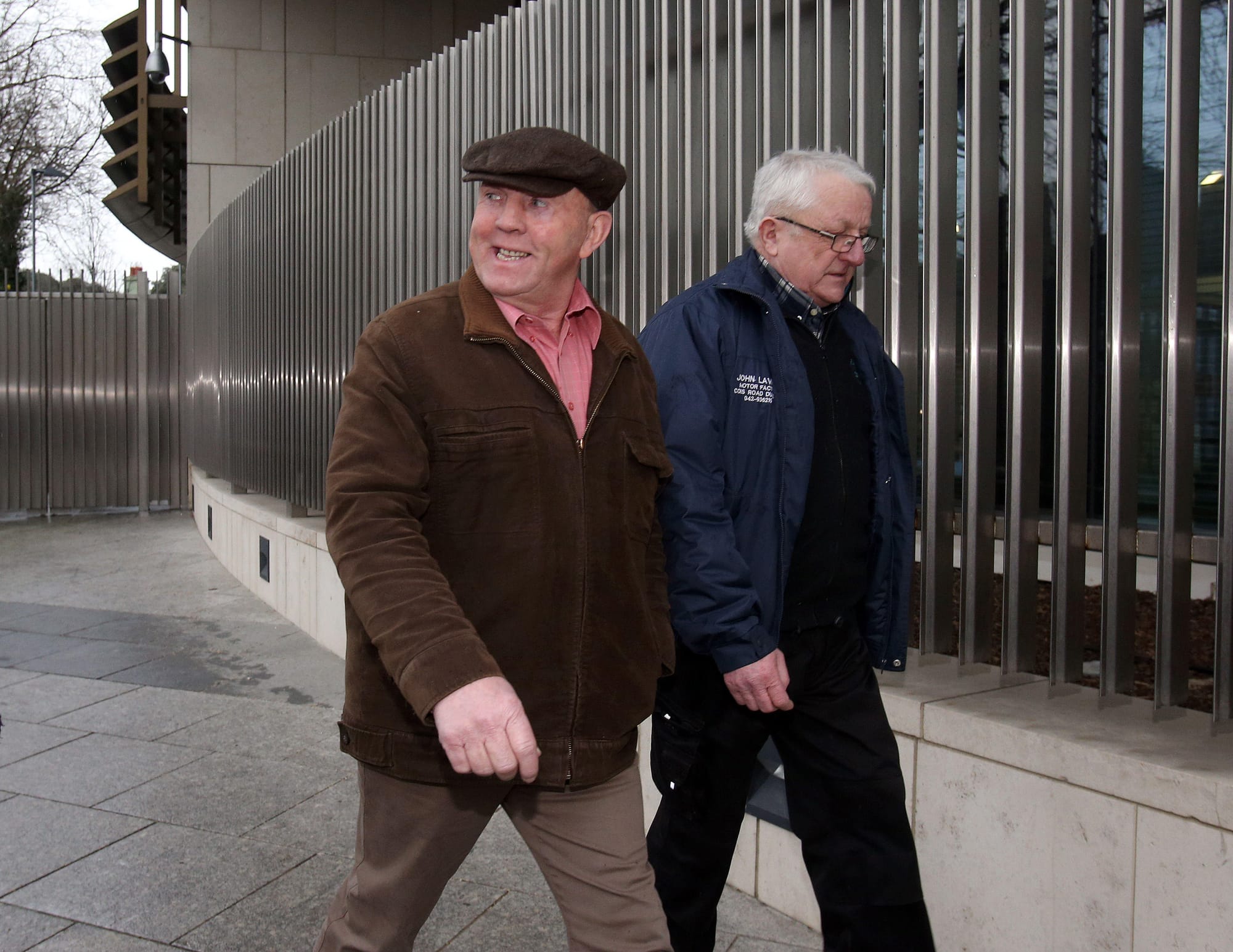
The houses, worth £445,000 and mainly in Trafford and Stretford, were part of nearly £1m of criminal assets that Murphy and his brothers surrendered. In 2016, Murphy was convicted — Al Capone style — on nine charges of tax evasion and sentenced to 18 months in prison. Now 76, Murphy still lives quietly on his border farm, which betrays few of the trappings of his immense wealth. Gerry Adams has described him as a “good republican”.
Seamus McArdle, now 58, lives in a sumptuous, heavily fortified white stucco house, with a slate roof and a stained glass window featuring a peacock, on the Ballsmill Road outside Crossmaglen. There were people at home when I called but there was no answer on the video intercom. I left a message and my number. I heard nothing back.
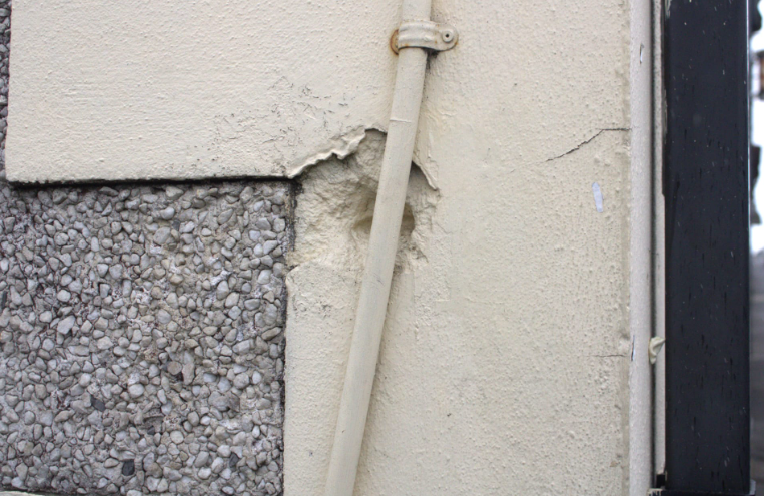
On the Ard Ross estate in Crossmaglen, the house owned by Declan McCann, now 61, appeared unoccupied. A three-minute walk from McCann’s house, a large strike mark from the .50 calibre bullet that killed Guardsman Blinco is still visible on the corner wall outside Murtagh’s bar, carefully preserved for more than 32 years. Local sources told me that McCann lives at a secret location south of the border. Gerard Trainor, the solicitor who spoke for McCann in the late 1990s, did not respond to questions we sent him on Thursday evening.
In September 2022, a Manchester bombing suspect was arrested as he arrived at Birmingham airport. According to a former Northern Ireland intelligence officer, the suspect was McCann, who was stopped because he had an “arrest on sight” notation on his personal record. He was questioned by Manchester detectives and released without charge. A spokesperson from Counter Terrorism Policing declined to comment when we contacted them linking the arrest to McCann.
In Lisdoney, close to Castleblayney, just south of the border, there was no trace of Terence Fitzsimons, 75. His ex-wife Mary answered the door and said she hadn’t been in touch with her husband for 30 years and neither she nor any of their 10 children knew where he was, though she believed he was still alive. She had never heard allegations he had been involved in the Manchester bomb, she insisted.
Fitzsimons was an early example of the crossover between the IRA and drugs. He was arrested in 1995 in connection with the seizure of £2 million worth of Ecstasy tablets and chemicals as part of an operation run by the notorious drug baron known as the Penguin, who hailed from the Dublin suburb of Drimnagh, where Fitzsimons also grew up. Fitzsimons was on bail at the time of the Manchester bomb and was later jailed for 10 years for the drug offences.
A trauma
There has never been any indication of remorse from the IRA or anyone involved in the Manchester bomb. Recently, however, Barry Laycock got his day in court with Gerry Adams. After the Saturday blast, Laycock did not go to hospital but instead drove home. He stopped at a service station on the M60 near Preston and was seized by pain. He stayed in bed all day Sunday and was later diagnosed with spine compression and leg injuries. He had to retire from British Rail and never worked again.
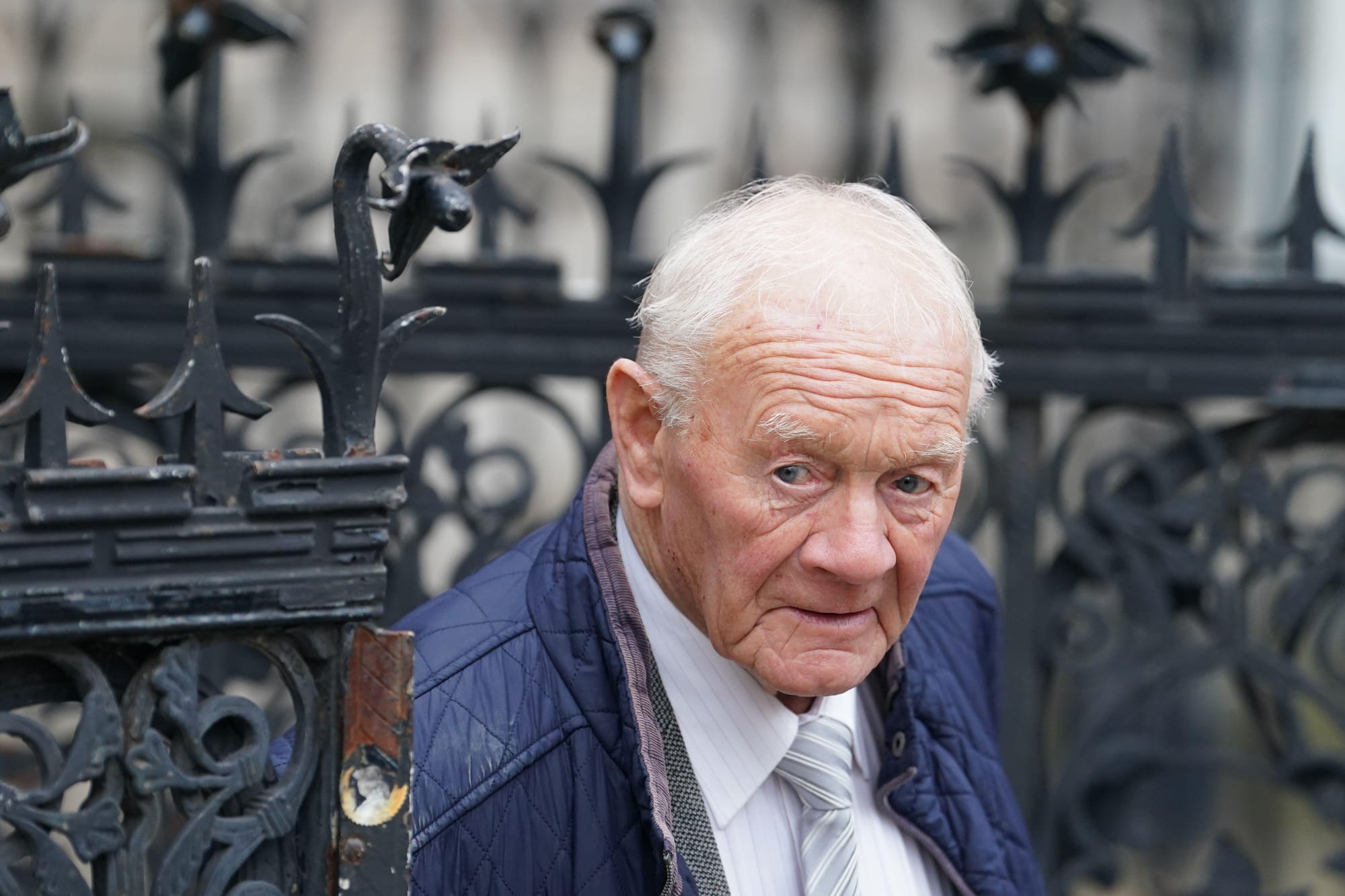
Now 87 and widowed, he still experiences spasms in his spine that can send him tumbling. He was diagnosed with PTSD, had two nervous breakdowns and can get around only with the aid of painkillers and a walking stick. “I think about the bomb every day of my life,” he told me. “It took everything away from us.”
In March, Laycock was part of a civil trial brought against Adams in London by victims of the England bombings. Days before the Manchester blast, Adams had visited Crossmaglen, doubtless to speak to members of the IRA’s South Armagh Brigade. At the time, all Adams spoke about was the scenery, telling a New York Times reporter about the “very majestic” mountains.
In court, Adams, wearing a shamrock and a Palestine flag lapel pin, insisted: “I was never in the IRA”. His witness statement said he “had no involvement or advance knowledge of” the Manchester bombing. Laycock was unimpressed. “I was sat not maybe 10 feet away from Adams for two weeks,” he said. “I kept looking at him. I dead-eyed him, but he never turned once to look at me.” The trial collapsed on its final day when the judge ruled that Laycock and the other claimants might be liable for costs if Adams prevailed. The former railwayman took it as a cruel blow.
“I feel very bitter that they can walk the streets,” he said, referring to the bombers. “On that particular day, nearly 30 years ago, they came to Manchester with the intention of murdering people." The worst thing, he feels, is that the bomb worked. A little over a year later, the IRA had called another ceasefire and were back in talks that led to the Good Friday Agreement. “The British government were blackmailed into accepting that peace agreement on the IRA's terms," Laycock said. "It was a case of either accept or they’d be back on the streets with violence and bombs.”
On Thursday evening, as we were making the final edits to this piece, Counter Terrorism Policing North West announced that the investigation into the 1996 bombing is “no longer active”. A review following the 20th anniversary of the attack had identified “some new, albeit limited, investigative opportunities”, but these have now been exhausted too. The statement mentioned the arrest at Birmingham Airport in 2022, which we believe was McCann. It also referred to a second man who “would have been arrested and interviewed”, adding, somewhat pathetically, “however he died whilst preparations were underway to arrest him.”
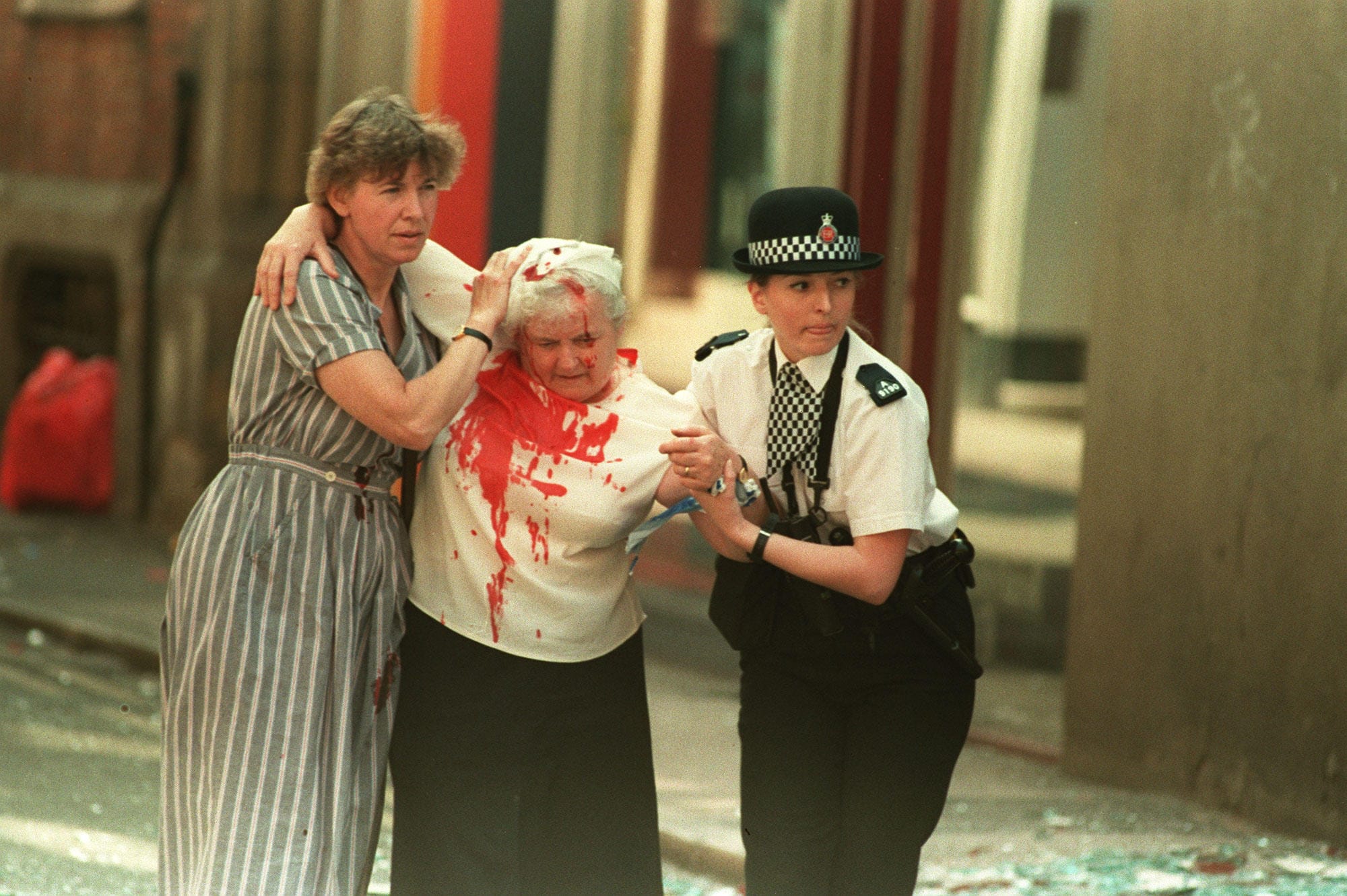
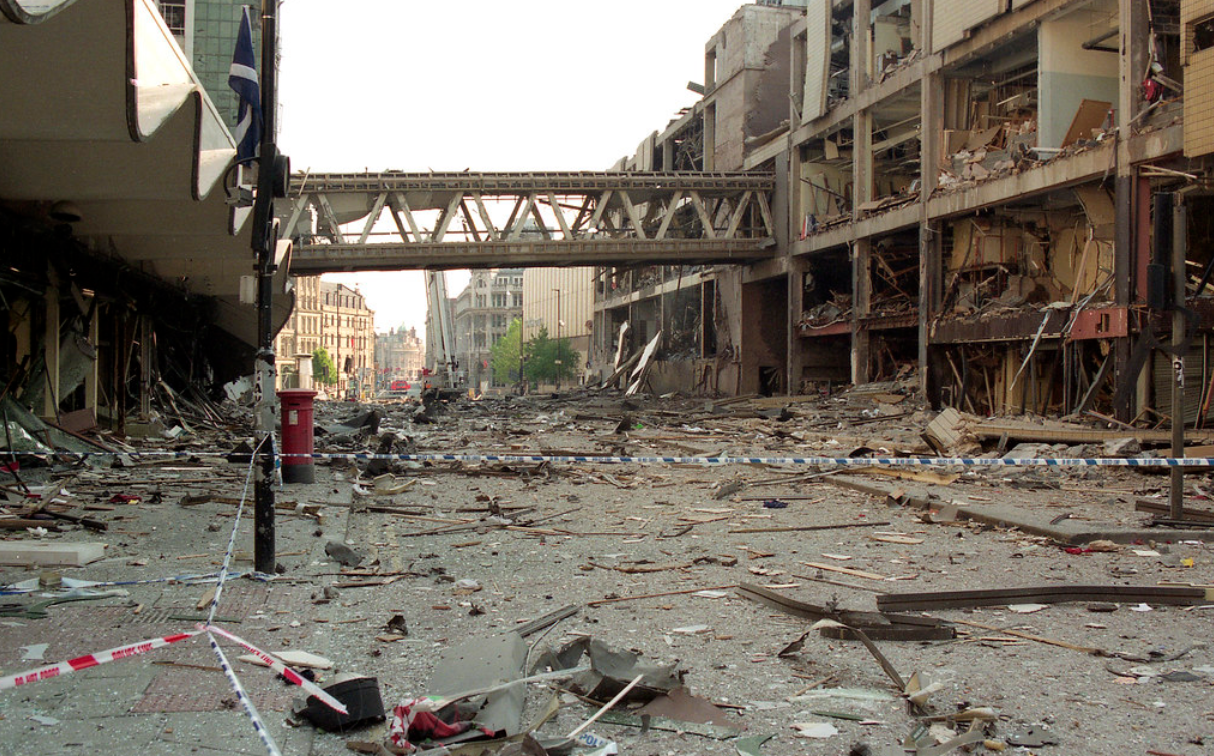
That is, very likely, the end of efforts to bring anyone to justice for the largest bombing in Britain since the Second World War. Tomorrow, just after 11am, will mark 30 years since the bomb ripped through the city centre. A memorial service will be held at Manchester Cathedral this afternoon, but even among the Mancunians who remember that day, many have moved on. Subsequent events have reframed our collective memory of this particular trauma, not least the fact that some local leaders now cite the bomb as a moment of renewal for Manchester – an opportunity, even, to attract government investment and upgrade the urban core.
But trauma it was. Not just for those like Laycock who were thrown across rooms by the blast, or left injured or disfigured. But for the hundreds of people who lost their food stalls and shops over which they had taken pride, or the thousands of us who wondered — for minutes or hours — whether the people we most love had been caught in its blast zone.
Three decades on, the chapter is closing. But I take some satisfaction from having returned to this story after so many years. As someone who anguished about the fate of my father and brother, I know — and the public can now know — the real story of how terror came to Manchester on that early summer’s day.
Please share this story with friends and tell us about your memories of 15 June 1996 in the comments.
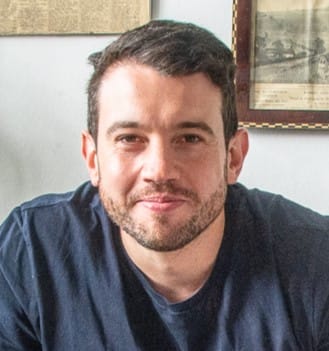
Six months ago, after reading Bandit Country, one of the great books about The Troubles, I called its author Toby Harnden and asked him to go back to his sources - spies, soldiers and IRA men. The assignment was to write the first full account of the 1996 Manchester bombing - finally filling out the picture of who was responsible and why no one has ever been brought to justice.
I paired him up with The Mill's staff writer Jack Dulhanty, who started doing some of the Manchester-based reporting, and put our brilliant investigations editor Cameron Barr - formerly of the Washington Post - in charge of the story.
I'm sure you will agree that what they have produced together is one of the most gripping and illuminating pieces of local journalism imaginable. And I'm sure you also realise that work like this is very time-consuming and expensive, including a trip to South Armagh and months of work.
The reason we can do it because we have thousands of paying Mill members, and so I'd love you to join them. If around 100 new members join after reading this story, it will cover the costs of our reporting and justify us doing more big investigative projects like this.
It costs just £8.90 a month, or £89 a year, to become a member. Thanks for backing us.