
Editor’s note: Monday will be the 30th anniversary of the IRA bomb which ripped through the city in June 1996 and yet nobody has ever been brought to justice for the attack.
Six months ago, we commissioned Toby Harnden, an award-winning author and war reporter, to re-investigate. Harnden grew up in Manchester and served as the Daily Telegraph’s correspondent in Belfast, where he wrote Bandit Country, one of the essential books about The Troubles.
Working with The Mill’s Jack Dulhanty, he has assembled the most complete narrative of what really happened in 1996 - and who was responsible.
We are publishing this special investigation over two days this weekend. Part 2 will be in your inboxes tomorrow morning.
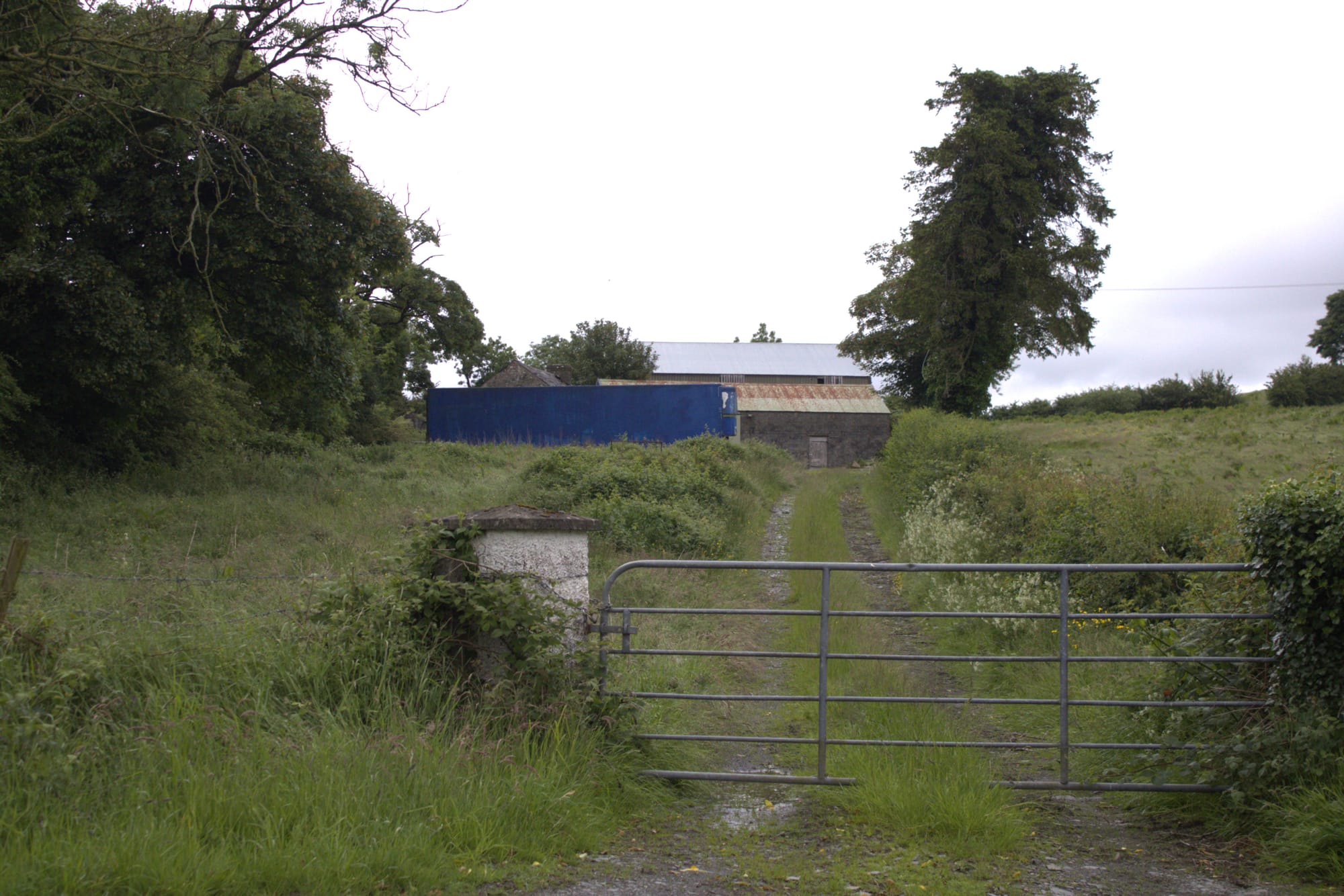
We’re driving along a deserted road in the Republic of Ireland, just 300 yards away from the UK border, close to what’s known locally as Donaghy’s crossroads, when we see it on the left. A bomb factory. At least, that’s what it once was, according to an IRA man who in all likelihood mixed the explosives that decimated Manchester city centre in June 1996.
The large, corrugated iron barn with a galvanized roof is at the end of a long lane flanked by brambles, cow parsley and ivy-covered ash trees. “Let’s flip around and get a better look,” I tell our local guide, the driver, who is growing more nervous by the minute. “Time is limited, boys,” he informs us. “You’d be surprised how fucking quick things can change around here.”
A minute later, a red four-wheel drive vehicle appears and races past us. “Looks like we’ve got company,” our guide announces grimly. “Let’s go.”
I agree that it’s time to leave. I spent enough time in this area in the 1990s, in the final years of the Troubles, to know that strangers are not welcome here. No one wants outsiders prying into what has happened in these barns or along these roads, whether it’s smuggling or some kind of activity directed against the British state.
In any case, it’s time to knock on the doors of alleged suspects in the 1996 Manchester bombing, which injured 212 people, including 13 seriously, and caused £700 million of damage. Mancunians refer to the attack as the “IRA bomb” but no one has ever been charged with planning or carrying out the bombing and this visit is part of our quest to find out why.
When I left Northern Ireland in 1999, after three and a half years as a Belfast-based reporter for the Daily Telegraph, I vowed never to return to these borderlands, the killing fields of the Troubles. I’d just written a book, Bandit Country: The IRA and South Armagh, that unmasked a number of senior IRA figures. But the area encompassing the southern portion of County Armagh, one of the six counties of Northern Ireland, and the adjoining counties of Louth and Monaghan in the Irish Republic, has, to appropriate W.B.Yeats, a “terrible beauty”. It lures people back.
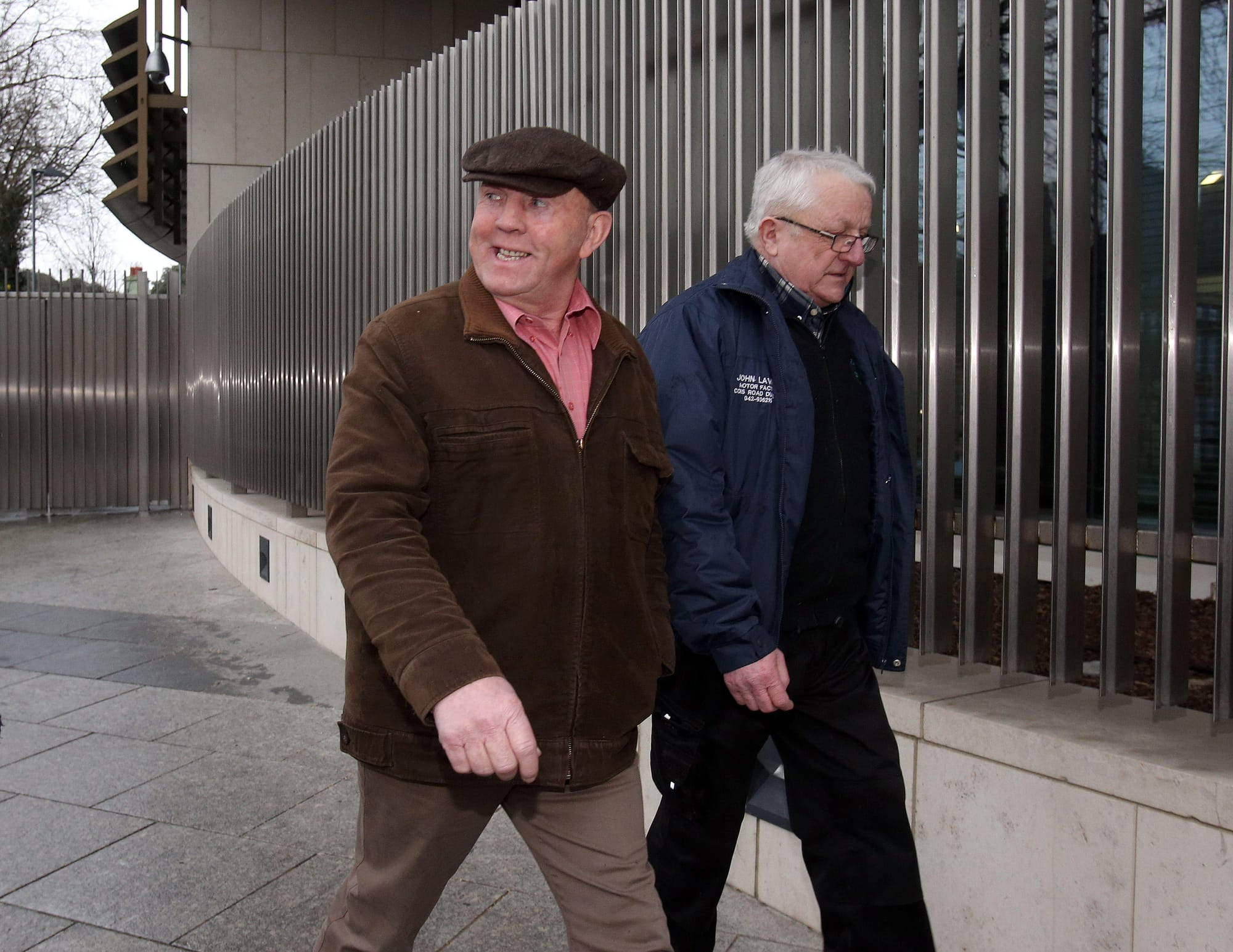
So, 30 years after the Manchester bombing, here I am again, at the behest of The Mill. On my itinerary are the homes of two men who I believe drove the bomb into the city centre and the former home of the man believed to have been the “quartermaster” who organised the operation and placed the coded warning calls.
When I interviewed a senior police officer in the late 1990s, he told me cryptically “there's a lot known about Manchester”, and it turns out he was right. Many years later, I’ve been able to speak to a range of sources, including retired British intelligence officers, former IRA men and police on both sides of the border. They wouldn’t have been as candid in the past, if they’d spoken to me at all.
The result is that we can now tell the real story of what really happened in 1996: including naming most of those who were responsible and explaining how the politics of the “peace process” got in the way of suspects being prosecuted for an attack that blew Manchester’s city centre apart. We show that the plot was directed from the very top of the Irish republican movement and that it involved a powerful but shadowy figure in South Armagh who later built up a large property portfolio in Manchester. We also reveal, for the first time, that the IRA had a mysterious ‘inside man’ in Manchester, who helped to facilitate the bombing, according to detectives who questioned an IRA member who tried to strike a deal with the British state.
During our investigation, we found a document that was only recently declassified: a memo on behalf of then prime minister John Major from his private secretary John Holmes, written a few days after the attack. “We need to do everything possible to catch those responsible for the Manchester bomb,” Holmes told another senior official.
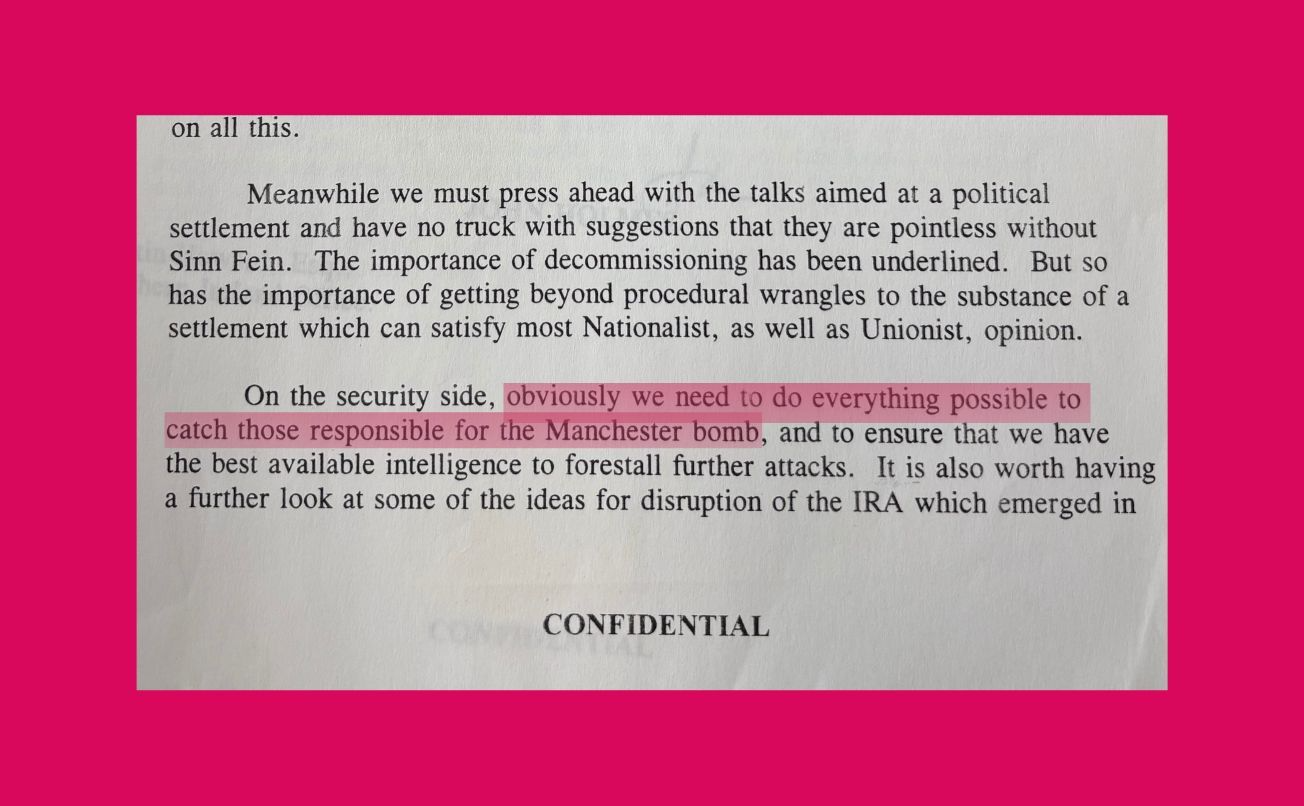
They were never caught — never officially named, never charged, never prosecuted. This week, counter-terror police announced that they had closed their investigation after exhausting new leads they said they had followed in recent years. But the failure of the authorities to bring to light what really happened doesn't mean we shouldn’t do so ourselves.
The day of the bomb
For Barry Laycock, a British Rail manager at Victoria Station, the beautiful, sunny morning of 15 June 1996 was the start of just another day doing the job he loved. He’d driven to work from his new motor home in Fleetwood and was in a good mood because the journey had been a breeze in the weekend traffic — under 90 minutes. At 57, the plainspoken Yorkshireman had begun to contemplate retirement and the motor home was part of an emerging plan. But his role supervising all the train drivers at Victoria was something they’d have to prise away from him. In fact, there was no particular reason for him to be at work that day.
At 8.31am, around the time Laycock sat down at his desk in his first-floor office to catch up with paperwork, a Ford Cargo lorry, with two men inside, turned off the M6 at junction 21A and onto the M62 eastbound. So did a maroon Granada. The two vehicles were heading towards Manchester city centre, which was beginning to fill with shoppers, mixed with fans visiting for the next day’s Germany versus Russia game at Old Trafford in the Euro ‘96 tournament. Security in the city was relatively light.
The IRA had ended its 17-month ceasefire in February, but political talks in Belfast had just begun. Manchester had been hit by the IRA before, including rush-hour bombs in Parsonage Gardens, behind Kendals, and near the Arndale Centre in December 1992. There was, however, no intelligence to indicate the city, with its large Irish population, would be targeted again. London, where Queen Elizabeth II was due to take the salute from the Irish Guards at the Trooping of the Colour, was surrounded by a ring of steel. The IRA had calculated, correctly, that Manchester would be a much softer target.
At 9.20am, the lorry, which had a red cab in front of a white box body with the words Jack Roberts Transport on the side, turned left from St. Mary’s Gate into Corporation Street. Two minutes later, it stopped just short of Cannon Street, leading into the Arndale Centre, and parked on double yellow lines outside Marks & Spencer.
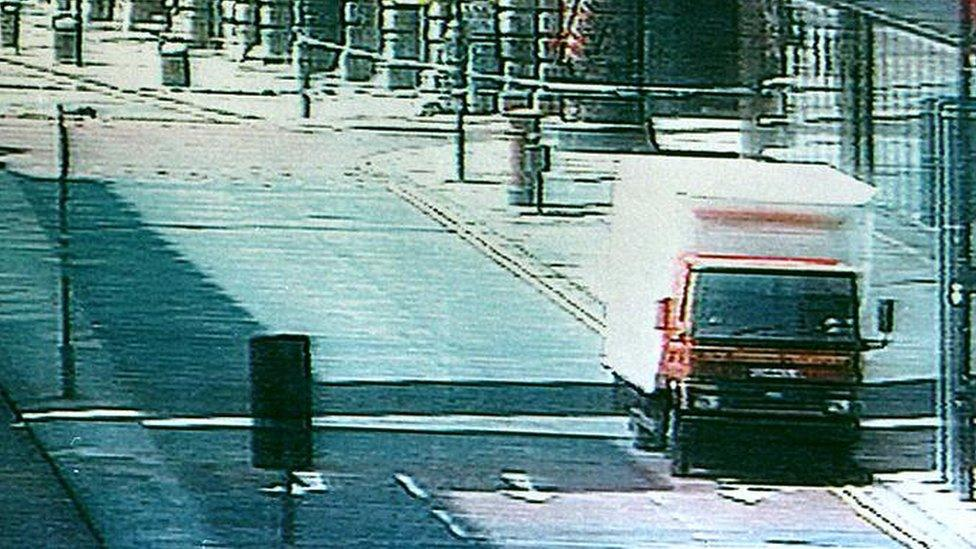
It was the end of the journey for the two men, who had traveled from the borderlands of South Armagh, taking a circuitous route via London, Peterborough and Cheshire to reach their destination. Two days earlier, detectives concluded, they had finalised their target, close to a pedestrian overpass. They flipped a switch inside the cab to activate a timing device, which was connected by wires running from the dashboard to the box body behind them: 3,300 pounds of ammonium nitrate fertilizer, icing sugar and a Semtex booster charge.
The pair hopped out of the cab, leaving the hazard lights flashing. They wore cagoules and hooded sweatshirts, despite the warm weather, to disguise their body shapes. Baseball caps and sunglasses, along with the hoods, prevented their faces being caught on CCTV. They walked around the outside of Marks & Spencer and into Cathedral Street, where a third man was waiting in the Granada to pick them up.
Two calls were placed from the Granada to a house in the Republic of Ireland, just south of the border, at 9.25am and 9.26am, confirming that the bomb had been placed and primed. It was to be the biggest device detonated in Britain since the Second World War. Three minutes after the second call, a vigilant traffic warden slapped a parking ticket on the lorry’s windscreen.
Between 9.38am and 9.50am, a man with an Irish accent made warning calls to the Granada TV switchboard in Manchester, North Manchester General Hospital, Sky TV, and the Garda Siochana (Irish police) in Dublin. He gave the codeword Kerrygold, the same word used for the Docklands bomb in London four months earlier that ended the IRA’s 17-month ceasefire.
IRA warnings were often vague and deliberately deceptive, designed to sow confusion and increase the likelihood of a bomb going off. This one, however, was unusually precise, as the journalist Ray King outlined in his 2006 book Detonation: Rebirth of a City. The bomb had been placed at the corner of Cannon Street and Corporation Street, the caller said, and would explode in one hour.
Once Manchester police officers saw the lorry on CCTV they knew they were in a race against time. Fortunately, extra officers were on duty for the Euro ‘96 game. Their presence meant there was a fighting chance of clearing the crowds of people from the immediate vicinity of the bomb. But the four-man Army bomb squad was based in Liverpool, at least an hour away. The team, already on standby, gathered their equipment at full speed and set off on the M62.
PC Gary Hartley, the first officer to reach the lorry on Corporation Street, saw the wires inside the cab and knew this was either the bomb or an elaborate IRA hoax. Hartley had the good sense not to try to get inside the cab. If he had done so, the bomb, probably fitted with an anti-handling device, might well have exploded. The police set about moving 80,000 people as far as possible away from the lorry. Initially, Mancunians were reluctant. WPC Wendy McCormick ran into Marks & Spencer and then evacuated other shops and restaurants. “I don’t want to die because someone wants to finish their pizza,” she thought.
Barry Laycock thought it was probably a false alarm. “You’d get bomb scares,” he recalled. “They’d happened on many, many occasions during the 12 years I worked there. The IRA just loved to disrupt the service.” But he and the rest of the Victoria staff ensured that every window and door in the train station was opened, to mitigate the effects of a blast. Victoria was an evacuation point from the Arndale Centre. Looking at the mass of people thronging the platforms, Laycock weighed up whether to suspend trains as a safety precaution. He went down from his office to help out but realised he’d left his mobile phone by his desk.
Manchester’s shoppers sensed the tension and urgency in the voices of the officers and began to move. Almost imperceptibly, the mood and momentum shifted. Soon, people were flooding out of buildings towards a cordon that police had established 450 yards away. In the time available, it was impossible to move people further. The cordon had a circumference of more than a mile and a half. Establishing it so quickly was an almost superhuman feat. A police helicopter used its Skyshout loudspeaker system to hurry along stragglers.
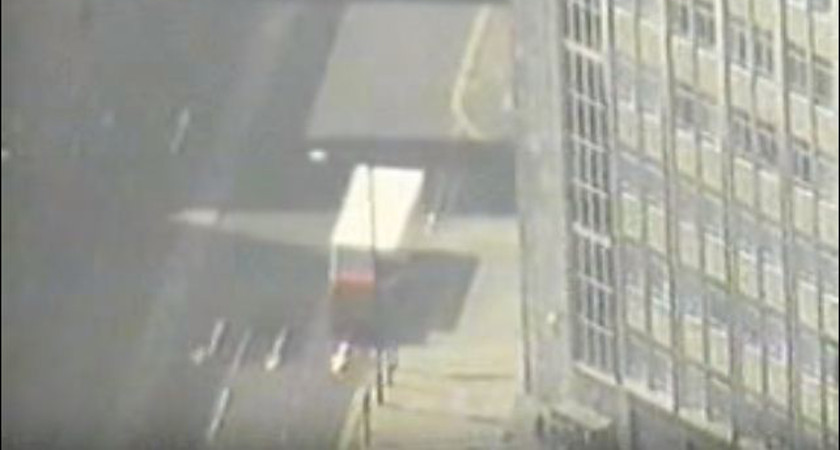
The hour the IRA had specified had already passed by the time the Army bomb squad arrived, taking up position near Sam’s Chop House, just off Cross Street, 200 yards from the lorry. They used a “Pigstick disrupter”— a type of gun, mounted on the 16-inch arm of a remote-controlled robot, that could fire bullets and explosive charges calibrated to disable a bomb. Once they were ready, a police officer announced: “For information, the EOD [Explosive Ordnance Disposal] are ready to start their operation. There will be two explosions, one small and one slightly larger.”
One of Manchester’s busiest pockets was now empty and eerily quiet. The teeming masses of Saturday shoppers were gone. It was down to the robot and the bomb. The operator watched footage from a video mounted on the robot. The first shot from the pigstick was barely audible, a crumpling sound as a round penetrated the metal skin of the box body. It would take just a few seconds for the operator, 200 yards away, to manoeuvre the robot into position for the second shot, intended to destroy the bomb’s primer and render it inert. In the police control room at Bootle Street station, the clock clicked to 11.17am as officers nervously monitored the CCTV screen that showed the lorry and robot. Four seconds later, the bomb detonated.
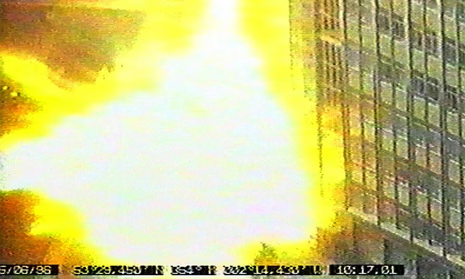
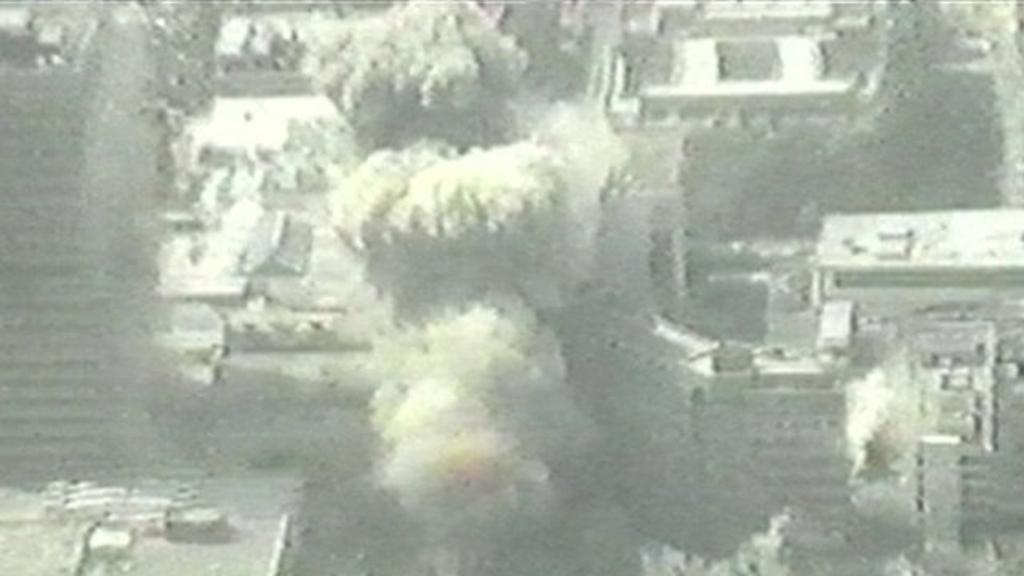
Footage of the moment the bomb exploded. Pictures: GMP.
Barry Laycock had just got back to his office and was leaning down to pick up his phone from the floor, by his desk, when the lorry exploded. He was blown six feet across his office and into a wall. After a second or two of silence, every alarm across the city began shrieking. “It wasn't a scare, it was the bloody real thing,” was Laycock’s first thought. Almost three decades later, he still thinks about what might have been that day. “If I hadn't gone to work, things would have been different,” he told me. “If I hadn’t left my mobile phone in my office, I’d have been OK.”
After what Laycock described as “a few choice Yorkshire words”, he rolled over and sat up on the floor. “I couldn’t believe what I was seeing,” he remembers. “There was a dark mushroom cloud filling the sky and glass was flying down from all the tall buildings, like confetti.” He felt a pain in his back but managed to get up and stagger to the glassless window. “My God,” he thought, as he saw people running, some of them covered in blood, and lying on the grass. “There’s no way nobody’s dead.”
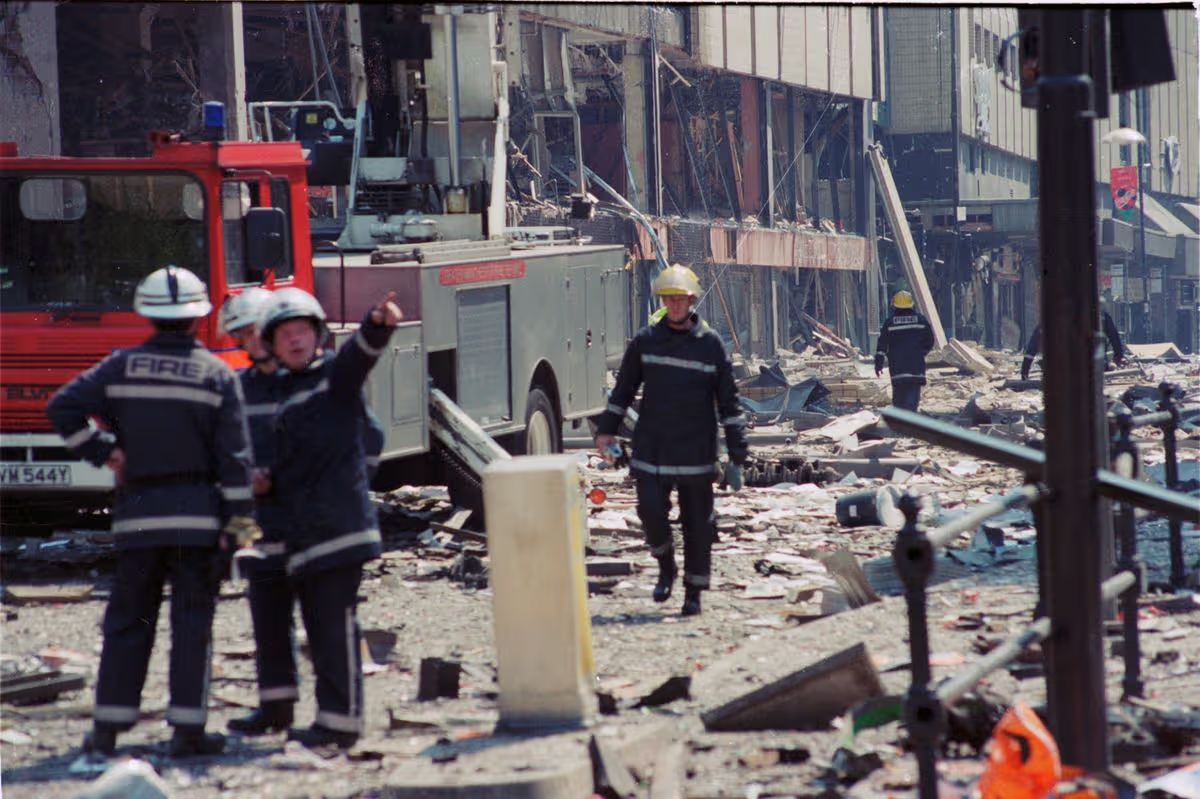
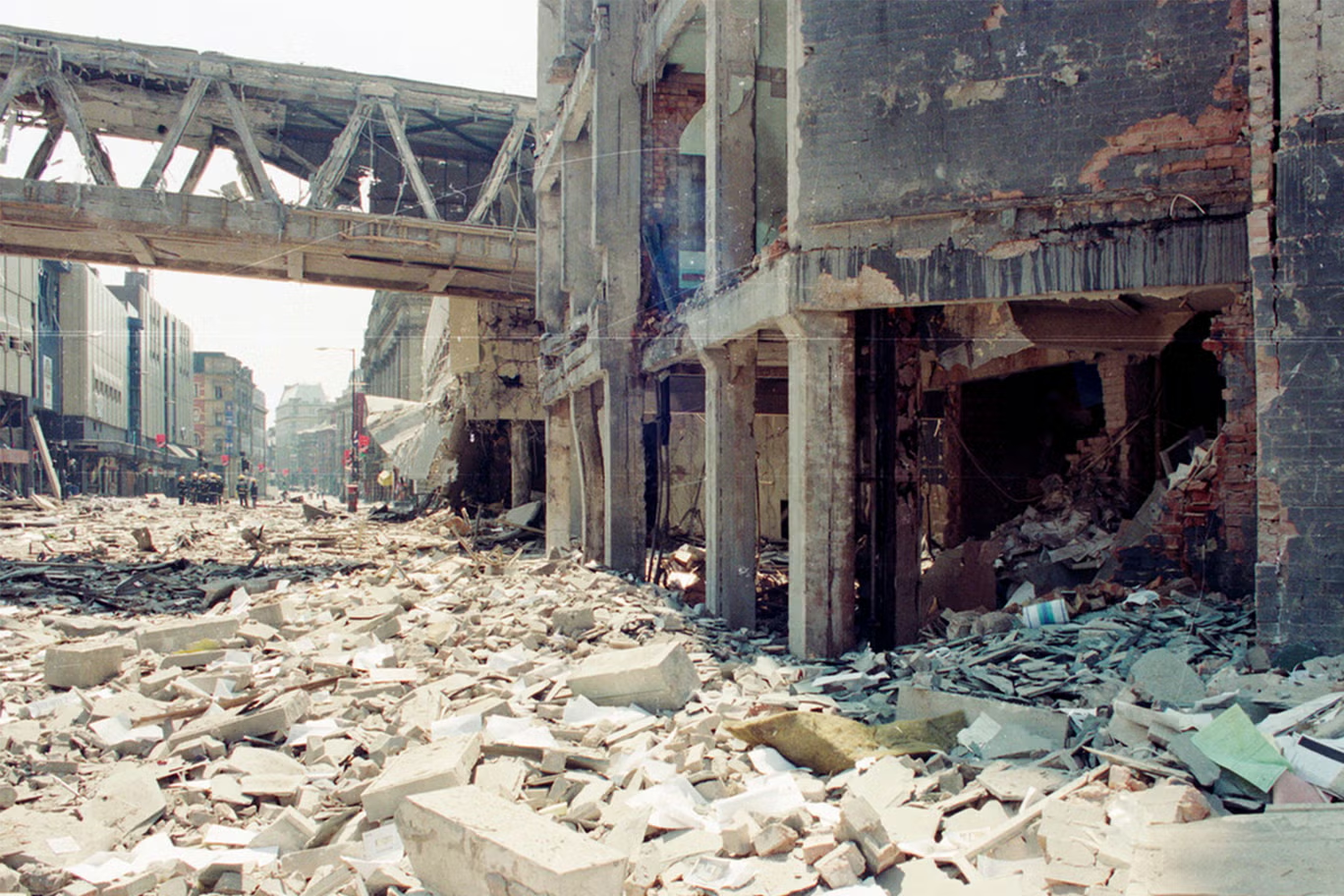
Victoria Station was built in 1844, more than a century before shatterproof glass was invented. Much of the roof had collapsed and there wasn’t a window pane left in the building. Some people wandered, dazed, with large shards of glass stuck in their flesh. The blast, heard 15 miles away, left a crater 18 yards wide. Miraculously, no one was killed, though store mannequins, some dismembered and lying in grotesque piles in shop windows, briefly conjured mass death. But 212 people were injured, including 13 seriously. Among them was Barry Laycock.
Son of Manchester
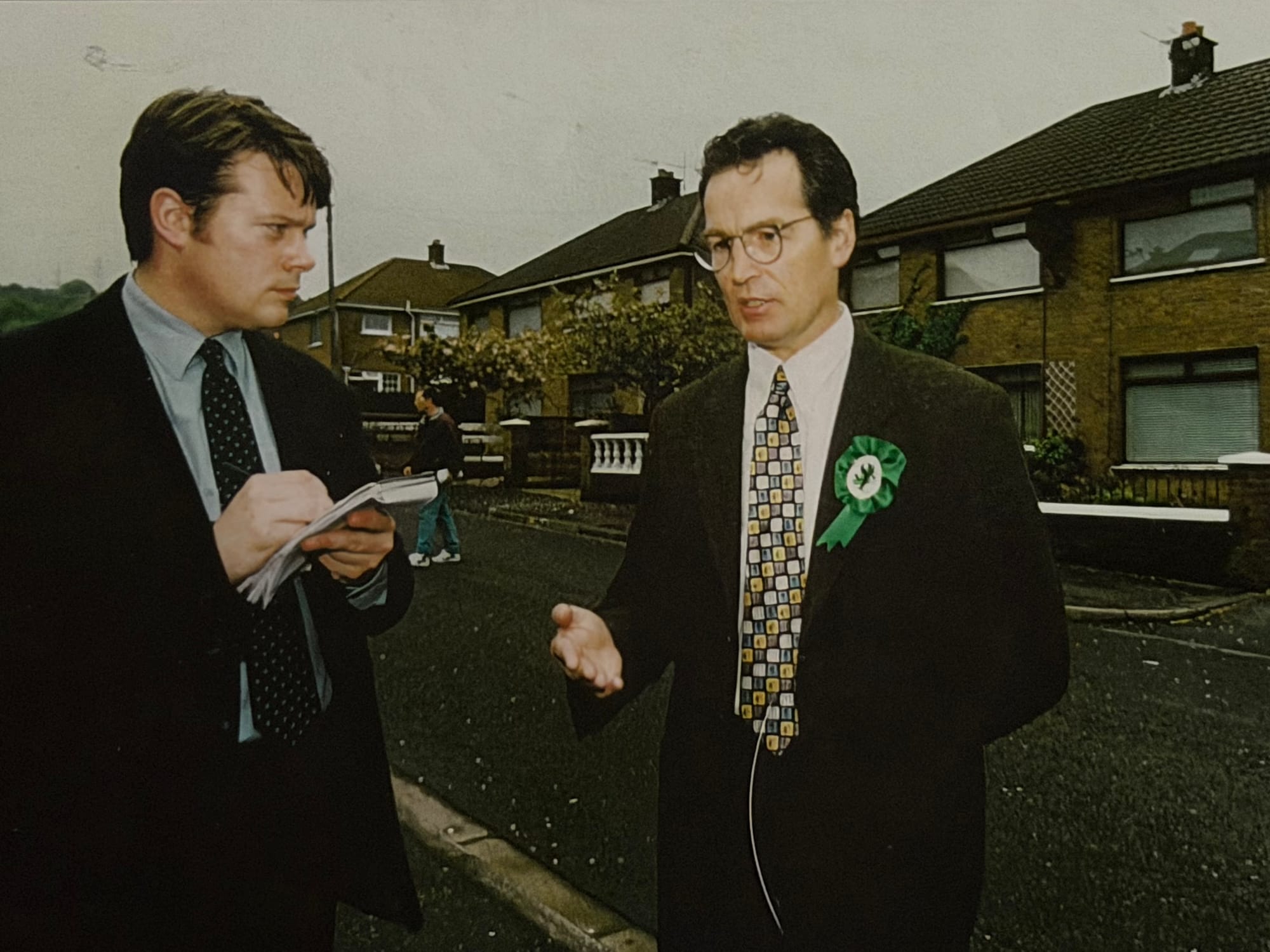
I grew up in Manchester, moving into Rusholme from Marple in Cheshire when I was 14. I went to a Catholic school, St. Bede’s in Whalley Range, where lots of boys had Irish parents. By the time the Manchester bomb went off, I’d been away for a dozen years, at university and then in the Royal Navy, in warships that sailed as far as Hong Kong and the West Indies.
In 1994, I had somehow been able to bluff my way into journalism and felt I’d found my calling when I landed a job at the Daily Telegraph. I was on the spot in Docklands one Friday evening in early 1996 when the IRA ended its ceasefire with a 3,000-pound bomb. Some people in the Telegraph newsroom, on the 11th floor of the One Canada Square skyscraper, flung themselves on the floor. The lifts were out, so we ran down the stairs and headed to the scene. Glass crunching underfoot, I spoke to dazed survivors and asked myself who could have done this. Yes, the IRA. But precisely who? Who had ordered it? Who had driven the lorry that delivered it? And why?
The following month, I was sent to Belfast to become the Telegraph’s Ireland correspondent. It was a dream job, especially — this is how news reporters have to think — because the IRA ceasefire was over. If it bleeds, it leads, goes the old saw. There was blood alright, but it was mixed with politics and the possibility of a political settlement. The “peace process” was the acceptable phrase, though I never liked it because it implied that if you questioned anything about it then you were anti-peace. And for Sinn Fein and the IRA — inextricably linked, and better described as the Irish republican movement — the “peace process” involved quite a lot of tactically advantageous bombs and bullets.
I was pottering around in my newly-rented house in leafy south Belfast when I heard there’d been a bomb in Manchester. I called home and spoke to my dad, who sounded a little shaken. He and my brother, who’d just turned nine, had been on their way into the city centre when the device had gone off. Half an hour later and they’d have been in the Arndale Centre.
I already had an inkling of the grouping behind the bomb. A week earlier, I’d visited South Armagh for the first time. I was returning from the Irish Republic, reporting on the IRA killing an Irish police officer during during a botched bank robbery in County Kerry, when I heard that there was a Metropolitan Police operation in Forkhill, South Armagh. I turned left off the main road as I crossed the border, heading north, and entered another world, part of the United Kingdom in name only.
Young British squaddies crouched in the hedgerows, camo paint on their faces, nervously pointing their rifles. London bobbies, dressed in white forensic coveralls, were collecting vehicle parts and other evidence from outbuildings. The massive security operation stunned locals, and many plainly resented it. South Armagh was a place apart, an IRA heartland where the Army flew equipment in and out using underslung loads suspended from helicopters rather than risk being blown up on the roads.
The name Thomas “Slab” Murphy, whose property straddled the border, had already been whispered to me. He was a farmer, and having a boundary between two countries running literally through the middle of his pig sheds was a boon to his second occupation: smuggler. Patrick, his late brother, was his partner in crime.
But Murphy’s third occupation had made him a notorious figure, to the security forces if not, at that stage, to the British public. He was the IRA’s chief of staff and the man in charge of its so-called England Department, responsible for bombing the likes of London and Manchester. And there was a reason why those British soldiers looked distinctly uneasy. An IRA sniper team had been picking off troops and Royal Ulster Constabulary officers one by one, using an American-made .50 calibre bolt action Barrett sniper rifle.
That day, 7 June 1996, planted the seed for what became my book. In it, I painstakingly laid out the details of the Docklands bomb operation and set it in the context of the talks that would lead to the Good Friday Agreement of 1998. I explained how the bombs in England were central to a complex and cunning strategy by the republican movement to use violence tactically to achieve their ends.
According to the security services, Gerry Adams and Martin McGuinness, Sinn Fein’s double-act leaders, sat alongside Tom Murphy on the IRA’s ruling seven-man Army Council. Adams has always steadfastly denied he was even in the IRA. “To be clear, I had no involvement in or advance knowledge” of the bombings, Adams said in a 2026 witness statement. “These allegations are untrue. I was never a member of the IRA or its Army Council”. McGuinness, who died in 2017, admitted he was in the IRA but denied being on the council.
While I’d been able to answer nearly all the questions I had about the Docklands bomb, I hadn’t quite got there with Manchester. I covered it in the book, and named two prime suspects, going a step further than the Manchester Evening News, which had named one in 1999. For decades, however, it gnawed at me that I didn’t know who might have killed Barry Laycock, my father and brother and who knows how many other Mancunians on 15 June.
Digit 6
Manchester police immediately launched Operation Cannon — named after the street, now no longer in existence after the post-bomb rebuilding of the Arndale Centre. A recent advance in analysing data from the GSM network and cell towers meant that the police had new ways of tracking people. “It was a very powerful tool for establishing where a phone was at a certain time,” Stephen Curran, a phone network engineer who worked for an Irish mobile company in the border area in the 1990s, told me in a recent interview. “The IRA were concerned about fingerprints and forensics, but they were ignorant about the digital realm.”
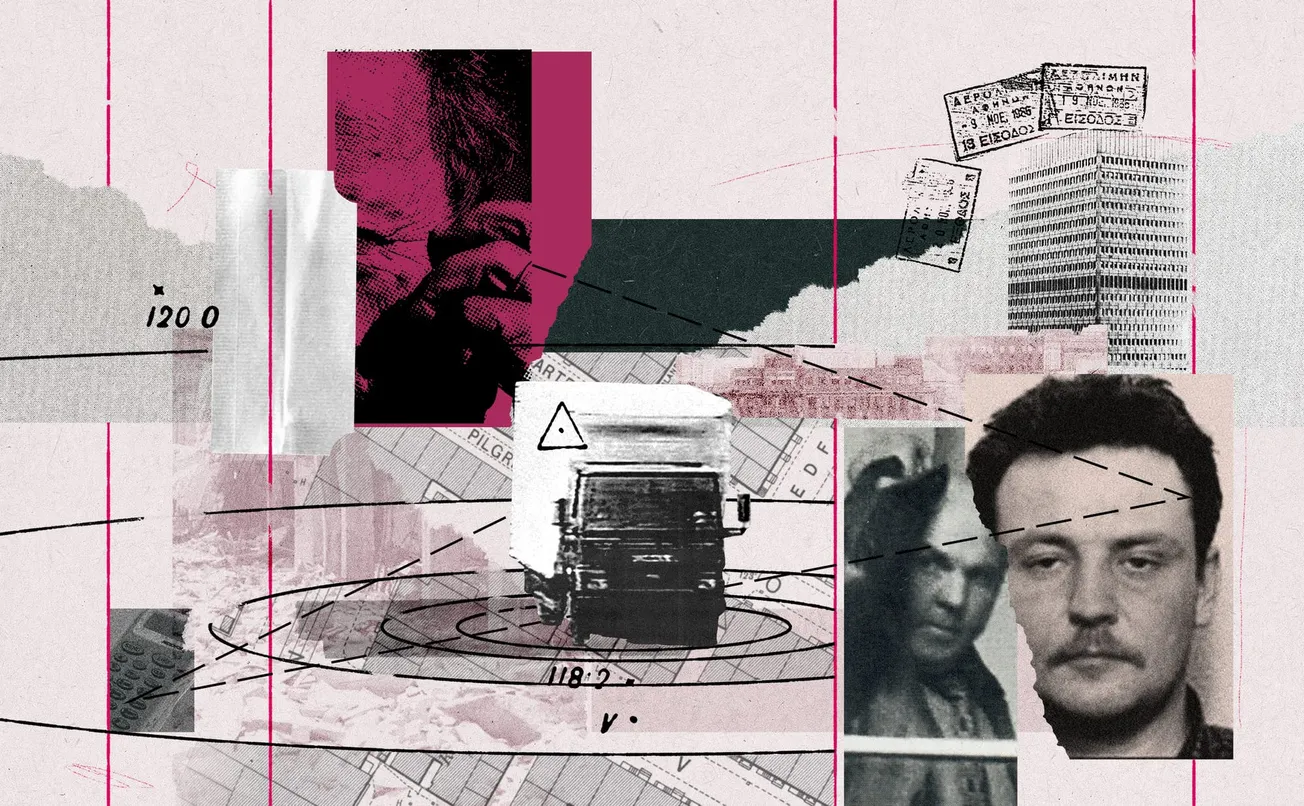
By triangulating signals from cell towers, Manchester detectives identified an Irish mobile as the phone used to make the two calls from the Granada on Cathedral Street. They dubbed it Digit 6, after the last digit of its number. The 13-day lifespan of Digit 6, outlined in the police investigation report leaked to the Manchester Evening News in 1999, proved to be the key to the investigation.
It had been registered on an Eirecell contract by a Declan McCann at an address in Castleblayney, County Monaghan, just inside the Irish Republic, on 2 June, less than two weeks before the bombing. McCann, 31 at the time, also had a house in Crossmaglen, South Armagh, a few miles away, on the other side of the border in Northern Ireland.
One in six British soldiers killed during the Troubles died within three miles of Crossmaglen. Eight had met their end in the town’s square. The most recent of those was Guardsman Danny Blinco, killed in December 1993 by a single-shot sniper some 100 yards as the crow flies from McCann’s house. McCann, one of nine children, who was married with two young sons, had strong family ties to Manchester and had visited to watch United at Old Trafford.
Over the 13 days it was used, Digit 6 received 10 calls, seven of them from McCann’s house in Castleblayney. It made 26 calls, mainly to McCann relatives on either side of the border. Digit 6 had been in the Irish Republic until 10 June and in England from 12 June. On 13 June, two days before the explosion, Digit 6 was in Manchester for the suspected bomb reconnaissance trip, and was used to call Arthur Loveridge, a second-hand vehicle dealer in Peterborough.
Using the name “Tom Fox”, the caller arranged to buy the Ford Cargo lorry for £1,195. Fox had spoken to Loveridge two weeks earlier, from a landline, and agreed a price of £2,000 for another lorry. The money had been sent by registered post from a false address similar to that of the home of Terence Fitzsimons, a former ambulance driver, in Lisdoney, County Monaghan, just outside Castleblayney. Fox had also bought the Granada on 4 June.
The £2,000 for the first lorry had gone astray in the post and been returned to Ireland, where it was recovered by Irish police. This time, the money for the Ford Cargo would be hand-delivered to Loveridge. On 14 June, the day before the explosion, Digit 6 called Loveridge from Birmingham and Wisbech, Cambridgeshire. After receiving the cash from a taxi driver who’d been approached by an Irishman outside a Tesco, Loveridge left the lorry at a Peterborough parking area at 3pm. IRA men picked it up and drove it to London, where they loaded the bomb with explosives mixed in the border shed.
Since 1992, the South Armagh Brigade had become adept at moving explosives across the Irish Sea as unaccompanied freight, either from Warrenpoint in Northern Ireland or Dublin in the Irish Republic. By 7.40pm, Digit 6 was being driven north up the M1 accompanied by the Granada. The final two calls were made to the Fitzsimons home from the Granada, just after the bomb lorry had been left on Corporation Street.
Investigators suspected that Fitzsimons subsequently made the four coded bomb warning calls. Twelve days later, Declan McCann reported that someone had stolen the phone on 10 June. Even though a thief had supposedly been in possession of Digit 6, McCann paid the £66.40 bill for all calls and for the rental until August. He did not ask for a replacement phone.
Digit 6 helped connect the Manchester bomb to a six-man IRA team in London. The conspirators were plotting to blow up power stations, with the aim of inflicting massive financial damage by shutting down the City of London. On July 15, exactly a month after Manchester city centre was decimated, the Metropolitan Police arrested the six.
Banknotes discovered in the wardrobe of one of the men, Donal Gannon, had serial numbers that placed them in the same batch as the banknotes in the misdirected payment package for the first lorry. Gannon had been in contact with Fitzsimons by phone. A Rizla cigarette paper at the London flat of another conspirator had seven encrypted phone numbers written on it. One of the numbers was for a close relative of Declan McCann, at a Dublin address where McCann often stayed.
The Digit 6 phone records were a major breakthrough for the police — acting as a kind of map that could guide them towards the perpetrators of the Manchester bomb. But soon, something significant happened across the water in South Armagh: a high-stakes SAS raid on an IRA sniper team, and a call I received late that night that now points us to who was behind the bombing.
Read Part 2 of our special investigation – and please share it on social media if you enjoyed this piece.
 Toby Harnden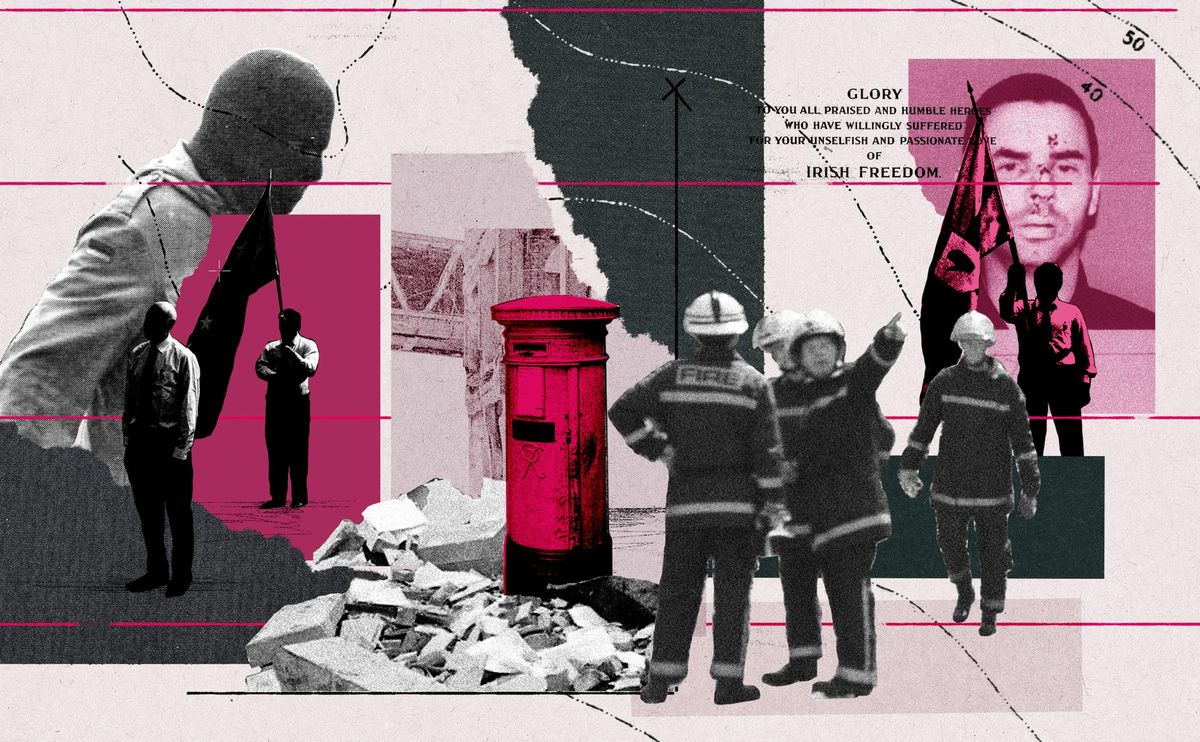
To get all of our journalism in your inbox - and support the kind of investigative work we do - join as a paying member of The Mill now.
You will get instant access to the piece that dozens of Westminster watchers signed up to read about Andy Burnham's 'man in the shadows', as well as all our paywalled stories and access to our members-only events.
It costs just £8.90 a month, or £89 a year, to become a member, which allows us to do the most ambitious local journalism in this city. Go on, join the gang.