

Late last summer, Angela Rayner – MP for Ashton-under-Lyne and then-Deputy Prime Minister – was hosting a barbecue in her garden. An email invitation shows she wanted to thank her guests, mostly Constituency Labour Party (CLP) members, for their continued campaigning outside of election time. “Bring a bottle of your favourite bevvy and let’s have some fun in the sun!” it read.
One of the attendees was Philip Wilson-Marks, then Vice-Chair of the Ashton-under-Lyne CLP, now of the Green Party. According to Wilson-Marks, it was common for Rayner to host such parties — though never rowdy or overly boozy, attendees often stayed over, and Rayner would cook breakfast in the morning. In this environment, Rayner and party members felt able to relax. The karaoke machine was often wheeled out.
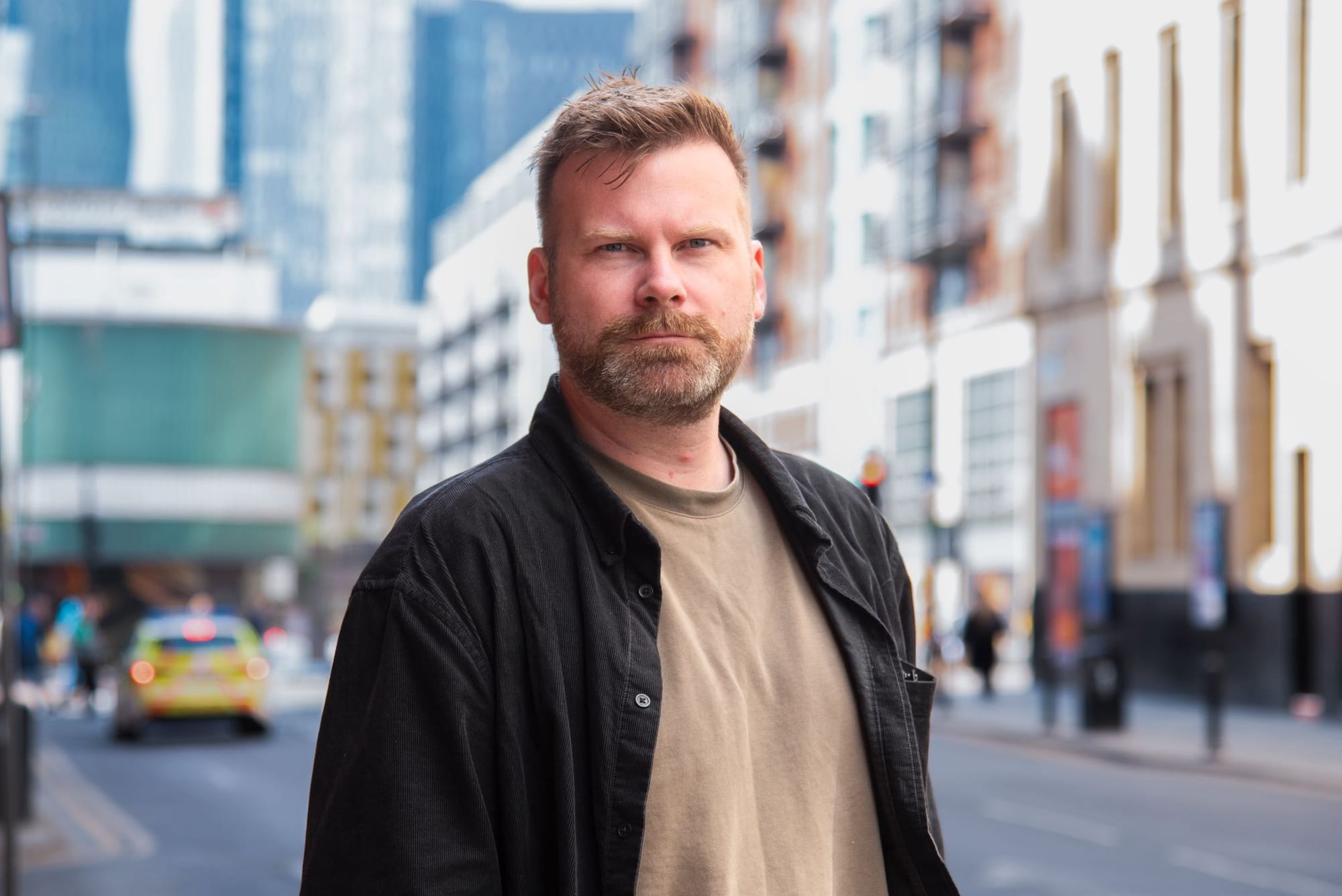
Standing in the kitchen, Wilson-Marks began chatting informally to a fellow Labour Party member, Vimal Choksi MBE, a councillor in the Ashton Waterloo ward, each of them with a beer in hand. Choksi, he claims, had a tactic that he should consider: Labour should try to split opposition votes by putting forward its own ‘Independent’ candidates. This wasn’t the first time Choksi had suggested this. “This idea remained important to Vimal. It was central to his tactics,” Wilson-Marks claims. He tells me that he listened politely, but thought of Choksi’s suggestion as bizarre and dishonest. He did not move forward with it. I approached Choksi for comment on this matter, but he declined.
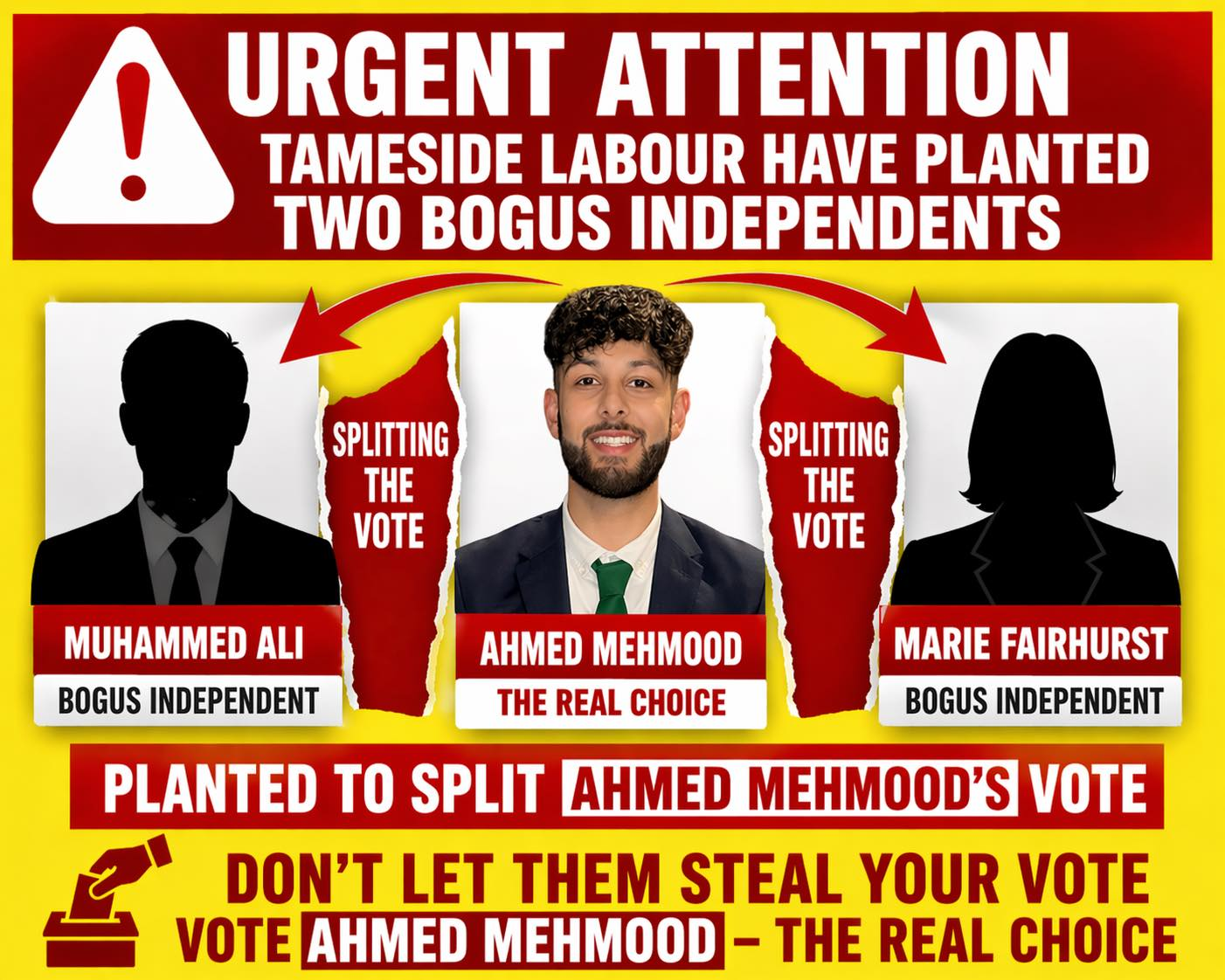
But now, just a week before local elections, Labour is being accused by its opponents of putting forward two faux-Independent candidates in the St Peter’s ward in Ashton-under-Lyne. Among the accusers are Conservative councillor Liam Billington, Independent councillor for St Peter’s Ward Kaleel Khan, and his nominee Ahmed Mehmood. These councillors and candidates claim that Labour is doing this to benefit their own candidate: Atta Ul-Rasool, a man described by party insiders as Angela Rayner’s protégé. But do these allegations stand up?
Meet the candidates
Muhammad Ali and Marie Fairhurst are the Independent candidates causing the flight of questions and serious accusations which, if true, would amount to electoral fraud.
It’s difficult to find any information about either of them. Neither has an online presence, and no one I speak to in the ward has seen them engaging in typical campaign activity, such as handing out flyers, door-knocking or putting up posters. There have been no social media posts or press engagements since their names were announced on April 10th. Neither appear to be active members of the community — nor does Fairhurst seem to live in it.
So how would they split the vote? To understand this, you need to first understand the ward.
St Peter’s, on the western flank of Ashton-under-Lyne, features top or near-top of the Tameside rankings for each characteristic a ward would hope to avoid: deprivation, unemployment and household overcrowding. It was until recently one of Labour’s safest seats in the borough. Facing such challenges, a constituent could reasonably assume that Fairhurst and Ali are just two local people throwing their hats into the ring, trying to improve one of Tameside’s most hardened wards.
But politics in St Peter’s is widely viewed through two lenses: The war in Gaza, and Tameside Labour’s recent scandals (among them, Angela Rayner’s resignation as Deputy PM, and the ‘Trigger me Timbers’ WhatsApp group). Both look unkindly on Labour, the borough’s governing party.
There are five candidates standing in St Peter’s: Ali and Fairhurst; Reform’s Gaynor Francis; a third Independent candidate, Ahmed Mehmood; and Labour’s Ul-Rasool, described by Labour insiders as the one-day heir to the Westminster seat now occupied by Rayner. Local sources from St Peter’s large and growing Muslim community tell me that voting is often decided along cultural lines. They explain that by putting forward two Independents, one with a Muslim name, the other with a white British name, voters turning away from Labour could be divided across sectarian lines.
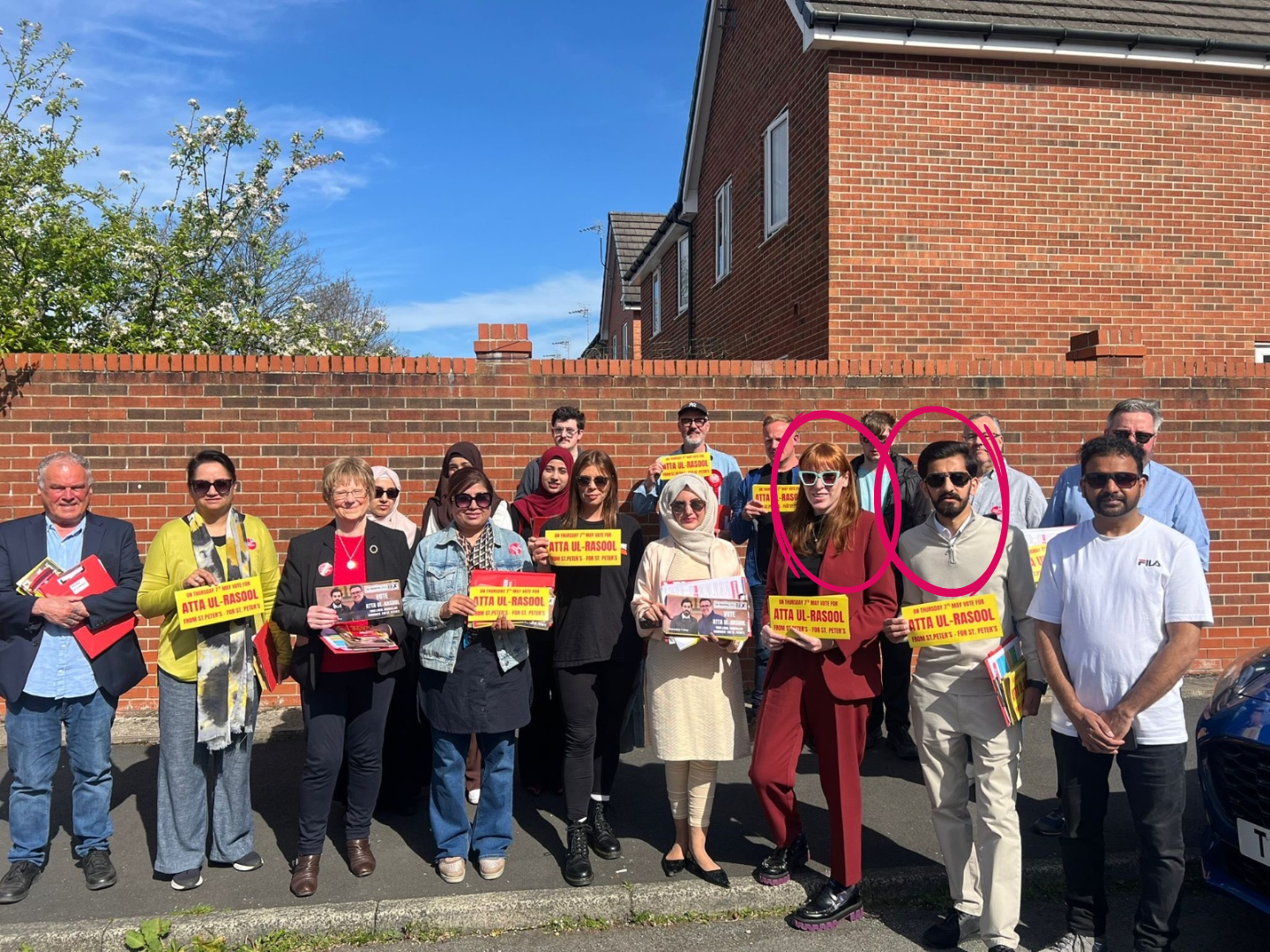
These allegations claim that by taking undecided voters away from Mehmood, who would otherwise be standing as the sole Independent in the ward, Ul-Rasool hopes to pull on his strong community alliances and come through the middle victorious, gaining the first political position of his career. I decided to work out if this is true.
‘I have nothing at all to say’
Each candidate in a local election must have a Proposer and a Seconder, who sign the candidate's nomination forms and must be registered electors in the ward. Together, these two positions are referred to as the ‘Assentors’.
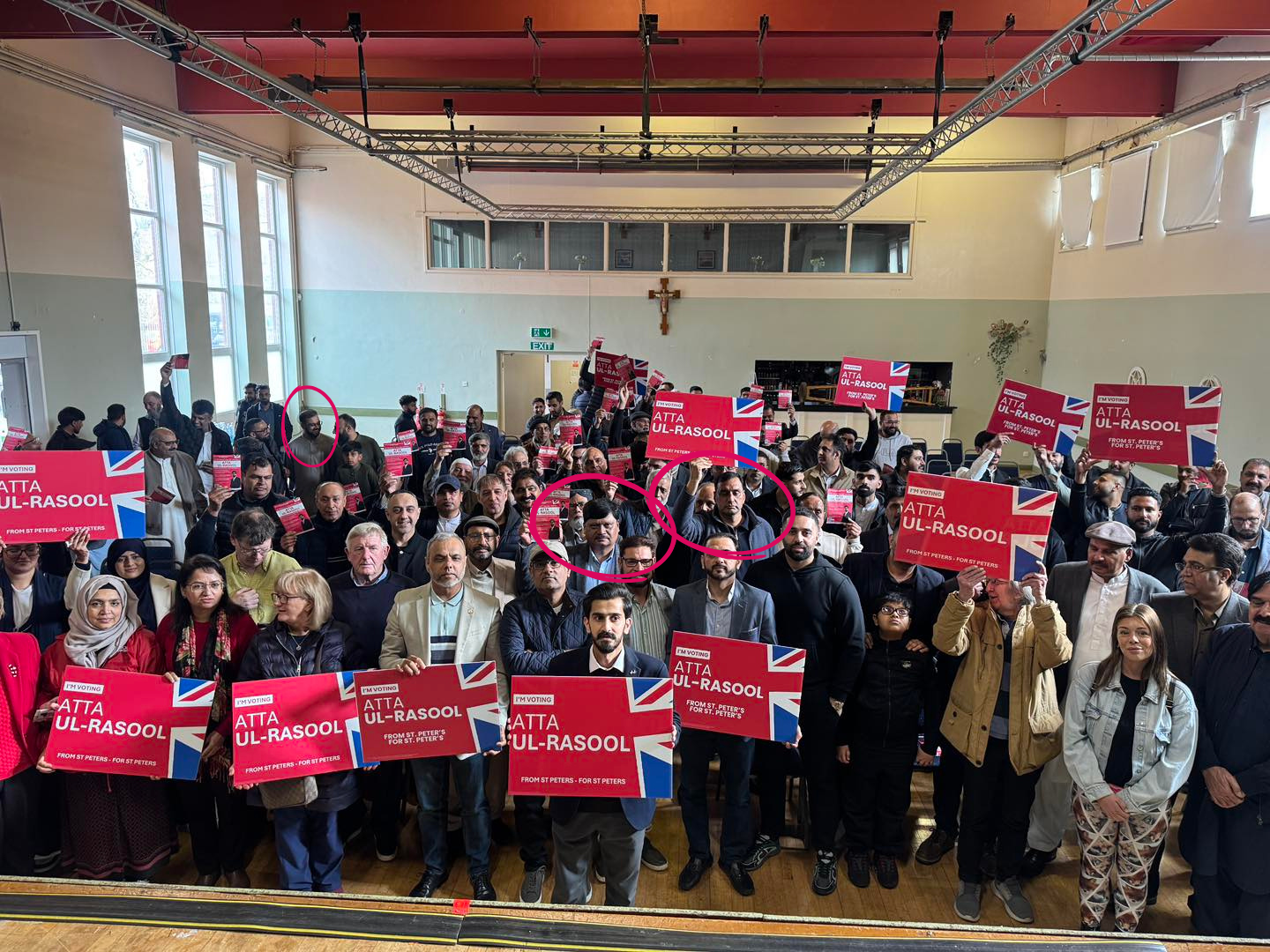
Just over a month ago, on 22nd March, Atta Ul-Rasool held a well-attended launch event for his campaign in a large Catholic church hall. Speeches were given, and photographs were taken of attendees holding placards with Ul-Rasool’s name, or posing with him. Known supporters of opposition candidates were allegedly turned away. Among the crowd that day, it would appear, between Labour candidates for other wards and the staunch local supporters clambering around Ul-Rasool, were three out of the four Assentors for Marie Fairhurst and Muhammad Ali.
Afzal Anwar is the Seconder for Fairhurst, and Abdul Qudoos Sahi and Afzal Gondal are the Assentors for Ali. Their social media profile pictures match those of three attendees at Ul-Rasool’s launch event. Gondal is a keen thumbs-upper of Ul-Rasool’s Facebook campaign posts, and Sahi posted a clapping emoji when pictures from the event were published on the same platform. Both can be seen in photographs from the event, holding their Ul-Rasool placards up high.
Rows and rows of industrial terraces make up the part of St Peter’s where Afzal Anwar lives, like much of the ward. The house I find sits between the Ikea and the tall minaret of Masjid-e-Hamzah mosque. A poster for Labour’s Atta Ul-Rasool has been placed in the ground floor window.
A kind, elderly man confirms that this is Anwar’s home, but tells me he’s not in. He says he doesn’t know anything about the election. I hand him a note and ask him to pass it on.
I also sourced his phone number, but my three calls to him ring out. I send a message asking to speak, and an hour later I receive a WhatsApp message:
‘Should you come to my parents house uninvited or call me again I will report you for harassment... I have nothing at all to say’
I follow up over WhatsApp with questions. The message only ever gets one tick. I’ve been blocked. I’ve sent messages to Abdul Qudoos Sahi and Afzal Gondal on Facebook, but still haven’t received a reply. Phone numbers and address details for Assentors aren’t publicly available. So I try to find Fairhurst and Ali themselves.
‘NO COLD CALLERS’
In 2009, the most famous boxer of all time, Muhammad Ali, visited Tameside to open Ricky Hatton’s gym. It must have been quite a sight to see the Louisville Lip walking the streets of Hyde in his final years. Nearly two decades later, the borough could be governed by a man with the same name, who may also float like a butterfly in the sense that it’s almost impossible to catch him.
Every candidate in a local election has an Election Agent, the person legally responsible for a candidate’s political campaign. In both Ali and Fairhurst’s cases they are their own Election Agents, which is convenient for me because it means their correspondence addresses are listed in the Notice of Election Agents. At a suburban Levenshulme end terrace, a casually dressed man with a friendly demeanour opens the door. I ask to speak with Muhammad Ali. “I’ve never heard that name,” he replies, his response quick and unfaltering, almost practiced. He maintains his smile throughout. I double check the address on the notice, and there it is. This might not be where Ali lives, but they should certainly be aware of his existence. His election material will have been sent there by the council.
It’s hard to pinpoint a man who shares a name with one of the most famous athletes of all time — but I eventually narrow down my social media search: One Facebook and one LinkedIn account, with the same name, same profile picture, one in Manchester, the other in Ashton-under-Lyne. The LinkedIn account for this Muhammad Ali shows the Labour Party as one of his interests. His Facebook account only likes four pages, and one of them is Andy Burnham. Could this be the man running against Labour?
A few days later, I get my hands on a phone and home address for Muhammad Ali, the candidate. I call the number and there’s no answer, so I identify myself and send questions over WhatsApp, but there’s no response. At the address – a newbuild not far from the church after which the ward is named – a man in his late 20s or early 30s answers the door. He looks strikingly similar to the man in the profile pictures, though with a much longer beard — I suspect it’s a family member, a brother or a cousin. He says Ali isn't home, but confirms he lives there and is running in the election. When I say I want to speak to him urgently and that I’ve been trying to get in contact, he thumbs his phone awkwardly, looks down to the side, and tells me he’ll ask him to call me back. I never get the call.
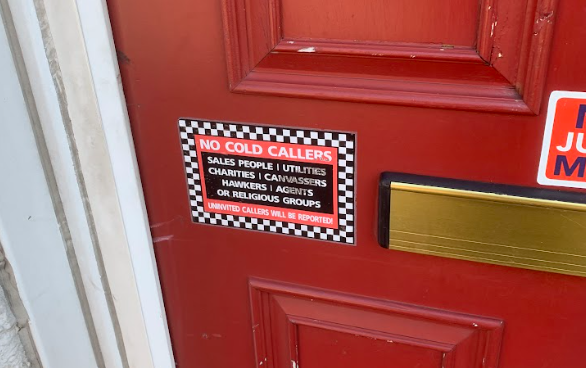
Just outside St Peter’s ward, I arrive at an industrial era two-up two-down, cladded in moulding white render. This is the correspondence address I have for Marie Fairhurst. Stuck to the door is a notice that reads “NO COLD CALLERS,” warning that canvassers “WILL BE REPORTED!” Strange, I think, for someone who should be out canvassing for the election they’re running in. I knock on and ring the bell. Eventually there’s a twitch of the net curtains, but nothing more. I return some time later. Still no answer. I post a note saying I hope to speak with her, and include my number, but she never gets back to me.
So who’s behind it?
If the allegations of fake Independents are true, then the question still remains of who’s behind it. Could this be the workings of some of Ul-Rasool’s most ardent supporters, looking to boost their man’s chances without ever mentioning it to him? Is Ul-Rasool himself behind it? And how much was known of this supposed plot within Tameside Labour?
On the evening of Friday 23rd May 2025, members of the Ashton-under-Lyne CLP gathered at Broadoak Community Centre. The old school hall in which party meetings are regularly held had a sullen atmosphere, almost one of mourning. It was the first such meeting since Labour suffered catastrophic losses in local elections across the country earlier that month. A by-election in nearby Longdendale had just been lost to Reform by a landslide. Party members were stunned at the size of the national swing to Farage’s party. There was a genuine sense of panic.
This is how Wilson-Marks, who we began this article with at Rayner’s barbecue, describes the evening. At the time, he was Vice-Chair of the CLP to Ul-Rasool as Chair, and he was responsible for Campaigns and Memberships. This day marks the first occasion in which Choksi allegedly approached him with the suggestion of fake Independents. A current Labour member, who was at both the CLP meeting and the barbecue confirms that Choksi and Wilson-Marks were in attendance at both events, but that they did not hear any such conversation.
However, this same source tells me that they have seen the tactic of putting forward Independents being discussed in Tameside Labour member-only WhatsApp groups. They’re not able to provide evidence of this, for one obvious reason: Since the Trigger Me Timbers WhatsApp group scandal, messages in Tameside Labour WhatsApp groups have been programmed to auto-delete after a set period of time. Wilson-Marks corroborates this detail. My source tells me, however, that the particular messages about fake Independents were instantly and manually deleted by another group member, and instructions were sent to not discuss the topic in that forum. They tell me they’ve been speaking with other Labour members about the Independents in St Peter’s, alleging that there are a number who believe it’s the handiwork of Atta Ul-Rasool alone. Ul-Rasool has not responded to any of my attempts to contact him. In a video he posted on Facebook addressing unspecified “false claims and baseless allegations,” he accuses Mehmood of “Playground politics”: “It’s time you grew up,” he says. “We’ve been campaigning truthfully and in accordance with the rules and regulations.”
Is this the story of one of Labour’s brightest rising stars, leaving too much of a mess behind in the dirty game of politics? Or is it a wider plot that’s been reverberating through the meetings and hyper-alert WhatsApp groups of Labour for more than a year? Wilson-Marks believes the tactic may not end with St Peter’s, that it could extend to other Independents running in the 7th May local elections across Tameside. I have not been able to corroborate this claim.
Perhaps one question remains outstanding more than any other: Could this tactic play into the hands of Reform? If the assumption that Labour will have enough loyal support to claim victory with a split Independent vote is miscalculated, could it be Reform’s Gaynor Francis who seizes the day and takes the seat?
I don’t know if that risk has been taken into account. No one accused of being involved will speak to me about it. Never has a Tameside election meant so much, and never has the water been murkier.
If someone forwarded you this newsletter, click here to sign up to get quality local journalism in your inbox.