
Aged ten and eight, my brother and I appeared on the Saturday morning horror-comedy show Ross Lee’s Ghoulies. Our task was this: we were to dress as zombies and crouch in the bushes at the local golf course while our Dad enjoyed a morning of hooks and slices. When he reached the fourth tee, positioned by our hideout, we charged out and interrupted his back-swing, shouting the immortal words: “We’ve been bitten by the ghoulies”.
There followed the ghoulies, four of them, a Nickelodeon-troupe of pasty white zombies waddling out from the shrubbery, followed by serial prankster and TV host Ross Lee (who would eventually hit dizzying heights with the Keith Lemon Sketch Show). When we got to the studio in London for the live interview segment, Lee pulled up the Scareometer, which — as you will know — ranks how scared all the pranked Dads have been throughout the series. Our Dad was last — statistically the hardest Dad of Series 18. Out onto the primary school playground I strode the day after it aired, chest puffed out and proud as punch, the cock of the walk.
Chezdan Mills had his own post-TV fame realisation that same year, 2009. His came at a bus stop.
The show Chezdan had been on had a viewership more than a touch higher than Ross Lee’s Ghoulies. At least, while I don’t think Chezdan can recall seeing me and my brother standing proud before the Scareometer, I distinctly recall watching him, arguing with an irate Pastor on BBC Three’s World’s Strictest Parents.
At that time, British reality TV operated under a defining principle. The key was to be as nasty as possible to ordinary people, and to make them appear as ludicrous as possible for the entertainment of the viewing public. Bonus points could be earned if they were poor, or 16.
Chezdan was 16. He came from Bolton. He wanted — at just about any cost — to be on the TV.
These were the days of peak popularity for shows like Big Brother, or Jeremy Kyle, the latter much adored for its deployment of a dubious lie-detector to humiliate the working class. Over on BBC Three, a tax-funded sub-genre of sorts spawned, called factual entertainment. It included such classics as Sun Sex and Suspicious Parents, where parents would go undercover and follow their teens on partying holidays to Zante or Magaluf, watching through binoculars as they licked alcopops off a hunky barman’s abs, or sneaking into their hotel rooms to rustle through their suitcases, falling down in shock at the discovery of a Durex box.
Personally, I loved Sun, Sex and Suspicious Parents, and remember well the show’s pinnacle: a lanky teen emptying his bank account on repeat visits to an ATM outside a Zante strip-club. But nothing beat World’s Strictest Parents. Perhaps building on the substantial thirst viewers had worked up for shows about naughty kids (Supernanny was by this point a huge hit), the show took the adolescent truants and early-age smokers of our island and dropped them in the hands of (often black or Asian) families around the globe for a week-long crash course in a little something called discipline.
And so Chezdan Mills sent off an application. He’d been living for the past four years with just his mum in a council estate in Bolton, following the death of his nan. Before that, Chezdan’s nan had helped to raise him, and following her death he’d been put on antidepressants, aged only 12. Her death made things much harder on his mum; having the central heating or the water cut off was a common fixture of his childhood. He slept on a mattress on the floor — you see it in the opening sequence of his episode. “Things were shit, I just wanted to get on TV,” he tells me.
The problem he faced was that he wasn’t that bad. He wasn’t perfect, he was partial to a cigarette, but he did well in class and wouldn’t exactly have ranked in the top bracket for teenage delinquency. As he confesses to the moderate crimes of his 16-year-old self, I think blimey, he wasn’t anywhere near as bad as me. I was twice excluded (once for throwing rubbers at Mr Spillet, once for forging a detention letter and sending it to the parents of my classmate Giovanni), were it a competition, I would almost certainly outrank Chezdan, who was apparently among the worst teens in the country. Thankfully for me, my worst moments were not aired on national TV.
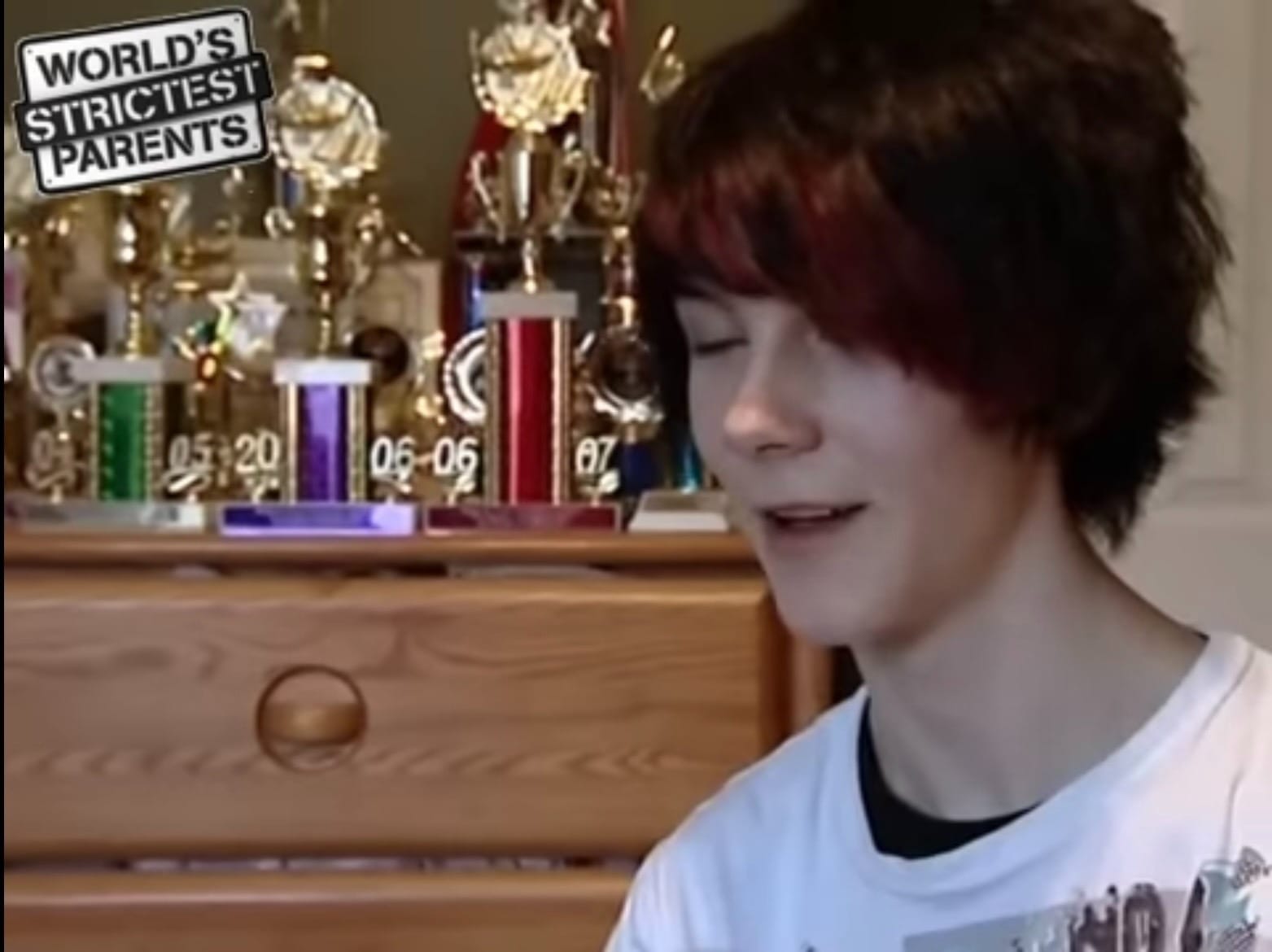
No, Chezdan really wasn’t that bad. In lieu of being that bad, however, he was gay, which was another formula for great TV, especially when pushed in front of the cameras alongside a hardline Southern Baptist Christian conservative family from Atlanta.
On top of that he was told by the show’s producers to just pretend to be as awful as possible, and he obliged, because he was really pleased to be on TV. For example, during his screen test for the show, he was asked to stand by the washing machine demanding his mum put laundry on for him. In reality, he tells me, she was putting on the clean laundry he’d already done earlier in the day.
Filming in Atlanta lasted 10 days. The show’s format sent two teens to each family, so Chezdan was paired with Bex, a 17-year-old girl from Walton-on-Thames. They didn’t get to meet the family they would be staying with, the Kimbroughs, before filming began, instead this intro came in the form of a filmed segment where Mum and Dad Wanda and David present their guests with a document — to be signed — outlining the rules of their house: no profanity, no smoking, maintaining a B+ average in every class at school, responding “yes ma’am” or “yes sir” while being “reprimanded”, and so on. This was followed by a segment where Bex and Chez duly break one of the rules by smoking on the balcony, and later we get a confrontation between David and Chezdan in which the patriarch learns that Chezdan is a “pretty boy” (a tag that stuck). Left on the cutting room floor, Chezdan tells me, was a scene in which he was made to sit in a locked church throughout a series of sermons about the sin of homosexuality, during which time he had a panic attack, also filmed. When he attempted to go to the toilet, he was followed by a nanny on behalf of production to stop him running away. Chezdan ran outside sobbing.
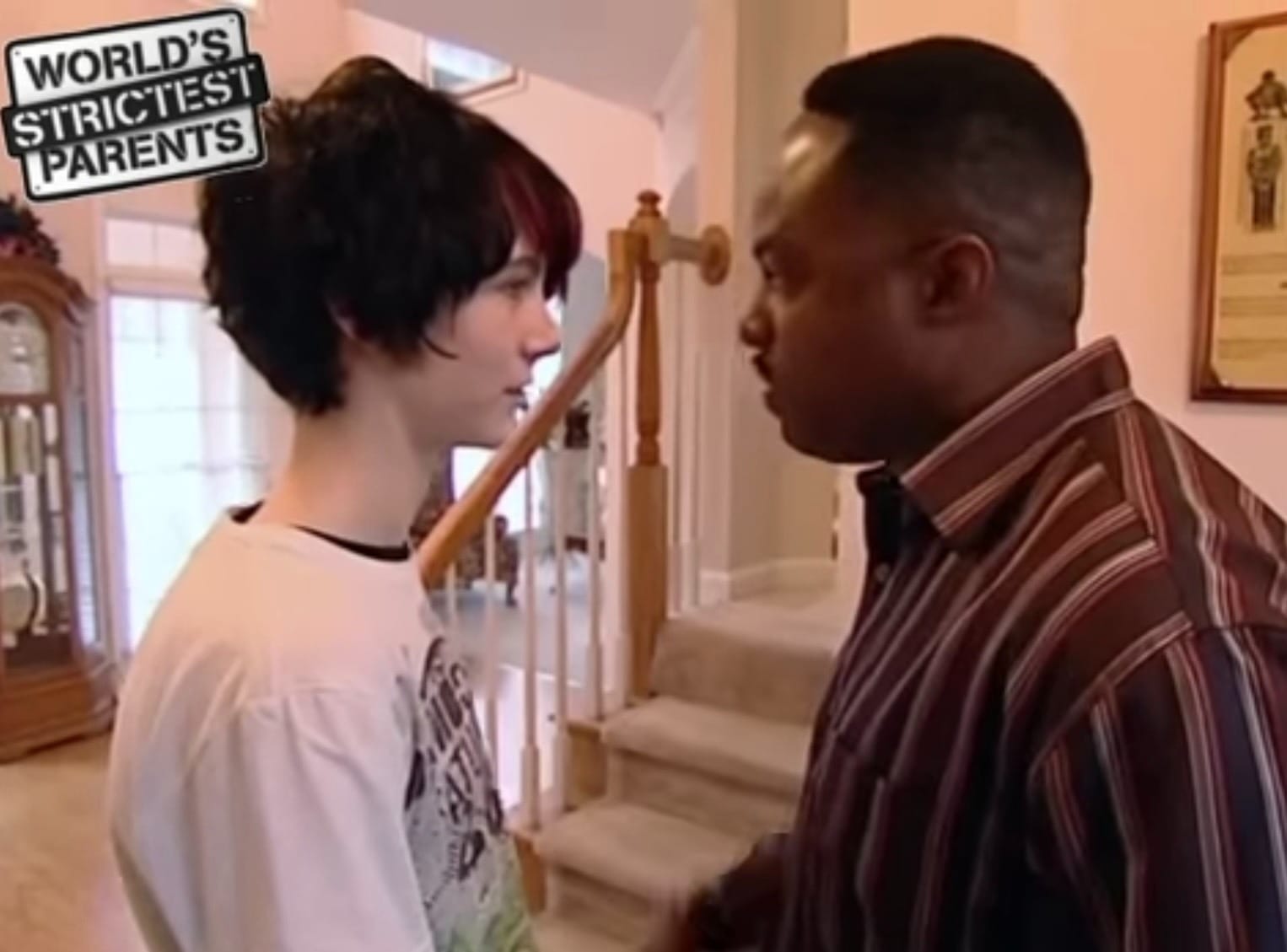
World’s Strictest Parents was billed as a “constructed factual documentary”, which, in essence, meant the whole thing was directed. “They’d set up the lights and camera in the kitchen and we’d be in separate rooms, me with Bex then the family in another room,” Chezdan explained. “Then [the producer] would go to us and say you need to go in there all guns blazing and give attitude, then he’d go to the family and say ‘you need to really come down on them’”.
It’s usually a touch cliche to say something like “you couldn’t get away with that anymore” but here it feels apt. You certainly couldn’t lock a crying 16-year-old in a church and film him getting upset as he’s told he’s a hell-bound sinner, which is some kind of progress. But Chezdan himself has no grudge towards the Kimbroughs, nor even the show’s makers, one of whom (a director) he tells me he stayed in contact with long after filming and now counts as a kind of “father figure”, who came to his wedding. “At the end of the day, he just had a job to do,” he says.
But back to the bus stop. It was the day after the show had first aired. Chezdan was on his way to college, and he noticed a small group standing nearby staring and murmuring. They didn’t address him, but he could hear them talking about him: They’d chanced upon the naughty kid from TV.
And this was only the start. The following months and years included coming across forums dedicated to the analysis of his delinquency, receiving death threats via email, discovering that strangers on the internet had written sexualised fan fiction about him, long periods of depression, various courses of antidepressants, and the eventual realisation that his status as the “pretty boy” (as the internet now knew him) would be a great big bollard standing in between him and any possible career he wished to pursue. He ended up smoking weed every day and describes a psychotic episode aged 18 in which the devil told him he’d take his soul away for being gay.
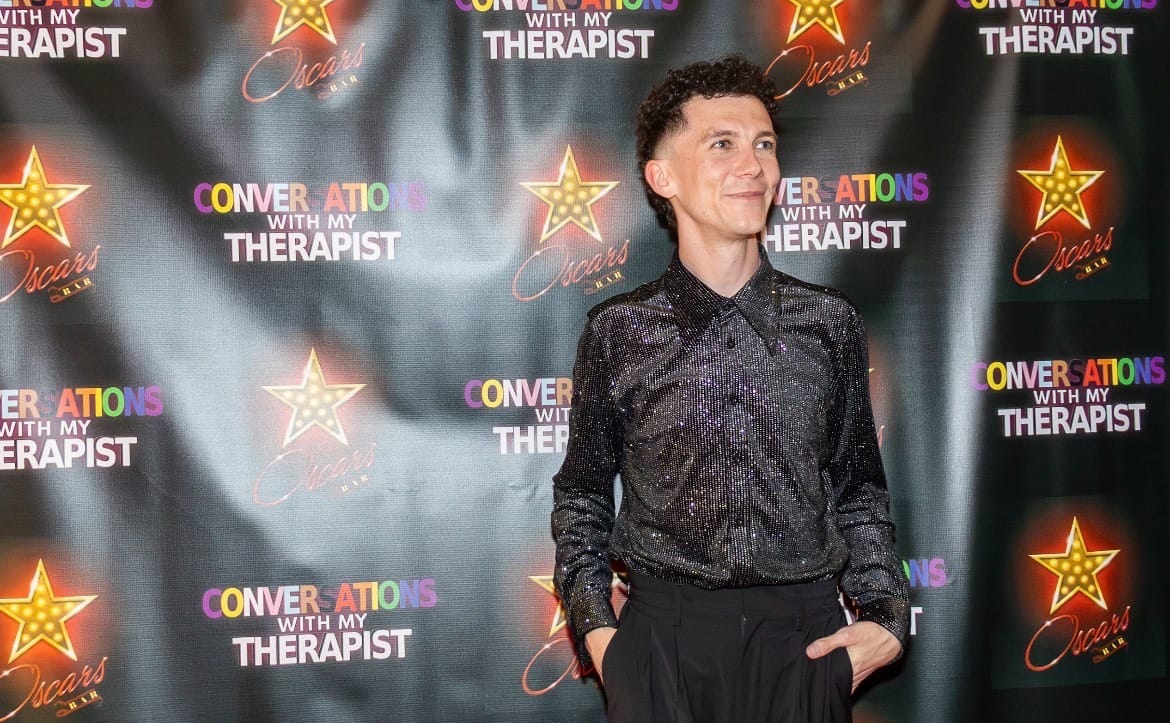
At times, he says he felt as though a decision to sign a document at the age of 16, as a not-unusually fame hungry teenager, spawned a chain-reaction of mini catastrophes that put into jeopardy his entire future.
Before the show, Chezdan tells me he was actually among the top of his class in college. After the show, he stopped leaving the house, and had to leave college, preventing him from getting into uni.
When he moved back in with his mum in Bolton, there was a coffin in Chezdan’s childhood bedroom. This was the same house where the opening segment of the show had been filmed, during which Chezdan tells me he just said the most outrageous and sexualised things that came into his head as he thought it was what the producers wanted, and during which his mum says she has no issue with him being gay, but does take issue with the fact that he’s a “turd” (or so she tells the cameras). The coffin, of dubious home-construction, crafted by his mother from scrap wood in a premature money-saving exercise, stood before him. It became his inspiration, one of many scrap materials from his life at that time which eventually went into the creation of his new show, Conversations with my Therapist, which will be on streaming platforms over the summer.
He wrote and starred in it himself, documenting the long fallout of the World’s Strictest Parents phase of his life.
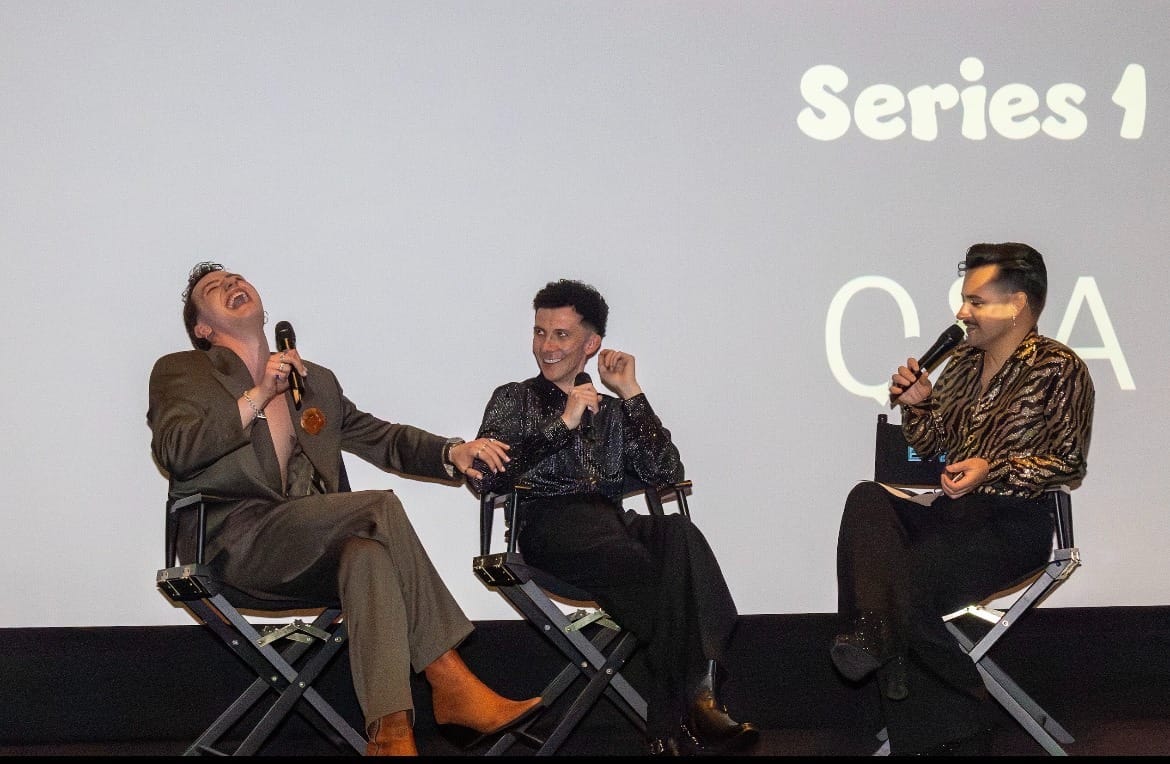
Last week, The Mill went to the premiere, the room filled with friends and family of the cast. Chezdan sees it as a new approach to dealing with the minor celebrity that has followed him since the show, no longer trying to pretend it didn’t happen. “You can’t put it back in the box, really, I’d been trying to hide from it for years,” he says towards the end of our chat. “Everyone else has benefited from it, I might as well do it .”
Unable to be in the room on the night was Bex, who had accompanied Chezdan on that strange excursion to Atlanta back in 2009. The pair have been close friends since, and Chezdan cites her as one of the main reasons he’s been able to get through everything that has happened thereafter. “If nothing else came of it,” he tells me. “I got my friendship with Bex.”
Chezdan hasn’t heard from the Kimbrough family in a long time now, he hopes they’re doing well. But every now and then he notices an old clip from the show has been re-uploaded on YouTube and it reminds him someone, somewhere continues to profit from the episode. To date, he hasn’t made a dime.
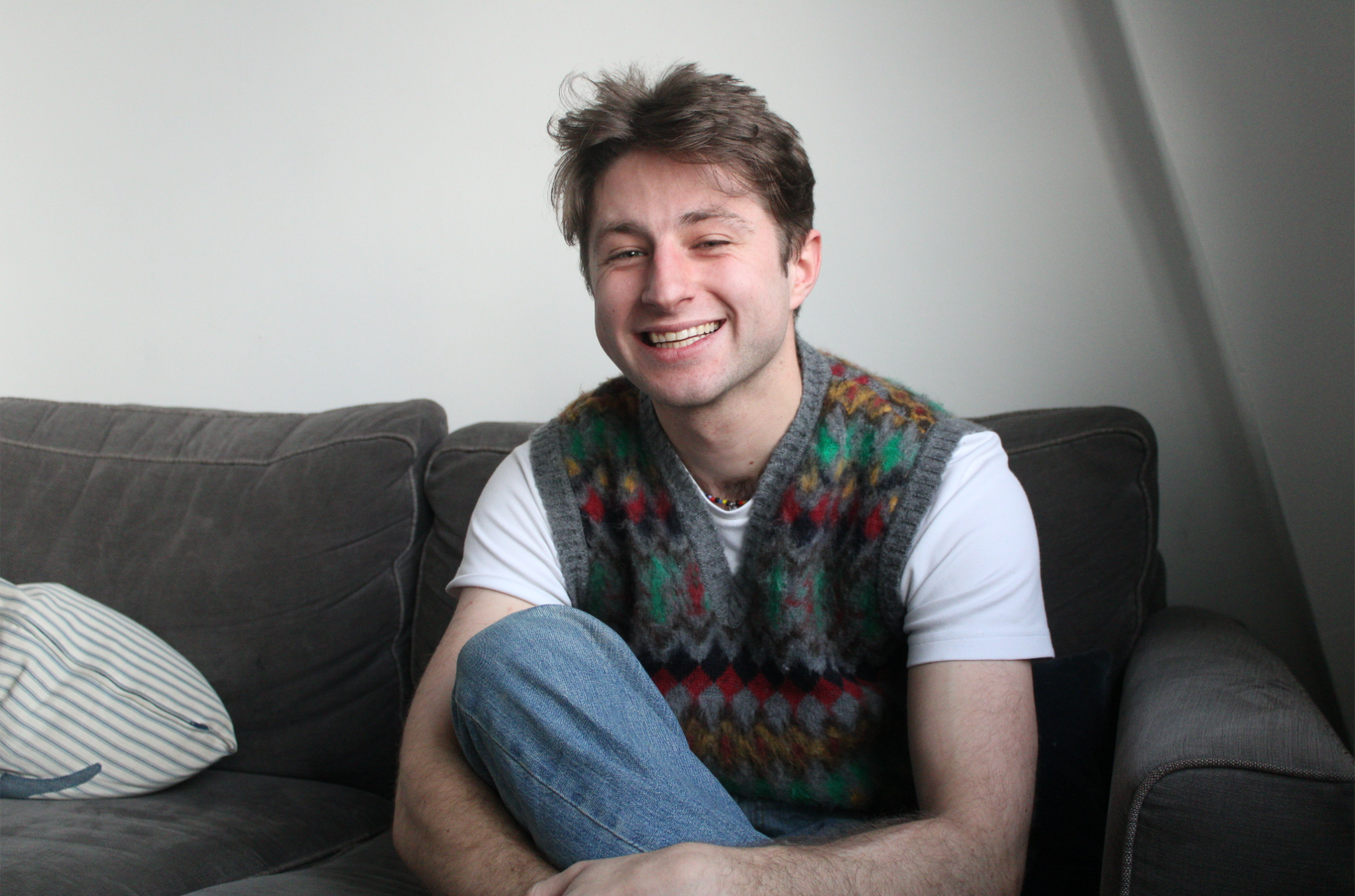
Hi guys, I’m Jack — the author of this article.
One of the things I really enjoyed about writing this piece was that it wasn’t about Andy Burnham.
We’ve been bringing you the best Makerfield and Burnham coverage in the country over the past few weeks, but beyond the politics and the investigations, I think pieces like this make The Mill what it is. They introduce you to characters and stories in Manchester you may never have otherwise come across, and hopefully make you feel a little more connected to the city you live in as a result.
The Mill is now almost at 4,500 paying subscribers. If you enjoy this kind of people-led journalism, sign up today and help us get there this month.
If someone forwarded you this newsletter, click here to sign up to get quality local journalism in your inbox.