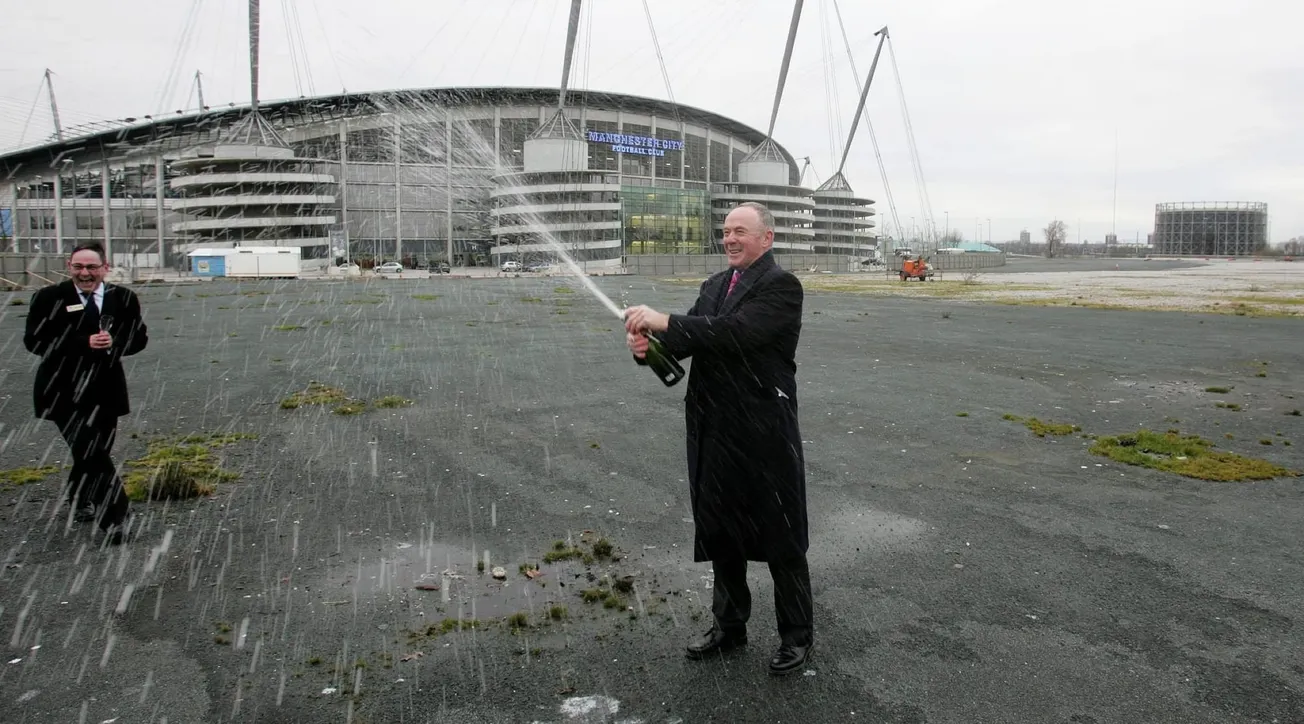

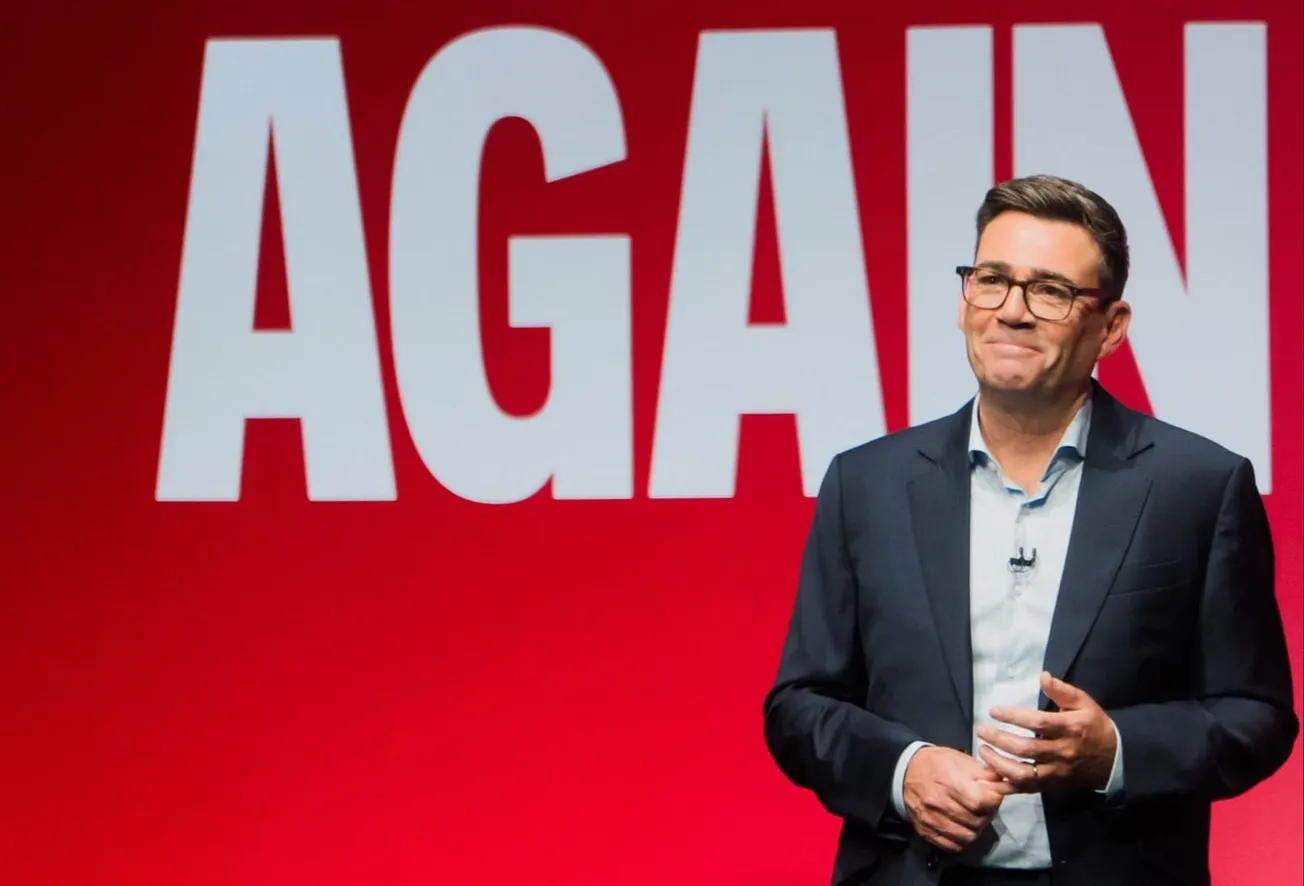
Good morning, readers. It's Ethan here, fresh from the Labour Party conference. Between my chats with MPs, property developers and trade unionists, I had a nagging thought. For all the talk of Burnhamism and Manchesterism, it felt like Liverpool, not Manchester, was the city Labour had in mind.
This piece is the product of my and Jack Dulhanty’s combined forces, where we try and pin down the shifting balance of influence between the two cities, and consider the prospects of devolution on the Mersey.
Ethan and Jack also discussed the conference in our latest episode of The Run of the Mill, our weekly podcast. You can listen to that on Spotify below, or wherever you get your podcasts here!

A message from Ethan: Dear readers, this is it: we’re hurtling into the final 48 hours of our campaign! Two weeks ago, 5,000 paying members was a pipe dream. “Boss,” I said to Ophira (my boss). “500 new members in a fortnight? It can’t be done.”
Yet, here we are, just 32 members away from our target — scanning the crowd as we tear around the final bend.
It took a slew of irresistible articles on salaries, cigarettes, and cycling. It took a visionary plan from the team at the Postcode Lottery to extend our reporting to young Mancunians, for free. And it took a lot of hard-hitting pleas in your inbox. Now, it takes you.
Our offer to you hasn’t changed, but the clock is running out.
Subscribe today for the discounted price of £6.95 a month or £69 for the year. You’ll be filling your inbox with a stream of gritty investigations and show-stopping long-reads from our award-winning team. You’ll be helping us fund our work in schools across Greater Manchester. You’ll be joining the movement revitalising local journalism.
When the campaign closes in less than 48 hours, so does this price. If you’ve been meaning to join, this is your moment.
They say the past is a different country, but this time last year was a different planet for Andy Burnham. The then-mayor and leadership hopeful who refused to accept he was a leadership hopeful – he previously said “you would have to wrench” him from the north west – fled his party’s 2025 conference in Liverpool after claiming it was gripped by a “climate of fear” that was preventing debate.
In the weeks before, Burnham had been putting forward his ideas for the country in the pages of the New Statesman and the Financial Times — more devolution, not being “in hock” to the bond markets — and the Labour establishment ridiculed it. In the end, he was forced to back Keir Starmer as leader. When he finished laying out his vision at this year’s conference — a new age of re-industrialisation, the dawn of electoral reform, better relations with the EU, and a new social care service — he was met not with ridicule but eyes bleared with pride. No longer was he a pretender to the throne, “hopeless” on the economy and obsessed with the north. He was a beacon of hope.
This week, Burnham has been framed as a homecoming king in the local press. Liam Thorp – the political editor of the Echo, who co-authored Head North with Burnham and Liverpool mayor Steve Rotheram – described “a new energy feeding off the lad born just up the road in Aintree.”
And the Prime Minister’s much-feted political philosophy, Manchesterism (originally branded ‘Burnhamism’), which hinges on devolving powers to local authorities and councils, has been spread like gospel through Labour heartlands, not least in Liverpool. In fact, milling around the party conference this week, it began to feel as though it’s Liverpool and not Manchester that Burnham believes can offer a guide to the UK at large. “The values of Liverpool are now the values of the UK.” he told a fringe meeting of conference delegates after his speech. “It is a huge statement about the people of this place, that in the end, having been cast out by the powers that be, everything has come full-circle.”
Is ‘Liverpoolism’ what we have been actually talking about all along? Or did Andy Burnham, a people-pleaser par excellence, just happen to be there while talking about his vision? And, can Liverpool and others seize the opportunity of devolution like Manchester did?
The power of the ‘and’
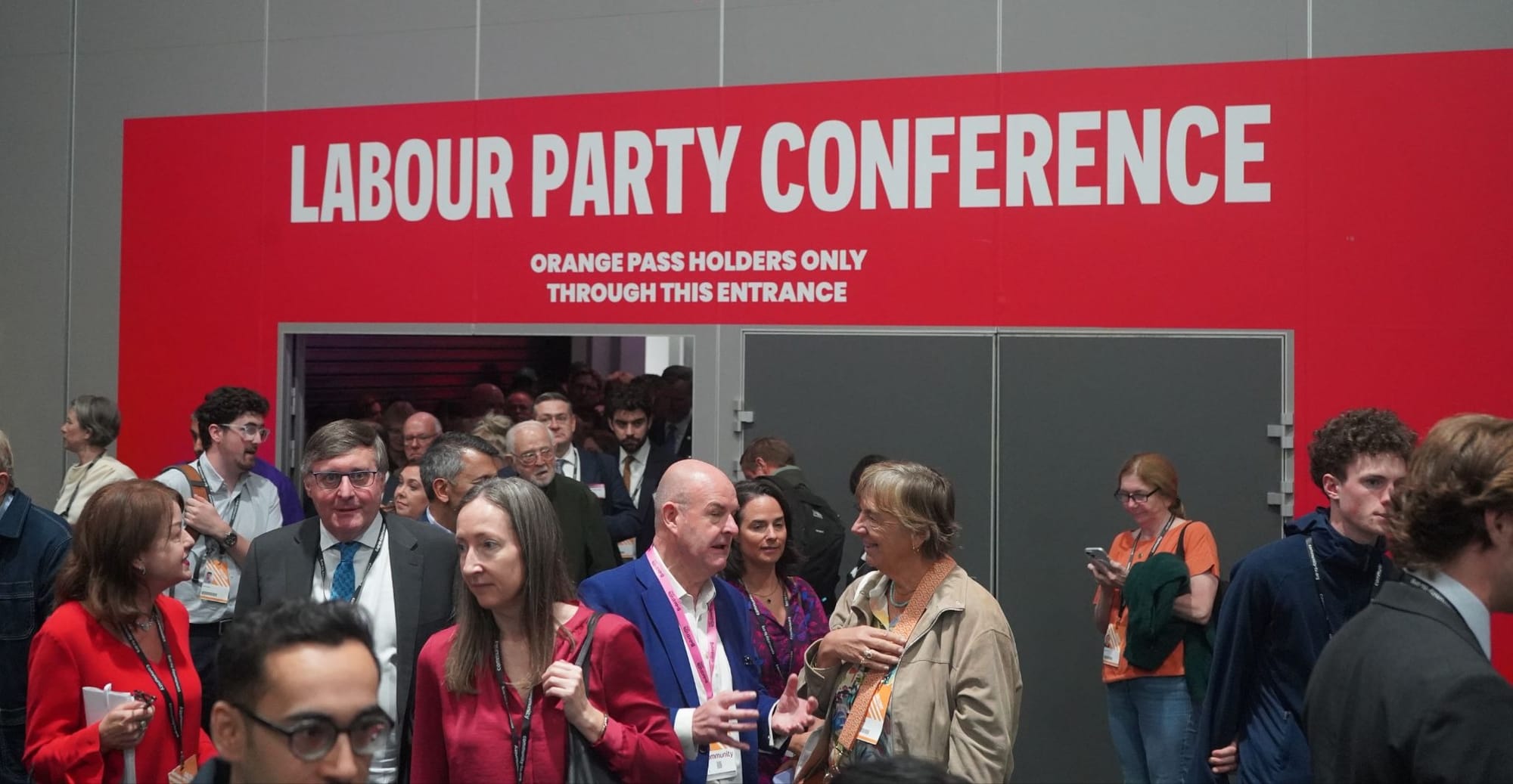
Inside the M&S Bank Arena on King’s Dock, the Labour conference is an eccentric patchwork of plucky causes and vested interests, both vying – with waning enthusiasm over the three days of the event – for a chat with a passing minister. Chester Zoo shares a row with the Cuba Solidarity Campaign, in the shadow of the Lloyds Bank MPs lounge and GB News’ improvised broadcasting studio. Lost amongst it, I find two staff from the Liverpool City Region Combined Authority (herein the CA).
Among the 20,000-odd party delegates in attendance, it was a challenge to find attendees clued up on the North West’s local fortunes. The CA stall acts as something of a showroom for Liverpool’s regional power — in their glossy “Investment Guide” the glittering future of the Liverpool City Region is laid out for potential financiers.
“So, what benefits can we see from devolved powers in Liverpool now?” I ask one of the CA staffers.
“Look at bus franchising, that’s been a success,” they say.
“But, hasn’t it only been going for three weeks?” I ask, and they share a thoughtful look.
“We’ve got new routes to the airport,” they say, referring to the new X3 service linking St Helens to Liverpool John Lennon airport. “And we’re looking at the Wirral next.” I push, to no avail, for something a bit more substantial.
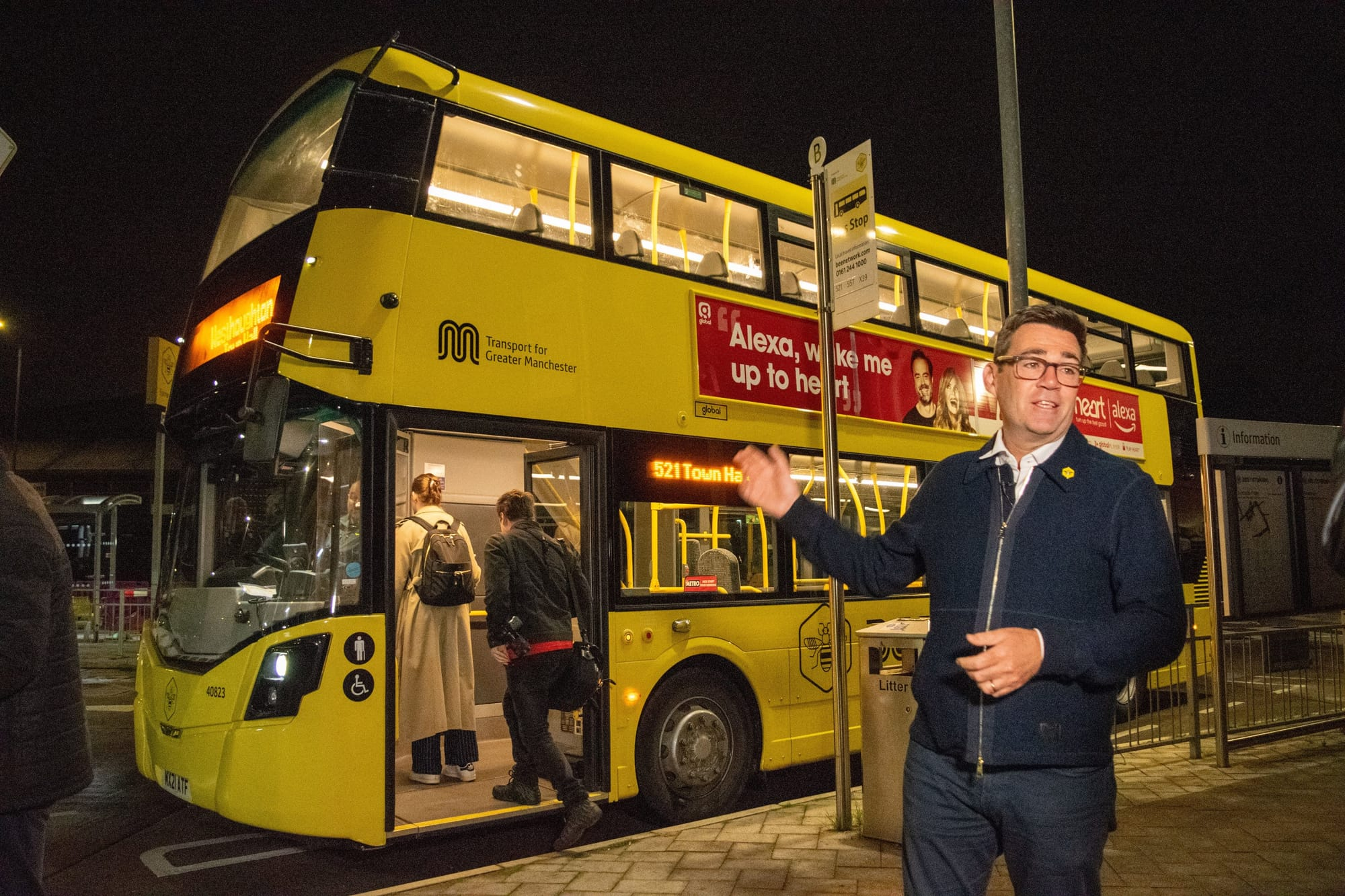
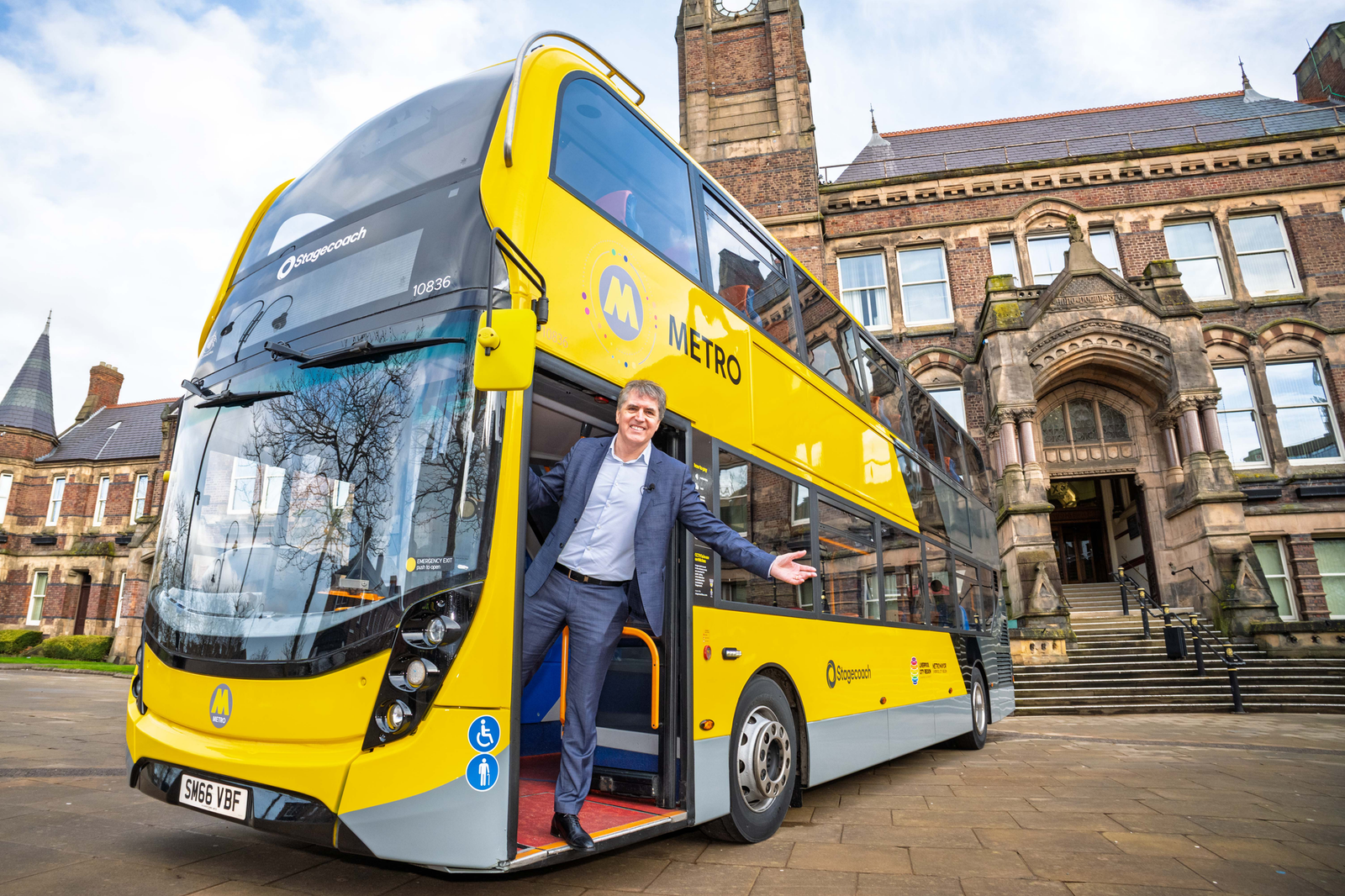
Burnhamism seems an aesthetic theory as much as a political one. Upon entering public control, the buses of both Liverpool and Manchester were painted a fetching yellow. Liam Robinson, Liverpool council leader, puts it plainly: “Transport is a very good visible element of devolution,” he says. “You paint the buses a different colour. You make fares less expensive.”
Last month, Burnham confessed to The Times that the government’s strategy on public control isn’t exactly clear “with the exception of the buses.” The model of local public control, and the political capital that Burnham has generated for it, is built around this one small, visible policy. Buses are the unobtrusive centre of the programme of local devolution. But, around it, authorities are being armed with much more dramatic powers.
Steve Rotheram in Liverpool, and Bev Craig in Manchester can now intervene in planning decisions, issue upfront planning permissions, charge levies on new infrastructure, and take on police and fire functions. The Liverpool City Region has already received a £700m integrated housing settlement and a £1.5b budget covering transport, skills and growth.
Photos: @BeeNetwork via X and LCRCA
The evening before Robinson welcomed the prime minister, he wrote a string of proposals for future local devolution. He pitched for a Scotland-style extension of public health policy and the return of taxes on passenger flights into the local authority to fund improvements at local airports.
The overnight visitors levy – a tax on tourists that local leaders are now able to introduce – will be “proof of concept” for further devolved control of taxes. But, above all, Robinson tells me, he “deeply wants greater devolved control over school education.”
“Being dead straight with you," Robinson repeats, “it’s about how we maximise this opportunity. Andy is saying the era of resistant devolution is over. We’ve got to keep playing that back to the civil service.”
Robinson is not the only one eager for devolution to lose its friction.
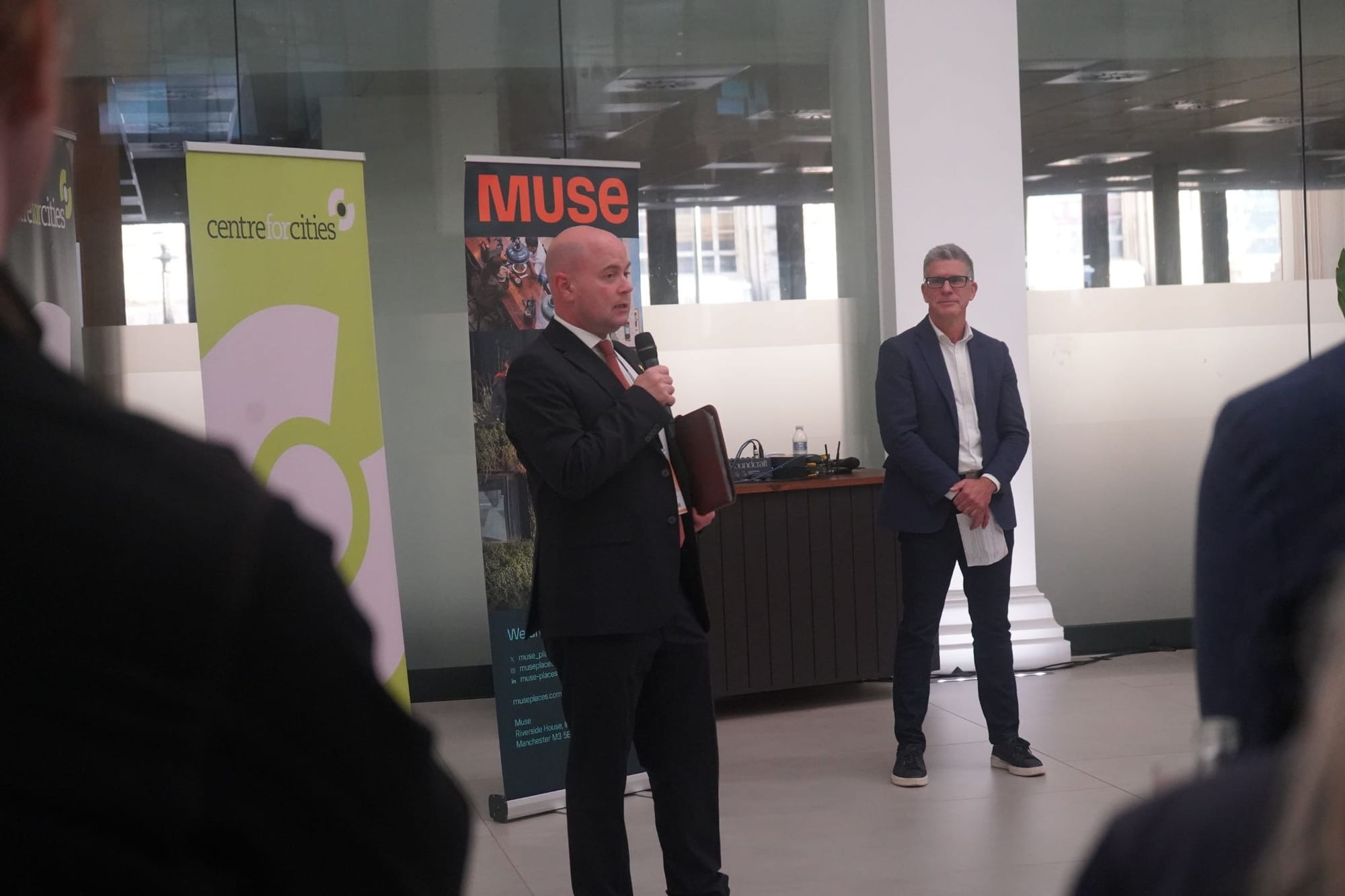
Phil Mayall is the managing director of Muse, the heavyweight property development company behind some of the North West’s biggest regeneration projects. Muse have led town centre redevelopments in Salford, St Helens, Wythenshawe, and Birkenhead.
“We are seeing an element of big government moving into regional government,” he tells the conference reception at the Liver Building. “Let’s not fall into the trap of bidding rounds, and due diligence to the extent it’s not needed.”
Mayall thinks that the old Levelling Up model – where, in his words, you "bid for this money, by this date, it goes into a black hole, and you await a company decision" – was dysfunctional and slow.
In regeneration, the argument for pace is clear. Design costs can inflate into the millions before diggers enter a site, as the Post’s recent piece on Southport’s Marine Lake Events Centre explored. From the window of the Liver Building where I speak to Mayall, the Albert Dock is lit up across the waterfront. The space was derelict for over a decade, until Michael Heseltine bypassed the local council regulation and created a development corporation to charge the investment through. To an extent, it makes Mayall’s case for him.
"Use pace, really drive the region forward,” Mayall tells me, in the swell of networking after his talk. “It’s the power of the ‘and’.”
It’s clear, though, that regional developers stand to gain the most from speeding up the process of development in devolved areas. The cost, if scrutiny is too hasty and projects collapse, falls squarely on the taxpayer. In Liverpool, where the memory of Labour council corruption under Joe Anderson is still fresh, losing scrutiny is a high price to pay for speeding up building.
‘Success looks like a load of Stockports’
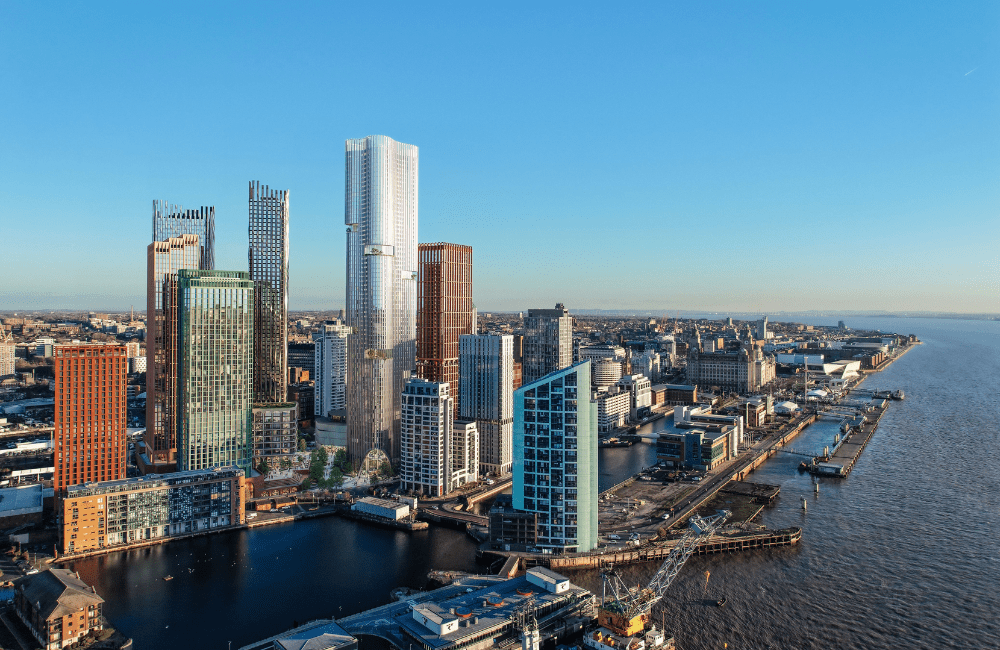
Over on the northern tip of the waterfront, up past the conference centre, the North Docks development is poised to be the largest regeneration project in Liverpool’s history, with billions of pounds of investment and thousands of new homes.
A mayoral development corporation will be formed by Rotheram and Robinson to drive the North Docks. It strips planning decisions away from the usual local authority processes and concentrates them in a single body, accountable to the mayor. Depending on your view of recent Liverpool history, it’s either immensely exciting, or a concentration of power in an office that has historically not always used it well.
“It’s not something to comment on at the moment,” Ian Byrne, MP for Liverpool West Derby says when I ask him about the development. “I’m watching that with interest. I think we need more detail.”
The regenerative aspirations of Burnhamism are understood to be modelled from Stockport. A mayoral development corporation in the Greater Manchester suburb was established in 2019 and has delivered 1,200 new homes and secured £600 million in private investment within five years. “Success,” according to a Greater Manchester Combined Authority Commissioner, “looks like a load of Stockports.”
You can hardly read a national paper without a Westminster journalist marvelling at what Manchester has become. In the last year, the city centre built more homes than all 32 London boroughs combined.
Manchester has long enjoyed a band of powerful and wily sponsors. It took George Osborne, then the Chancellor of the Exchequer, to architect a new model of English devolution that trialled in Greater Manchester. And it took the two terms of a swaggering Andy Burnham to turn his, and the city’s fortunes into semi-mythic ‘-isms’.
But now, in the words of one trade unionist I spoke to, “all the stars are lined up in Liverpool.”
In Head North – the 2024 book authored by Andy Burnham, Steve Rotheram, and the Echo’s Political Editor Liam Thorp – “Andy” wrote that when “Steve” became Liverpool mayor, “he knew Liverpool needed to be a bit more like Manchester.”
“Less political and able to work with the government where possible,” he explained.
The new Labour Party General Secretary, Joe Fortune, hails from Merseyside. Anneliese Midgley, the Chief Whip, is from Knowsley. The Prime Minister is from Aintree. Number 10 North, our sources tell us, is packed with Scouse staffers. The party conference just rolled into Liverpool for the sixth time, and there’s no doubt that it’ll be back next year.
“Is there a sense that Merseyside is now running the Labour Party?” I ask Kim Johnson, MP for Liverpool Riverside
“Well, I –. Well, yeah!” she laughs.
If someone forwarded you this newsletter, click here to sign up to get quality local journalism in your inbox.