


After almost two weeks of asking, insisting and outright begging (and almost waterboarding), we are on the home stretch of our campaign to reach 5,000 Mill members.
You only have until tomorrow morning to take advantage of our discounted membership prices.
£6.95 (usually £8.95) for the first two months or £69 (usually £89) for a whole year.
It’s an exciting time for the city, it’s an exciting time for Millers. We’re glad you’re with us on this journey.
Earlier this week, just hours after giving a speech to Labour party conference that was praised by pundits and sent party delegates into raptures, Andy Burnham got himself into “perhaps his biggest self inflicted tangle since he arrived in Downing Street,” in the words of the BBC’s political editor Chris Mason. Answering a question from Mason about Manchester City’s Abu Dhabi owners and the financial scandal engulfing the club, Burnham said he would be “really concerned to lose them”, adding: “They've been such a huge partner in the building of modern Manchester.”
The backlash was swift. “Astonishing, alarming comments,” wrote the veteran football journalist Henry Winter, while government officials told Bloomberg he had risked breaching the government’s neutrality on the case. Downing Street soon saw the need to backtrack. On Thursday, it issued a new statement, this time emphasising that no one could be “above the rules”. Half an hour later, this too had to be amended. "If wrongdoing is established, those responsible should face the appropriate consequences” was replaced with “Wherever wrongdoing is established”.
After all, the independent commission had already found Manchester City guilty “of all charges related to serious breaches of the Premier League’s financial rules”, including filing misleading accounts and repeatedly creating “sham” contracts that inflated the club’s commercial revenues by over £800 million over nine seasons. The club, several of whose witnesses were accused by the commission of lying during the 12-week hearing, has lodged an appeal.
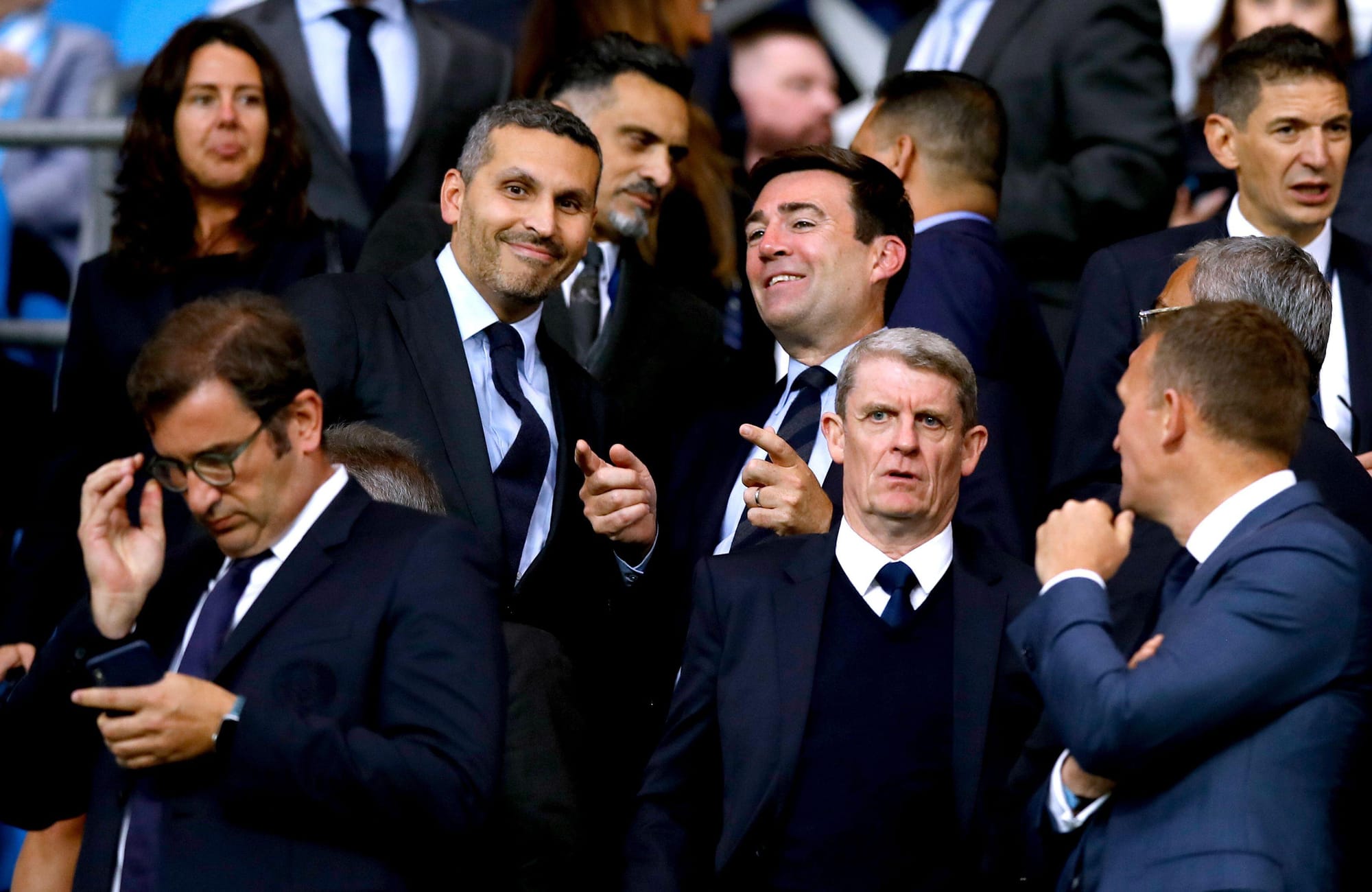
Burnham’s intervention has drawn unwanted attention to the close ties between Manchester and Abu Dhabi. The media’s whiplash mood shift was best exemplified by the popular News Agents podcast, which went from praising Burnham for delivering “one of the great political speeches” on Tuesday to discussing “Andy Burnham’s dirty political secret” on the following day’s show, asking if his legacy as mayor is “now tarnished by accusations of dirty money”.
But there’s another way of looking at what Burnham said — less as a gaffe than as a rare glimpse of the Mancunian political doctrine that propelled him to Downing Street, but that he has largely expunged from his public platform. You might call it Bernsteinism after Sir Howard Bernstein, the council executive whose commercial genius shaped modern Manchester. You might even say it's “Real Manchesterism”.
Whatever you call it, it’s the uber-pragmatic model that has held sway in this city since the late 1980s and which says: Manchester’s economic interests trump all other concerns. It has delivered massive overseas investment and has driven the economic growth that Burnham touts in every speech. But it also requires, as local leaders are remembering this week, a very high threshold for embarrassment.
‘You don’t criticise the council’s relationship with the football club’
Back in 2018, a year after Andy Burnham was elected and ten years into Abu Dhabi’s ownership of Manchester City, a small group of staff at Manchester City Council held a strained meeting. It was March 21, and a council officer called Dominic Hayes had just resigned from his role as a director of development and corporate real estate, which he had been doing for just seven months.
Hayes had been assigned to take over various council development projects, and his resignation was surprising and swift. The meeting was designed to work out how the corporate real estate department would operate without a director while a replacement for Hayes was sought. But what made the meeting tense was the letter Hayes sent to the council, outlining his reasons to resign. One of Hayes’ criticisms was particularly awkward: it was about the council’s relationship with Manchester City.
We haven’t seen the letter, but have seen contemporaneous notes from the March 21 meeting, written by a development manager called Gillian Boyle. When we contacted Boyle for comment, she confirmed she remembered the meeting and the notes she took: “I was in the room at the time, I wrote it down in the notes,” she told us. “I thought: ‘hm, this is an important meeting’.”
This story is free to read - you just need to join our mailing list. And why wouldn't you? By becoming a Mill subscriber, you'll get our scoops, features, and insights into Manchester, in your inbox, the second we hit publish. No card details required.
Already have an account? Sign In


